
Why Authorized Generics Look Different from Brand-Name Drugs
 Apr, 24 2026
You pick up your prescription, open the bottle, and freeze. The pill is blue, but your brand-name medication has always been white. Or maybe the shape is slightly off, and the imprint on the tablet doesn't match what you've seen for years. If you've been prescribed an authorized generic, this moment of confusion is incredibly common. In fact, nearly 68% of people feel a bit of panic the first time they see a medication that is supposed to be "identical" but looks completely different.
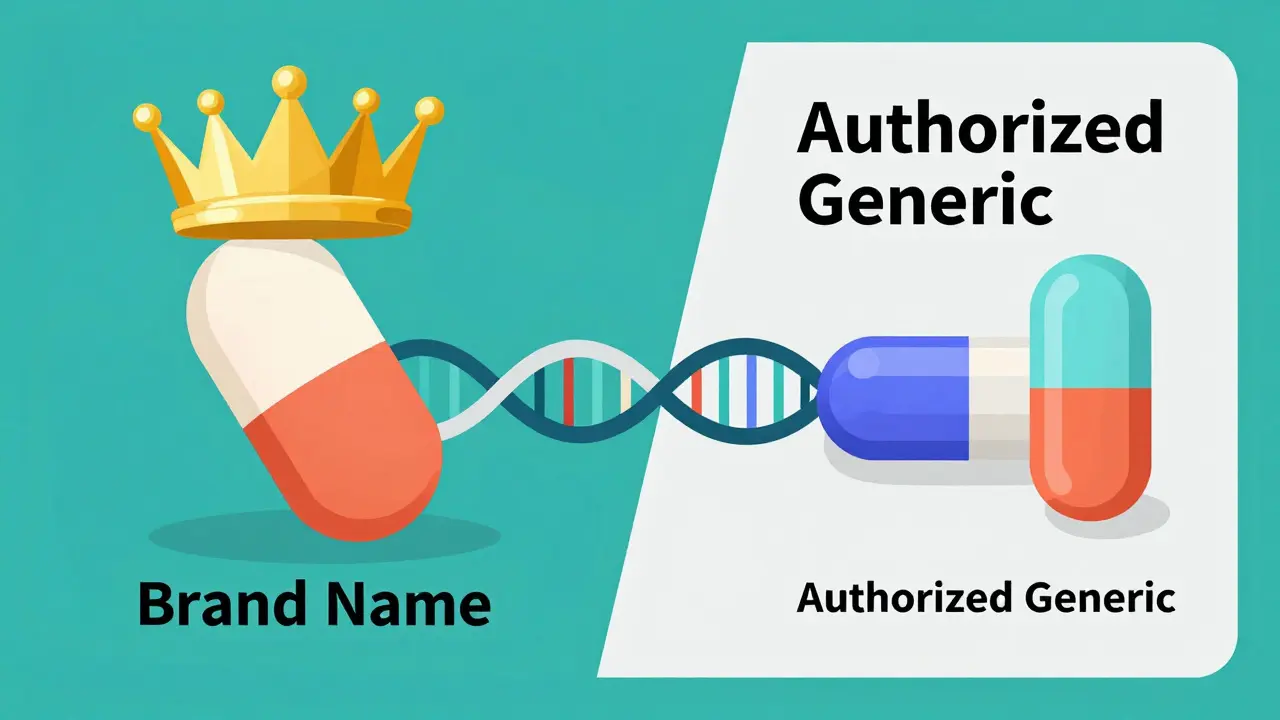
The irony is that an authorized generic is actually the closest thing you can get to a brand-name drug without paying the brand-name price. Unlike a standard generic, which is a "copy" made by another company, an authorized generic is the actual brand-name drug, just sold without the fancy name on the label. So, why the visual disguise? It isn't a mistake, and it isn't a sign of lower quality. It's a legal requirement.
| Feature | Brand-Name Drug | Authorized Generic | Regular Generic |
|---|---|---|---|
| Active Ingredient | Original | Identical to Brand | Bioequivalent |
| Inactive Ingredients | Proprietary | Identical to Brand | May Vary |
| Appearance | Trademarked | Different (Required) | Different |
| Cost | Highest | Moderate | Lowest |
The Legal Battle Over Looks: Trademark Law
To understand why your pill changed color, you have to look at Trademark Law is a set of legal protections that prevent companies from using the same identifiers-like logos, names, or visual designs-for different products to avoid consumer confusion. In the pharmaceutical world, the look of a pill (its color, shape, and imprint) is often protected as a trademark.
The FDA (Food and Drug Administration) requires that every drug product have unique identifying features. If an authorized generic looked exactly like the brand-name version but had a different label, it could lead to massive medication errors. Imagine a pharmacy mix-up where a technician can't tell two different labeled products apart because they look identical. To prevent this, the FDA and trademark laws mandate that authorized generics be visually distinct.
Statistically, this means that while the chemistry remains the same, the aesthetics change. About 76.4% of authorized generics have a different color than their brand counterpart, and a staggering 89.2% feature different imprints or markings. These aren't random choices; manufacturers intentionally adjust the final coating or imprinting stage to satisfy legal requirements while keeping the medicine inside untouched.
Why "Identical" Still Matters
You might wonder why you should care about an authorized generic if a regular generic is even cheaper. The answer lies in the "fillers"-the inactive ingredients. Regular generics go through an ANDA (Abbreviated New Drug Application) process, where they prove the drug works the same way, but they aren't required to use the exact same inactive ingredients. This means they might use different binders, dyes, or fillers.
For most people, this is a non-issue. But for about 4.7% of patients, these inactive ingredients cause allergic reactions or sensitivities. If you've ever switched to a regular generic and suddenly felt itchy or nauseous, you might be reacting to a filler. Authorized Generics are a lifesaver here because they are marketed under the original NDA (New Drug Application). They contain 100% of the same active and inactive ingredients as the brand-name drug. The only difference is the label and the color.
Breaking Down the Cost and Availability
Money is usually the biggest motivator when switching medications. While authorized generics aren't always as cheap as regular generics, they are significantly more affordable than the brand name. On average, a brand-name drug might cost around $478 per month, while an authorized generic drops that to about $341. For comparison, a regular generic might be as low as $276.
The catch is that they are harder to find. Only about 38.4% of brand-name drugs that have generic competition actually have an authorized generic version. This is often because the brand-name manufacturer decides whether or not to release one. Sometimes they do it to keep a foothold in the generic market, and other times they partner with a third-party manufacturer to handle the distribution.
What to Do When Your Pill Looks Different
It's completely normal to feel skeptical when your medication changes appearance. Many patients report questioning the efficacy of their drug simply because it's a different shade of yellow or a different shape. If you're staring at a pill that doesn't look right, here is a practical approach to handle it:
- Check the Label: Verify that the medication name and dosage are correct.
- Ask the Pharmacist: Ask specifically, "Is this an authorized generic?" They can confirm if the pharmaceutical composition is identical to the brand name.
- Use a Pill Identifier: Most pharmacies have access to visual comparison tools that show exactly what the authorized generic should look like.
- Monitor Your Reaction: If you switched to an authorized generic because of a sensitivity to regular generics, keep a log of any side effects to ensure the identical formula is working for you.
Keep in mind that pharmacists often spend extra time-sometimes nearly two minutes per prescription-just explaining these visual differences to patients. Don't feel bad about asking a "silly" question; it's a safety check.

The Future of Medication Appearance
The industry is moving toward making this process less confusing. The FDA has already proposed protocols to standardize how authorized generics are differentiated to reduce patient anxiety. Some companies, like Pfizer, have started "appearance continuity programs" where they try to keep the shape the same and only change the color, making the transition easier on the eyes.
Looking ahead to 2025 and 2026, the FDA plans to integrate authorized generics more clearly into the Orange Book. This will make it easier for your doctor and pharmacist to identify these drugs and explain the visual differences to you before you even leave the pharmacy counter.
If the active ingredients are the same, why can't it look the same?
It comes down to trademark law and safety. Drug companies trademark the visual appearance of their pills. If a generic looked exactly like the brand, it would violate those trademarks. More importantly, the FDA requires different looks to prevent medication errors-if two different products looked identical, a mistake in labeling could lead to a dangerous medical error.
Is an authorized generic better than a regular generic?
Not necessarily "better" in terms of effectiveness, but it is more identical. Regular generics are bioequivalent (they work the same), but authorized generics use the exact same inactive ingredients as the brand. This makes them the superior choice for people with sensitivities or allergies to common fillers used in standard generics.
Will my insurance cover an authorized generic?
Most do, but there can be glitches. About 28.6% of cases involve insurance plans that don't immediately recognize authorized generics as therapeutically equivalent. If your claim is denied, your pharmacist can usually provide the necessary documentation to the insurance company to show it is an authorized version of the brand drug.
How can I tell if my pill is an authorized generic or a regular one?
The easiest way is to ask your pharmacist. You can also check the manufacturer listed on the bottle. If the manufacturer is the same company that makes the brand-name drug (or a subsidiary), it's likely an authorized generic. Regular generics are made by different companies that have filed an ANDA.
Does the change in color mean the drug is less potent?
No. The color is achieved through minor adjustments in dyes that do not affect the active pharmaceutical ingredient. These adjustments are strictly regulated and do not change how the drug is absorbed by your body or how it treats your condition.
Next Steps for Patients
If you are concerned about your medication's appearance, your first step should always be a conversation with your healthcare provider. If you have a history of reacting poorly to generic drugs, specifically request an authorized generic from your doctor. This ensures you get the identical formula of the brand-name drug while potentially saving a significant amount of money.
For those who are visually impaired or have cognitive challenges, it may be helpful to have a caregiver or pharmacist mark the bottle with a clear note about the pill's color to avoid confusion during daily dosing. As the FDA continues to update its guidelines, the goal is to move toward a system where the medicine is identical, the price is lower, and the visual transition is seamless.