
Understanding the Pregnancy and Lactation Labeling Rule (PLLR): A Guide to Safety Sections
 Apr, 21 2026
PLLR Label Navigator
Guide for interpreting modern FDA drug safety labels
Select the scenario you are researching to find the correct section and key questions to ask.
Focus: Section 8.3
Females and Males of Reproductive Potential
This section is for preventing unintended exposure. It outlines the requirements before a medication is even started.
What to look for:
- Required pregnancy tests before initiation.
- Specific types of contraception required.
- Interactions with hormonal birth control.
Focus: Section 8.1
Pregnancy
This replaces the old A, B, C, D, X letters with a narrative format focusing on risk-benefit analysis.
Key Sub-sections:
- Risk Summary: What are the known fetal risks?
- Clinical Considerations: Does timing (trimester) matter?
- Data: Is the evidence from humans or animals?
Focus: Section 8.2
Lactation
Focuses on the transfer of the drug into breast milk and the potential impact on the infant.
Key Technicals:
- Drug concentrations in milk vs. plasma.
- Compatibility with breastfeeding.
- Effect on milk production volume.
Suggested Discussion Question:
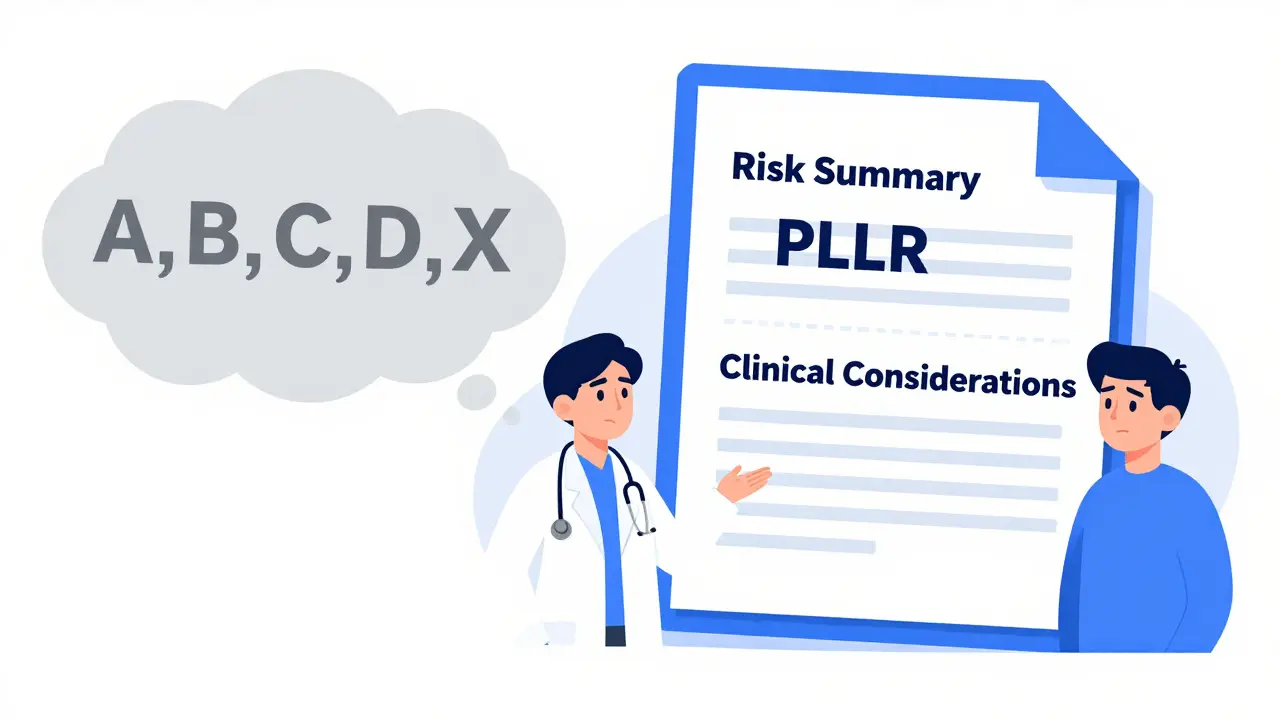
For decades, doctors and patients relied on a simple letter system-A, B, C, D, or X-to figure out if a drug was safe for a pregnant woman. It seemed easy, but it was dangerously oversimplified. A "Category B" drug might have just lacked enough studies to prove it was harmful, while a "Category C" drug might have known risks that were actually manageable. This "innocent until proven guilty" bias led to confusion and, in some cases, poor clinical decisions. To fix this, the Pregnancy and Lactation Labeling Rule is a regulatory framework implemented by the U.S. Food and Drug Administration (FDA) that replaced letter categories with detailed narrative summaries to provide clinically relevant safety information. It is also commonly known as PLLR.
If you are a healthcare provider or a patient looking at a modern drug label, you won't find a single letter to guide you. Instead, you'll find a detailed breakdown in Section 8 of the prescribing information. The goal here isn't to give a "yes" or "no" answer, but to provide enough context so that a doctor and patient can weigh the benefits of a medication against its potential risks. Given that pregnant women in the U.S. take an average of three to five prescription drugs, having a nuanced understanding of these labels is a necessity, not a luxury.
The Core Structure of PLLR Safety Sections
The FDA restructured the labeling into three specific subsections under "Use in Specific Populations." Each of these sections is designed to answer a different set of critical questions about the patient's reproductive health.
- Section 8.1: Pregnancy - This covers the risks to the fetus, how the timing of the dose matters, and what happens during labor and delivery.
- Section 8.2: Lactation - This focuses on how much of the drug enters breast milk and whether it affects the baby or the mother's milk production.
- Section 8.3: Females and Males of Reproductive Potential - This section deals with the "before and after," including pregnancy testing and the need for birth control.
Within the Pregnancy and Lactation subsections, the FDA requires a standardized three-part format. You will always see a Risk Summary, Clinical Considerations, and Data. This consistency ensures that no matter which drug you are researching, you know exactly where to look for the most critical safety data.
How to Interpret the Risk Summary
The Risk Summary is the most important part of the label. Unlike the old letter categories, this is a narrative. It tells you exactly what the known risks are. For example, instead of just seeing "Category D," a provider might read that a drug is associated with oligohydramnios, which is a condition where there is too little amniotic fluid surrounding the fetus.
When reading this section, look for specific values and outcomes. Expert analysis from the Center for Drug Evaluation and Research (CDER) suggests that the Risk Summary should explain not just the risk, but how that risk behaves. In some cases, labels now describe how the amniotic fluid index changes when a drug is stopped and then restarted, providing a level of detail that was impossible under the old system.
It's also important to remember that the Risk Summary doesn't exist in a vacuum. A key part of a modern risk-benefit analysis is considering the risks of untreated illness. If a mother has a severe condition that could jeopardize her own life or the health of the fetus, a drug with known risks might still be the safest choice.
Analyzing Clinical Considerations and Data
If the Risk Summary is the "what," the Clinical Considerations and Data sections are the "how" and "why."
The Clinical Considerations section provides practical guidance. It might include dosing alterations needed during pregnancy or how the timing of exposure affects the fetus. For instance, a drug might be safe in the third trimester but dangerous during the first few weeks of organ development. This section helps doctors decide if they need to change the dose or switch medications as the pregnancy progresses.
The Data section is where the evidence lives. It summarizes the actual findings from human studies, animal data, and pharmacological activity. This is where you can see if the risks mentioned in the summary are based on a few case reports or a large-scale clinical trial. This transparency allows providers to judge the strength of the evidence for themselves.
| Feature | Old System (A, B, C, D, X) | PLLR Narrative System |
|---|---|---|
| Format | Single letter grade | Detailed text summaries |
| Nuance | Low (Often misinterpreted) | High (Context-specific) |
| Evidence | Categorical grouping | Direct citations of data/studies |
| Focus | General risk level | Timing, dose, and specific outcomes |
| Updates | Rarely changed | Mandatory updates as new data emerges |
Decoding Lactation and Reproductive Potential
The Lactation section (8.2) has moved away from simple "safe or unsafe" labels. Instead, it provides technical data on drug concentrations in milk relative to plasma concentrations. If a drug has a high concentration in milk, the label will discuss its compatibility with breastfeeding and whether it impacts the volume of milk produced. This allows a lactation consultant or doctor to determine if the amount of drug the infant receives is clinically significant.
The Females and Males of Reproductive Potential section (8.3) is a critical addition for preventing unintended exposure. This is where you'll find requirements for pregnancy testing. The goal is to determine a patient's status early enough to minimize fetal exposure to toxic drugs.
Additionally, this section covers contraception. It doesn't just suggest using birth control; it often specifies which types of contraception are required, especially if the drug interacts with hormonal contraceptives, making them less effective.
The Role of Pregnancy Exposure Registries
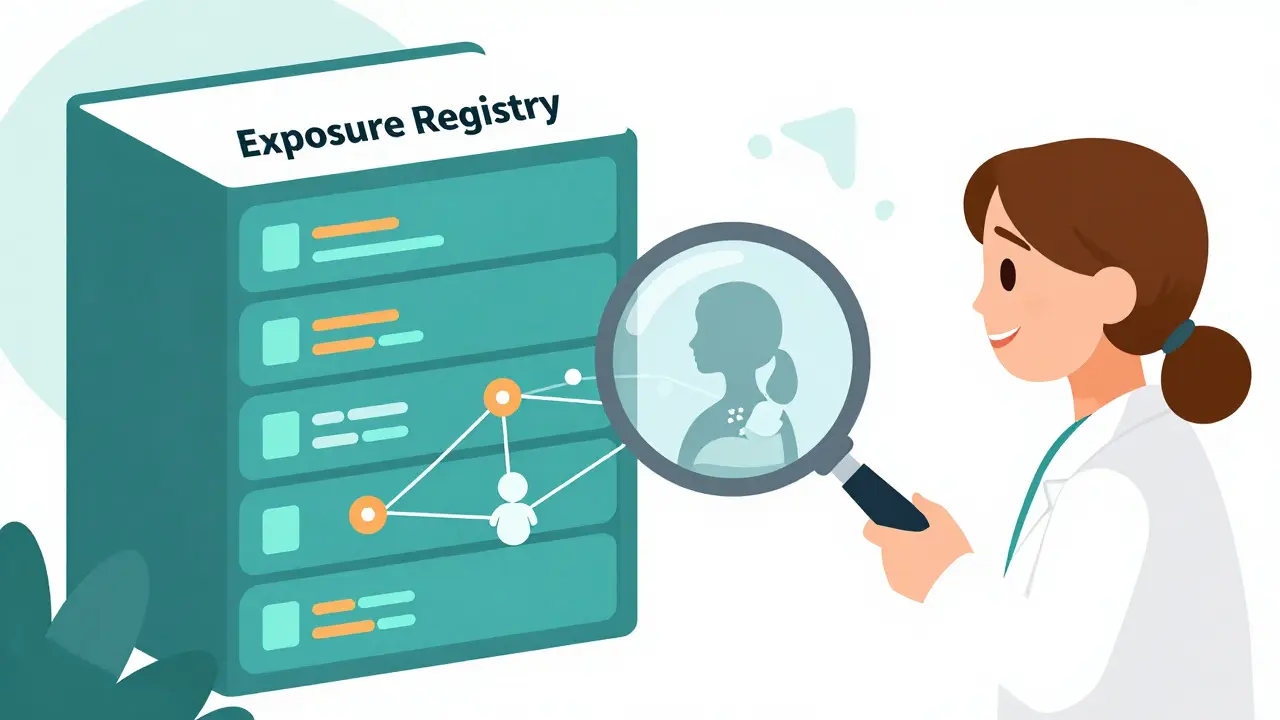
One of the most significant shifts under the PLLR is the move toward active surveillance. In the past, pregnancy exposure registries-databases that track the health of mothers and children exposed to a specific drug-were recommended but not required. Now, they are a mandatory part of the Pregnancy subsection for many products.
These registries are vital because they fill the data gaps left by clinical trials, where pregnant women are often excluded for safety reasons. By collecting real-world data, the FDA and manufacturers can identify rare side effects that only appear in a larger population. If you see a registry mentioned in the Data section, it means there is a formal system in place to monitor the long-term outcomes of babies exposed to that medication.
Common Pitfalls in Interpreting New Labels
Even with more information, there are common mistakes people make when reading these safety sections. One of the biggest is assuming that a lack of data means the drug is safe. In the old system, a "Category B" drug was often viewed as safe simply because there were no adverse reports. In the PLLR, if the Data section says "no human data available," it means exactly that-we don't know. This is a critical distinction that prevents the "innocent until proven guilty" bias from influencing care.
Another pitfall is ignoring the timing of exposure. Some drugs are only teratogenic (causing birth defects) during a specific window of embryonic development. If the Clinical Considerations section specifies a risk during the first trimester but not the third, a provider can make a much more informed decision about whether to maintain or stop therapy late in pregnancy.
Why did the FDA remove the A, B, C, D, X categories?
The letter categories were too simplistic and often misinterpreted. They didn't provide enough detail for a proper risk-benefit analysis and created a bias where drugs with no data were seen as safer than drugs with known but manageable risks. The PLLR replaces these with narrative summaries that provide specific clinical data.
Where do I find the pregnancy safety info on a drug label?
You should look for Section 8, "Use in Specific Populations." Specifically, Section 8.1 covers Pregnancy, Section 8.2 covers Lactation, and Section 8.3 covers Females and Males of Reproductive Potential.
What is a Risk Summary?
The Risk Summary is a concise narrative at the beginning of the pregnancy or lactation section. It describes the potential risks to the fetus or nursing infant based on available evidence and provides an assessment of the risk level.
Does the PLLR apply to all medications?
The rule applies to prescription drugs and biological products that follow the Physician Labeling Rule (PLR). This includes all products approved since June 30, 2001. Older products were required to remove the old letter categories within three years of the rule's effective date in 2014.
What should I do if the label says there is no human data available?
If human data is missing, the label will usually provide animal data or information based on the drug's pharmacologic activity. You should discuss this with your healthcare provider to weigh the risks of the medication against the risks of leaving your condition untreated.
Next Steps for Providers and Patients
If you are a healthcare provider, your first step when encountering a new medication should be to check Section 8.3 for any required pregnancy tests or specific contraception needs before starting the patient on the drug. Once a pregnancy is confirmed, move to Section 8.1 and focus on the Risk Summary and Clinical Considerations to see if the timing of the drug's use matches the current gestational age.
For patients, the best approach is to ask your doctor: "What does the FDA Risk Summary say about this drug for my specific stage of pregnancy?" and "Is there a pregnancy exposure registry I can join to help track the outcome?" This shifts the conversation from a simple "Is this safe?" to a more productive discussion about managing health and risk.
Ajinkya Joshi
April 23, 2026 AT 05:17Oh great, so instead of a letter, we get a novel. Because nothing says "quick clinical decision" like reading a three-page essay on amniotic fluid indices while a patient is actually in the room. Pure genius from the FDA.
Divyanshu Giri
April 23, 2026 AT 23:07This is a total game changer!! Love seeing the shift to real info that actually helps folks stay safe and healthy!! Keep crushing it with the knowledge drops
Caroline Duvoe
April 24, 2026 AT 09:36obviously this is just common sense for anyone who actually reads the literature 🙄 the letters were always a joke 🙄
Olayinka Ibukunoluwa Mercy
April 25, 2026 AT 02:50Such a wonderful and detailed explanation!!! ❤️ It is so important for us to support expectant mothers by providing them with the most accurate information possible!!!! 🥰✨
RAJESH MARAVI
April 25, 2026 AT 11:26Aktuallly the narative system is just as bad because now doctors just skm the text and miss the point anyway!! Totaly a waste of time to chnage the format if the people reading it are still lazey!!
Dan Wizard
April 25, 2026 AT 22:23I find it quite intriguing that the shift toward active surveillance through registries is now mandatory for many products, as it seems to bridge the ethical gap where pregnant women were historically excluded from trials, thereby creating a more inclusive dataset for future generations of medical practitioners to rely upon for safer prescribing habits.
Odicha ude Somtochukwu
April 27, 2026 AT 17:03The emphasis on Section 8.3 regarding reproductive potential is most commendable, as it ensures that preventive measures are taken with the utmost dignity and care for the patient's future health!!!!