
Timeline for Medication Side Effects: When Drug Reactions Typically Appear
 Dec, 23 2025
Side Effect Timing Calculator
Input Your Medication Details
Results & Action Plan
Keep a symptom journal and monitor carefully during this period.
Starting a new medication can feel like stepping into the unknown. You take the pill, hoping it helps, but then you wonder: when will you know if something’s wrong? Will the headache tomorrow be from the drug-or just bad sleep? Will that rash show up in two days or two weeks? Understanding when side effects typically appear isn’t just helpful-it can be life-saving.
Immediate Reactions: Minutes to One Hour
Some side effects hit fast. If you’ve ever felt your throat close up, your skin flushed, or your chest tighten right after swallowing a pill, you’ve experienced an immediate reaction. These are often allergic and happen within minutes to an hour. Anaphylaxis, the most dangerous type, occurs in 98.7% of cases within one hour, with 67% starting within just 15 minutes. Penicillin is a classic example: 73% of allergic reactions show up within 15 minutes of taking it. Other immediate reactions include sudden hives, wheezing, or a drop in blood pressure. If this happens, don’t wait. Call emergency services or go to the nearest ER immediately. These reactions don’t get better with time-they get worse.Early Delayed Reactions: 1 to 72 Hours
Not all reactions are dramatic or instant. Many show up within the first three days. This window covers most non-life-threatening allergic responses, like mild rashes, itching, nausea, or dizziness. Around 92% of drug allergy symptoms appear in this 1- to 72-hour window, according to clinical data from the FDA. For example, if you start a new antibiotic like amoxicillin and notice a red, flat rash by day two, it’s likely related. Some liver issues or serum sickness-like reactions also begin here. These aren’t always emergencies, but they shouldn’t be ignored. If symptoms are mild and you’re otherwise feeling okay, call your doctor within 24 hours. Don’t keep taking the drug unless they say so.Delayed Reactions: 4 Days to 8 Weeks
This is where things get tricky. Many side effects don’t show up until days or even weeks after you start the medication. Patients often assume they’re fine because nothing happened on day one or two. That’s when they get caught off guard. Maculopapular rashes-the most common drug-induced skin reaction-typically appear between days 4 and 14, with a median onset of 8 days. That’s why doctors tell you to watch closely for the first two weeks after starting a new drug. Antibiotics, antivirals, and seizure medications like carbamazepine are common culprits. Even more concerning are conditions like DRESS syndrome (Drug Reaction with Eosinophilia and Systemic Symptoms). This rare but serious reaction can take 2 to 8 weeks to show up, with a median onset of 28 days. Symptoms include fever, swollen lymph nodes, rash, and organ inflammation. If you’re on an aromatic anticonvulsant like phenytoin or carbamazepine, and you develop a fever and rash after three weeks, don’t brush it off. DRESS can be fatal if untreated. Early steroid treatment cuts mortality from 10% to under 3%.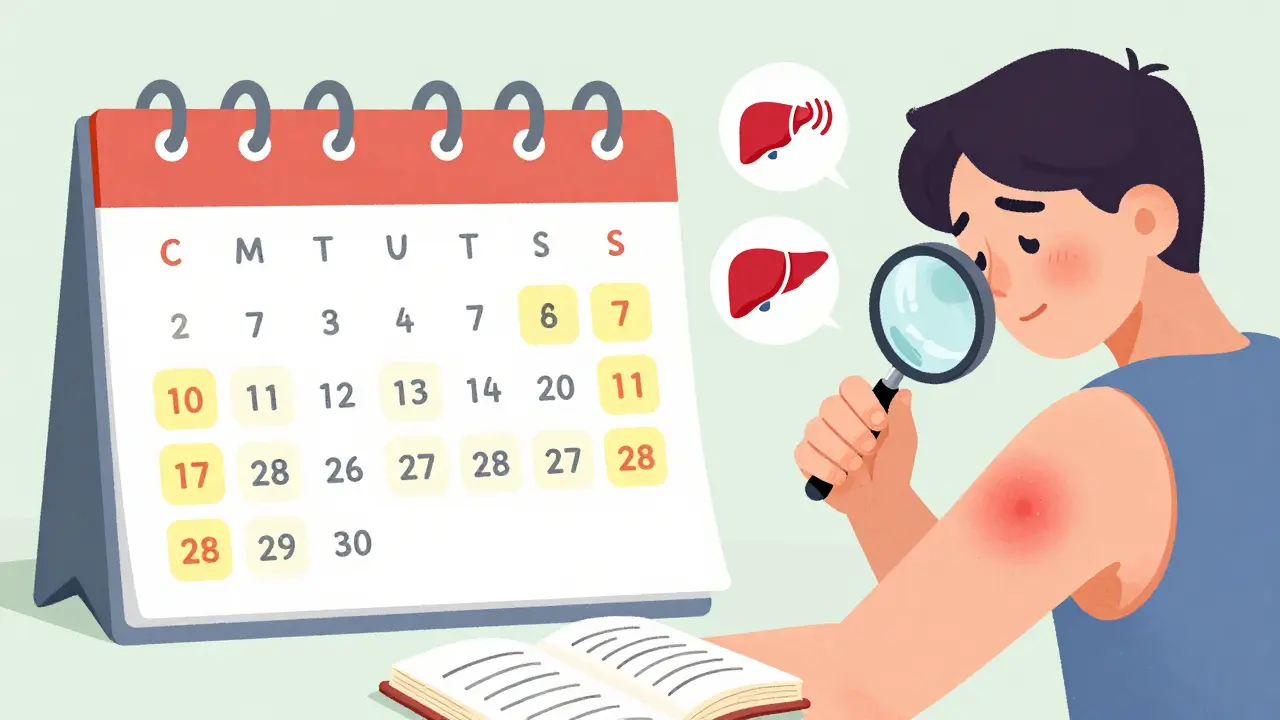
Chronic Reactions: Beyond 8 Weeks
Some side effects sneak in slowly. You take a medication for months, feel fine, then suddenly-fatigue, cough, joint pain, or shortness of breath. These are chronic reactions. They’re rare but real. Amiodarone, a heart rhythm drug, can cause lung damage after 6 to 12 months. Statins like atorvastatin might cause muscle pain after 7 to 10 days in a small percentage of users, but in others, the damage builds over months. Drug-induced lupus can take 6 months to a year to develop. These reactions are often mistaken for aging, stress, or another illness. That’s why keeping a symptom journal matters. Writing down when you feel off, what you took, and how long it lasted helps your doctor connect the dots.Why Timing Varies So Much
Not everyone reacts the same way. Your body’s chemistry, age, genetics, and other health conditions all play a role. For example:- Dosage matters. Higher doses speed up side effects. At double the normal dose, 82% of side effects appear within 24 hours-compared to only 47% at standard doses.
- Age slows things down. People over 65 experience side effects an average of 2.3 days later than younger adults because metabolism and kidney function decline with age.
- Genetics decide. If you carry the HLA-B*57:01 gene, you’re almost certain to have a severe reaction to abacavir (an HIV drug)-and it’ll show up within 48 hours. Testing for this gene before prescribing is now standard in many countries.
- Other conditions change the clock. If you have kidney disease, drugs that leave your body through your kidneys stick around longer. Side effects last 30-50% longer. Autoimmune conditions can make reactions appear 37% faster.
- Generic vs. brand. Sometimes, switching from brand to generic triggers a new reaction-not because the active ingredient changed, but because the fillers, dyes, or coating did. About 23% of patients report different side effect timing after switching.
What You Should Do: A Simple Action Plan
Knowing when side effects might appear helps you act faster. Here’s what to do:- First hour: Stay near a phone or someone who can help. Watch for swelling, trouble breathing, or dizziness. If any of these happen, call emergency services.
- Days 1-7: Check your skin daily. Note any rash, itching, or unusual bruising. Track nausea, dizziness, or sleep changes. Keep a simple log: date, time, symptom, medication taken.
- Weeks 2-8: This is the high-risk window for delayed reactions. Don’t assume you’re safe just because the first week was fine. If you develop fever, swollen glands, joint pain, or a spreading rash, contact your doctor immediately.
- After 8 weeks: Stay alert for new fatigue, cough, muscle weakness, or mood changes. These could be slow-burning reactions.
For antidepressants, follow-up appointments at 2 weeks and 4 weeks aren’t optional-they’re critical. Side effects like emotional numbness or sexual dysfunction often appear by day 21. Catching them early means your doctor can adjust your dose or switch meds before you feel worse.

How to Track Symptoms Like a Pro
The best tool you have is your own memory-organized. A 2021 study showed that patients who recorded symptoms down to the minute were far more likely to get an accurate diagnosis. You don’t need an app (though they help). Just use your phone’s notes app:- When did it start? 8:15 a.m. after taking the pill?
- What does it feel like? Burning? Itching? Heavy legs?
- Did it get better or worse? Did it go away after 3 hours? Did it spread?
- Did you take anything else? Alcohol? Painkillers? New food?
Patients who do this are 63% more likely to correctly identify a side effect versus another health issue. That’s huge. It means fewer ER visits, fewer misdiagnoses, and better care.
When to Worry-and When to Wait
Not every odd feeling is a side effect. Your body adjusts. About 78% of mild side effects-like mild nausea or drowsiness-go away on their own within 3 to 5 days as your system adapts. But here’s the rule: if it’s new, unusual, or getting worse, don’t guess. Call your doctor. If you have any of these, seek help right away:- Swelling of lips, tongue, or throat
- Difficulty breathing
- High fever with rash
- Yellow skin or eyes (sign of liver trouble)
- Severe blistering or peeling skin
- Chest pain or irregular heartbeat
For everything else, wait 24 to 48 hours. If it doesn’t improve-or if it spreads-get it checked.
What’s Changing in 2025
Medicine is getting smarter. In 2023, the FDA began requiring all prescription medication guides to include specific timelines for expected side effects. That’s new. More clinics now use AI tools to predict your personal risk based on your genetics, age, and medical history. Mayo Clinic’s personalized program can forecast your side effect window with 84% accuracy. Digital health apps that track medication timing and symptoms have cut emergency visits by 32%. These tools aren’t everywhere yet, but they’re coming fast.The bottom line? Don’t just take your meds. Know when something might go wrong. Track your body. Speak up. Side effects aren’t random-they follow patterns. And when you understand those patterns, you’re not just a patient. You’re an active partner in your care.
How long after taking a pill do side effects usually start?
It depends on the type of reaction. Immediate reactions like anaphylaxis can start within minutes to an hour. Early delayed reactions, such as rashes or nausea, often appear within 1 to 72 hours. Delayed reactions like DRESS syndrome or drug-induced lupus can take 4 days to 8 weeks. Chronic reactions, such as lung damage from amiodarone, may not show up for months.
Can side effects appear weeks after starting a medication?
Yes. Many serious reactions, like DRESS syndrome or drug-induced lupus, appear 2 to 8 weeks after starting the drug. Even common medications like anticonvulsants or antibiotics can cause delayed skin rashes or organ inflammation weeks later. This is why it’s important to keep monitoring your body, even if you felt fine for the first few days.
Do generic medications cause side effects at different times than brand-name ones?
Sometimes. While the active ingredient is the same, generics may use different fillers, dyes, or coatings that affect how quickly the drug is absorbed. About 23% of patients report different side effect timing or intensity after switching from brand to generic. If you notice a change, talk to your doctor or pharmacist.
Should I stop taking my medication if I get a side effect?
Don’t stop without talking to your doctor. Mild side effects like nausea or drowsiness often fade within a few days. But if you have trouble breathing, swelling, a spreading rash, fever, or yellowing skin, stop the medication and seek help immediately. For most other symptoms, call your doctor within 24-48 hours to decide what to do next.
How can I tell if a symptom is from my medication or something else?
Keep a symptom journal. Write down exactly when the symptom started, what you took, and how long it lasted. People who track symptoms this way are 63% more likely to correctly identify medication side effects. If the symptom began shortly after starting a new drug and isn’t typical for you, it’s likely related. But always confirm with your doctor.
Are older adults more likely to experience delayed side effects?
Yes. People over 65 often experience side effects 2.3 days later than younger adults because metabolism and kidney function slow down. This means drugs stay in the body longer, and reactions can be more subtle or delayed. Older patients should be extra vigilant for fatigue, confusion, or balance issues-these can be signs of drug buildup.
Can genetic testing predict when I’ll have a side effect?
For some drugs, yes. Testing for the HLA-B*57:01 gene can predict with 99% accuracy if you’ll have a severe reaction to abacavir, and it usually appears within 48 hours. Other genetic markers affect how fast your body processes drugs like clopidogrel or statins. While not routine for everyone yet, this testing is becoming more common in specialized clinics.
What should I do if I think I’m having a side effect?
First, don’t panic. Note the symptom, when it started, and how it’s changed. If it’s severe-trouble breathing, swelling, fever with rash-seek emergency care. For mild symptoms, call your doctor within 24-48 hours. Bring your symptom log. Most side effects can be managed without stopping the medication, but only if caught early.
Side effects aren’t a sign you did something wrong. They’re part of how drugs interact with your unique biology. The more you know about timing, the more power you have to stay safe.
Blow Job
December 23, 2025 AT 20:13This is the kind of info every single person on meds needs to read. I didn't know DRESS could take 8 weeks to show up. My cousin almost died because they thought the rash was just allergies. Thanks for laying it out like this.
Christine Détraz
December 24, 2025 AT 06:15I started lamotrigine last month and got that maculopapular rash on day 9. Scared the hell out of me. I called my neurologist right away and they told me to stop it immediately. This article saved my skin-literally.
John Pearce CP
December 25, 2025 AT 22:40The government should mandate this information be printed on every prescription bottle in capital letters. People are dying from ignorance. This is not rocket science. If you take a pill, you owe it to yourself to know when it might kill you.
Paula Villete
December 26, 2025 AT 12:59Wow. So we're supposed to become amateur pharmacologists just to not die from our antidepressants? Thanks capitalism for making healthcare feel like a survival game. 😒
Georgia Brach
December 27, 2025 AT 22:30The 63% statistic is misleading. No control group was mentioned. Also, the FDA’s requirement for timelines is just regulatory theater. Big Pharma still hides adverse events in fine print. Don’t be fooled.
Katie Taylor
December 27, 2025 AT 23:34STOP WAITING. If you feel weird after a new med, call your doctor TODAY. Don’t wait 24 hours. Don’t google it. Don’t hope it goes away. Your life is not a gamble.
Lu Jelonek
December 29, 2025 AT 17:48In my culture, we say: "The body speaks before the mind understands." This article helps you listen. I’ve seen elders ignore symptoms because they didn’t want to be a burden. Please don’t be that person.
siddharth tiwari
December 29, 2025 AT 23:02they dont want you to know this. the pharma giants make more money if you keep taking meds and get sicker. why do you think they dont put the timelines on the bottle? its a conspiracy. they want you sick.
Adarsh Dubey
December 30, 2025 AT 13:38My dad switched from brand Lipitor to generic and got muscle pain two weeks later. We thought it was aging. Turns out it was the dye. He switched back and it vanished. This article nailed it.
Bartholomew Henry Allen
December 30, 2025 AT 17:28Timing is everything. Medical science demands precision. Patient compliance depends on understanding pharmacokinetics. This is not anecdotal. This is data driven. You ignore this at your peril.
Dan Gaytan
December 31, 2025 AT 08:49THIS. 🙌 I keep a notes app log since I started sertraline. Day 18: mood flat. Day 21: no libido. Called doc. Switched to bupropion. Life changed. Tracking saved me. You guys are the real MVPs.
Delilah Rose
December 31, 2025 AT 22:19It’s funny how we’re told to trust doctors but then given zero tools to understand what’s happening inside our own bodies. I spent six months thinking my fatigue was depression until I realized it was the statin I’d been on for a year. The system doesn’t prepare you for this. You have to become your own detective. And honestly? That’s exhausting. But if you don’t, you might end up in the ER with liver failure because no one told you to look for it at month five. I wish someone had just handed me this article when I started my first prescription. We’re all just trying not to die while being told to be grateful for the care we get.
Spencer Garcia
January 1, 2026 AT 09:54Log symptoms. Call early. Don’t wait. You’ve got this.