
Therapeutic Equivalence Codes (TE Codes) Explained: How Generic Drugs Are Approved and Substituted
 Dec, 12 2025
When you pick up a prescription for high blood pressure or cholesterol, you might get a pill that looks completely different from the brand-name version you saw on TV. That’s not a mistake-it’s the Therapeutic Equivalence Code at work. These little codes-like AA, AP, or AT-tell pharmacists whether it’s safe to swap a brand-name drug for a cheaper generic. And they’re the reason millions of Americans save billions every year without risking their health.
What Are TE Codes and Why Do They Matter?
Therapeutic Equivalence Codes (TE Codes) are the U.S. Food and Drug Administration’s official way of saying, ‘This generic drug works just like the brand-name version.’ They’re published in the FDA’s Orange Book, a public database that lists every approved drug and its substitution status. The system started in 1984 after Congress passed the Hatch-Waxman Act, which created a faster, cheaper path for generic drugs to enter the market. Before that, pharmacists had no clear rules about which generics could be swapped-and some states banned substitution entirely.
Today, every state in the U.S. uses TE Codes as the legal basis for automatic generic substitution. That means if your doctor prescribes Lipitor and you have a generic version available with an ‘A’ rating, your pharmacist can legally give you the cheaper version unless you or your doctor specifically say no. The result? Generic drugs now make up over 90% of all prescriptions filled in the U.S., and they cost 80-85% less than brand names. That’s not just convenience-it’s billions saved for patients, insurers, and the healthcare system.
How TE Codes Are Assigned: The Science Behind the Letters
TE Codes aren’t random. They’re based on three strict criteria:
- Pharmaceutical equivalence-The generic must have the same active ingredient, strength, dosage form, and route of administration as the brand-name drug.
- Bioequivalence-The generic must be absorbed into the bloodstream at the same rate and to the same extent as the brand. This is proven through clinical studies showing the 90% confidence interval for absorption (measured by Cmax and AUC) falls between 80% and 125% of the brand.
- Clinical equivalence-The FDA reviews real-world data to confirm the generic produces the same therapeutic effect and safety profile under normal use.
The code itself has two or three characters. The first letter is the most important:
- A = Therapeutically equivalent. Safe to substitute.
- B = Not therapeutically equivalent. Don’t substitute.
The second letter tells you more about the product type:
- AA = Oral solution (like levothyroxine)
- AN = Injectable solution
- AO = Oral solution
- AP = Powder for injection
- AT = Topical cream
So if you see ‘AA’ next to a generic levothyroxine, you know it’s been tested and approved as interchangeable with Synthroid. But if you see ‘B’-like with some early generic versions of warfarin-pharmacists are required to stick with the brand unless the prescriber approves a switch.
Where TE Codes Work-and Where They Don’t
TE Codes are incredibly reliable for simple, well-understood drugs. Take atorvastatin (the generic for Lipitor). Studies like the one published in JAMA Internal Medicine in 2021 showed no difference in LDL cholesterol reduction between multiple TE-rated generics and the brand. Patients didn’t feel any difference. Their labs looked the same. Their insurance paid less.
But not all drugs are created equal. Some are far more sensitive to tiny changes in formulation. That’s where TE Codes start to hit their limits.
Take inhalers. In 2019, the FDA withdrew TE ratings for several generic budesonide inhalers after reports surfaced that patients weren’t getting the full dose. Even though the generics met the chemical and bioequivalence standards, the way the drug was delivered through the device was different-enough to matter clinically. The same issue happened with some generic topical steroids and nasal sprays.
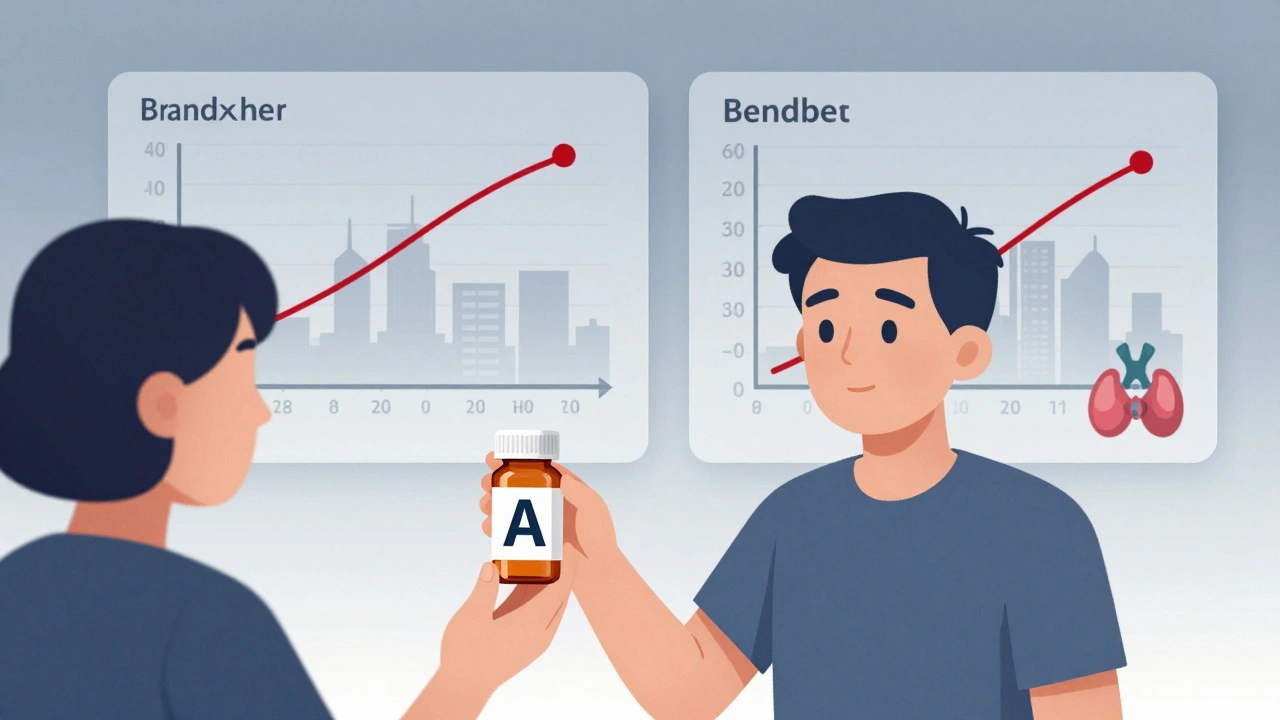
Narrow therapeutic index (NTI) drugs are another gray zone. These are medications where even a small change in blood level can cause serious harm. Warfarin (a blood thinner), levothyroxine (for thyroid), and some seizure medications fall into this category. While most TE-rated generics for these drugs are safe, some patients report feeling different after a switch-even when labs show no change. That’s why many doctors still write ‘Dispense as Written’ on prescriptions for these drugs, even if the generic has an ‘A’ rating.
How Pharmacists Use TE Codes Every Day
For pharmacists, TE Codes are a daily tool-not a theory. When a prescription comes in, they check the Orange Book (either online or through their pharmacy software like Epic or Cerner) to see the TE rating. If it’s ‘A’, they substitute. If it’s ‘B’, they don’t. It takes about 30 seconds. According to a 2022 survey by the National Community Pharmacists Association, 91% of pharmacists have high confidence in TE-rated substitutions.
Pharmacy students learn TE Codes in school. By the time they take the NAPLEX licensing exam, 98% can correctly interpret them. And the system works: 97% of hospitals use TE Codes to guide therapeutic interchange programs. Pharmacy benefit managers (PBMs) rely on them to build formularies that push patients toward the cheapest, safest options.
There are occasional hiccups. Sometimes a new generic gets approved, but the state’s formulary hasn’t updated yet. That happened in 3.2% of cases in 2022. Or a patient swears their new generic makes them feel weird-even though their blood levels are fine. That’s where communication matters. Pharmacists are trained to listen, explain, and, if needed, call the doctor to discuss alternatives.
What Patients Should Know
Most patients never think about TE Codes-until they get a different-looking pill. If you’ve been on the same medication for years and suddenly get a new generic, it’s normal to feel uneasy. But here’s the truth: if it has an ‘A’ rating, it’s been rigorously tested. You’re not getting a lower-quality product. You’re getting the same medicine, just cheaper.
That said, if you notice a change in how you feel-new side effects, less energy, worse symptoms-don’t ignore it. Talk to your pharmacist or doctor. Sometimes, switching between two TE-rated generics can still cause issues, especially with NTI drugs. Your body might respond differently to one manufacturer’s version over another, even if both meet FDA standards.
For common conditions like high blood pressure, diabetes, or high cholesterol, switching to a TE-rated generic is almost always safe and smart. GoodRx data shows a 4.7/5 patient satisfaction rating for TE-rated generics in chronic disease management. For complex drugs, ask questions. Don’t assume all generics are the same.

The Bigger Picture: Cost, Access, and the Future
TE Codes aren’t just about pills and codes. They’re about access. Since 1995, they’ve saved the U.S. healthcare system over $2.2 trillion, according to former FDA Director Dr. Janet Woodcock. Without them, many people couldn’t afford their meds. That’s why 90.1% of prescriptions in the U.S. are now filled with generics.
The FDA is working to improve the system. In 2022, they released new guidance to standardize how TE ratings are assigned, especially for complex products. A pilot program is now testing whether real-world patient data can help refine evaluations. And by 2024, they plan to extend TE Codes to biosimilars-biologic drugs that are even more complex than traditional generics.
By 2027, experts predict TE-rated generics will make up 93.4% of all prescriptions. That’s not just a number-it means more people can get the care they need without choosing between medicine and rent.
Frequently Asked Questions
What does an ‘A’ rating mean on a TE Code?
An ‘A’ rating means the generic drug is therapeutically equivalent to the brand-name version. It has the same active ingredient, strength, dosage form, and route of administration, and it’s been proven through clinical studies to be absorbed the same way and produce the same therapeutic effect. Pharmacists can legally substitute it without needing a new prescription.
Can I ask my pharmacist to give me the brand-name drug even if a generic is available?
Yes. Even if a generic has an ‘A’ rating, you can request the brand-name drug. Your pharmacist must honor your request, though you may pay more out of pocket. Some insurance plans will still cover the brand if you pay the difference in cost. Always check with your insurer first.
Why do some generic drugs still have a ‘B’ rating?
A ‘B’ rating means the FDA has determined the generic is not therapeutically equivalent to the brand. This usually happens when the generic doesn’t meet bioequivalence standards, or when there are unresolved concerns about formulation differences-like with some inhalers or topical products. In these cases, substitution is not allowed without a prescriber’s approval.
Are all generic drugs reviewed by the FDA for therapeutic equivalence?
No. Only generics approved under the Abbreviated New Drug Application (ANDA) pathway are evaluated for TE ratings. Some generics, especially those made for single-source drugs or imported from overseas, may not be reviewed or approved by the FDA at all. Always check the Orange Book to confirm a generic has a TE rating before assuming it’s interchangeable.
How can I check a drug’s TE Code myself?
Go to the FDA’s online Orange Book database at fda.gov/orangebook. Search by the brand name or generic ingredient. The results will show the TE Code next to each approved product. Many pharmacy apps and websites like GoodRx and Drugs.com also display TE ratings for common medications.
Next Steps for Patients and Caregivers
If you’re on a long-term medication, take a moment to check if you’re on a brand or a generic. Look at your pill bottle or receipt. If it’s a generic, see if it has an ‘A’ rating. You can search the FDA’s Orange Book or ask your pharmacist.
If you’ve switched generics and noticed changes in how you feel-fatigue, dizziness, mood shifts, or worsening symptoms-don’t brush it off. Write down what changed and when. Bring it to your doctor or pharmacist. Sometimes, switching back to the original brand or trying a different generic manufacturer can help.
For chronic conditions like diabetes, high blood pressure, or thyroid disease, sticking with a TE-rated generic is usually the safest, most affordable choice. But if you’re on a narrow therapeutic index drug, stay informed. Ask your doctor if you should avoid switching between generics-even if they’re both rated ‘A’.
Therapeutic Equivalence Codes are one of the quietest success stories in modern medicine. They don’t make headlines. But they’re the reason millions of people can afford their meds. And they’re still evolving-to make sure that safety and savings keep going hand in hand.
Lara Tobin
December 13, 2025 AT 17:08I switched my levothyroxine last year and felt like a zombie for two weeks. Turns out, different generics hit me differently-even with an 'A' rating. My pharmacist said it's normal, but no one warned me.
Thank god I spoke up. 🙏
Keasha Trawick
December 14, 2025 AT 16:10TE codes are the unsung heroes of pharmacoeconomics-bioequivalence thresholds of 80–125% Cmax/AUC? That’s not just science, it’s a regulatory ballet. And yet, we treat these codes like barcodes. The FDA’s Orange Book is the Bible, but nobody reads the footnotes. Especially when your insurer forces a switch and you start hallucinating because your new generic has a different filler that’s triggering your histamine sensitivity. 😳
Bruno Janssen
December 16, 2025 AT 03:12They say generics save billions. But what about the billions in lost productivity when people feel off after a switch? I’ve been on the same blood pressure med for 12 years. They swapped it. Now I’m dizzy at 3 p.m. every day. Nobody cares. Just another cog in the machine.
Scott Butler
December 16, 2025 AT 22:35Why are we letting foreign factories make our meds? I don’t care if it’s 'A' rated-if it’s made in India or China, it’s a gamble. We used to make our drugs here. Now we’re trusting a lab with no OSHA oversight to get the particle size right? This isn’t progress. It’s surrender.
Deborah Andrich
December 18, 2025 AT 12:19If you feel different after a generic switch, you’re not crazy. It’s not all in your head. Your body remembers. Talk to your pharmacist. Ask for the manufacturer name. Write it down. You have a right to consistency. And if your doctor dismisses you? Find a new one. You’re not a number. Your health isn’t a cost center.
Period.
Richard Ayres
December 18, 2025 AT 20:24It's worth noting that the therapeutic equivalence framework has undergone significant refinement since its inception in 1984. The FDA's current guidance emphasizes not only pharmacokinetic parameters but also post-marketing surveillance data. This evolution reflects a growing recognition that real-world outcomes sometimes diverge from clinical trial metrics, particularly with complex formulations. The system is not perfect, but it is adaptive.
Rawlson King
December 18, 2025 AT 22:12Canada doesn’t use TE codes the same way. We have a different classification system-therapeutic interchange is more conservative. You don’t just swap pills because a database says so. We actually monitor outcomes. Maybe we should stop copying the U.S. and start thinking for ourselves.
Tyrone Marshall
December 19, 2025 AT 18:58Think of TE codes like a driver’s license for generics. Just because you have one doesn’t mean you’re ready for a snowstorm. Some people handle levothyroxine switches fine. Others? They crash. The system works for most. But for those of us who are sensitive? We need more nuance. Not just A or B. Maybe A1, A2, A3. Some manufacturers are just… better.
Emily Haworth
December 21, 2025 AT 08:50EVERY GENERIC IS A LAB EXPERIMENT ON YOU. 😱 The FDA doesn’t test every batch. They test ONE. And then they let 10 million bottles go out. What if the filler in your pill has trace heavy metals? What if the coating dissolves differently in your stomach? You think they care? They’re making money. You’re the test subject. 🧪
Tom Zerkoff
December 22, 2025 AT 05:20The Therapeutic Equivalence Code system is a robust, evidence-based regulatory mechanism that enables cost-effective access to essential pharmaceuticals while maintaining clinically validated standards of bioequivalence. The FDA’s adherence to rigorous statistical thresholds for Cmax and AUC, coupled with post-market surveillance, ensures that substitution remains a safe, scalable public health intervention. Any anecdotal reports of adverse effects should be documented and submitted to MedWatch for further evaluation.
Yatendra S
December 23, 2025 AT 19:53TE codes are just another way capitalism hides behind science. You think the FDA cares about your thyroid? No. They care about profit margins. The real question: Who owns the patent on the filler? Who profits when you switch? The answer is never in the Orange Book. 🤔
Himmat Singh
December 25, 2025 AT 06:38It is a fallacy to assume that bioequivalence implies therapeutic equivalence. The statistical criteria employed-80–125% confidence interval-are mathematically permissible yet clinically inadequate for drugs with narrow therapeutic indices. The current paradigm is statistically valid but pharmacologically naive. A reevaluation of the regulatory framework is not only warranted but ethically imperative.
kevin moranga
December 26, 2025 AT 21:55Man, I used to hate generics until I got on them for my cholesterol. Saved me $200 a month. My doctor said, ‘If it’s got an A, it’s the same stuff.’ And honestly? I feel better now-I’m not stressed about the cost. I used to skip doses. Now I take them every day. That’s the real win. Don’t let fear stop you from saving money on meds. Your bank account will thank you. 🙌
Alvin Montanez
December 28, 2025 AT 12:32People complain about generics because they’re too lazy to read the label. If you don’t like your new pill, look at the manufacturer. Switch back to the one you liked. It’s not the system’s fault-it’s your own failure to track which version works for you. You want consistency? Be consistent. Don’t blame the FDA because you didn’t write down the name on your bottle.
Webster Bull
December 29, 2025 AT 16:41A rating = same drug, different wrapper. If you feel weird? Try a different brand. Don’t suffer. Your body’s not broken-it’s just picky. Pharmacist can help. Just ask. 💪