
Statin-Related Liver Problems: Elevation of Liver Enzymes Explained
 Aug, 28 2026
Statin Liver Enzyme Risk & Action Checker
This tool estimates your enzyme level relative to the upper limit of normal (ULN) and applies current monitoring guidance. It is educational and not a substitute for medical advice.
Statin Liver-Risk Comparison
Before Blaming the Statin
- • Fatty liver (NAFLD) accounts for ~45% of elevated LFTs — and statins often help it.
- • Alcohol use (~19%) and recent intense exercise can raise these numbers.
- • Drug interactions (e.g. clarithromycin + atorvastatin) increase elevation risk.
- • A high AST may reflect muscle injury, not the liver.
Getting a call from your doctor saying your liver numbers are up can be terrifying. If you're on a statin for cholesterol, it's easy to assume the medication is the culprit. But here’s the reality check: while statins can raise liver enzymes, serious liver damage is incredibly rare. The bigger issue isn't usually the drug itself-it's the unnecessary panic that leads people to stop taking a medication that saves their lives.
Statin-induced liver injury is a condition where serum aminotransferases, specifically alanine aminotransferase (ALT) and aspartate aminotransferase (AST), rise above normal levels due to statin therapy. This article breaks down what those numbers actually mean, when you should worry, and how modern guidelines have changed the way we monitor this risk. We’ll look at the data behind the fear and give you a clear path forward if your results come back elevated.
The Real Risk: Numbers vs. Fear
Let’s put the statistics in perspective. For decades, patients were told to get routine liver function tests (LFTs) every six months. That practice created a culture of anxiety. Today, the U.S. Food and Drug Administration (FDA) notes that significant liver injury from statins occurs in only about 0.5% to 2.0% of patients. Severe hepatotoxicity? Less than 0.01%. To put that in context, the risk of liver injury from statins is roughly similar to the background risk in people not taking any medication at all.
Why did we change course? A massive analysis of 20 million patient-years of data showed only 32 confirmed cases of statin-induced acute liver failure between 1990 and 2020. That’s an incidence of 0.00016 cases per 1,000 patient-years. Despite this, surveys show that nearly 22% of statin users have stopped their medication at least once due to liver concerns. Often, these stops happen over minor enzyme bumps that would never require stopping other medications.
| Metric / Factor | Old Guidelines (Pre-2012) | Current FDA/AHA Standards |
|---|---|---|
| Routine LFT Frequency | Every 6 months | Baseline only; retest only if symptomatic or baseline was high |
| Threshold for Action | Any elevation noted | >3x Upper Limit of Normal (ULN) |
| Estimated Serious Injury Rate | Perceived as common | <0.01% (Acute Failure) |
| Primary Pattern of Injury | Unclear/Mixed | Hepatocellular (70-85% of cases) |
Understanding Your Lab Results: What Do ALT and AST Mean?
When your lab report comes back, you’ll likely see two main values: ALT and AST. These are enzymes found inside liver cells. When liver cells are stressed or damaged, they leak these enzymes into the bloodstream. Alanine aminotransferase (ALT) is more specific to the liver, while Aspartate aminotransferase (AST) can also come from muscle or heart tissue.
Doctors use the "Upper Limit of Normal" (ULN) as a benchmark. Here is how to interpret the levels:
- 1x to 3x ULN: Mild elevation. Usually not a reason to stop statins. This range is often seen with fatty liver disease, alcohol consumption, or even recent intense exercise. Current guidelines suggest continuing the statin and retesting in 4-6 weeks.
- >3x ULN: Significant elevation. This is the threshold where doctors typically pause the medication to investigate further. It happens in less than 2% of patients.
It is crucial to remember that an isolated bump in ALT does not equal liver failure. In fact, studies from the Veterans Affairs Healthcare System found that up to 18.7% of statin discontinuations were due to these isolated elevations without any actual clinical symptoms. Stopping the drug in these cases often removes the cardiovascular protection you need most.
Why Do Statins Affect the Liver? The Mechanism
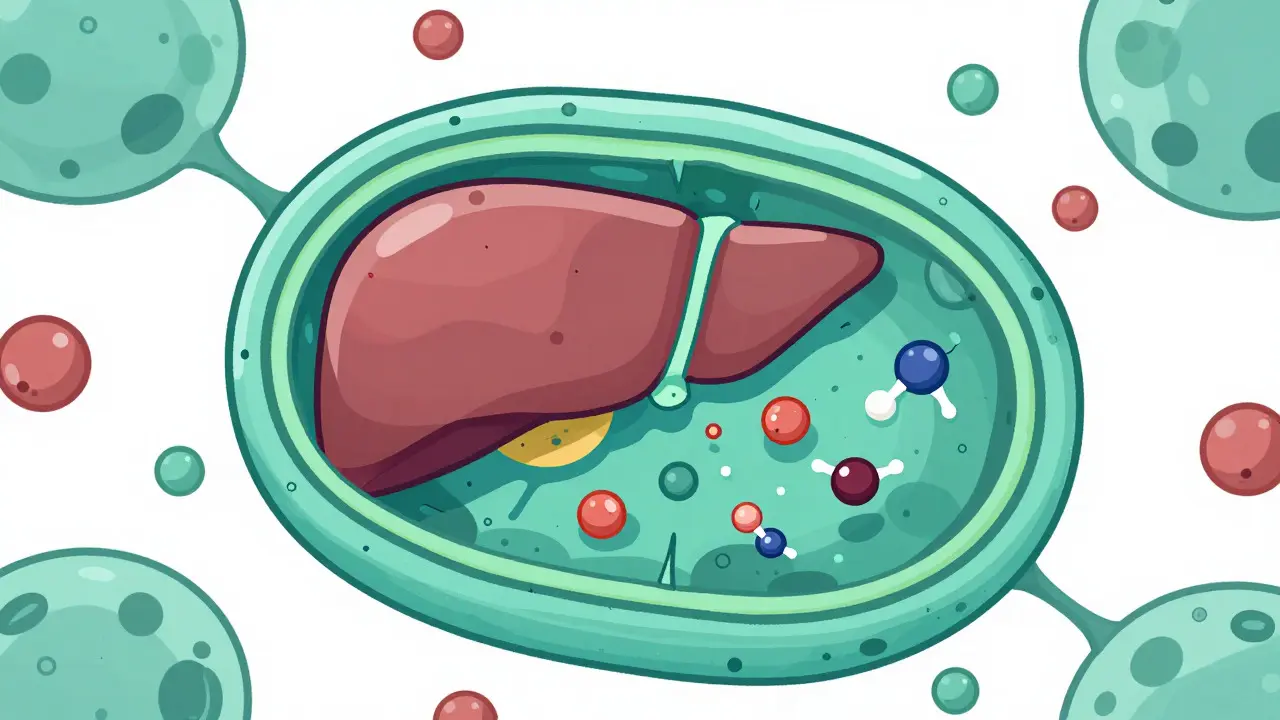
You might wonder how a drug that lowers cholesterol impacts the liver. It’s largely about metabolism. Most statins are processed by the liver using enzymes like CYP3A4. This process creates metabolic byproducts that can sometimes stress liver cells. The mechanism involves mitochondrial damage-specifically, a reduction in membrane potential and increased production of reactive oxygen species (ROS).
Not all statins are created equal in this regard. Lipophilic statins, such as simvastatin and lovastatin, tend to produce slightly higher levels of oxidative stress in liver cells compared to hydrophilic statins like pravastatin and rosuvastatin. However, the difference in real-world clinical outcomes is minimal. Genetic factors also play a role. Variants in the SLCO1B1 gene can make some people more sensitive to statin side effects, including both muscle pain and liver enzyme changes. If you have a family history of severe statin reactions, mention it to your doctor, as pharmacogenetic testing is becoming more available to identify these risks.
Common Misconceptions and Hidden Causes
Before blaming the statin, consider what else might be raising your enzymes. In many cases, the statin is innocent. A review of cases with elevated LFTs found that nonalcoholic fatty liver disease (NAFLD) accounted for 45.3% of the causes, alcohol use disorder for 18.7%, and viral hepatitis for 4.2%. Here are three common traps to avoid:
- The Fatty Liver Paradox: Many people assume statins worsen fatty liver. Actually, statins are often beneficial for NAFLD. Patients with fatty liver show lower incidence rates of significant statin-related enzyme elevation (0.4%) compared to controls (0.9%).
- Drug Interactions: If you take antibiotics like clarithromycin or antifungals alongside a statin metabolized by CYP3A4 (like atorvastatin), the risk of enzyme elevation increases significantly. Always tell your pharmacist what else you’re taking.
- Recent Exercise or Trauma: Heavy weightlifting or muscle injury can spike AST. Since AST is present in muscle, a high value might reflect a torn bicep, not liver damage.
What To Do If Your Levels Are Elevated
If your doctor flags your liver enzymes, don’t panic. Follow this logical step-by-step approach:
- Check the Magnitude: Is it below 3x the upper limit? If yes, ask if you can continue the statin. Repeat the test in 4-6 weeks.
- Review Other Factors: Have you been drinking alcohol recently? Did you start a new supplement? Did you work out intensely before the blood draw?
- Consider Switching: If levels remain high or you are anxious, ask about switching to a different statin. Pravastatin, for example, has the lowest reported risk of >3x ULN elevations (0.3%) because it is not heavily metabolized by the CYP3A4 pathway.
- Don’t Stop Cold Turkey Without Advice: Unless you have signs of jaundice (yellow skin/eyes) or dark urine, sudden discontinuation usually isn't required for mild elevations. Stopping abruptly can cause your cholesterol to rebound, increasing your heart attack risk.
For most patients, the number needed to treat (NNT) for primary prevention is 39-meaning you protect 39 people from a major cardiac event to harm one person through liver issues. The math strongly favors staying on therapy, provided you monitor appropriately.
Frequently Asked Questions
Do I need regular liver function tests while on a statin?
Generally, no. The FDA removed the requirement for routine periodic monitoring in 2012. You should have a baseline test before starting. After that, testing is only recommended if you develop symptoms like fatigue, nausea, or yellowing of the skin, or if your baseline levels were already elevated.
Can statins cause permanent liver damage?
It is extremely rare. While transient enzyme elevations are common, permanent liver failure caused solely by statins is exceptionally uncommon. Data shows only 32 confirmed cases of acute liver failure across 20 million patient-years of use. Most enzyme elevations resolve completely when the dose is adjusted or the medication is switched.
Which statin is safest for the liver?
Pravastatin and rosuvastatin are generally considered to have a lower risk of significant enzyme elevation compared to lipophilic statins like simvastatin or lovastatin. Pravastatin, in particular, has the lowest reported incidence of elevations greater than three times the upper limit of normal. However, individual response varies based on genetics and other health conditions.
Should I stop my statin if my ALT is slightly high?
If your ALT is less than three times the upper limit of normal and you have no symptoms, current guidelines suggest continuing the statin. Recheck the level in 4-6 weeks. Stopping prematurely exposes you to cardiovascular risk. Only pause the medication if levels exceed 3x ULN or if you experience classic signs of liver distress.
Does having fatty liver disease make statins dangerous?
No. In fact, statins are often prescribed for patients with nonalcoholic fatty liver disease (NAFLD). Studies show that patients with NAFLD have a lower rate of significant statin-related liver enzyme issues compared to those without the condition. The cardiovascular benefits of lowering cholesterol usually outweigh the theoretical liver risks in this population.