
Sedative-Hypnotics: Benzodiazepines vs. Non-Benzodiazepines for Sleep
 Mar, 13 2026
When sleep pills stop working - and start hurting
You’ve tried counting sheep. You’ve cut out caffeine after noon. You’ve even tried melatonin. But nothing helps. So your doctor gives you a prescription - maybe benzodiazepines like lorazepam, or a non-benzodiazepine like zolpidem (Ambien). It works. For a while.
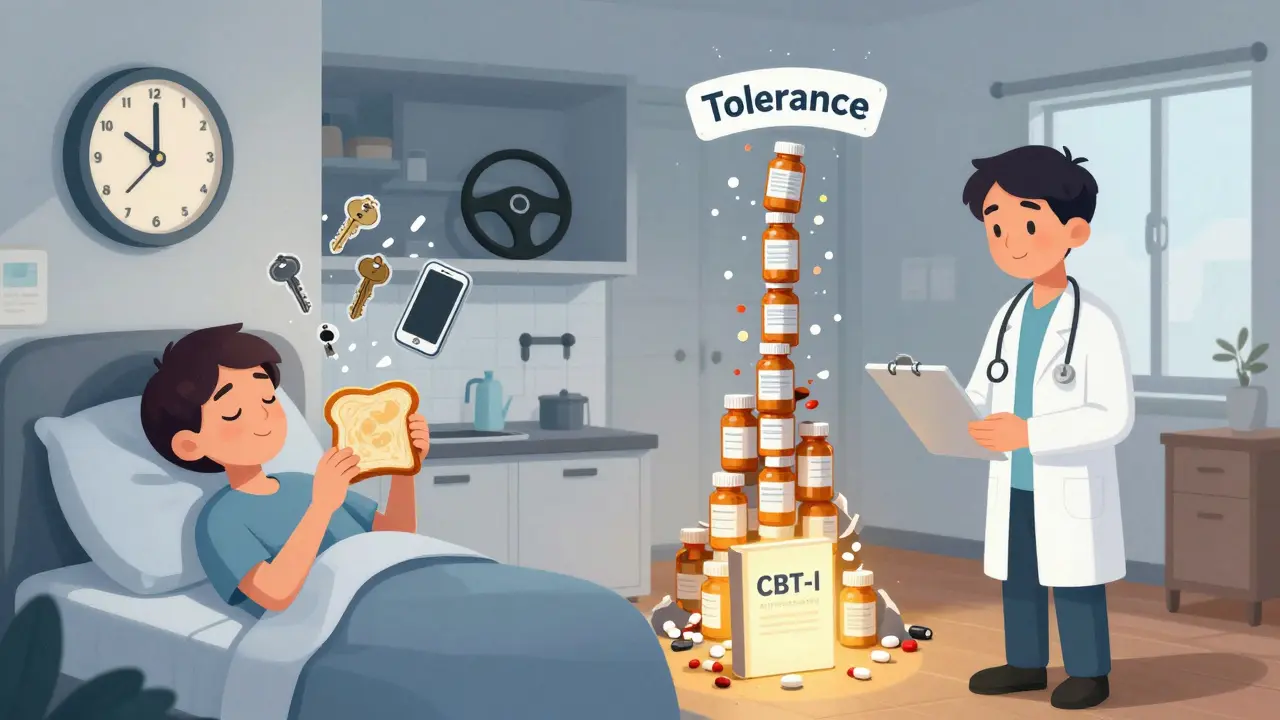
Then you wake up groggy. Your memory feels fuzzy. You almost crashed your car because you didn’t remember driving home. Or worse - you find yourself in the kitchen at 3 a.m., making toast, with no idea how you got there.
This isn’t rare. In 2022, over 6 million Americans were prescribed non-benzodiazepine sleep pills, and nearly 4 million got benzodiazepines. But here’s the truth most doctors won’t say out loud: these drugs don’t fix insomnia. They mask it - and often make it worse over time.
What’s the difference between benzodiazepines and non-benzodiazepines?
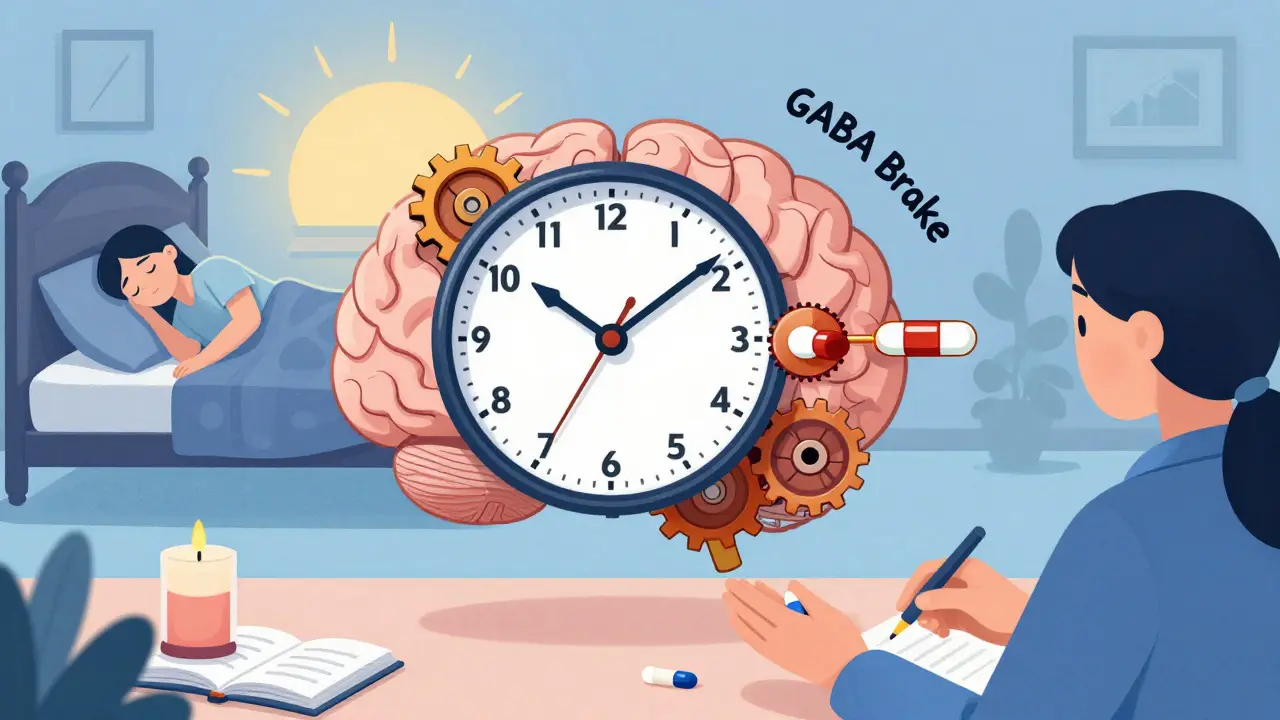
Both classes work on the same brain system: GABA, the chemical that slows down your nervous system. Think of GABA as your brain’s brake pedal. Sedative-hypnotics press it harder, making you drowsy, calm, or unconscious.
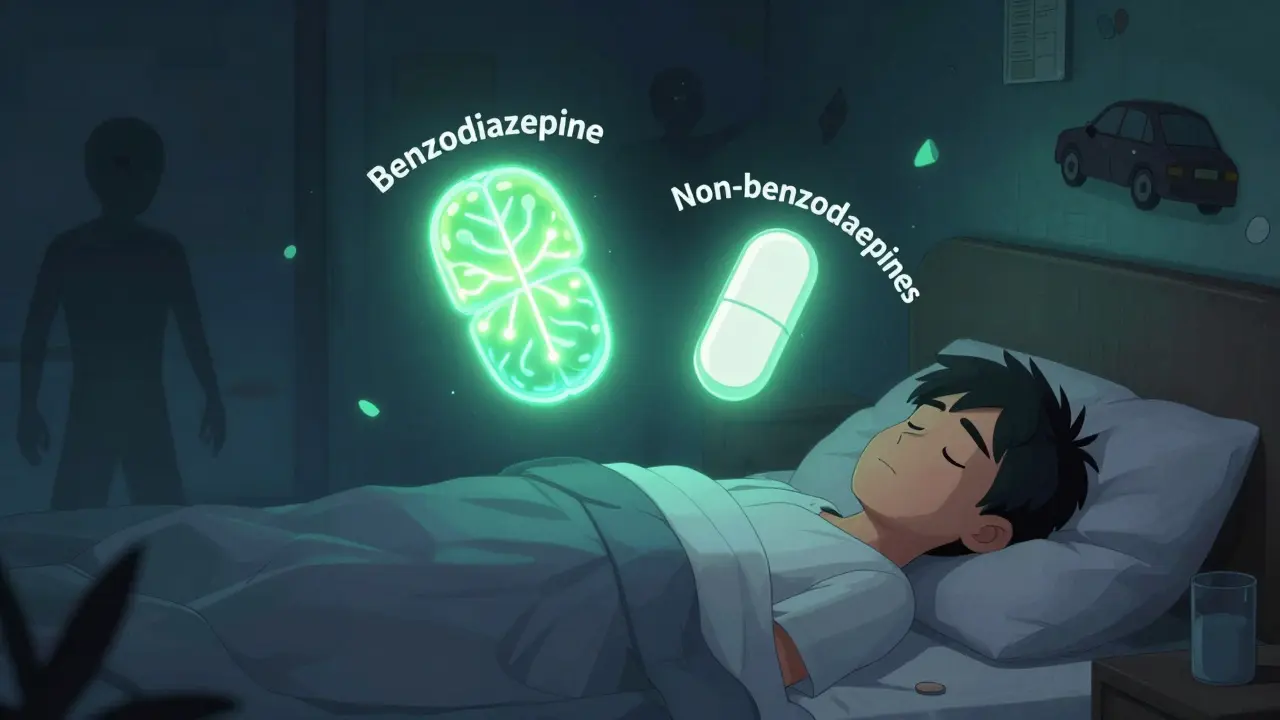
Benzodiazepines are the older class - developed in the 1950s and 60s. They include drugs like diazepam (Valium), alprazolam (Xanax), temazepam (Restoril), and triazolam (Halcion). They bind to multiple parts of the GABA receptor, which means they affect not just sleep, but also anxiety, muscle tension, and seizures. That’s why they’re used for panic attacks and epilepsy - but also why they’re so risky for sleep alone.
Non-benzodiazepines (or Z-drugs) came later - zolpidem (Ambien), eszopiclone (Lunesta), and zaleplon (Sonata) - designed to target just one part of the GABA receptor (the omega-1 site) to focus on sleep without the broad effects. They were marketed as "safer," "targeted," and "less addictive." But the science says otherwise.
Do they really work better than each other?
For short-term relief? Maybe. But if you’re looking for a long-term fix, neither delivers.
Studies show both classes improve sleep onset - meaning you fall asleep faster - for the first few nights. But after 2-4 weeks, the brain adapts. The pills lose their power. That’s called tolerance. You need more. Or you switch. Or you double up. And that’s when things go sideways.
Here’s what the data says about effectiveness:
- After 8 weeks of intermittent use, zolpidem showed no improvement in daytime function, energy, or mood - even though users thought they slept better.
- People on benzodiazepines often report longer-lasting sleep, but they wake up feeling drugged, not rested.
- One study found that 34% of users experienced daytime drowsiness severe enough to hurt work performance.
Neither class improves sleep quality. They just make you unconscious faster. And when you wake up, your brain hasn’t gone through the full cycle - deep sleep, REM, restoration. You’re not refreshed. You’re just less awake.
The hidden dangers: memory, falls, and next-day impairment
Let’s talk about the risks - the ones that aren’t on the pill bottle.
The VA Academic Detailing Service (2023) laid it out plainly: people taking sedative-hypnotics face a 5-fold higher risk of memory and concentration problems, a 4-fold increase in daytime fatigue, and a 2-fold increase in falls and fractures. That’s not a small risk. That’s a life-changing one.
For older adults - especially those over 65 - the numbers are even scarier:
- Benzodiazepines: 2.3 times higher risk of hip fracture.
- Non-benzodiazepines: 1.8 times higher risk.
Why? These drugs don’t just make you sleepy. They blur your vision, slow your reaction time, and mess with your balance. You don’t need to be drunk to fall. Just taking a sleep pill can be enough.
And it’s not just falls. People on zolpidem have been reported driving while asleep - 66% of all FDA-recorded sleep-driving incidents involved Ambien between 2005 and 2010. Others have cooked meals, made phone calls, or even had sex - with no memory of it the next day.
These aren’t myths. They’re documented medical events. And they happen more often than you think.
Withdrawal: The invisible trap
Here’s the cruel twist: the longer you take these drugs, the harder they are to quit.
Benzodiazepines are notorious for severe withdrawal. Stop them suddenly after a few months, and you can get:
- Panic attacks
- Seizures
- Insomnia worse than before
- Hallucinations
- Heart palpitations
One Reddit user described quitting temazepam after 8 months: “I had panic attacks for three weeks straight. I thought I was dying.”
Non-benzodiazepines seem gentler - but they’re not harmless. Withdrawal can still cause rebound insomnia, anxiety, and tremors. And because they’re often prescribed for short-term use, many people don’t realize they’re dependent until they try to stop.
And here’s the kicker: the withdrawal symptoms can last for months. Your brain doesn’t snap back. It relearns how to sleep without chemicals - and that takes time.
Why are prescriptions still so common?
Despite all this, doctors still write millions of these prescriptions every year. Why?
- It’s easy. Writing a script takes 30 seconds. Counseling on sleep hygiene takes 30 minutes.
- Patients ask for it. When you’re exhausted, you want a quick fix.
- Marketing worked. Z-drugs were sold as "next-generation," "safer," and "non-addictive." They weren’t.
But things are changing. The American Academy of Sleep Medicine now says cognitive behavioral therapy for insomnia (CBT-I) should be the first-line treatment. Not pills. Not supplements. Therapy.
CBT-I works by changing how you think about sleep. It teaches you how to break the cycle of anxiety around bedtime, reset your internal clock, and stop relying on pills. Studies show it’s more effective than any medication - and lasts longer.
And new drugs are coming. Orexin receptor antagonists like suvorexant (Belsomra) and lemborexant (Dayvigo) target a different brain pathway - one that regulates wakefulness, not sleep. Early data shows they cause 30-40% less next-day drowsiness than traditional hypnotics.
What should you do if you’re on one of these drugs?
If you’re currently taking a benzodiazepine or non-benzodiazepine for sleep, here’s what to do - step by step:
- Don’t stop cold. Sudden withdrawal can be dangerous. Talk to your doctor.
- Track your sleep. Use a journal: When do you go to bed? How long does it take? Do you wake up? How do you feel in the morning?
- Start CBT-I. Look for a certified sleep therapist. Many online programs exist - some covered by insurance.
- Reduce alcohol. Even one drink doubles the sedative effect. That’s when breathing slows dangerously.
- Optimize your environment. Cool room. No screens 90 minutes before bed. Consistent wake-up time - even on weekends.
- Slow taper. For benzodiazepines, reduce by 10% every 1-2 weeks. For Z-drugs, try cutting the dose in half for 2-4 weeks before stopping.
It’s not easy. But it’s safer than staying on the pills.
The bottom line: pills don’t cure insomnia - they delay the real fix
Sedative-hypnotics are not sleep solutions. They’re temporary patches on a broken system.
Benzodiazepines and non-benzodiazepines might help you fall asleep tonight. But tomorrow? The next week? The next year? They steal your memory, your balance, your safety - and they leave your insomnia unchanged.
The real cure isn’t in a pill bottle. It’s in your routine, your thoughts, and your bedtime habits. And yes - it takes work. But it’s the only way to get your sleep back - without losing yourself in the process.
Are non-benzodiazepines safer than benzodiazepines?
No - not really. While non-benzodiazepines (Z-drugs) were designed to be more targeted and have fewer side effects, studies show they carry nearly the same risks: memory loss, daytime drowsiness, falls, and dependence. They may cause fewer withdrawal symptoms, but they still lead to tolerance, rebound insomnia, and dangerous behaviors like sleep-driving. Neither class is truly safer - both should be used only for very short periods.
Can I take these drugs for more than a few weeks?
Clinical guidelines from the American Academy of Sleep Medicine and the VA strongly advise against long-term use. Even 4-6 weeks of continuous use increases the risk of cognitive decline, falls, and addiction. Tolerance builds quickly, meaning you’ll need higher doses over time - which makes side effects worse. The longer you use them, the harder they are to quit.
Why do I feel more tired during the day after taking a sleep pill?
Sleep medications don’t replicate natural sleep. They induce unconsciousness, but your brain doesn’t go through the full sleep cycles - especially deep and REM sleep - that restore energy and memory. This leaves you in a state of residual sedation. Many people report feeling foggy, sluggish, or uncoordinated the next day - even if they don’t remember being sleepy.
What are the alternatives to sleep medication?
The most effective alternative is Cognitive Behavioral Therapy for Insomnia (CBT-I). It’s proven to work better than pills in the long term and has no side effects. Other helpful strategies include maintaining a consistent sleep schedule, avoiding screens before bed, keeping your bedroom cool and dark, reducing caffeine and alcohol, and practicing relaxation techniques like diaphragmatic breathing or mindfulness meditation.
Is it safe to mix sleep pills with alcohol?
No - never. Alcohol and sedative-hypnotics both depress the central nervous system. Together, they can dangerously slow your breathing, cause loss of consciousness, or even lead to respiratory arrest. Even one drink can triple the risk of overdose. This combination is a leading cause of accidental death among people using these medications.
Do these drugs cause addiction?
Yes. Both benzodiazepines and non-benzodiazepines can lead to physical dependence. Your brain adapts to their presence, so when you stop, it struggles to function normally. Many people continue taking them not because they help - but because they fear the withdrawal symptoms. This is addiction, even if you’re not seeking a "high." Benzodiazepines carry a higher risk of severe withdrawal, but Z-drugs like Ambien are also addictive. The FDA has issued black box warnings for both classes due to dependence and abuse potential.
Sally Lloyd
March 15, 2026 AT 05:53They’re not just hiding insomnia-they’re covering up the real problem: corporate greed and pharmaceutical lobbying. The FDA knows this. The AMA knows this. But they let it continue because Big Pharma pays for their conferences, their research, their lives. I’ve seen the documents. They’ve been suppressing CBT-I funding for decades. You think this is about health? It’s about profit. And you’re being dosed like cattle.
Emma Deasy
March 16, 2026 AT 08:41Oh. My. God. I cannot BELIEVE how many people are still blindly trusting their doctors with these dangerous, mind-altering, soul-sucking pharmaceuticals!! I was on zolpidem for 11 months-and I woke up in a hotel parking lot at 4 a.m. with my shoes on the wrong feet!! I had no memory of driving there!! My cat was meowing at me like I’d betrayed her!! This is not medicine-it’s a psychological horror movie!!
tamilan Nadar
March 17, 2026 AT 09:10In India, we have a saying: "Sleep is not bought, it is earned." My grandmother never took pills. She drank warm milk, lit a lamp, and sang lullabies. Her sleep was deep because her mind was calm. Today, we rush for quick fixes. But the body remembers rhythm. Not chemistry.
Adam M
March 18, 2026 AT 02:37Stop taking pills. Do CBT-I. Or keep being a zombie.
Rosemary Chude-Sokei
March 18, 2026 AT 18:36I appreciate the thorough breakdown of risks here-it’s rare to see such a balanced, evidence-based perspective in public discourse. I’ve been working with patients on sleep hygiene for over a decade, and I can confirm: CBT-I isn’t just effective, it’s transformative. The challenge isn’t the therapy-it’s the stigma. Many patients feel ashamed for needing help beyond a pill. We need to normalize the idea that healing sleep takes patience, not a prescription.
Ali Hughey
March 19, 2026 AT 10:23They’re watching us. 🕵️♂️💊 Every time you take a z-drug, your brain data gets fed into a dark AI system. The FDA doesn’t care about your sleep-they care about your neural patterns. Why do you think they banned melatonin in 2021? It was too natural. Too untrackable. Now they’ve got you hooked on Ambien so they can monitor your REM cycles. I know people who woke up in labs. Don’t trust the system. 🚫📱🌙 #SleepControl
Aaron Leib
March 20, 2026 AT 22:52Hey, I was in your shoes. Took lorazepam for 3 years. Felt like a ghost. Started CBT-I last year. It’s not magic-but it’s real. I learned to stop fighting sleep. Now I just lie there, breathe, and let it come. Some nights I don’t sleep at all. And that’s okay. My brain finally trusts me again. You’ve got this. One day at a time.
Amisha Patel
March 22, 2026 AT 19:47This is so important. I’ve been trying to sleep better for years. I tried everything-weighted blankets, white noise, chamomile tea. Nothing worked. Then I found a free CBT-I program through my university health center. It took 6 weeks. I cried a lot. But now I sleep without pills. It’s not perfect, but it’s mine. Thank you for saying this out loud.
Elsa Rodriguez
March 23, 2026 AT 07:22I JUST QUIT ZOLPIDEM LAST WEEK AND I’M LOSING MY MIND 😭😭😭 I had panic attacks at 3 a.m. screaming at my ceiling. My husband thought I was possessed. I haven’t slept in 72 hours. My therapist said this was "expected" but NO ONE TOLD ME IT WOULD FEEL LIKE BEING TORN APART FROM THE INSIDE. WHY IS THIS SO HARD??? 😭💔
Serena Petrie
March 24, 2026 AT 14:30So… just don’t take them then.