
Risks Associated with Any Medication or Dietary Supplement
 Aug, 7 2026
There is a dangerous myth floating around that if something comes from a plant or a bottle labeled "natural," it must be safe. You might grab a multivitamin or an herbal remedy without giving it a second thought, assuming the worst-case scenario is just some extra energy. But here is the hard truth: your body does not distinguish between a synthetic pill and a natural extract when it comes to chemical reactions. Both medications and dietary supplements are products containing vitamins, minerals, herbs, amino acids, or other substances intended to supplement the diet carry significant health risks that are often underestimated.
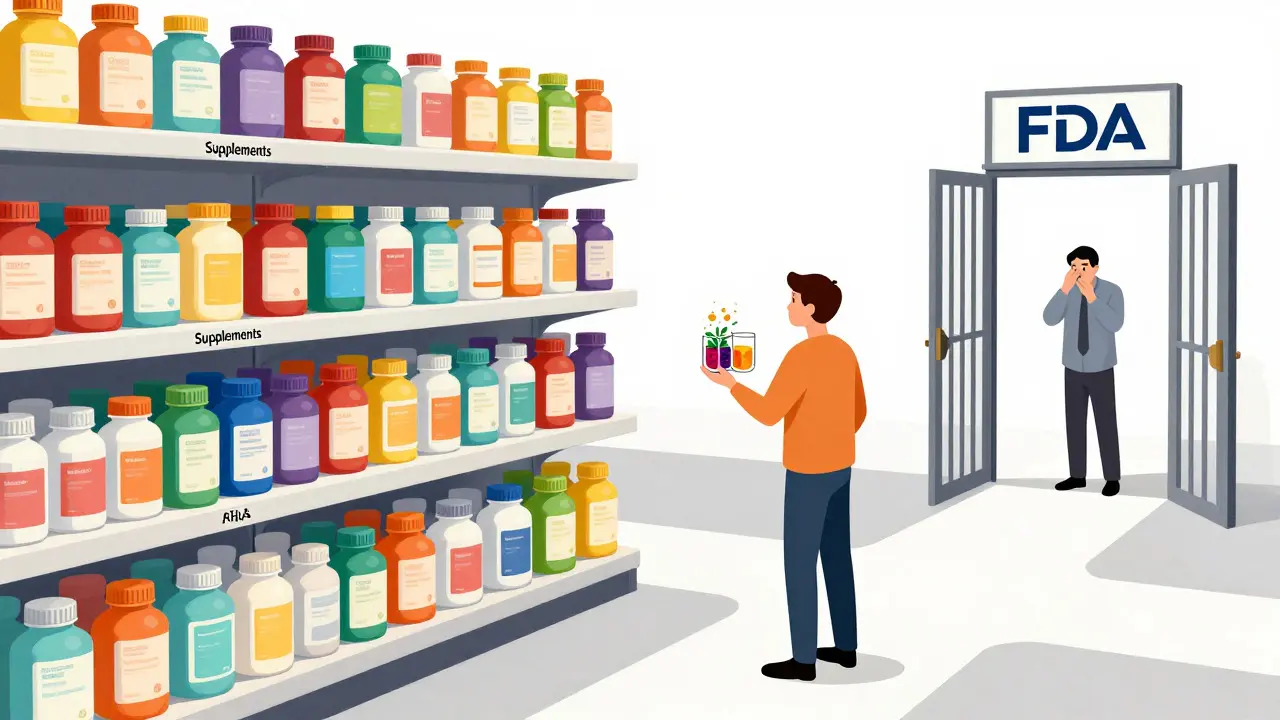
The difference lies in how they are regulated. Prescription drugs undergo years of rigorous testing to prove they are safe and effective before you can buy them. Supplements? Not so much. Under the Dietary Supplement Health and Education Act (DSHEA) of 1994, regulatory oversight established for dietary supplements in the United States, these products are regulated as food, not drugs. This means manufacturers do not need to prove effectiveness to the U.S. Food and Drug Administration (FDA) before selling them. They only have to step in if something goes wrong-and even then, the process is slow. By the time a dangerous supplement is banned, thousands of people may have already been harmed.
Why Natural Doesn't Mean Safe
Let’s look at the numbers. A study published in the New England Journal of Medicine found that approximately 23,000 emergency department visits in the U.S. each year are linked to dietary supplement adverse events. That is nearly 63 hospital visits every single day. The FDA receives about 5,000 adverse event reports annually, but experts believe this is just the tip of the iceberg because reporting is voluntary. If you take a supplement and feel sick, you might blame it on stress or a bad meal, never connecting the dots back to that green tea extract or vitamin E capsule you took earlier.
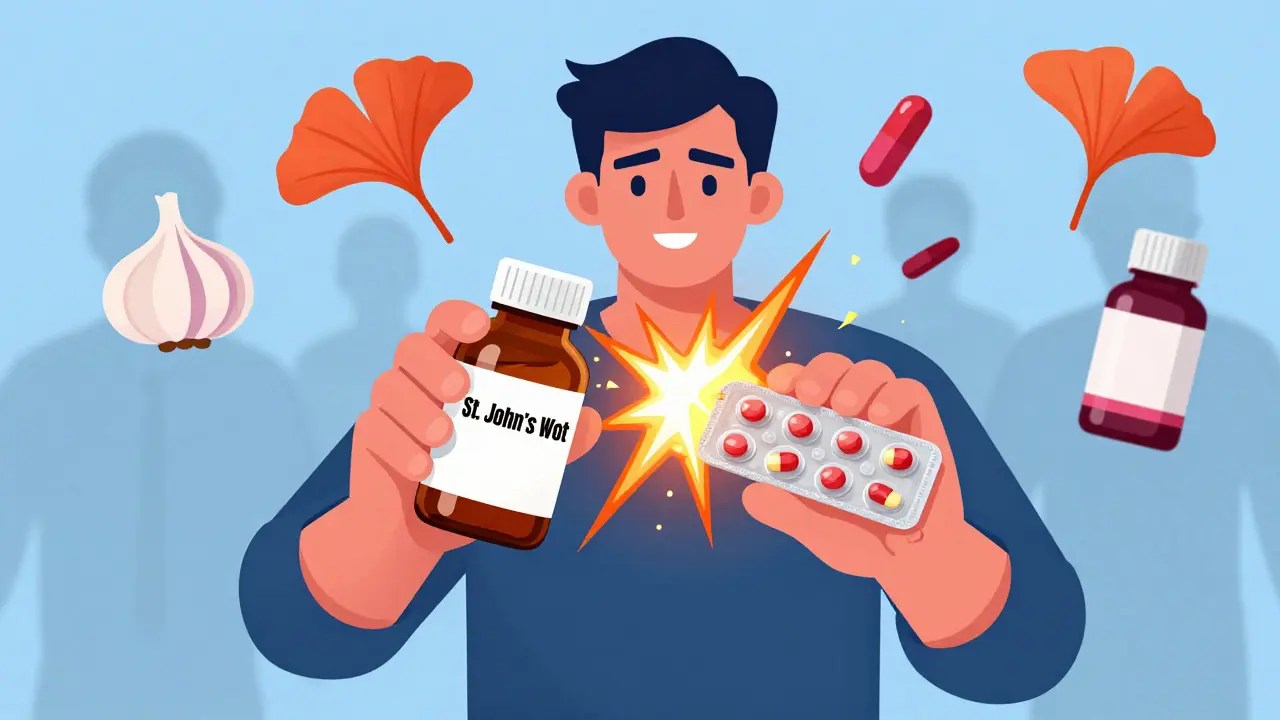
The risk isn’t just about the supplement itself; it’s about what happens when it meets other substances in your body. This is where pharmacokinetic and pharmacodynamic interactions come into play. In simple terms, one substance can change how your liver processes another, or they can fight each other for the same receptors in your cells. For example, St. John's wort is an herbal supplement commonly used for depression that interacts dangerously with many medications is notorious for speeding up the metabolism of other drugs. It can reduce the effectiveness of oral contraceptives by 13-15% and cut cyclosporine levels-a drug used to prevent organ transplant rejection-by up to 60%. If you are relying on birth control or immunosuppressants, St. John's wort doesn't just make them less effective; it can render them useless.
Dangerous Interactions with Common Medications
You don’t have to be on complex chemotherapy to face serious risks. Many common over-the-counter prescriptions interact badly with popular supplements. Consider blood thinners like warfarin. If you start taking high doses of vitamin K, garlic, ginkgo biloba, or fish oil, you can drastically alter your bleeding time. One case reported to the FDA involved a 68-year-old woman who suffered severe bleeding requiring hospitalization after combining ginkgo biloba with aspirin. Another man developed serotonin syndrome-a potentially life-threatening condition caused by too much serotonin in the brain-after mixing St. John's wort with his antidepressant, sertraline.
Even cancer patients are at risk. The American Cancer Society warns that antioxidants like vitamins C and E can actually protect cancer cells from the damage chemotherapy tries to inflict, reducing treatment effectiveness by 25-30% in some cases. Dr. Ryan T. Lee, a radiation oncologist at Memorial Sloan Kettering, notes that certain supplements can cause severe skin reactions during radiation therapy, delaying critical treatment by weeks. These aren't rare edge cases; they are documented realities that affect thousands of patients who think they are helping their bodies heal while accidentally sabotaging their medical care.
| Supplement | Interacting Medication | Potential Risk |
|---|---|---|
| St. John's Wort | Birth Control Pills, Antidepressants | Reduces drug effectiveness; causes serotonin syndrome |
| Vitamin K | Warfarin (Blood Thinner) | Increases risk of blood clots by reducing anticoagulant effect |
| Ginkgo Biloba / Garlic | Aspirin, Warfarin | Increases bleeding time by 20-30% |
| Vitamins C & E | Chemotherapy Agents | May reduce cancer cell death by 25-30% |
| Bitter Orange | Blood Pressure Medications | Can raise systolic blood pressure by 10-15 mmHg |
Toxicity: When More Is Less
We often think that vitamins are harmless because our bodies "need" them. But there is a massive difference between nutritional needs and toxic overload. Vitamin A is essential for vision and immune function, but acute toxicity can occur with ingestion of more than 300,000 IU. Chronic toxicity, which happens with daily doses above 10,000 IU, can lead to skin peeling, liver damage, vision loss, and dangerously high pressure in the skull. Similarly, Vitamin D toxicity leads to hypercalcemia-too much calcium in the blood-which can cause seizures, coma, and even death. High intermittent doses of Vitamin D have been linked to a 15-20% increased risk of falls and fractures in elderly patients, ironically making them more vulnerable to injury.
Then there is Vitamin E. While marketed as a heart-health booster, high doses (above 400 IU/day) have an antiplatelet effect that increases the risk of hemorrhagic stroke by about 10%. And let’s talk about liver health. The NIH’s LiverTox database lists dozens of supplement ingredients linked to liver injury. Green tea extract, often praised for its antioxidant properties, accounts for 22% of supplement-related liver injury cases reported to the Drug-Induced Liver Injury Network. Your liver works hard to filter everything you ingest, and flooding it with concentrated herbal extracts can overwhelm its capacity, leading to permanent damage.
The Regulatory Gap and Market Realities
Why is this happening? Because the system is broken. The dietary supplement industry generated $52.2 billion in U.S. sales in 2022, with over 85,000 products on the market. Yet, since DSHEA was passed in 1994, the FDA has only banned 12 supplement ingredients. Why so few? Because under current law, the burden of proof is on the government to show a product is unsafe *after* it has caused harm. Manufacturers can launch new products with little oversight. The proposed Dietary Supplement Listing Act aims to fix this by requiring pre-market notification, but until it passes, consumers are essentially guinea pigs.
Quality control is another major issue. The Council for Responsible Nutrition reports that 45% of adverse event reports involve products purchased online. Online sellers often bypass the stricter quality checks found in physical pharmacies. Furthermore, 73% of adverse events involve multi-ingredient products. When you take a "joint health" blend that contains five different herbs, plus a separate vitamin D pill, plus your prescription painkiller, the interaction matrix becomes incredibly complex. No label will warn you about the combined effect of all those compounds working together in your bloodstream.
How to Protect Yourself
So, how do you navigate this minefield? First, stop assuming "natural" equals "safe." Treat every supplement with the same respect you give a prescription drug. The most important step is communication. Only 33% of adults discuss their supplement use with healthcare providers before starting, yet 67% of dangerous interactions happen precisely because doctors don't know what patients are taking. Bring a complete list of everything you consume-prescriptions, over-the-counter meds, vitamins, herbs-to every medical appointment.
Use tools designed to help. The NIH Office of Dietary Supplements offers a "My Dietary Supplement and Medicine Record" tool, adopted by over 1,200 healthcare facilities, to help track what you are taking. If you are undergoing surgery, chemotherapy, or managing a chronic condition like hypertension or diabetes, ask your doctor specifically: "Will this supplement interfere with my treatment?" Be prepared to hear "no." Many oncologists recommend stopping all non-essential supplements during treatment to avoid any potential interference.
If you experience unexplained symptoms like rashes, shortness of breath, severe joint pain, or changes in urine color after starting a new supplement, stop taking it immediately and seek medical care. Report the incident to the FDA via MedWatch. Your report could be the piece of data that triggers an investigation and saves someone else from suffering the same fate. With the FDA developing AI systems to scan social media for safety signals, your voice matters more than ever. Don’t let the marketing hype override your health. Stay informed, stay skeptical, and always prioritize evidence over anecdotes.
Are dietary supplements regulated by the FDA?
Yes, but loosely. Under the DSHEA of 1994, supplements are regulated as food, not drugs. Manufacturers do not need FDA approval before selling them, nor do they need to prove effectiveness. The FDA only intervenes after adverse events are reported, which creates a significant lag time in addressing safety issues.
Can vitamins cause toxicity?
Absolutely. Fat-soluble vitamins like A, D, E, and K can accumulate in the body. Excessive Vitamin A can cause liver damage and intracranial hypertension. High-dose Vitamin D can lead to hypercalcemia, causing seizures or kidney failure. Even Vitamin E in high doses (>400 IU/day) has been linked to an increased risk of hemorrhagic stroke.
Which supplements interact with blood thinners?
Several supplements can interfere with blood thinners like warfarin. Vitamin K can decrease the anticoagulant effect, increasing clotting risk. Conversely, ginkgo biloba, garlic, ginger, and fish oil can increase bleeding time by 20-30%, raising the risk of hemorrhage when taken with anticoagulants.
Is St. John's wort safe to take with antidepressants?
Generally, no. St. John's wort can cause serotonin syndrome when combined with SSRIs like sertraline or fluoxetine. It also induces liver enzymes that break down many medications, reducing their effectiveness. It is considered a high-risk herb for drug interactions.
Should I stop supplements before surgery?
Most surgeons recommend stopping all non-essential supplements at least two weeks before surgery. Many supplements, such as ginkgo, garlic, and vitamin E, can increase bleeding risk during and after the procedure. Always consult your surgeon for specific instructions based on your health history.