
Recent Advances in Bioequivalence Testing: Emerging Technologies and AI Tools
 Jun, 10 2026
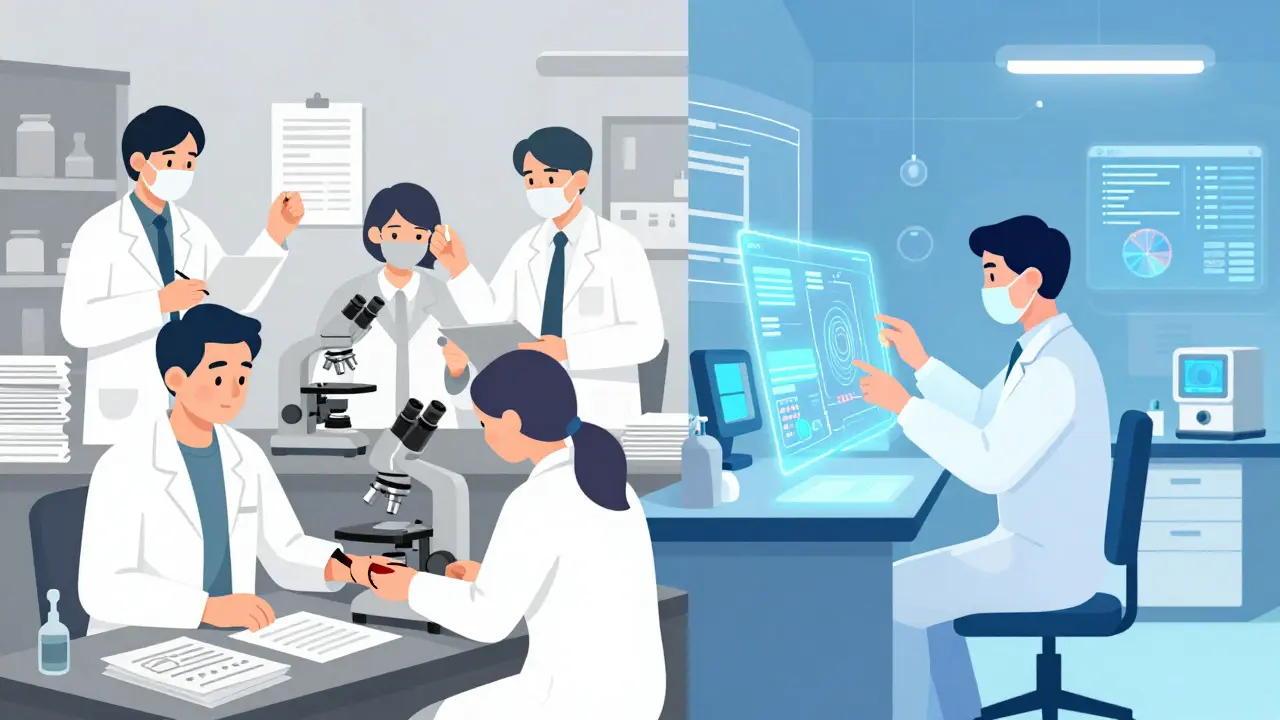
For decades, proving that a generic drug works just like its brand-name counterpart meant recruiting dozens of healthy volunteers, drawing blood at precise intervals, and waiting weeks for lab results. It was slow, expensive, and often frustrating for everyone involved. But as we move through 2026, the landscape of bioequivalence testing is shifting dramatically. We are no longer relying solely on traditional clinical trials. Instead, a wave of emerging technologies-from artificial intelligence to advanced imaging-is reshaping how regulators and manufacturers verify drug safety and efficacy.
This transformation isn't just about speed; it's about precision. With the global market for bioequivalence studies projected to jump from USD 4.54 billion in 2025 to nearly USD 18.66 billion by 2035, the pressure is on to adopt these new tools. If you are navigating the regulatory maze or developing generic pharmaceuticals, understanding these shifts is critical. Let’s look at what is actually changing on the ground right now.
The Rise of AI and Automated Data Analysis
The biggest game-changer in recent years has been the integration of artificial intelligence into data processing. The U.S. Food and Drug Administration (FDA) recognized this need early on. In the second quarter of 2024, they launched the Bioequivalence Assessment Mate (BEAM), which is a specialized data and text analysis tool designed to automate labor-intensive tasks in bioequivalence assessment. Before BEAM, reviewers spent countless hours manually checking data consistency and formatting. Now, the system handles much of that heavy lifting.
According to internal FDA metrics, the pilot testing of BEAM reduced reviewer workload by 52 hours per application. That is significant time saved. By Q2 2026, the agency plans to implement BEAM system-wide. This automation doesn't just make life easier for regulators; it accelerates the approval process for generic drugs. Dr. John Jenkins, Former Director of the FDA's Office of New Drugs, noted in a January 2025 report that technology is revolutionizing these studies by reducing timelines and costs through AI-driven analysis and real-time monitoring.
Machine learning is also being integrated into pharmacokinetic/pharmacodynamic (PK/PD) modeling. Dr. Lisa Thompson, a Senior Scientist in Bioanalytics, highlighted that this integration streamlines assessments and improves decision-making. Essentially, algorithms can now predict how a drug will behave in the body with greater accuracy than traditional statistical methods alone, allowing for faster go/no-go decisions during development.
New Guidelines and Global Harmonization
Technology alone isn't enough without clear rules. One major step forward was the adoption of the ICH M10 guideline, which is a unified framework for bioanalytical method validation adopted by the FDA in June 2024. Previously, manufacturers had to navigate separate documents from the FDA and the European Medicines Agency (EMA), leading to confusion and duplicated efforts. The World Health Organization (WHO) endorsed this guideline in August 2024, further solidifying its global importance.
This harmonization has had immediate effects. A February 2025 analysis by Market.us reported that discrepancies in method validation between regulatory regions dropped by 62%. For companies operating internationally, this means less rework and fewer rejected applications due to technical nitpicks. It creates a level playing field where scientific merit matters more than bureaucratic alignment.
However, regulations are also becoming more specific regarding origin. In October 2025, the FDA unveiled a pilot prioritization program that offers accelerated review for Abbreviated New Drug Applications (ANDAs) that meet strict domestic manufacturing criteria. These applications must use bioequivalence testing conducted exclusively in the U.S. with domestic active pharmaceutical ingredient (API) sources. While this aims to strengthen supply chain security, it adds a layer of complexity for international manufacturers who may need to adjust their sourcing strategies to qualify for faster reviews.
Advanced Imaging and In Vitro Models
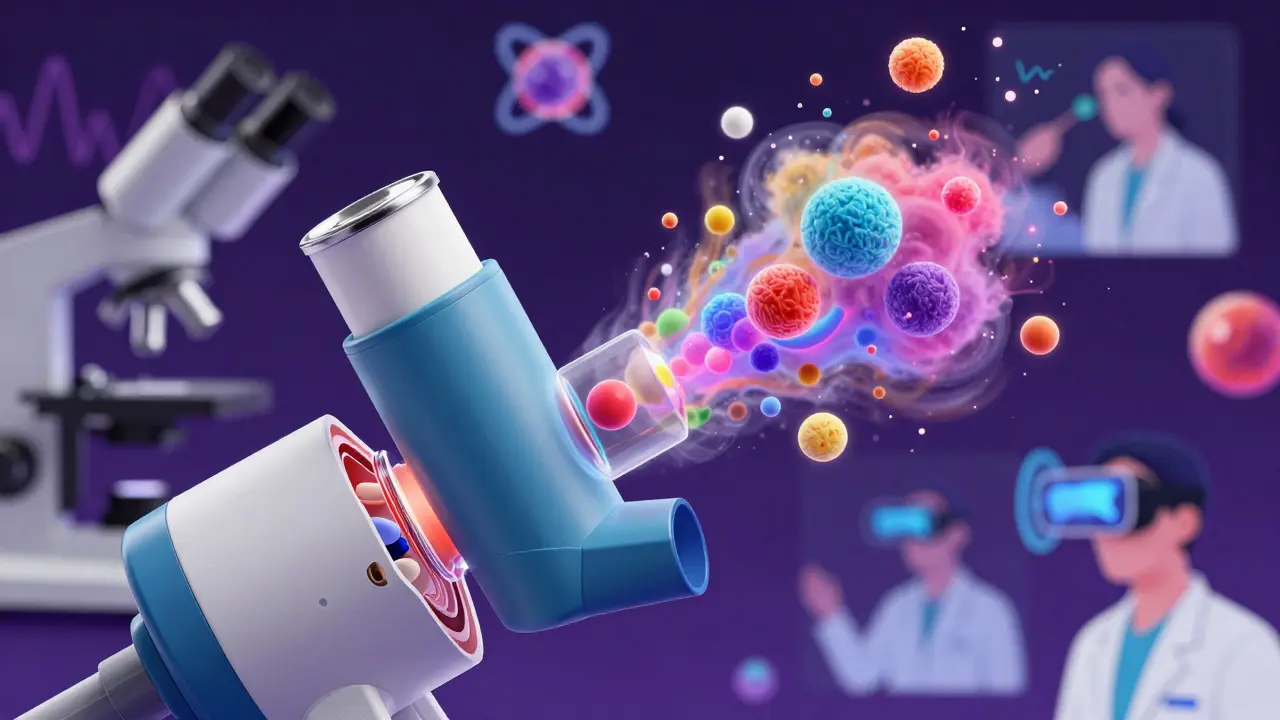
Not all drugs are simple pills. Complex formulations, such as orally inhaled products or transdermal patches, have historically been difficult to test using standard dissolution methods. To address this, researchers are turning to sophisticated imaging techniques. The FDA’s FY 2025 research initiatives highlight the use of scanning electron microscopy (SEM), focused ion beam high-speed microscopic imaging, and atomic force microscopy infrared spectroscopy.
These tools allow scientists to see exactly how a drug dissolves and disperses at a microscopic level. For example, the proprietary Dissolvit system provides physiologically relevant in vitro dissolution testing. FDA research published in March 2025 details ongoing evaluations of Dissolvit’s ability to overcome hurdles in development and manufacturing for complex products. By mimicking human physiology more accurately in the lab, these systems reduce the need for extensive human trials.
Virtual bioequivalence platforms are another emerging area. Funded by the FDA starting in August 2024, these platforms aim to replace traditional clinical endpoint studies for certain complex products. Early projections suggest that virtual methods could reduce the need for comparative clinical studies by 65% for some drug types. This is a massive shift, moving the focus from observing patients in clinics to simulating patient responses in digital environments.
| Feature | Traditional Clinical Studies | AI-Enhanced & Virtual Methods |
|---|---|---|
| Timeline Reduction | Baseline | 40-50% faster |
| Cost Efficiency | $1-2 million (standard) | 35% lower overall cost |
| Data Accuracy | Standard | 28% improvement |
| Best For | Simple small-molecule generics | Complex formulations, biosimilars |
| Regulatory Acceptance | Universal | Growing, but case-specific |
Challenges and Limitations
Despite the excitement, these technologies aren't a silver bullet. There are still significant limitations, particularly for narrow therapeutic index drugs-medications where small differences in dose can lead to serious side effects or treatment failure. Dr. Michael Cohen, President of the Institute for Safe Medication Practices (ISMP), cautioned in September 2025 that over-reliance on in vitro models without proper clinical correlation could compromise patient safety. You cannot simply simulate everything; sometimes, you need real-world human data to be sure.
Specific product types remain tricky. Transdermal systems, for instance, require optimized irritation and adhesion studies that current models struggle to replicate perfectly. Orally inhaled products still need standardized charcoal block pharmacokinetic studies to ensure the drug reaches the lungs effectively. Topical semisolids demand integrated modeling and compositional assessments that are not yet fully automated.
Additionally, while AI-enhanced approaches promise cost savings, the initial investment is high. Knobbe Martens’ November 2025 analysis noted that technology-enhanced studies can cost between $2.5 and $4 million, compared to $1-2 million for standard bioequivalence studies. For simple small-molecule generics, conventional PK studies often remain more cost-effective. Companies must carefully weigh whether the complexity of their drug justifies the expense of adopting these new technologies.
Market Growth and Future Outlook
The momentum behind these changes is undeniable. The global bioanalytical testing services market is expected to reach US$ 11.5 billion by 2034, growing at a 9.1% compound annual growth rate (CAGR). Within this sector, bioequivalence is projected to grow at the highest rate, driven largely by the surge in biosimilar approvals. As of October 2025, the FDA had approved 76 biosimilars, each requiring rigorous equivalence testing.
Regional dynamics are also shifting. While North America and Europe lead in regulatory innovation, the Middle East and Africa are experiencing rapid expansion. Government-funded biotech parks in GCC nations, supported by initiatives like Saudi Arabia’s Vision 2030, are establishing advanced labs and partnering with global Contract Research Organizations (CROs). This decentralization of capability means bioequivalence testing is becoming more accessible globally, though standards must remain aligned.
Looking ahead to 2030, MetaTech Insights projects that AI-driven bioequivalence testing will handle 75% of standard generic applications. Complex products will increasingly rely on virtual platforms and sophisticated imaging. However, regulatory hurdles will persist, especially for novel drug delivery systems where current paradigms may fall short. The FDA’s research agenda through 2027 includes developing validated in vitro models for advanced injectables, ophthalmic, otic, peptide, and oligonucleotide products, signaling that the work is far from over.
What is the BEAM tool used for in bioequivalence testing?
BEAM (Bioequivalence Assessment Mate) is an FDA-launched data and text analysis tool introduced in Q2 2024. It automates labor-intensive tasks such as data collection and consistency checks, significantly reducing the manual workload for reviewers and speeding up the approval process for generic drugs.
How does the ICH M10 guideline impact bioanalytical methods?
The ICH M10 guideline, adopted by the FDA in June 2024, establishes a unified framework for bioanalytical method validation. It consolidates previously separate requirements from the FDA and EMA, reducing regional discrepancies by 62% and simplifying compliance for multinational pharmaceutical companies.
Are virtual bioequivalence studies accepted by regulators?
Yes, acceptance is growing, particularly for complex products. The FDA has funded virtual bioequivalence platforms since August 2024. These methods can reduce the need for comparative clinical endpoint studies by up to 65% for certain drug types, though they are not yet suitable for all formulations, especially those with narrow therapeutic indices.
Why are complex formulations harder to test than simple generics?
Simple small-molecule generics often follow predictable dissolution patterns that standard tests can measure easily. Complex formulations, such as inhalers or transdermal patches, involve variables like particle size, adhesion, and localized absorption that require advanced imaging and physiologically relevant in vitro models to assess accurately.
What are the cost implications of using AI in bioequivalence studies?
While AI-enhanced approaches can reduce study timelines by 40-50% and improve data accuracy, the upfront costs are higher. Technology-enhanced studies may cost $2.5-4 million compared to $1-2 million for traditional studies. However, for complex drugs, the long-term savings from avoiding failed clinical trials often justify the investment.
Cici arya Arya
June 10, 2026 AT 16:52so u mean the whole industry is just gonna let ai decide if my meds are safe lol thats wild
Aditya Singh
June 12, 2026 AT 08:50The paradigm shift towards AI-driven pharmacokinetic modeling represents a significant leap in bioanalytical efficiency. We are witnessing the convergence of computational power and regulatory science, which will undoubtedly streamline the ANDA approval process. The integration of machine learning algorithms for PK/PD prediction is not merely an incremental improvement but a fundamental restructuring of how we validate generic equivalence.
Brett Webster
June 12, 2026 AT 13:29Aditya makes a good point about the efficiency gains. From a practical standpoint, the reduction in reviewer workload by 52 hours per application via BEAM is huge. It means faster approvals for patients who need affordable generics. However, we have to be careful that speed doesn't compromise the rigorous validation required for narrow therapeutic index drugs. The human element in reviewing complex cases is still irreplaceable right now.
Hailey Dunston
June 12, 2026 AT 13:44Oh please. Let's not pretend this 'revolution' isn't just another corporate cost-cutting measure disguised as innovation. The FDA has always been slow, and now they're outsourcing critical safety decisions to black-box algorithms trained on data that might be flawed from the start. It's pretentious to think a computer can understand the nuanced physiological variability of humans better than decades of clinical trial data. I'd rather wait longer than risk getting a generic that fails because an AI missed a subtle outlier in the dataset. Typical bureaucratic laziness.
Glenn Davis
June 12, 2026 AT 16:46domestic manufacturing priority is key. keep it in the us. supply chain security matters more than cheap foreign drugs.
AnneKatherine Stiekes
June 14, 2026 AT 05:50i think its interesting how the guidelines are finally harmonizing globally. less confusion for everyone involved hopefully
Callie Skipper
June 14, 2026 AT 23:14just wondering if the virtual platforms actually work for inhalers or if its all hype
Daniella Renzon
June 15, 2026 AT 21:41Hey Callie! That's a really smart question. The post mentions that orally inhaled products are tricky because standard tests don't capture particle size and lung deposition well. The new imaging tech like SEM helps see this at a microscopic level, but virtual platforms are still being evaluated. It's not a full replacement yet, but it's promising for reducing the number of human trials needed. It's great to see science adapting to help people breathe easier!
Cecilia McGuinness
June 16, 2026 AT 23:41im so excited about the future of biotech!! this stuff is gonna change everything for sure. hope the costs go down though cuz $4m is crazy high for some companies
Sherry Wheeler
June 18, 2026 AT 22:48Cecilia, your optimism is contagious! But you touch on a profound philosophical dilemma here: the tension between accessibility and quality. If the upfront cost of these advanced studies is prohibitive, does it create a barrier that only large conglomerates can cross? We must ensure that the democratization of generic drugs isn't stifled by the very technologies meant to accelerate them. The ethical imperative is clear: we need equitable access to safe, effective medication, regardless of the technological overhead.
Emily Barnhill
June 20, 2026 AT 12:02Listen, I respect the enthusiasm, but let's get real. You cannot simply automate safety. When you talk about 'changing everything,' you ignore the vulnerable populations who rely on precise dosing. Aggressive adoption of unproven virtual models without robust clinical correlation is reckless. We need boundaries. We need strict oversight. Do not let the allure of AI blind you to the potential for harm. Protect the patient first, always.
Talilla Bailey
June 20, 2026 AT 15:04I concur with Emily's concerns regarding patient safety, yet I believe we must also recognize the collaborative potential of these advancements. The integration of AI should be viewed as a supportive tool for regulators, not a replacement for their judgment. By fostering a culture of inclusive mentorship within the regulatory bodies, we can ensure that these tools are used responsibly. It is essential that we maintain rigorous standards while embracing innovation to benefit the global community.
Christina S.
June 22, 2026 AT 01:05Great discussion everyone. Just wanted to add that the ICH M10 guideline is a big deal for anyone working across borders. No more fighting between FDA and EMA requirements on method validation. Saves so much headache. Keep an eye on those domestic manufacturing rules though if you're planning an ANDA submission soon.