
QT Prolongation: Medications That Raise Arrhythmia Risk
 Dec, 1 2025
When a medication changes the way your heart beats, it’s not always obvious. You might feel fine, take your pill as directed, and never suspect anything’s wrong. But for some drugs, even a normal dose can stretch out the electrical timing of your heart-long enough to trigger a dangerous rhythm called torsades de pointes. This isn’t theoretical. It’s happened to real people. And the list of medications that can do this is longer than most doctors admit.
What QT Prolongation Actually Means
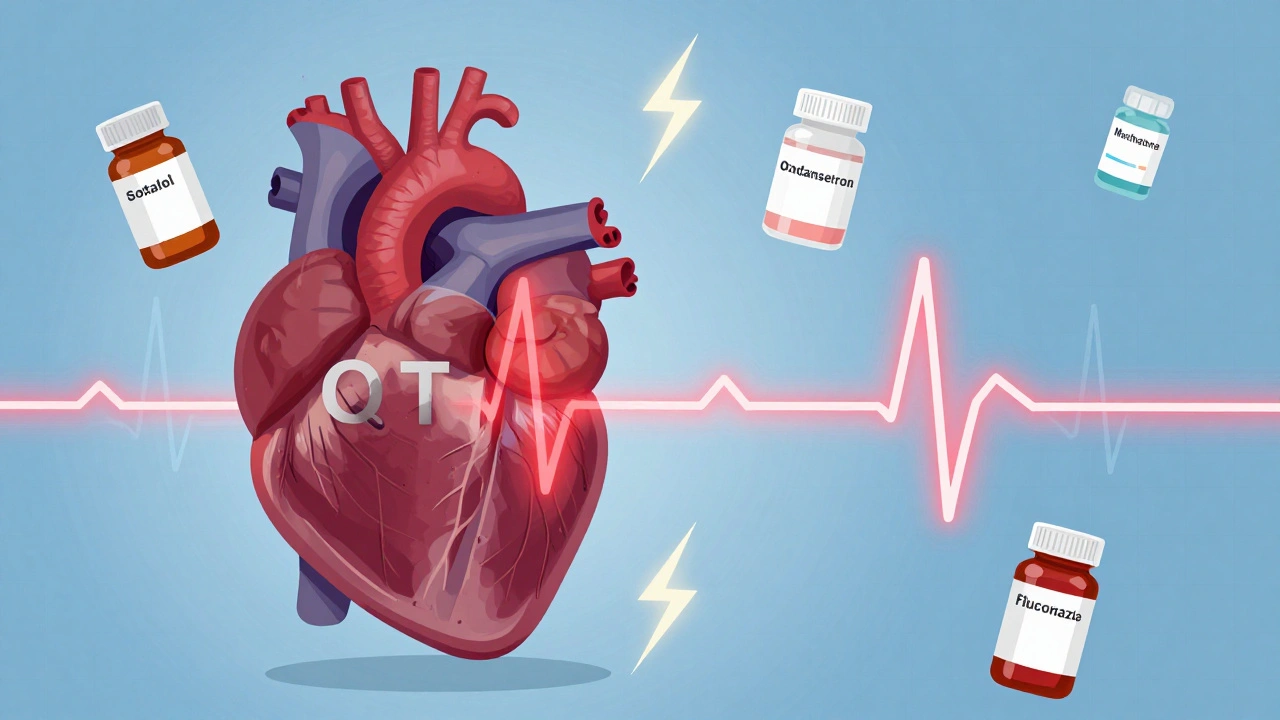
Your heart’s rhythm is controlled by electrical signals. The QT interval on an ECG measures how long it takes your ventricles to charge and reset after each beat. When this interval gets too long, your heart becomes electrically unstable. That’s QT prolongation. It doesn’t cause symptoms on its own. But it sets the stage for torsades de pointes-a wild, chaotic heartbeat that can spiral into cardiac arrest.
Doctors measure the corrected QT interval, or QTc, to account for heart rate. A QTc over 500 milliseconds is a red flag. An increase of more than 60 ms from your baseline is just as concerning. Women are at higher risk-about 70% of reported cases occur in women, especially after childbirth. Why? Hormones, body size, and subtle differences in how heart cells handle electrical currents make female hearts more sensitive to these drug effects.
The Real Culprits: Drugs That Stretch the QT Interval
It’s not just heart meds. Many everyday prescriptions can do this. The biggest offenders fall into three groups.
- Antiarrhythmics: Drugs like sotalol, dofetilide, and quinidine are designed to fix heart rhythms-but they can cause them. Sotalol carries a 2-5% risk of torsades in clinical trials. Quinidine, an older drug, causes it in about 6% of patients.
- Antibiotics and antifungals: Erythromycin and clarithromycin can stretch the QT interval by 15-25 ms. Azithromycin is less risky, but still dangerous when combined with other QT-prolonging drugs. Fluconazole, a common antifungal, is another silent player.
- Antipsychotics and antiemetics: Haloperidol, ziprasidone, and ondansetron (Zofran) are frequently prescribed for nausea, psychosis, or agitation. Ziprasidone has a black box warning for arrhythmia risk. Ondansetron shows up in nearly half of all documented torsades cases, especially when paired with antibiotics or antipsychotics.
Methadone, used for pain and opioid addiction, is another major concern. Doses over 100 mg daily significantly raise risk. Citalopram, an antidepressant, can prolong QTc in a dose-dependent way-so the FDA capped it at 40 mg daily (20 mg if you’re over 60).
Why Some People Are at Higher Risk
Not everyone who takes these drugs has a problem. Risk depends on what else is going on in your body.
- Drug combinations: Taking two or more QT-prolonging drugs multiplies the risk. A 2020 review found 68% of torsades cases involved multiple such drugs. Haloperidol + ondansetron? High risk. Erythromycin + fluconazole? Dangerous combo.
- Low potassium or magnesium: These minerals help your heart reset properly. Low levels make QT prolongation much more likely. Diuretics, vomiting, or poor diet can trigger this.
- Age and sex: People over 65 and women are at higher risk. Postpartum women are especially vulnerable.
- Genetics: About 30% of cases involve hidden genetic variants that make the hERG potassium channel more sensitive to drugs. You won’t know you have it until something goes wrong.
- Heart disease: If you’ve had a heart attack, heart failure, or enlarged heart, your heart is already electrically fragile.
How Doctors Should Respond
Guidelines from Medsafe (New Zealand), the American Heart Association, and the European Society of Cardiology agree: don’t guess. Screen.
- Check baseline ECG: Before starting high-risk drugs like sotalol, methadone, or ziprasidone, get an ECG. Measure your QTc. Know your starting point.
- Monitor after starting: Repeat the ECG 3-7 days after beginning treatment or after a dose increase. That’s when drug levels peak and QT changes are most likely.
- Stop the drug if QTc >500 ms or jumps >60 ms: Unless there’s no alternative, discontinuing the drug is the safest move.
- Check electrolytes: If you’re on diuretics or have vomiting/diarrhea, test potassium and magnesium. Correct them before prescribing.
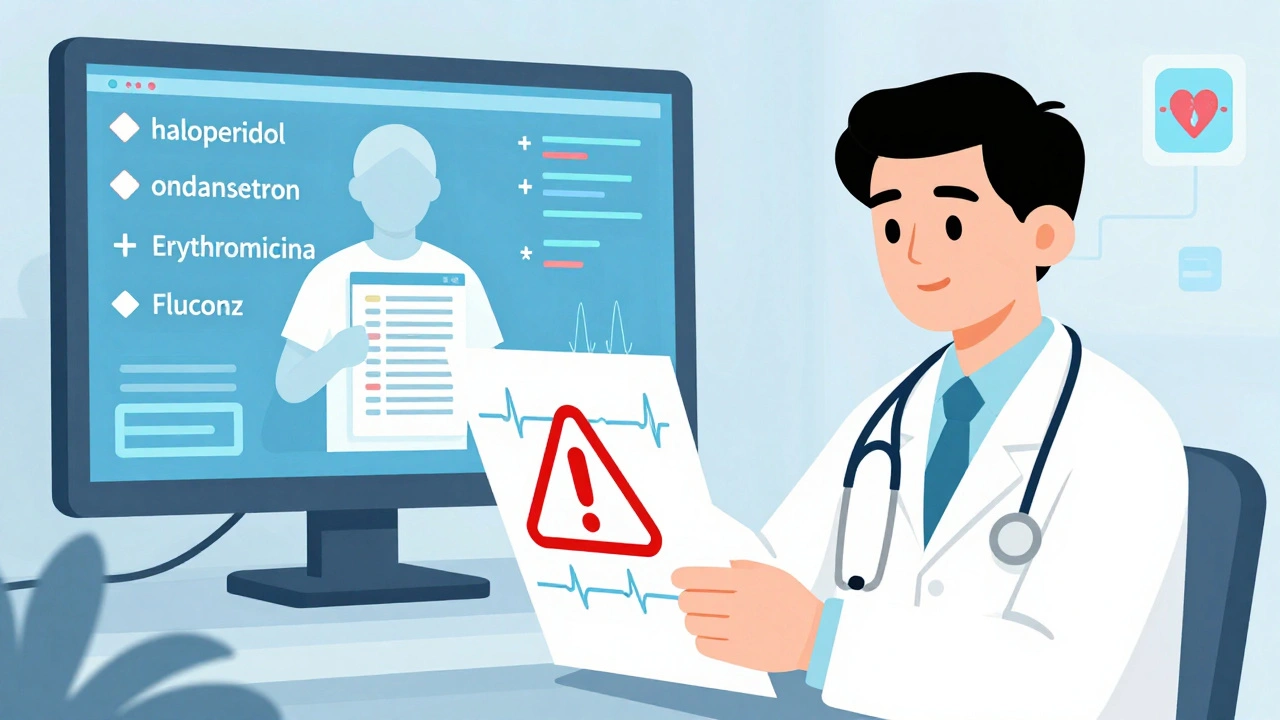
Some hospitals use electronic alerts in their systems to flag risky combinations. One study showed this cut dangerous prescribing by 58%. But many clinics still rely on memory or paper charts. That’s a problem.
The Hidden Danger: Over-the-Counter and Newer Drugs
You might think only prescription drugs matter. But even some OTC meds can contribute. Cold remedies with pseudoephedrine, certain herbal supplements, and even high-dose zinc can interfere with heart rhythms. And new drugs are constantly being added to the risk list.
In November 2023, crediblemeds.org added 17 new drugs, including retatrutide-a new obesity medication that showed a 8.2 ms QTc increase in trials. Cancer drugs like vandetanib and nilotinib are now known to carry QT risk. Of the 27 tyrosine kinase inhibitors approved for cancer, 12 (44%) come with QT prolongation warnings.
The pharmaceutical industry is changing too. Since 2016, the FDA and other global agencies use the CiPA framework-testing drugs on multiple heart channels, not just measuring QT. This has led to 22 drug failures between 2016 and 2022, each costing over $2 billion. That’s good for safety, bad for drug development.
What You Can Do
If you’re on any of these medications:
- Ask your doctor: “Could this drug affect my heart rhythm?”
- Ask if you need a baseline ECG.
- Don’t combine multiple drugs that can prolong QT without checking.
- Report unexplained dizziness, fainting, or palpitations immediately.
- Keep a list of all your meds-including supplements-and share it at every visit.
If you’re a caregiver or family member, watch for sudden changes in behavior, energy, or consciousness. Torsades can strike fast. Early recognition saves lives.
Is Routine ECG Screening Worth It?
Some experts argue it’s not cost-effective for low-risk drugs. The chance of torsades from a single, low-risk medication is less than 1 in 10,000 per year. But when you combine risk factors-female, over 65, on two QT drugs, low potassium-the odds shift dramatically.
One case from a Reddit thread tells the story: a 65-year-old woman on ondansetron and azithromycin for stomach flu saw her QTc jump from 440 to 530 ms in 24 hours. She didn’t collapse, but she came close. Her doctor later admitted: “I didn’t think about the combo. I should have checked.”
Systematic screening isn’t perfect. But for high-risk patients, it’s the difference between prevention and tragedy.
The Bigger Picture
QT prolongation isn’t a rare curiosity. It’s a well-documented, preventable cause of sudden death. The good news? We know which drugs cause it. We know who’s at risk. We know how to test for it.
The challenge isn’t science-it’s systems. Too many prescriptions are written without checking ECGs. Too many patients are discharged with new meds and no follow-up. Too many pharmacies don’t flag dangerous combinations.
But change is happening. AI tools are now being tested to predict torsades risk from subtle ECG patterns-not just QTc. Genetic testing may one day identify high-risk patients before they even start a drug.
For now, the safest approach is simple: know your meds. Know your numbers. Ask questions. Your heart is counting on it.
Anthony Breakspear
December 1, 2025 AT 22:21Man, I had no idea my Zofran for nausea could be ticking time bomb. I took it with clarithromycin last winter and just thought I was extra tired. Turns out my QTc jumped 70ms. Doc didn’t even blink. Scary how common this is and how little we’re told. I’m getting an ECG before any new script now - no more guessing games.
Allan maniero
December 3, 2025 AT 12:04It’s wild how medicine keeps adding new risks without warning patients. I’ve been on methadone for chronic pain for six years - never got an ECG until I brought it up myself. My cardiologist said, ‘Most docs don’t screen unless you’re symptomatic.’ But torsades doesn’t give you time to be symptomatic. It just… stops you. I’m lucky I didn’t collapse in the grocery store. Now I check my potassium monthly and avoid all combo meds like the plague. If you’re on more than one script, assume they’re playing Russian roulette with your heart. And women? We’re basically the canaries in the coal mine.
Zoe Bray
December 3, 2025 AT 15:41While the clinical implications of QT interval prolongation are well-documented in the literature, the absence of standardized, protocol-driven ECG monitoring in outpatient primary care settings remains a critical systemic deficiency. According to the 2022 ESC Guidelines on Drug-Induced Arrhythmias, a baseline and follow-up ECG is indicated for all high-risk pharmacotherapies, including class Ia/III antiarrhythmics, certain antipsychotics, and macrolide antibiotics. Failure to implement this constitutes a breach of the standard of care in jurisdictions with robust regulatory oversight. Moreover, the concomitant use of CYP3A4 inhibitors (e.g., fluconazole) with hERG-channel blockers (e.g., ondansetron) induces pharmacokinetic synergism, thereby amplifying the risk of torsades de pointes beyond additive effects. Electrophysiological risk stratification must be institutionalized, not left to clinician discretion.
Michael Campbell
December 5, 2025 AT 09:42Big Pharma knows this. They hide it in the fine print. FDA? Bought and paid for. You think they care if some old lady drops dead from Zofran? Nah. They make billions. You’re just collateral damage.
Girish Padia
December 6, 2025 AT 00:32People in the West take so many pills like candy. In India, we don’t just swallow drugs without thinking. We know food, rest, and time heal more than pills. This is why your hospitals are full of people with heart problems from medicine, not disease. Your system is broken.
Fern Marder
December 6, 2025 AT 01:36Okay but have you seen the list of new drugs added in 2023? Retatrutide? That’s a weight-loss drug. So now if you want to lose 20 lbs, you risk dying mid-squat? 🤯
John Biesecker
December 7, 2025 AT 02:18my heart just did a little flip reading this 😳 i’m on citalopram and azithro for a sinus thing… should i panic? or just call my doc? 🤔
Anthony Breakspear
December 8, 2025 AT 04:47Don’t panic, but don’t wait. Call your doctor today and say: ‘I’m on azithromycin and citalopram - can we check my QTc?’ They’ll either say yes or act like you’re overreacting. Either way, you’ve done your part. I did the same thing last year - turned out my QTc was 490. They switched me to amoxicillin and lowered my citalopram to 20mg. Saved my life. Seriously.
Saravanan Sathyanandha
December 9, 2025 AT 08:43In my country, we don’t just rely on pills. We use Ayurveda, yoga, and diet to support heart health. But I also understand modern medicine has saved lives. The real issue isn’t the drugs - it’s the lack of integration. Why not combine ECG screening with nutritional counseling? Why not teach patients about potassium-rich foods like bananas and spinach when prescribing diuretics? We need systems that treat the whole person, not just the ECG reading. This isn’t just a medical problem - it’s a cultural one.
william tao
December 11, 2025 AT 06:59Wow. Just… wow. You’ve written a textbook chapter. I’m sure the pharmaceutical executives are weeping into their yachts right now. But let’s be honest - this isn’t going to change anything. People will keep getting prescriptions. Doctors will keep forgetting. And the FDA will keep approving drugs that kill people slowly, then slap on a black box warning like it’s a discount sticker.
Carolyn Woodard
December 12, 2025 AT 03:20Interesting. The hERG channel’s sensitivity to pharmacological blockade is a well-known liability, but the population-level genetic heterogeneity in KCNH2 expression remains grossly undercharacterized in clinical practice. While CiPA is a step forward, its reliance on in silico modeling and stem-cell-derived cardiomyocytes still lacks external validation in diverse cohorts. The absence of routine pharmacogenomic screening for variants like rs1805123 or rs36210415 means we’re essentially flying blind for 30% of the population. Until we move from population averages to individualized electrophysiological risk profiling, this will remain a preventable epidemic.