
Pregnancy and ACE Inhibitors or ARBs: Fetal Risk and Safe Alternatives
 Dec, 9 2025
Pregnancy Medication Safety Checker
When you're pregnant and have high blood pressure, the last thing you want is to take a medication that could harm your baby. Yet, many women with chronic hypertension are prescribed ACE inhibitors or ARBs before they even know they're pregnant. These drugs are common, effective, and widely used - but they are not safe during pregnancy. The risks aren't just theoretical. They're real, documented, and severe.
Why ACE Inhibitors and ARBs Are Dangerous in Pregnancy
ACE inhibitors and ARBs work by blocking the renin-angiotensin-aldosterone system (RAAS). That’s great for lowering blood pressure in adults. But in a developing fetus, that same system is essential for kidney growth, amniotic fluid production, and overall organ development. When these drugs cross the placenta, they shut down the baby’s RAAS. And that leads to serious, sometimes fatal, complications. The risks include:- Fetal kidney failure - the baby’s kidneys stop working properly
- Oligohydramnios - dangerously low levels of amniotic fluid, which can cause lung underdevelopment and limb deformities
- Fetal skull defects - including flattened facial bones and underdeveloped skull bones
- Severe low blood pressure in the newborn
- High potassium levels (hyperkalemia) - which can cause heart rhythm problems
- Stillbirth or neonatal death
ARBs May Be Even Riskier Than ACE Inhibitors
Not all drugs in this category carry the same level of risk. While both ACE inhibitors and ARBs are strictly off-limits during pregnancy, research shows ARBs like losartan and candesartan are associated with worse outcomes than ACE inhibitors like lisinopril or enalapril. The American Heart Association’s 2012 review found that babies exposed to ARBs had poorer neonatal outcomes - including higher rates of kidney failure and death - compared to those exposed to ACE inhibitors. This isn’t a small difference. It’s a clinically significant one. And it’s why guidelines now treat both classes the same: no safe window, no safe dose. Common ACE inhibitors linked to fetal harm include:- Enalapril
- Lisinopril
- Perindopril
- Quinapril
- Ramipril
- Losartan
- Candesartan
- Valsartan
- Irbesartan
What Happens If You’re Already Pregnant and Taking One of These Drugs?
If you find out you’re pregnant while taking an ACE inhibitor or ARB, don’t panic - but do act fast. Stop the medication immediately. Then contact your doctor right away. The goal isn’t to leave you with uncontrolled blood pressure - that’s dangerous too. It’s to switch you to a safer option as quickly as possible. Delaying the switch increases the risk to your baby. Studies show that the longer you’re exposed to these drugs during pregnancy, the worse the outcomes. Your doctor will likely switch you to one of three well-studied, pregnancy-safe alternatives: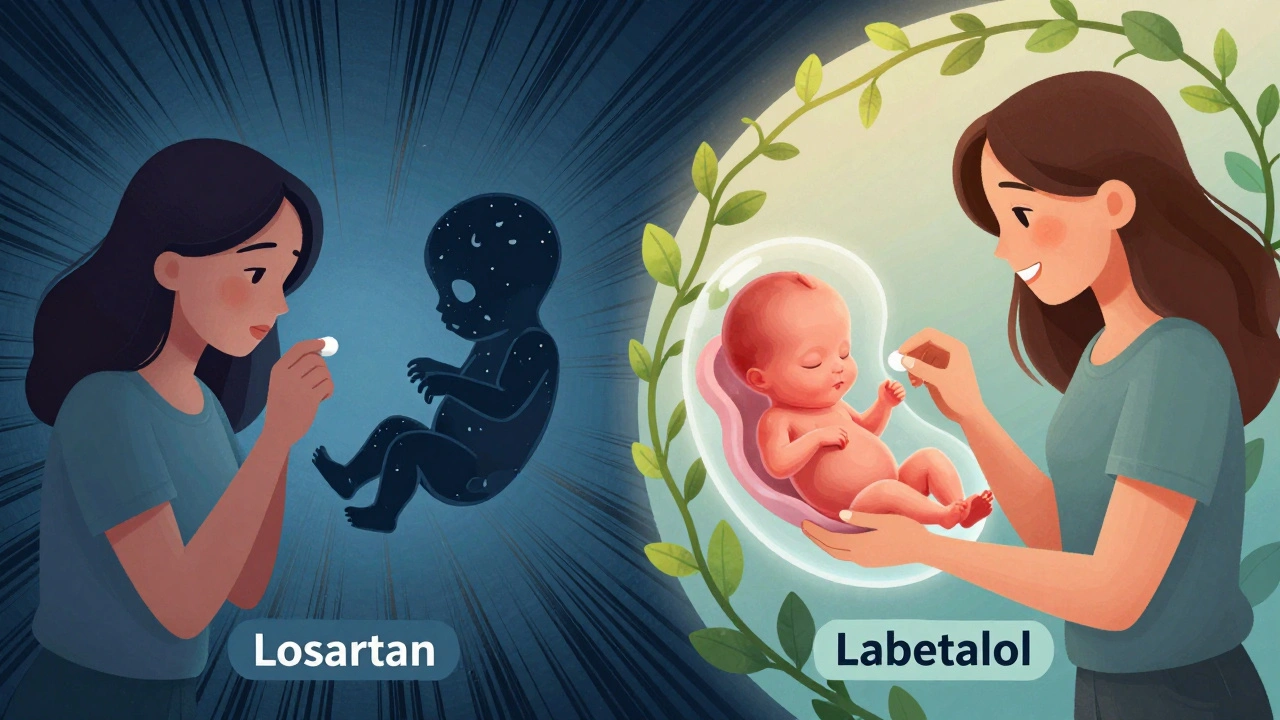
Safer Alternatives for Managing High Blood Pressure During Pregnancy
There are three main antihypertensive medications with decades of safety data in pregnancy. These are the gold standard:1. Labetalol - First-Line Choice
Labetalol is a beta-blocker that also blocks alpha receptors. That means it lowers blood pressure without significantly reducing blood flow to the placenta. It’s been used safely since the 1980s and is now the go-to first-line drug in most guidelines, including those from the American College of Obstetricians and Gynecologists (ACOG) and Health New Zealand. Starting dose: 100 mg twice daily. Can be increased up to 2,400 mg per day, divided into two or three doses. Most women tolerate it well. Side effects are mild - maybe some fatigue or dizziness, but rarely anything serious for the baby.2. Methyldopa - The Longest Track Record
Methyldopa has been used in pregnancy since the 1970s. More than 50 years of data show it’s safe for both mother and baby. It works by calming the central nervous system to reduce blood pressure. It doesn’t cross the placenta in large amounts, and there’s no evidence of harm to fetal development. Starting dose: 250 mg twice daily. Can be increased to 3,000 mg per day in divided doses. Some women report drowsiness or dry mouth, but these usually fade over time.3. Nifedipine - Second-Line Option
Nifedipine is a calcium channel blocker. It’s often used when labetalol or methyldopa aren’t enough, or if a woman can’t tolerate them. It’s effective and generally safe - but it’s not ideal for women with heart conditions because it can slightly reduce the heart’s pumping strength. Immediate-release forms are preferred in pregnancy. Extended-release versions aren’t recommended because their absorption is unpredictable.What About Other Blood Pressure Medications?
Some women ask: “What about diuretics? Or angiotensin receptor-neprilysin inhibitors (ARNIs)?” Diuretics like hydrochlorothiazide were once commonly used, but they’re now avoided in pregnancy because they can reduce blood volume and placental flow, potentially leading to low birth weight. ARNIs like sacubitril/valsartan are newer drugs - and they’re absolutely contraindicated. They contain an ARB component, so they carry the same risks. Even over-the-counter NSAIDs like ibuprofen or naproxen can be risky in the third trimester. Always check with your doctor before taking anything.
Planning Pregnancy? Get Ahead of the Risk
The best time to switch medications is before you get pregnant. If you’re on an ACE inhibitor or ARB and thinking about starting a family, talk to your doctor now. Don’t wait for a positive pregnancy test. Your healthcare provider should:- Ask if you’re planning to become pregnant
- Discuss your options and risks
- Switch you to a safer drug before conception
- Confirm you’re using reliable contraception if you’re not ready to get pregnant
What If Your Doctor Doesn’t Mention This?
Sadly, medication errors still happen. According to the FDA’s 2021 adverse event data, about 1.2% of pregnancies in women with chronic hypertension still involve exposure to ACE inhibitors or ARBs. That’s not because doctors are careless - it’s because these drugs are so common, and pregnancy isn’t always planned. If you’re taking one of these drugs and haven’t been warned about pregnancy risks, speak up. Ask: “Is this safe if I get pregnant?” If your provider doesn’t know, ask for a referral to a maternal-fetal medicine specialist or a pharmacist who specializes in pregnancy. You have the right to know. And you deserve to be protected.What to Do Next
If you’re currently taking an ACE inhibitor or ARB:- If you’re pregnant: stop the drug immediately and contact your provider today.
- If you’re trying to conceive: schedule an appointment to switch medications before you stop contraception.
- If you’re not planning pregnancy: ask your doctor about reliable birth control options that work with your current meds.
Can I take ACE inhibitors or ARBs in the first trimester if I didn’t know I was pregnant?
No. Even first-trimester exposure carries risks. A 2020 meta-analysis confirmed that ACE inhibitors and ARBs increase the chance of miscarriage, low birth weight, and preterm birth even when taken early in pregnancy. You should stop the medication as soon as you confirm pregnancy and switch to a safer alternative like labetalol or methyldopa. Don’t wait for a doctor’s appointment - act immediately.
Are there any safe blood pressure meds during pregnancy?
Yes. Labetalol and methyldopa are the two most recommended first-line options. Nifedipine is a safe second-line choice. These drugs have been used safely for decades in pregnant women. They don’t harm fetal development, and they effectively control blood pressure. Your doctor will choose based on your health history and how high your blood pressure is.
How soon should I switch medications if I’m pregnant and on an ACE inhibitor or ARB?
Immediately. There is no safe waiting period. The longer you’re exposed, the higher the risk of kidney damage, low amniotic fluid, and fetal death. Switching to labetalol or methyldopa within days of confirming pregnancy can prevent serious complications. Delaying increases danger - don’t wait for your next scheduled appointment.
Do ARBs cause more birth defects than ACE inhibitors?
They don’t necessarily cause more structural birth defects, but they cause worse overall outcomes. Babies exposed to ARBs have higher rates of kidney failure, neonatal death, and severe low blood pressure compared to those exposed to ACE inhibitors. The American Heart Association specifically noted that ARB exposure leads to poorer neonatal outcomes. Both are dangerous - but ARBs are more likely to be life-threatening.
Can I breastfeed while taking labetalol or methyldopa?
Yes. Both labetalol and methyldopa are considered safe during breastfeeding. Only tiny amounts pass into breast milk, and studies show no adverse effects on infants. Nifedipine is also considered compatible with breastfeeding. Always check with your provider, but you don’t need to stop breastfeeding if you’re on these safer medications.
What if I can’t tolerate labetalol or methyldopa?
Your doctor may consider other options like nifedipine, or in rare cases, hydralazine. But there are no other first-line alternatives. Avoid all other antihypertensives - including diuretics, ARNIs, and NSAIDs - unless specifically approved for pregnancy. If you’re having trouble with side effects, talk to your provider about adjusting the dose or timing. Never stop or switch on your own.
Rebecca Dong
December 9, 2025 AT 14:54Okay but what if the government is secretly using ACE inhibitors in the water supply to control population growth? I mean, why else would they push these drugs so hard? And why are the FDA warnings so vague? Someone’s hiding something.
Stephanie Maillet
December 10, 2025 AT 20:45It’s fascinating-really-to consider how the renin-angiotensin system, evolved over millions of years to regulate fluid balance and blood pressure, becomes, in the context of pregnancy, a double-edged sword: vital for the fetus, lethal when inhibited. It’s not that the drugs are ‘bad’-they’re just… out of context. Like using a chainsaw to trim hedges.
Raj Rsvpraj
December 10, 2025 AT 21:47In India, we’ve been using methyldopa for decades-no issues. Why are Western doctors so obsessed with new drugs? Labetalol? Please. My aunt took methyldopa for three pregnancies and delivered five healthy grandchildren. Modern medicine is just marketing dressed as science.
Frank Nouwens
December 12, 2025 AT 12:03Thank you for this incredibly thorough and well-researched post. I work in maternal health, and I can’t tell you how many times I’ve seen patients transition from ACE inhibitors to labetalol with zero complications. The data is clear, the alternatives are safe, and the key is early intervention. Kudos for highlighting this.
Aileen Ferris
December 13, 2025 AT 13:46wait so ur saying ARBs are worse than ace inhibitors?? but like… i thought they were the same?? and also… is this even real?? like… did someone actually study this??
Michelle Edwards
December 14, 2025 AT 20:09This is such an important reminder. If you’re on one of these meds and thinking about a baby-please, please talk to your doctor now. You’re not alone, and there’s no shame in switching. Your baby’s health is worth it.
Queenie Chan
December 14, 2025 AT 21:26I love how the body’s systems are these intricate, ancient machines-like a symphony of hormones and receptors-and then we come along with our little pharmaceuticals, thinking we’re conducting, when really we’re just smashing the violin. ACE inhibitors? They’re not just lowering blood pressure-they’re silencing the baby’s own orchestra. Chilling.
Michaux Hyatt
December 15, 2025 AT 09:45For anyone reading this and feeling overwhelmed: you’re not alone. I’ve helped dozens of patients switch safely from ARBs to labetalol. It’s not scary-it’s routine. Your doctor can make this seamless. Don’t wait until the panic hits. Schedule that appointment today. You’ve got this.
Kaitlynn nail
December 15, 2025 AT 20:17So… basically, if you’re a woman and you take meds, you’re just a walking liability? Cool. Thanks for the guilt trip.
Sarah Clifford
December 16, 2025 AT 15:51OMG I took lisinopril for 3 months before I knew I was pregnant. My baby is 2 now and fine. So… is this all just fearmongering??
Regan Mears
December 17, 2025 AT 20:46Every pregnancy is different. Just because one person had a healthy baby doesn’t mean the risk isn’t real. The data shows increased odds of harm-statistically significant, peer-reviewed, and replicated. It’s not about guilt. It’s about informed choice. You’re not alone in your fear-but your baby’s safety matters more.
David Palmer
December 18, 2025 AT 06:50Why is it always the women who have to change their meds? Why doesn’t the system make it easier? Why do we have to be perfect? Why is this even on us? I’m exhausted.
Doris Lee
December 19, 2025 AT 02:41Thank you for writing this. I was on valsartan and didn’t know until I was 8 weeks in. Switched to labetalol the same day. Baby’s due next month and everything looks perfect. You’re right-it’s not too late to act.
Ben Greening
December 19, 2025 AT 04:10It is noteworthy that the American College of Obstetricians and Gynecologists, the European Medicines Agency, and the World Health Organization concur on the contraindication of ACE inhibitors and ARBs during pregnancy. This represents a strong consensus within the global medical community.