
Postoperative Ileus with Opioids: Prevention and Treatment Guide
 Jul, 17 2026
Postoperative Ileus Risk Estimator
Patient Profile & Treatment Plan
Select the options that apply to your situation.
Your Estimated Risk
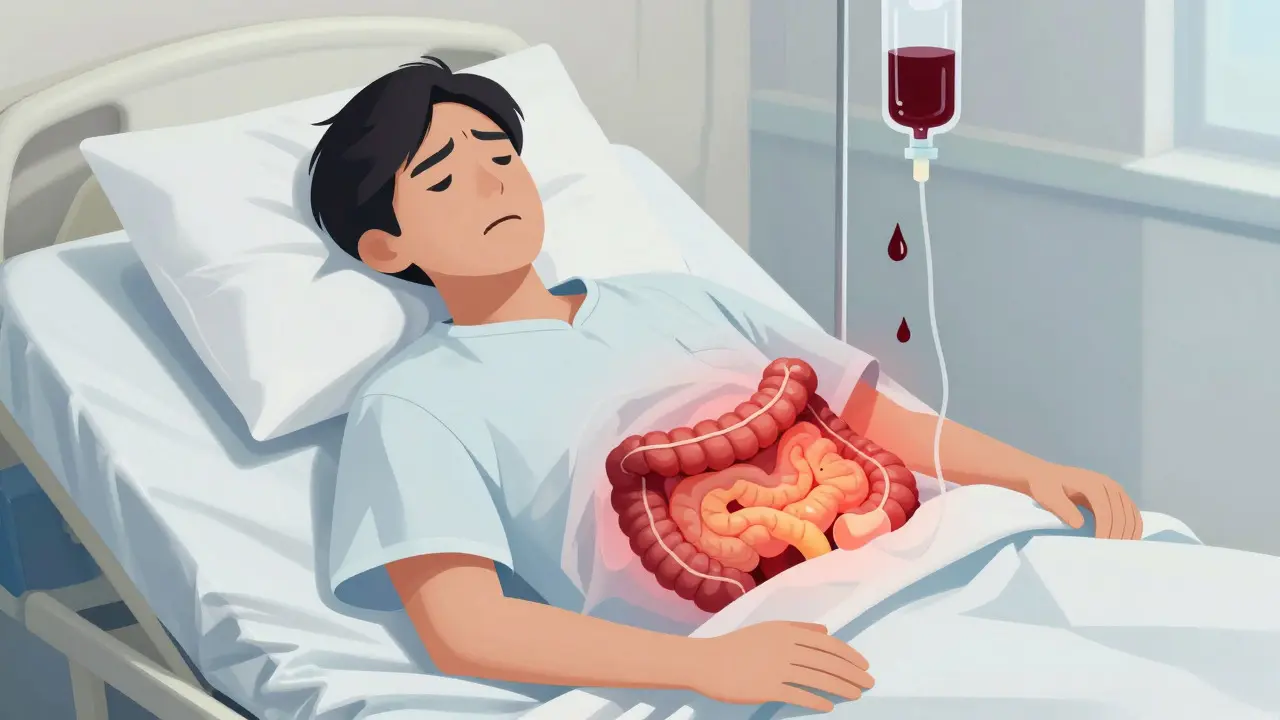
Imagine waking up from surgery, ready to start your recovery, only to find your stomach completely shut down. You can't eat, you can't pass gas, and bloating makes every breath uncomfortable. This isn't just a minor annoyance; it is Postoperative Ileus (POI), defined as a temporary paralysis of the intestines that occurs after abdominal or other major surgeries. While surgical manipulation plays a role, the biggest culprit often sitting in your IV drip is opioids. These powerful painkillers are essential for managing post-surgical pain, but they come with a heavy price tag for your gut health.
Opioids don't just numb pain; they bind to mu-opioid receptors in your gastrointestinal tract, effectively stopping the natural waves of muscle contractions that move food through your system. The result? A condition that adds an average of 2 to 3 days to hospital stays and costs the U.S. healthcare system roughly $1.6 billion annually. But here is the good news: POI is largely preventable. By understanding how opioids affect your gut and using modern prevention strategies, you can significantly speed up your recovery.
Why Opioids Paralyze Your Gut
To understand why your gut stops working, we need to look at what happens on a cellular level. When you take opioids like morphine, fentanyl, or oxycodone, these drugs travel throughout your body. They hit the central nervous system to block pain signals, which is exactly what you want. However, they also bind to receptors in the myenteric plexus-the network of nerves controlling your digestive muscles.
This binding triggers a cascade of issues. First, it increases sympathetic stimulation while suppressing parasympathetic activity, essentially hitting the brakes on your digestion. Second, it reduces the release of neurotransmitters like substance P and vasoactive intestinal peptide, which are crucial for moving contents along. In experimental models, activating these receptors can decrease colonic motility by up to 70%.
The symptoms usually emerge within 24 to 72 hours after surgery. You might experience:
- Persistent nausea and vomiting
- Inability to tolerate oral fluids or food
- Significant abdominal distension (bloating)
- Delayed passage of flatus (gas) or stool
- A feeling of incomplete evacuation
If this lasts more than 3 days, it is considered clinically significant and requires immediate medical intervention. The key takeaway is that higher doses of opioids directly correlate with longer-lasting ileus. Patients receiving more than 50 morphine milligram equivalents (MME) in the first 48 hours report bloating severity scores nearly three times higher than those on lower doses.
The Power of Multimodal Analgesia
The most effective way to prevent POI is to reduce your reliance on opioids before you even step into the operating room. This approach is called Multimodal Analgesia, which involves using multiple types of pain-relieving medications and techniques that target different pain pathways. Instead of relying solely on opioids, doctors combine non-opioid drugs to manage pain effectively while sparing your gut.
Here is how a typical multimodal protocol works:
- Acetaminophen (Paracetamol): Often given intravenously (1g every 6 hours), it provides a baseline level of pain relief without affecting gut motility.
- NSAIDs (Non-Steroidal Anti-Inflammatory Drugs): Medications like ketorolac (30mg IV) reduce inflammation and pain. If you have no kidney issues or bleeding risks, this is a powerful opioid-sparing tool.
- Regional Anesthesia: Techniques like epidurals or nerve blocks numb specific areas of the body. Studies show epidural analgesia can reduce POI duration from 5.2 days to 3.8 days in orthopedic patients.
- Gabapentinoids: Drugs like gabapentin can help with nerve pain, allowing for lower overall opioid requirements.
By stacking these methods, surgeons can limit opioid use to less than 30 MME in the first 24 hours. According to the Enhanced Recovery After Surgery (ERAS) Society, this strategy reduces the incidence of POI from 30% to just 18%. It’s not about eliminating pain-it’s about managing it smarter.
Peripheral Opioid Receptor Antagonists (PORAs)
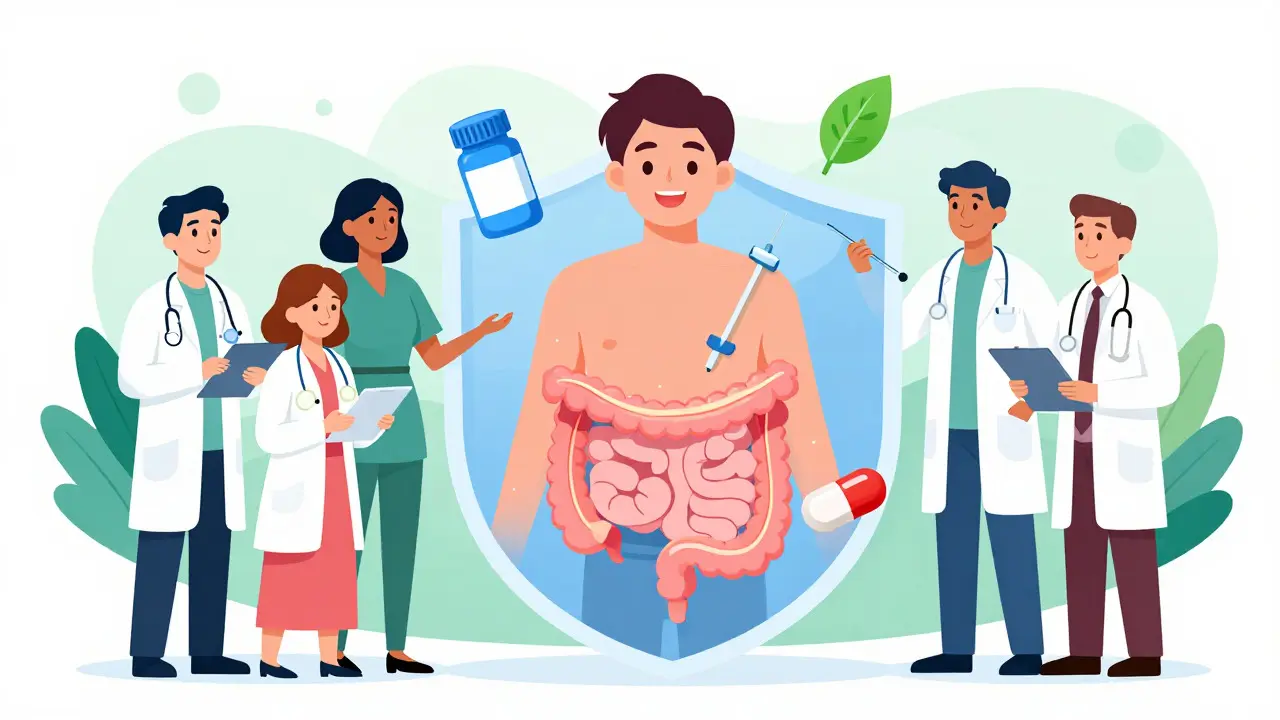
What if you still need opioids for severe pain but want to protect your gut? Enter Peripheral Opioid Receptor Antagonists, or PORAs. These are specialized drugs designed to block opioid receptors in the gut while leaving the receptors in the brain alone. This means you get pain relief without the constipation or ileus.
| Drug Name | Mechanism | Typical Dose | Key Benefit | Major Risk |
|---|---|---|---|---|
| Alvimopan | Blocks mu-receptors in the gut | 12mg twice daily | Reduces GI recovery time by 18-24 hours | Cardiovascular concerns (restricted REMS program) |
| Methylnaltrexone | Does not cross blood-brain barrier | 8-12mg subcutaneous | Fast return of bowel function (30-40% faster) | Contraindicated in bowel obstruction |
Alvimopan is particularly popular in abdominal surgeries. A landmark study published in JAMA showed it reduced the time to gastrointestinal recovery by nearly a full day. Methylnaltrexone, administered via injection under the skin, has shown similar success in opioid-tolerant patients. However, these drugs are not magic bullets. They are contraindicated if you have a mechanical bowel obstruction, which occurs in about 0.3-0.5% of surgical cases. Using them in such scenarios can be dangerous, potentially causing bowel perforation.
Simple Behavioral Strategies That Work
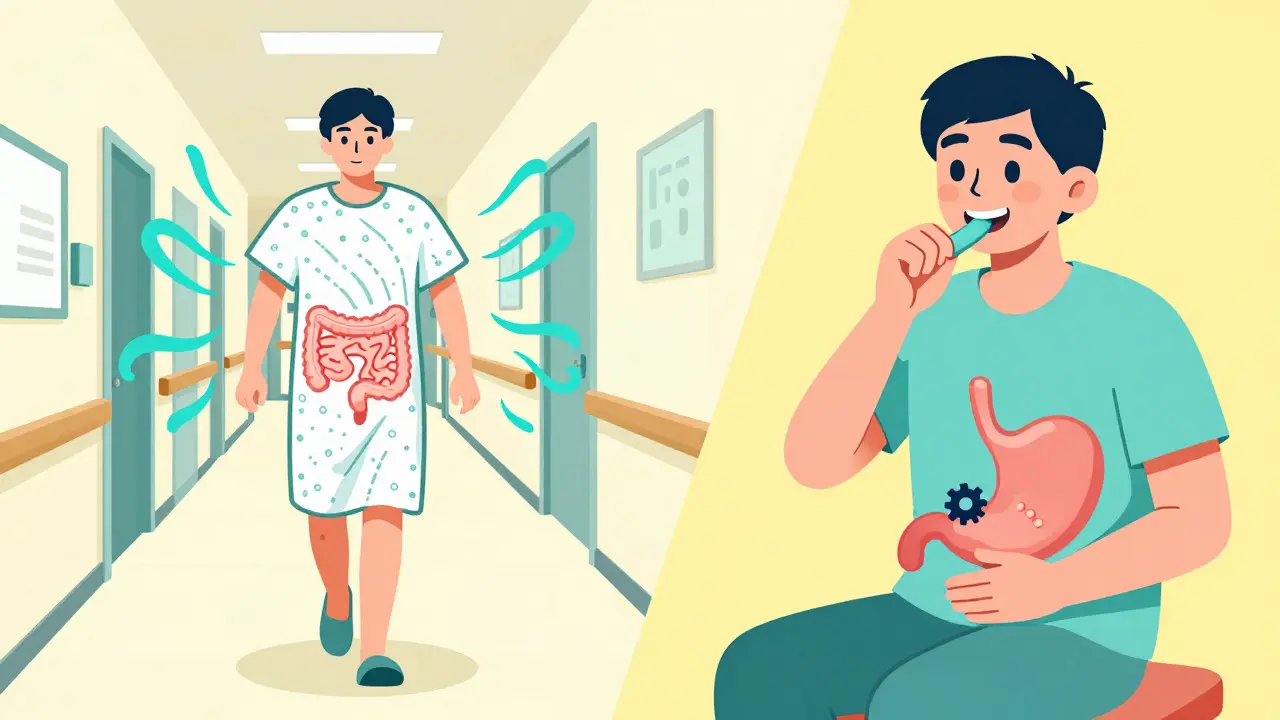
You don’t always need fancy drugs to keep your gut moving. Some of the most effective interventions are simple, low-cost behaviors that you can control. Dr. Michael Camilleri from Mayo Clinic emphasizes that early ambulation-getting out of bed and walking-is one of the strongest predictors of quick recovery.
Walking stimulates the vagus nerve and encourages natural peristalsis. Getting up within 4 to 6 hours of surgery can reduce POI duration by an average of 22 hours compared to staying in bed. But movement isn't the only trick.
Consider chewing gum. It sounds silly, but chewing gum four times a day mimics the act of eating. This triggers cephalic-vagal reflexes, sending signals to your stomach that food is coming, which stimulates acid secretion and motility. Clinical bundles that include chewing gum, early walking, and scheduled acetaminophen have been shown to reduce average POI duration from 4.1 days to 2.7 days in real-world hospital settings.
When Things Go Wrong: Troubleshooting POI
Despite best efforts, POI can still happen. If you are experiencing symptoms, here is how medical teams typically assess and treat the situation.
First, they rule out mechanical obstruction. This involves physical exams and sometimes CT scans to ensure there isn't a physical blockage like adhesions or a twisted bowel. If it's confirmed as functional ileus (paralysis), the focus shifts to supportive care.
- Nasogastric Decompression: If vomiting is severe, a tube may be inserted through the nose to drain stomach contents. While this provides comfort, studies show it doesn't necessarily shorten the duration of ileus.
- Fluid Management: Maintaining proper hydration and electrolyte balance is critical. Dehydration worsens gut stasis.
- Medication Adjustment: Doctors will switch to non-opioid pain relievers or introduce PORAs like methylnaltrexone if appropriate.
- Prokinetics: In some cases, drugs that stimulate gut movement may be used, though evidence for their effectiveness in POI is mixed.
It is important to note that transitioning off opioids too quickly can cause withdrawal symptoms in some patients, including anxiety, sweating, and increased pain sensitivity. This happened to 12% of patients in one case series, leading to readjustment of pain protocols. The goal is a balanced taper, not a cold turkey stop.
The Future of POI Management
We are standing on the brink of new treatments. Researchers are exploring naltrexone implants for sustained peripheral blockade, which could provide weeks of protection against opioid-induced gut dysfunction. There is also exciting pilot data on fecal microbiome transplantation, showing a 40% improvement in motility for refractory cases by restoring healthy gut bacteria.
Additionally, AI-driven prediction models are being developed to identify high-risk patients before surgery. By analyzing 27 preoperative variables, these models aim to predict POI risk with 86% accuracy, allowing for personalized prevention plans. As the global market for POI management grows toward $2.1 billion by 2029, expect these innovations to become standard care soon.
For now, the best defense is a proactive offense. Talk to your surgeon about an ERAS protocol. Ask about regional anesthesia. Commit to walking early. And remember, while opioids are powerful tools, they don't have to hold your recovery hostage.
How long does postoperative ileus last?
Physiologic ileus typically resolves within 48 to 72 hours. However, if symptoms persist beyond 3 days, it is considered clinically significant postoperative ileus (POI). With proper treatment, including multimodal analgesia and early mobilization, recovery time can be reduced to 2-3 days. Without intervention, it can extend hospital stays by several additional days.
Can I prevent postoperative ileus?
Yes, significantly. Prevention focuses on minimizing opioid use through multimodal analgesia (using acetaminophen, NSAIDs, and nerve blocks). Other key preventive measures include getting out of bed and walking within 4-6 hours of surgery, chewing gum to stimulate gut reflexes, and maintaining adequate hydration. These steps can reduce the incidence of POI by up to 35%.
What is the difference between ileus and bowel obstruction?
Ileus is a functional problem where the gut muscles temporarily stop contracting due to nerve suppression, often from opioids or surgical trauma. Bowel obstruction is a mechanical blockage caused by physical barriers like scar tissue (adhesions), hernias, or tumors. Ileus can often be managed conservatively with time and medication, while obstructions frequently require surgical intervention.
Are there medications specifically for opioid-induced ileus?
Yes, Peripheral Opioid Receptor Antagonists (PORAs) like Alvimopan and Methylnaltrexone are designed for this purpose. They block opioid receptors in the gut without affecting pain relief in the brain. Alvimopan is commonly used in hospitals for short-term use, while Methylnaltrexone is available via injection. They are not suitable for everyone, especially those with existing bowel obstructions.
Why do opioids cause constipation and ileus?
Opioids bind to mu-opioid receptors located in the enteric nervous system of the gastrointestinal tract. This binding inhibits the release of neurotransmitters that drive muscle contractions (peristalsis). It also increases fluid absorption in the colon, leading to hard, dry stools. The net effect is slowed transit time and reduced motility, resulting in constipation and potentially complete ileus.