
Patient Decision Aids: How They Improve Medication Safety and Adherence
 Jun, 5 2026
Patient Decision Aid Impact Calculator
Adjust the slider to represent the percentage of patients currently using a Patient Decision Aid for a specific condition.
Risk Perception Accuracy
Decision aids help patients understand actual probabilities (e.g., "1 in 10") rather than vague terms like "rare" or "common".
Projected Outcomes
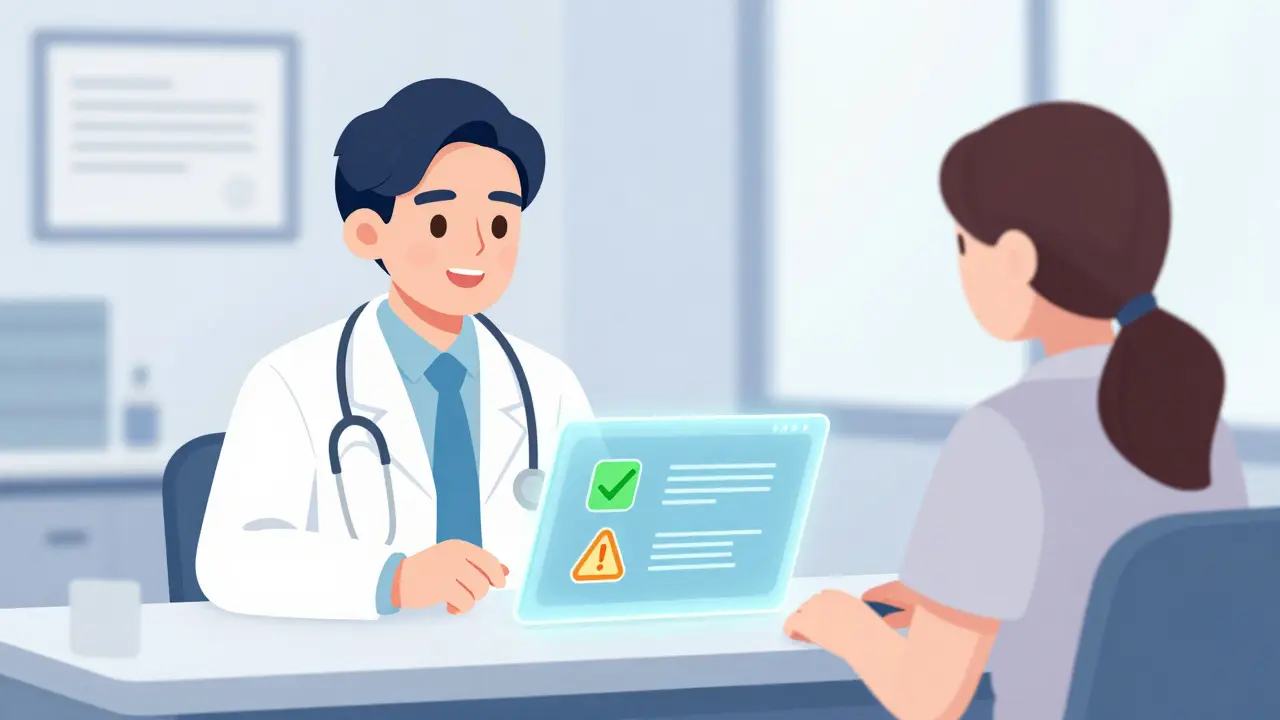
Imagine sitting in a doctor’s office, feeling the weight of a new prescription. The physician explains the benefits, mentions some side effects, and hands you the script. You nod, leave, and hope for the best. Now imagine that same visit, but with a tool that clearly lays out your options, helps you weigh the risks against your personal values, and ensures you actually understand what you’re agreeing to. This is not a futuristic dream; it is the reality of Patient Decision Aids (PtDAs), which are transforming how we approach medication safety.
Medication errors and poor adherence are massive problems in healthcare. Many patients stop taking their meds because they don’t understand why they need them or fear the side effects. Others start medications they don’t truly want because they felt pressured by the time-constrained consultation. Patient decision aids bridge this gap. They are evidence-based tools designed to facilitate shared decision-making between providers and patients. By presenting balanced information about treatment options-including benefits, risks, and potential outcomes-these tools empower patients to make choices that align with their own values.
What Exactly Are Patient Decision Aids?
At their core, patient decision aids are more than just brochures or pamphlets. According to the International Patient Decision Aids Standards (IPDAS) Collaboration, these tools must meet rigorous criteria to be considered effective. Established in 1997 and updated regularly, IPDAS provides a framework for quality. The latest version, IPDAS 4.0 (released in 2023), includes enhanced standards for digital tools and artificial intelligence features.
A valid decision aid typically includes three key components:
- Balanced Information: It presents all reasonable options, including the choice of no treatment, without bias toward one specific drug or procedure.
- Risk Probabilities: It uses clear, understandable formats (like icon arrays or natural frequencies) to show the likelihood of benefits and harms. For example, instead of saying "rare side effect," it might say "1 in 100 people experience this."
- Values Clarification: It helps patients reflect on what matters most to them. Do you prioritize avoiding side effects at all costs, or do you accept higher risk for better efficacy? This step is crucial for reducing decisional conflict.
Today, over 150 validated decision aids exist across various medical conditions. The Ottawa Hospital Research Institute's Decision Aids Library alone hosts 107 condition-specific tools as of 2023, serving tens of thousands of users monthly. These range from simple paper worksheets to sophisticated interactive web apps integrated with electronic health records (EHRs).
The Evidence: Do They Actually Work?
Skeptics might ask if these tools just add paperwork to an already busy clinic. The data says otherwise. The evidence supporting patient decision aids is robust and extensive. A landmark Cochrane Collaboration systematic review (updated in 2014 and referenced in subsequent studies) analyzed 115 randomized trials involving thousands of patients. The findings were clear: PtDAs improve the quality of the decision-making process in 88% of studies measuring key constructs.
Here is what happens when patients use these tools compared to usual care:
- Increased Knowledge: Patients score significantly higher on knowledge tests. One meta-analysis showed an average increase of 13.28 points on standardized knowledge assessments.
- Reduced Decisional Conflict: Patients feel less uncertain and more confident in their choices. Studies show a reduction of 8.7 points on the Decisional Conflict Scale.
- Better Risk Perception: Users demonstrate more accurate understanding of their actual risks. In one trial, patients using a statin decision aid realized their 10-year cardiovascular disease risk was 7.2%, not the vague "high risk" previously communicated, preventing unnecessary medication initiation.
- Improved Adherence: When patients choose a treatment themselves, they stick to it. Research indicates a 17.3% improvement in medication adherence at six months for diabetes medications when decision aids are used.
Dr. Annette O’Connor, Professor Emerita at the University of Ottawa and a leading expert in this field, notes that the evidence is "unequivocal." However, it is important to note that while PtDAs improve decision quality and processes, their impact on hard clinical outcomes like mortality or hospitalization rates is still being studied. As Dr. Michael Barry observed, we lack definitive proof that they consistently reduce hospitalizations, though they certainly prevent adverse events caused by misunderstanding.
| Metric | Usual Care (Verbal Explanation) | With Patient Decision Aid |
|---|---|---|
| Patient Knowledge Score | Baseline | +13.28 points (avg.) |
| Decisional Conflict | Higher uncertainty | -8.7 points (lower conflict) |
| Medication Adherence (6 mo) | Standard rates | +17.3% improvement (diabetes) |
| Clinician Time Required | Standard visit length | +3-8 minutes per consultation |
| Risk Understanding | Often inaccurate/vague | More accurate probability estimates |

Implementation Challenges: Why Aren’t They Used Everywhere?
If the benefits are so clear, why isn’t every doctor using them? The answer lies in the practical realities of modern healthcare. The biggest barrier is time. A typical primary care appointment lasts 15 minutes. Integrating a decision aid can add 3 to 8 minutes to the visit. For clinicians already overwhelmed, this feels like an impossible luxury.
Dr. Sarah Chen, reporting on Society of General Internal Medicine forums, highlighted this tension. She noted that while her patients’ hesitation to start insulin dropped from 42% to 18% after using a decision aid, the initial 8-minute investment per visit was difficult to sustain in short appointment slots.
Other challenges include:
- Health Literacy Barriers: Complex information can overwhelm patients with low literacy or limited English proficiency. Without tailored adaptations, these vulnerable groups may derive less benefit. Solutions like "teach-back" methods (where patients repeat information in their own words) are critical here.
- EHR Integration Issues: While newer digital aids use FHIR APIs to connect with Electronic Health Records, many legacy systems do not support this seamless integration, creating workflow friction.
- Reimbursement Models: In fee-for-service environments, the time spent facilitating shared decision-making is often not reimbursed adequately. This financial disincentive slows adoption.
Despite these hurdles, adoption is growing. In 2015, only 12% of U.S. primary care physicians used PtDAs. By 2022, that number rose to 37%. Regulatory drivers are helping too. Twenty-nine U.S. states have enacted legislation supporting the use of decision aids in specific contexts, such as Michigan’s 2018 law requiring them for elective surgeries. Additionally, CMS included shared decision-making with decision aids as a quality metric in Medicare Advantage plans starting in 2020.

How to Get Started with Patient Decision Aids
For clinicians looking to implement PtDAs, the process doesn’t have to be overwhelming. Here is a practical roadmap based on successful implementations like those at Mayo Clinic, which saw medication adherence jump from 58% to 75%:
- Select Validated Tools: Don’t create your own from scratch unless necessary. Use tools validated against IPDAS criteria. The Ottawa Hospital Research Institute’s library is a great starting point. Look for condition-specific aids, such as the "Statin Choice" or "Diabetes Medication Choice" tools.
- Pre-Visit Distribution: To save time in the clinic, send the decision aid to patients before their appointment via patient portals or mail. This allows patients to review the material at home and come prepared with questions. This strategy is used in 68% of successful implementations.
- Train Your Staff: Clinicians need basic facilitation skills to guide values clarification discussions. Training typically takes 2-3 hours initially, plus 2-3 supervised uses. Use the OPTION scale (a 12-item observational tool) to assess and improve clinician proficiency.
- Leverage Technology: If possible, integrate digital PtDAs with your EHR system. This ensures that the patient’s choices are documented correctly and reduces administrative burden. Newer platforms offer real-time effectiveness monitoring to track decision quality metrics.
- Address Literacy Gaps: For patients who struggle with complex text, use multimedia elements. 78% of contemporary PtDAs feature interactive risk calculators or video explanations. Always employ teach-back methods to confirm understanding.
The Future of Shared Decision-Making
We are entering a new era of personalized decision support. The global patient decision aid market, valued at $127.4 million in 2022, is projected to reach $386.2 million by 2028. This growth is driven by value-based care models that reward outcomes rather than volume.
Innovations are accelerating. The NIH-funded Personalized Medication Decision Support System (2022-2025) uses AI to tailor medication options to individual patient profiles based on EHR data. The FDA has also issued guidance recognizing certain decision aids as part of medication labeling for complex therapeutics. By 2027, experts predict that 75% of high-stakes medication decisions will involve validated decision aids.
For patients, this means more control, fewer errors, and treatments that truly fit their lives. For providers, it means deeper partnerships with patients and potentially fewer readmissions due to non-adherence. The shift from paternalistic medicine to shared decision-making is not just a trend; it is becoming the standard of care for preference-sensitive decisions.
Are patient decision aids free for patients?
Most patient decision aids available through public libraries like the Ottawa Hospital Research Institute are free to access and use. However, some proprietary digital platforms integrated into private health systems may be covered under insurance or employer health benefits. Patients should check with their provider or insurer regarding any potential costs associated with specific digital tools.
Do patient decision aids replace my doctor's advice?
No, they do not replace professional medical advice. Instead, they complement it. Decision aids provide balanced information about options and help you clarify your personal values. Your doctor provides clinical expertise, diagnoses, and recommendations based on your specific health status. The goal is to combine both sources of information to make the best joint decision.
How long does it take to use a decision aid during a visit?
Integrating a decision aid into a clinical consultation typically adds 3 to 8 minutes. To mitigate this time pressure, many clinics now distribute materials before the visit, allowing patients to review them at home. This pre-visit preparation makes the in-clinic discussion more efficient and focused on answering specific questions.
Are there decision aids for common medications like blood pressure drugs?
Yes, there are numerous validated decision aids for chronic conditions. Examples include aids for statins (cholesterol), antihypertensives (blood pressure), and diabetes medications. The Ottawa Hospital Research Institute’s library lists over 100 condition-specific tools. You can search for specific conditions to find relevant aids that explain the trade-offs of different medication classes.
What if I have low health literacy or speak a different language?
Many modern decision aids are designed with accessibility in mind. Look for tools that offer multimedia content, such as videos or interactive icons, which can be easier to understand than dense text. Some platforms offer translations in multiple languages. Additionally, clinicians trained in using these aids should employ "teach-back" methods to ensure you fully understand the information, regardless of literacy level.