
Parkinson’s Disease and Antipsychotics: How to Manage Psychosis Without Worsening Motor Symptoms
 Jul, 24 2026
Parkinson's Disease Psychosis Medication Guide
Use this tool to compare antipsychotic medications for Parkinson's disease psychosis (PDP), understand their risks, and follow the recommended stepwise approach before starting treatment.
Medication Comparison
| Medication | FDA Status | Motor Risk | Key Monitoring |
|---|---|---|---|
| Clozapine | Approved | Low | Weekly CBC (blood counts) |
| Quetiapine | Off-label | Low | Fall risk assessment |
| Pimavanserin | Approved | Very Low | Mortality risk awareness |
| Risperidone | Not Recommended | High | Avoid in Parkinson's |
| Haloperidol | Contraindicated | Very High | Avoid entirely |
Stepwise Approach Before Antipsychotics
Experts recommend reviewing existing Parkinson's medications first. 62% of patients see psychosis resolve by adjusting these meds alone.
-
Anticholinergicse.g., benztropine
-
MAO-B inhibitorse.g., selegiline
-
Amantadine
-
Dopamine agonistse.g., pramipexole, ropinirole
-
COMT inhibitorse.g., entacapone
-
LevodopaLast resort; controls core motor symptoms
Detailed Medication Profiles
Efficacy: FDA-approved specifically for PDP (2016). Treats psychosis without heavily impacting movement due to low D2 receptor affinity (occupies only 40-60%).
Risk: 0.8% risk of agranulocytosis (life-threatening drop in white blood cells).
Monitoring: Mandatory weekly blood tests initially. Stop immediately if absolute neutrophil count drops below 1,500 cells/μL.
Status: Widely prescribed off-label. Preferred over clozapine to avoid rigorous blood monitoring.
Dosing: Starts at 12.5–25 mg nightly, can go up to 100 mg. Effects usually seen within 1-2 weeks.
Efficacy Note: Some experts argue efficacy may be partly placebo-driven, citing trials where it performed no better than a sugar pill on specific symptom scales.
Side Effects: Watch for excessive sedation, which increases fall risk.
Mechanism: First FDA-approved non-dopaminergic antipsychotic for PDP (2022). Targets serotonin receptors (5-HT2A) instead of blocking dopamine.
Efficacy: Improved psychosis scores by nearly 6 points compared to placebo with virtually no worsening of motor symptoms.
Risk: Black box warning for increased mortality risk (1.7-fold higher than placebo).
Administration: Must take on empty stomach (at least one hour before or two hours after a meal).
Monitoring & Management Checklist
General Monitoring
- Track UPDRS-III score biweekly during titration
- Discontinue if motor scores worsen >30% from baseline
- Monitor for falls, stiffness, and confusion
Specific Drug Checks
- Clozapine: Ensure weekly blood draws are not skipped
- Pimavanserin: Verify taken on empty stomach
- Quetiapine: Assess for excessive sedation/fall risk
Imagine trying to steady your hand while reaching for a glass of water. For someone with Parkinson’s disease is a progressive neurological disorder characterized by the loss of dopamine-producing neurons in the brain. It causes tremors, stiffness, and slow movement., that simple task requires immense effort. Now imagine that same person also experiences vivid hallucinations or paranoia-a condition known as Parkinson’s disease psychosis (PDP) is a complex neuropsychiatric complication affecting up to 80% of patients during their disease course.. This creates a medical nightmare: treating the psychosis often worsens the movement problems, and vice versa.
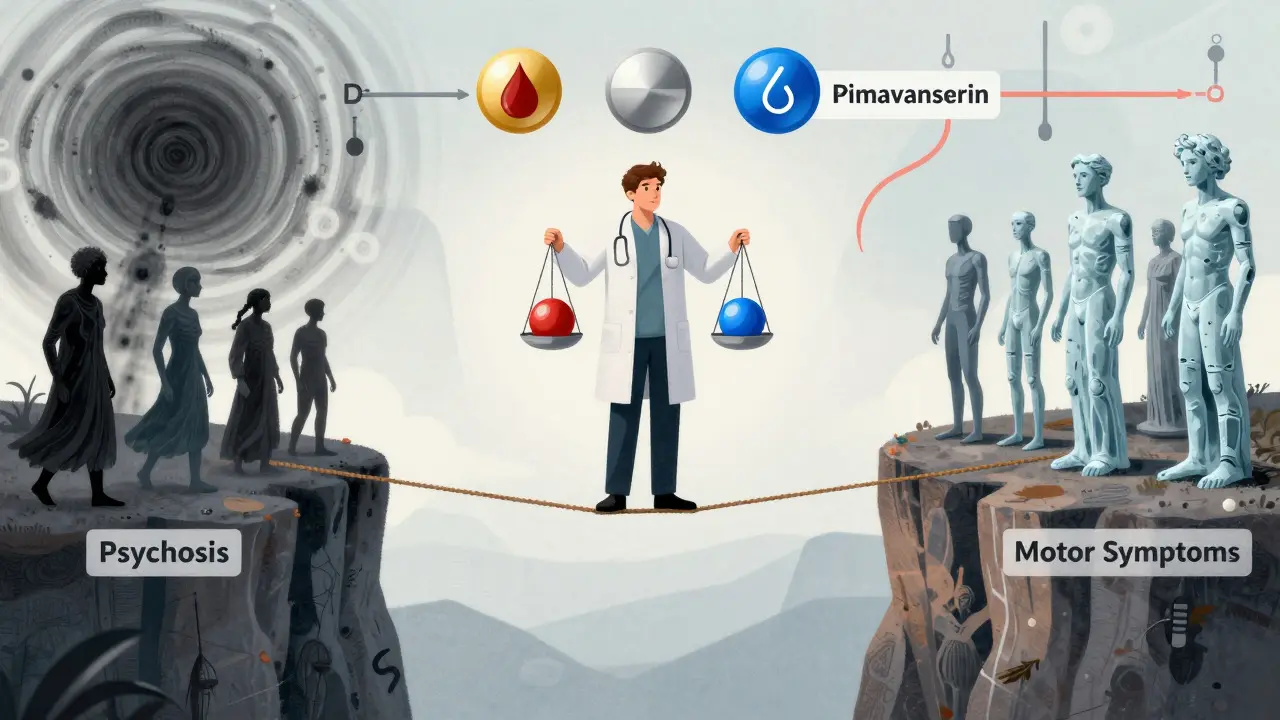
This isn't just a theoretical dilemma. Psychosis accounts for nearly a quarter of hospital admissions among Parkinson's patients. The core issue lies in how our brains work. Parkinson's stems from a lack of dopamine in the nigrostriatal pathway. Standard antipsychotic medications work by blocking dopamine receptors (specifically D2 receptors) to calm psychiatric symptoms. But if you block dopamine in a brain that is already starving for it, you essentially hit the brakes on movement. This therapeutic paradox means doctors must walk a tightrope, choosing drugs that treat the mind without crippling the body.
The Dopamine Dilemma: Why Most Antipsychotics Fail
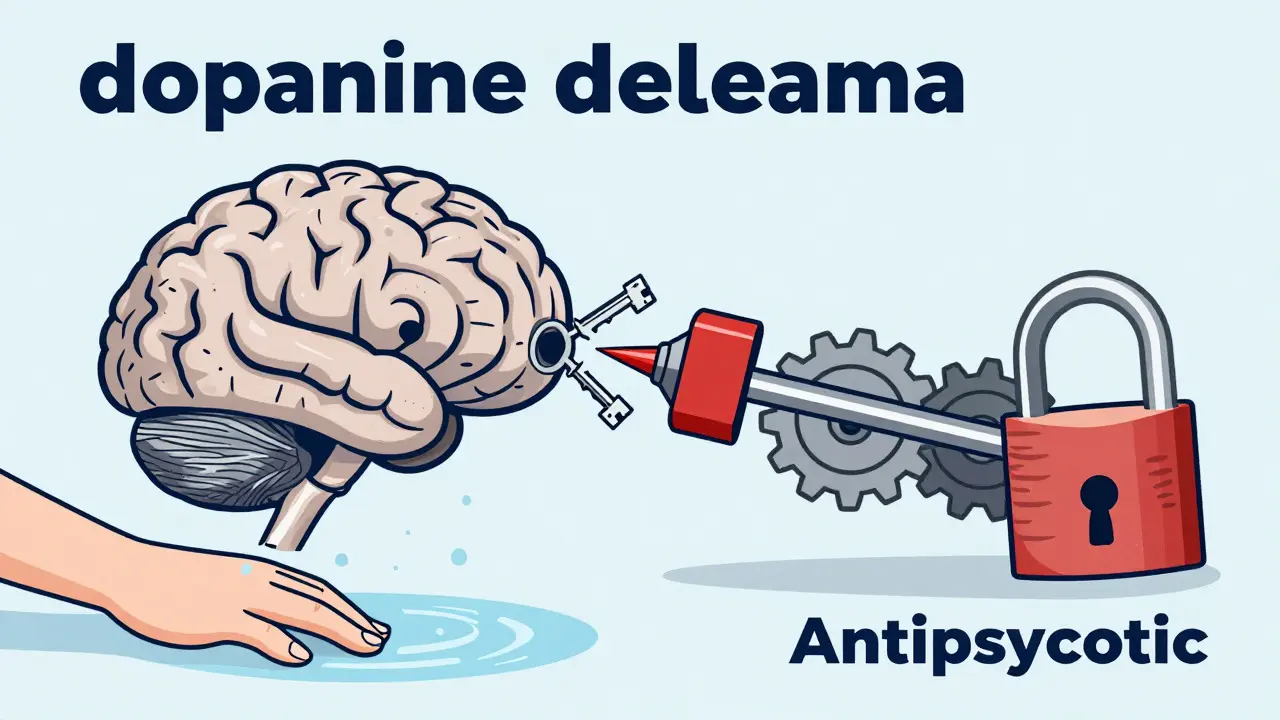
To understand why certain drugs are dangerous for Parkinson's patients, we have to look at receptor affinity. Think of dopamine receptors like locks and dopamine molecules like keys. In Parkinson's, you don't have enough keys. Antipsychotics act like jamming tools that stick into the locks, preventing any key from turning. The tighter the jamming tool fits, the worse the motor side effects become.
First-generation antipsychotics (FGAs) are older typical antipsychotic medications such as haloperidol and chlorpromazine that strongly block dopamine D2 receptors. These are the worst offenders. Drugs like Haloperidol is a high-potency first-generation antipsychotic associated with severe extrapyramidal symptoms. (Haldol) occupy 90-100% of D2 receptors at standard doses. Research shows that haloperidol can cause drug-induced parkinsonism in 70-80% of patients. Even microdoses of 0.25 mg can be catastrophic. The Parkinson's Foundation explicitly advises avoiding these entirely for PDP due to an 80-90% risk of significantly worsening motor function.
Even some newer "atypical" drugs carry heavy risks. Risperidone is a second-generation antipsychotic that has higher D2 receptor affinity than other atypicals, posing significant motor risks. might seem safer because it is a second-generation agent, but studies tell a different story. A landmark 2005 double-blind trial found that while risperidone helped psychosis, it caused a mean increase of 7.2 points on the Unified Parkinson's Disease Rating Scale (UPDRS-III)-a measure of motor severity-compared to only 1.8 points for safer alternatives. More alarmingly, a 2013 study in JAMA Internal Medicine linked risperidone use in Parkinson's patients to a 2.46 times higher risk of mortality compared to non-use.
Safer Options: Clozapine, Quetiapine, and Pimavanserin
If most antipsychotics are off-limits, what remains? There are three primary medications currently used to manage PDP, each with distinct pros and cons.
Clozapine is an atypical antipsychotic FDA-approved for Parkinson's disease psychosis with low D2 receptor affinity and high efficacy. holds the gold standard for efficacy. It was FDA-approved specifically for this indication in 2016. Because it has a very low affinity for D2 receptors (occupying only 40-60%) and strong activity on serotonin receptors, it treats psychosis without heavily impacting movement. However, it comes with a serious catch: a 0.8% risk of agranulocytosis, a life-threatening drop in white blood cells. This requires mandatory weekly blood tests initially. If your absolute neutrophil count drops below 1,500 cells/μL, you must stop the drug immediately. Despite this burden, it remains the most effective option for severe cases.
Quetiapine is a widely prescribed off-label antipsychotic for Parkinson's psychosis due to its favorable motor side effect profile. is the most commonly prescribed alternative. It is used off-label because it lacks formal FDA approval for PDP, though it is widely accepted in clinical practice. It typically starts at low doses (12.5-25 mg nightly) and can go up to 100 mg. It usually shows effects within 1-2 weeks. While generally safe for motor symptoms, some experts argue its efficacy may be partly placebo-driven, citing trials where it performed no better than a sugar pill on specific symptom scales. Still, many neurologists prefer it over clozapine to avoid the rigorous blood monitoring.
Pimavanserin (Nuplazid) is the first FDA-approved non-dopaminergic antipsychotic specifically for Parkinson's disease psychosis, acting as a serotonin 5-HT2A inverse agonist. represents a breakthrough. Approved in 2022, it works differently than all other antipsychotics. Instead of blocking dopamine, it targets serotonin receptors (5-HT2A). Clinical trials showed it improved psychosis scores by nearly 6 points compared to placebo, with virtually no worsening of motor symptoms. However, post-marketing data revealed a concerning 1.7-fold increased mortality risk compared to placebo, leading to a black box warning. Doctors now prescribe it cautiously, weighing the benefit of motor stability against potential long-term risks.
| Medication | FDA Status for PDP | Motor Side Effect Risk | Key Monitoring Requirement |
|---|---|---|---|
| Clozapine | Approved | Low | Weekly CBC (blood counts) for agranulocytosis |
| Quetiapine | Off-label | Low | Standard clinical monitoring; fall risk assessment |
| Pimavanserin | Approved | Very Low | Mortality risk awareness; take on empty stomach |
| Risperidone | Not Recommended | High | Avoid in Parkinson's patients |
| Haloperidol | Contraindicated | Very High | Avoid entirely |
The Stepwise Approach: Before Starting Antipsychotics
Before adding a new drug with potential side effects, experts recommend a strict algorithm. Jumping straight to antipsychotics is a common mistake. The first step is always to review existing Parkinson's medications. Many drugs used to treat movement symptoms can actually trigger psychosis.
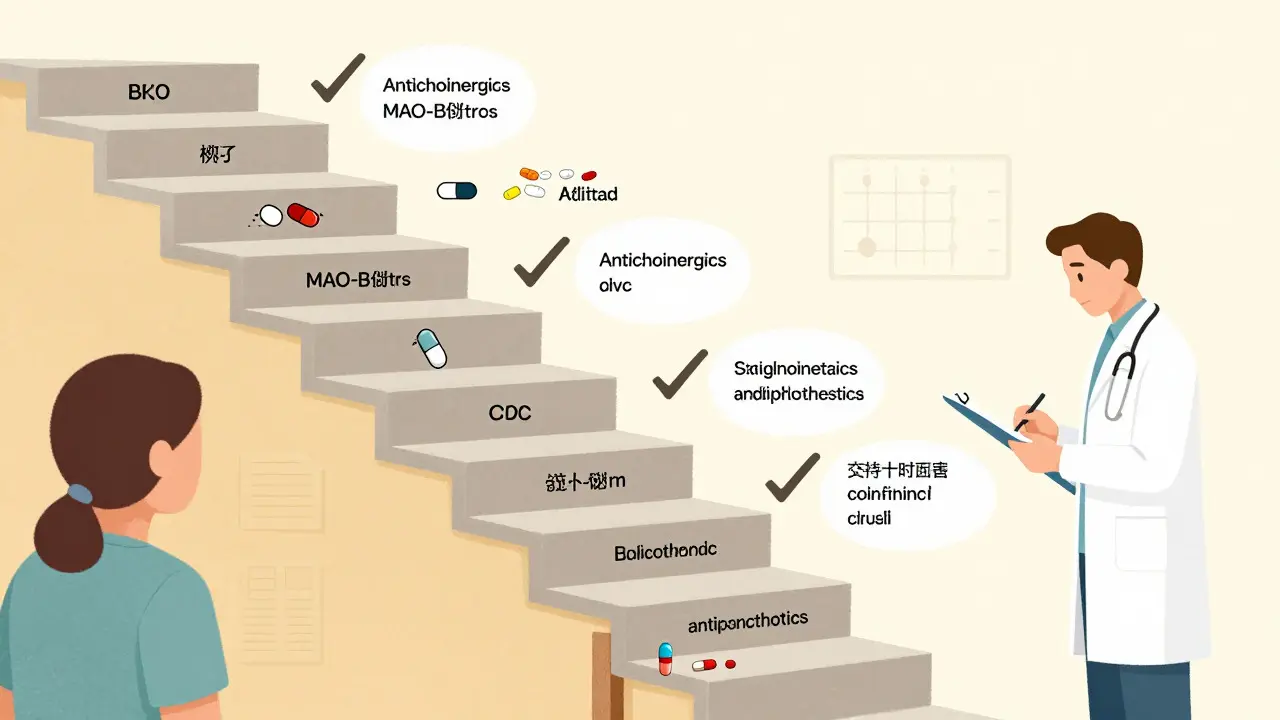
Neurologists typically reduce or eliminate medications in this specific order:
- Anticholinergics (e.g., benztropine)
- MAO-B inhibitors (e.g., selegiline)
- Amantadine
- Dopamine agonists (e.g., pramipexole, ropinirole)
- COMT inhibitors (e.g., entacapone)
- Levodopa (last resort, as it controls core motor symptoms)
Studies show that 62% of patients see their psychosis resolve simply by adjusting these existing meds, meaning they never need an antipsychotic at all. Only when this fails should clinicians introduce clozapine, quetiapine, or pimavanserin.
Monitoring and Managing Risks
Starting an antipsychotic in a Parkinson's patient requires vigilance. You aren't just watching for hallucinations; you are watching for falls, stiffness, and confusion. The standard protocol involves tracking the UPDRS-III score biweekly during the titration phase. If motor scores worsen by more than 30% from baseline, the medication should likely be discontinued.
For those on clozapine, the logistics of blood draws can be burdensome, but skipping them is dangerous. For pimavanserin, patients must remember to take it on an empty stomach, at least one hour before or two hours after a meal, to ensure proper absorption. With quetiapine, watch for excessive sedation, which increases fall risk-a major concern for elderly Parkinson's patients.
The landscape is evolving. New research focuses on selective serotonin inverse agonists like lumateperone, which showed promise in early trials with minimal motor impact. Until then, the choice remains between the proven efficacy of clozapine, the convenience of quetiapine, and the novel mechanism of pimavanserin. Each decision must be personalized, balancing the terror of psychosis against the disability of rigid, unmovable limbs.
Which antipsychotic is safest for Parkinson's disease?
Clozapine and pimavanserin are considered the safest options regarding motor side effects. Clozapine is highly effective but requires regular blood tests due to a small risk of agranulocytosis. Pimavanserin is the only non-dopaminergic option approved specifically for Parkinson's psychosis, avoiding dopamine blockade entirely, though it carries a black box warning for increased mortality risk.
Can I take Seroquel (quetiapine) for Parkinson's psychosis?
Yes, quetiapine (Seroquel) is widely used off-label for Parkinson's disease psychosis. It has a lower affinity for dopamine receptors than many other antipsychotics, making it less likely to worsen motor symptoms like tremors and rigidity. It is often preferred over clozapine because it does not require routine blood monitoring, although some studies suggest its efficacy may be modest.
Why do antipsychotics worsen Parkinson's symptoms?
Most traditional antipsychotics work by blocking dopamine D2 receptors in the brain. Parkinson's disease is caused by a deficiency of dopamine. When these drugs block the remaining dopamine receptors, they further inhibit movement control, leading to increased stiffness, tremors, and slowness (bradykinesia).
What should I avoid taking if I have Parkinson's?
Patients with Parkinson's should strictly avoid first-generation antipsychotics like haloperidol (Haldol) and chlorpromazine, as well as high-potency second-generation agents like risperidone. These drugs have high D2 receptor affinity and significantly increase the risk of severe motor deterioration and even mortality in Parkinson's patients.
How is Parkinson's disease psychosis treated first?
The first step in treating Parkinson's psychosis is not adding an antipsychotic, but reducing or eliminating other Parkinson's medications that may be causing the symptoms. Doctors typically taper anticholinergics, MAO-B inhibitors, amantadine, and dopamine agonists before considering adding clozapine, quetiapine, or pimavanserin.