
Palliative and Hospice Care: How to Balance Symptom Relief with Side Effects
 Jan, 15 2026
Symptom Relief Balance Calculator
How to Balance Medication Benefits and Side Effects
This tool helps you understand the delicate balance between symptom relief and potential side effects when managing symptoms in palliative care. Based on clinical guidelines from the article.
When someone is facing a serious illness, the goal isn’t just to extend life-it’s to make the life they have as comfortable as possible. That’s where palliative care comes in. It’s not about giving up. It’s about focusing on quality. Whether it’s pain, shortness of breath, nausea, or anxiety, these symptoms can overwhelm a person’s day-to-day experience. But treating them isn’t simple. Every medication that brings relief can also bring unwanted side effects. The real challenge? Finding the balance.
What’s the Difference Between Palliative and Hospice Care?
Palliative care is for anyone with a serious illness, no matter how advanced. You can be getting chemotherapy, dialysis, or surgery-and still receive palliative care to manage your symptoms. It’s not tied to prognosis. Hospice care, on the other hand, is a type of palliative care for people with a life expectancy of six months or less who are no longer seeking curative treatment. Think of hospice as the final stage of palliative care, focused entirely on comfort, not cure.How Do You Know If a Symptom Is Being Managed Well?
Good symptom control isn’t just about giving more drugs. It’s about measuring what matters. Pain, for example, isn’t just “bad” or “not bad.” Clinicians use a 0-10 scale: 0 is no pain, 10 is the worst imaginable. But that’s only the start. Where is the pain? Does it spread? Is it sharp, dull, burning? When does it get worse? These details change the treatment. One patient might need a low-dose opioid for nerve pain, while another needs a different drug for bone pain. Skipping this assessment leads to under- or over-treatment. Dyspnea-shortness of breath-is another common issue. Opioids are the most effective treatment, even for people without cancer. Studies show they reduce breathlessness without causing excessive sedation when used properly. But you can’t just give a pill and walk away. You need to check back in. Is the patient breathing easier? Are they alert? Are they confused? That’s the tightrope walk: relief without drowsiness.The Hidden Dangers of Medications
Medications are powerful tools-but they’re not harmless. Opioids can cause constipation, nausea, or mental fog. Benzodiazepines like lorazepam help with anxiety, but too much can make someone unresponsive. Antipsychotics like haloperidol are used for delirium, but they can stiffen muscles or cause heart rhythm changes. The key is starting low and going slow. One of the biggest mistakes? Giving a high dose too early because the family says, “Just make them comfortable.” But comfort isn’t unconsciousness. A patient who can hold their grandchild’s hand, hear their voice, or sip tea is more comfortable than one who’s sedated all day. That’s why guidelines like those from UPenn require assessments every 30 minutes when adjusting meds-so you don’t accidentally knock someone out.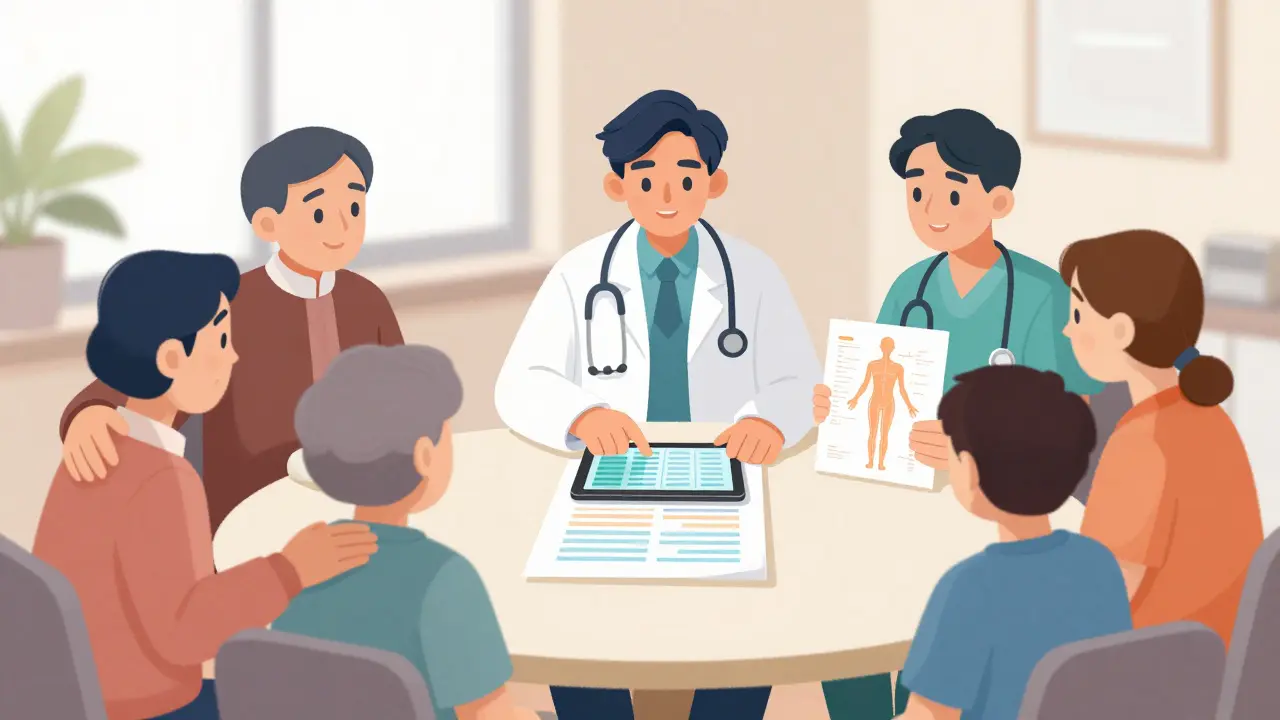
Non-Drug Tools Are Just as Important
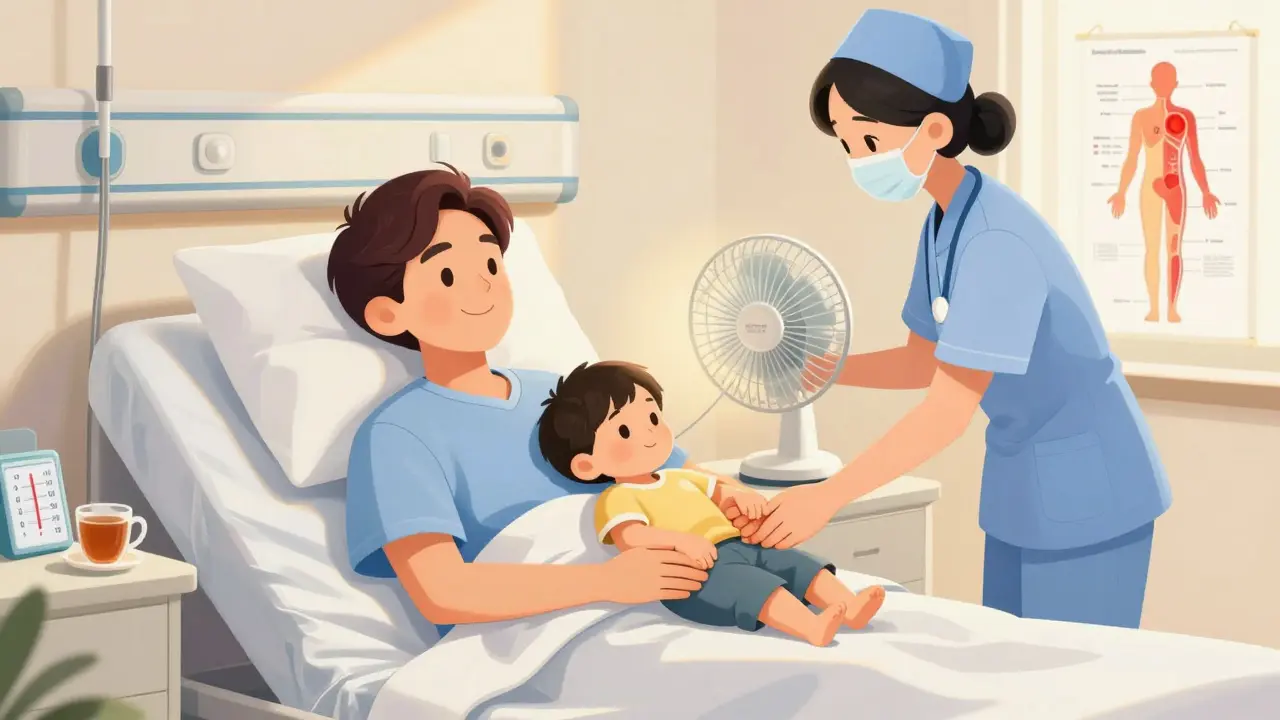
Not every symptom needs a pill. A cool cloth on the forehead helps with nausea. A fan blowing gently can ease breathlessness. Music, touch, quiet presence-these aren’t luxuries. They’re part of the treatment plan. A 2022 study found that using a “body diagram” to map pain improved communication between patients and nurses by 31%. That’s not just nice-it’s clinical. Spiritual and emotional distress often show up as physical pain. A person who feels like a burden, or who’s terrified of dying alone, may report higher pain scores. That’s not “all in their head.” It’s real suffering. Palliative teams include social workers and chaplains for this reason. Talking about fears, regrets, or meaning can reduce pain intensity just as much as morphine.What Happens When Care Is Poorly Managed?
When assessments are skipped, symptoms spiral. A patient with uncontrolled pain may become agitated, leading to more sedatives. More sedatives lead to confusion. Confusion leads to falls. Falls lead to fractures. Fractures lead to more pain. It’s a chain reaction-and it’s preventable. One nurse in New Zealand told me about a patient who was given high-dose morphine every four hours without checking if he was actually in pain. He was sedated for days. When the team finally did a full assessment, they found his pain was from a urinary tract infection. Antibiotics cleared it up. He woke up, recognized his daughter, and ate a banana for the first time in a week. That’s the difference between protocol and presence.How Do Families React to Medication Decisions?
Families often fear that giving pain meds means “giving up.” They hear “opioid” and think addiction. But in end-of-life care, addiction isn’t the concern-comfort is. The real risk is undertreatment. A 2021 audit in England showed that when nurses used structured pain assessments, medication errors dropped by 22%. The best way to help families? Educate them early. Tell them: “We’re not trying to make him sleep. We’re trying to make him awake enough to talk to you.” Show them the pain scale. Let them see the before-and-after. When families understand the goal isn’t sedation but connection, they stop resisting the meds.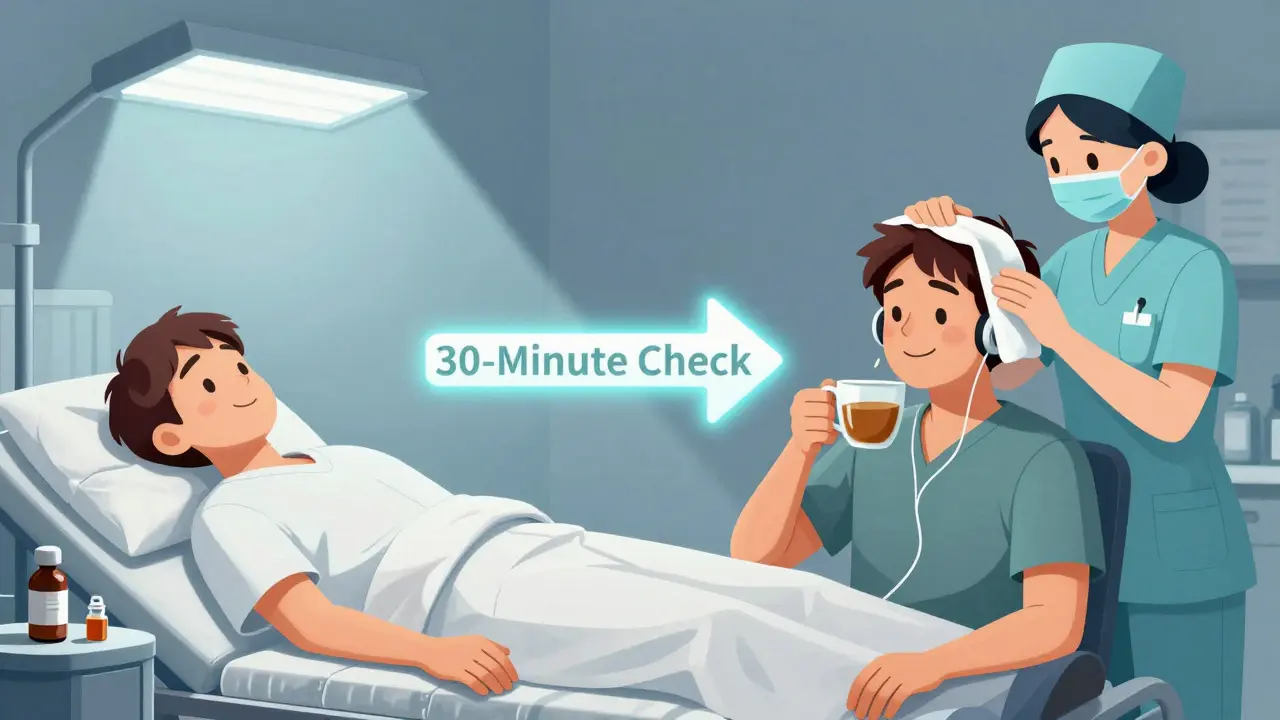
What’s Changing in Palliative Care Right Now?
The field is moving fast. New tools are emerging. Digital apps now let patients report symptoms from their phone-like “I’m short of breath” or “I feel nauseous.” These signals alert the care team in real time. Pilot programs show a 18% improvement in symptom control because problems are caught before they become crises. Cannabinoids are also being studied. In Canada, a 2023 trial found that adding medical cannabis reduced opioid use by 37% in hospice patients. But it came with dizziness in nearly a third of users. So it’s not a magic bullet-it’s another tool to consider, with risks and benefits weighed carefully. The biggest shift? Starting palliative care earlier. A landmark study in the New England Journal of Medicine found that lung cancer patients who got palliative care alongside chemotherapy lived 3.2 months longer and had far better quality of life. That’s not a side effect. That’s the point.How Do You Get Started?
You don’t need to be an expert. Start with three things:- Ask: “What’s the biggest discomfort right now?”
- Measure it: Use the 0-10 scale for pain, breathlessness, or nausea.
- Check back: In 30 minutes, ask again. Did it help? Did it make things worse?
What About the Future?
There’s a shortage of palliative care specialists. Only 7,000 certified doctors exist in the U.S. for a need of 22,000. But more general practitioners are learning basic skills. Tele-palliative care is expanding, especially in rural areas where access is limited. By 2027, nearly half of rural patients may get care through video visits. The goal isn’t to replace human touch with technology. It’s to make sure that touch reaches everyone who needs it.Is palliative care only for cancer patients?
No. Palliative care helps anyone with a serious illness-heart failure, COPD, dementia, kidney disease, ALS, and more. It’s not about the diagnosis. It’s about the suffering. Symptoms like pain, fatigue, nausea, and anxiety don’t care what disease caused them. They need relief, no matter the cause.
Does using opioids mean the patient is near death?
Not at all. Opioids are used for moderate to severe pain or breathlessness at any stage of illness. Many patients with chronic heart failure or COPD take low-dose opioids for years to stay active and comfortable. The dose is adjusted based on symptoms, not prognosis. Using opioids doesn’t predict how long someone has left-it means they’re being treated for discomfort.
Can you still get curative treatment while receiving palliative care?
Yes. Palliative care works alongside curative treatments. You can be getting chemotherapy, dialysis, or even surgery while also receiving pain management, emotional support, and symptom relief. Many people assume palliative care means “no more treatment,” but that’s a misunderstanding. It means “more support,” no matter what else is happening.
Why do some families resist giving pain medication?
Fear. Many believe opioids cause addiction, shorten life, or mean giving up. But in end-of-life care, addiction is extremely rare. Opioids don’t shorten life when used properly-they improve it. Families often don’t know the difference between sedation and comfort. Education helps. Showing them how the patient was before and after medication often changes their mind.
What if the patient can’t tell you how they feel?
That’s when observation matters. Look for signs: grimacing, restlessness, pulling at IV lines, increased heart rate, or withdrawal. Use tools like the RASS scale (Richmond Agitation-Sedation Scale) to measure alertness. Ask caregivers: “Has their behavior changed?” Sometimes, a person who used to smile at grandchildren now looks away-that’s a symptom. Non-verbal cues are just as important as words.
Are there alternatives to opioids for pain?
Yes. For nerve pain, gabapentin or pregabalin help. For bone pain, bisphosphonates or radiation may be used. For inflammation, steroids can reduce swelling. Non-drug options include heat, massage, positioning, or distraction techniques. But opioids remain the most reliable for moderate to severe pain. The goal isn’t to avoid them-it’s to use them wisely, with other tools, and only as much as needed.
Ryan Hutchison
January 17, 2026 AT 02:24Look, I don't care what some fancy medical journal says - if you're giving opioids to someone who's not dying, you're playing Russian roulette with their brain. I've seen too many grandpas turned into drooling zombies because some nurse thought 'comfort' meant knocking them out. This isn't medicine, it's chemical sedation disguised as compassion.
john Mccoskey
January 17, 2026 AT 03:49Let’s cut through the feel-good noise. Palliative care isn’t about ‘quality of life’ - it’s about cost containment disguised as ethics. Hospitals push it because it’s cheaper than aggressive treatment, and families buy into the myth because they’re too emotionally exhausted to fight. The real problem? We’ve turned suffering into a clinical metric. You measure pain on a 0-10 scale like it’s a Starbucks order. But pain isn’t a number - it’s a scream in the dark that no algorithm can quantify. And don’t get me started on those ‘body diagrams.’ If you think drawing a little red X on a stick figure tells you anything about existential dread, you’ve never sat with someone who’s afraid to die alone.
The ‘start low, go slow’ mantra is bureaucratic cowardice. When someone’s gasping for air, you don’t wait 30 minutes to check if they’re still breathing - you act. The real tragedy isn’t overmedication - it’s underdaring. We’ve replaced courage with checklists. And now we wonder why patients die feeling like burdens.
And yes, I know about that NZ nurse story. But that’s the exception, not the rule. Most hospice units are understaffed, underfunded, and overworked. The patient who ate a banana? That’s not protocol. That’s a miracle. And miracles don’t scale.
Non-drug interventions? Cute. A fan and music won’t stop bone metastases from shredding your spine. Don’t confuse comfort with distraction. And don’t tell me about chaplains ‘reducing pain intensity.’ That’s not medicine - that’s spiritual placebo. Pain is biological. It responds to pharmacology, not poetry.
Yes, early palliative care extended survival in that NEJM study - but correlation isn’t causation. Maybe those patients lived longer because they got better overall care, not because morphine was administered at week two. The data is cherry-picked to sell a narrative. The truth? We’re not improving end-of-life care. We’re just making it quieter.
And cannabinoids reducing opioid use by 37%? That’s not a breakthrough - it’s a Band-Aid on a hemorrhage. Dizziness in a third of users? That’s not a side effect - that’s a warning. We’re trading one set of risks for another because we’re desperate to avoid the word ‘opioid.’
Stop romanticizing this. Palliative care isn’t sacred. It’s a system built on compromise. And compromise means someone always loses - usually the person who can’t speak up anymore.
Joie Cregin
January 17, 2026 AT 04:31My grandma went through this last year. They gave her this little pain log - just a sticky note with 0 to 10 and a heart next to the 10. She’d draw a little sun if she felt okay. One day she drew a sun and a cat. I asked why. She said, ‘The cat reminds me of my first one, before the nursing home.’ That’s the magic right there. Not the morphine. Not the scale. The cat.
I used to think comfort was about silence. Now I know it’s about presence. The quiet hum of a fan, the weight of a hand on a shoulder, the way her voice cracked when she said, ‘I’m not ready to go.’ That’s the stuff they don’t put in guidelines. But it’s the stuff that matters.
They told us opioids would make her ‘zombie-like.’ She was awake enough to laugh at my terrible jokes. That’s not sedation. That’s dignity.
Stephen Tulloch
January 18, 2026 AT 15:59LMAO the ‘body diagram’ thing. 😂 Like, I’m supposed to color in my colon pain with a crayon? Next they’ll have us fill out a Google Form for existential dread. ‘Please rate your fear of the void on a scale of 1-5.’
But honestly? I get it. My uncle had COPD and they gave him a little handheld fan. He’d sit on the porch with it blowing on his face and just… smile. Like he was on vacation. That’s the real win. Not the opioids. Not the charts. The fan.
Also, medical cannabis? Canada’s ahead of the curve. I’d rather have a little dizziness than a brain full of fog. 🌿
Bianca Leonhardt
January 20, 2026 AT 15:19Of course the article says ‘don’t give too much morphine.’ That’s what the hospitals want you to believe. They’re scared of lawsuits. But let me tell you - when your mother is screaming in pain and the nurse says ‘let’s wait and see,’ you don’t care about guidelines. You care about silence. And if that means sedation, then so be it.
Rob Deneke
January 20, 2026 AT 20:50Listen - you don’t need a PhD to do this right. Ask the question. Listen. Check back. That’s it. No fancy apps. No body diagrams. Just pay attention. I’ve seen nurses do this with zero training and they’re the ones who get it right. You don’t need more tools. You need more heart.
Kasey Summerer
January 20, 2026 AT 23:05So let me get this straight - we’re now treating death like a customer service ticket? ‘Your pain level is 7/10, we’ve escalated to Phase 2 Comfort Protocol.’ Next they’ll send a survey: ‘How satisfied were you with your dying experience?’ 😏
Also, ‘spiritual distress causes physical pain’? Cool. So if I pray hard enough, my tumor goes away? Thanks, New Age pseudoscience.
Melodie Lesesne
January 22, 2026 AT 12:37I love how this post doesn’t just talk about meds - it talks about people. My aunt was in hospice and they let her listen to old Motown records every afternoon. She’d tap her foot. That was her version of relief. No pills needed. Just music and memory.
Also - the fan thing? Real. My mom had a little desk fan she’d point at her face. Said it felt like a breeze from the lake. That’s the stuff they never write about in textbooks.
kanchan tiwari
January 23, 2026 AT 02:12THEY’RE HIDING THE TRUTH. OPIOIDS AREN’T FOR PAIN - THEY’RE FOR CONTROL. THE GOVERNMENT AND BIG PHARMA WANT YOU SEDATED SO YOU DON’T ASK QUESTIONS. THAT’S WHY THEY PUSH ‘PALLIATIVE CARE’ - IT’S A SILENCE TOOL. THEY DON’T WANT YOU ALIVE AND AWAKE. THEY WANT YOU QUIET. THE ‘FAN’ AND ‘MUSIC’ ARE DISTRACTIONS. THE REAL CURE? WHISTLEBLOWERS. THE TRUTH IS OUT THERE.
Chelsea Harton
January 24, 2026 AT 11:58It’s not about the drugs. It’s about who’s holding the syringe.
Travis Craw
January 25, 2026 AT 06:34my uncle got hospice care and they gave him a little fan too. he said it felt like the wind from his old farm. i never thought something so simple could mean so much. thanks for reminding me.
evelyn wellding
January 25, 2026 AT 17:57This gave me chills. I work in a nursing home and we started doing ‘memory music’ after lunch - just old songs from their youth. One woman who hadn’t spoken in months started singing along. Tears. Pure joy. This isn’t just medicine - it’s magic. Keep sharing this 💙
Stephen Tulloch
January 26, 2026 AT 14:13Bro, the fan thing is legit. I saw my dad use one after chemo. Said it felt like his lungs were finally catching a breath. Also, the ‘body diagram’? My sister drew a little crying face next to her shoulder. We didn’t even need to ask. Just saw it and hugged her. That’s the real tech right there.