
Opioids and Antiemetics: Managing Interaction Risks and Nausea
 Sep, 2 2026
Opioid Nausea Management Assistant
Are you experiencing nausea while taking opioids? Use this tool to help understand your symptoms and discuss potential management strategies with your healthcare provider. This is not a substitute for professional medical advice.
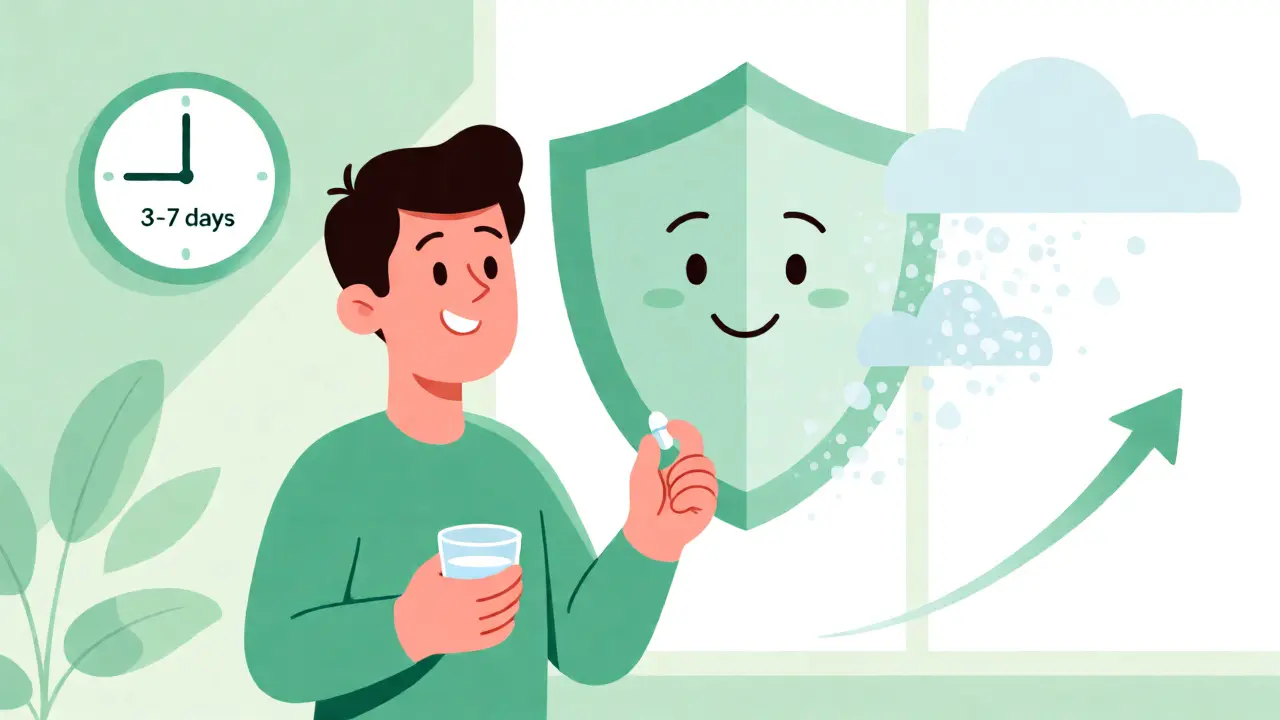
- Tolerance: Most patients develop tolerance to nausea within 3-7 days.
- Dosing: Try "Start Low, Go Slow" titration.
- Rotation: If one opioid causes severe nausea, ask about switching to another (e.g., morphine vs. oxycodone).
- Red Flags: Seek immediate care for inability to pass gas/stool, severe abdominal distension, or shallow breathing.
Fill out the form on the left and click "Analyze" to see personalized insights.
Imagine needing strong pain relief after surgery, but the thought of constant nausea makes you want to skip your meds. You aren't alone. Opioid-induced nausea and vomiting (OINV) affects roughly 20-33% of patients starting therapy. It’s a frustrating paradox: the drug meant to help you move or breathe easier can make you feel too sick to do either. The good news? This isn't a permanent sentence. Most people develop tolerance to the emetic effects within 3-7 days. But getting through that first week requires smart management, not just suffering in silence.
Why Opioids Make You Sick
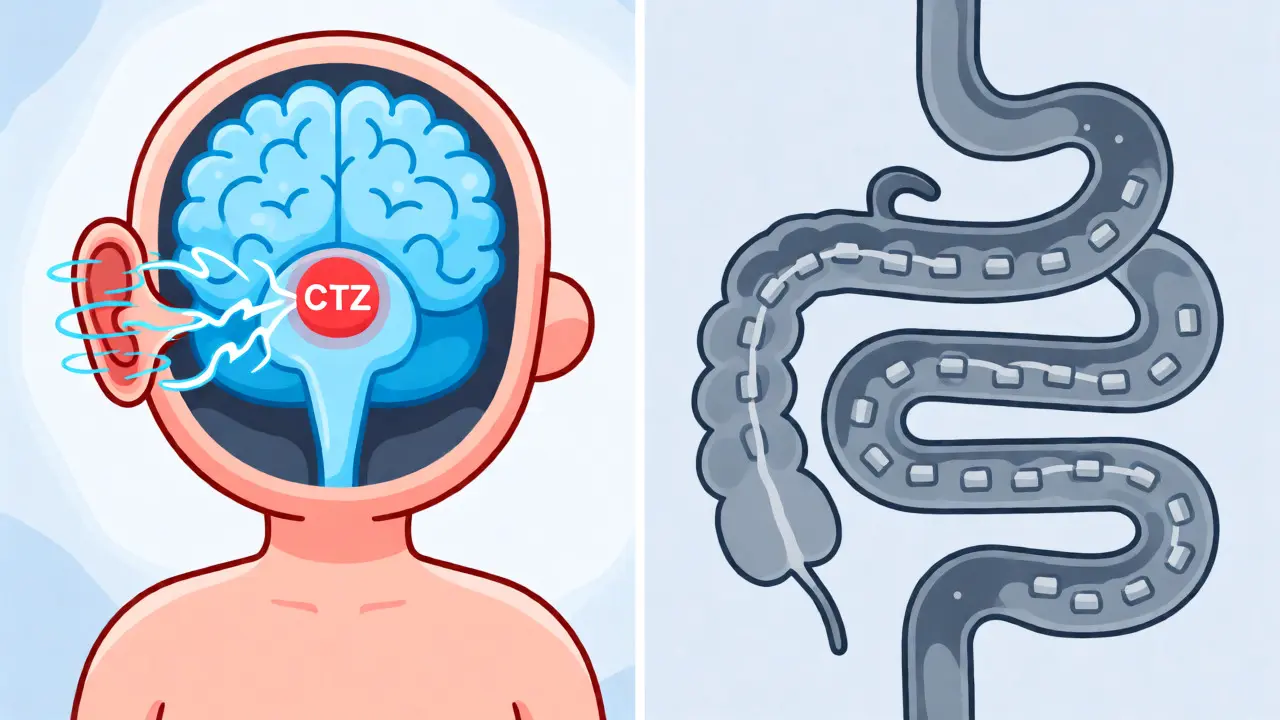
To fix the problem, you have to understand the mechanism. Opioids don't just block pain signals; they hit multiple receptors in your gut and brain simultaneously. When opioids activate mu-opioid receptors in the gastrointestinal tract, motility slows down. This constipation triggers afferent cholinergic pathways that signal nausea to the brain. Simultaneously, opioids stimulate the chemoreceptor trigger zone (CTZ) in the brainstem, which is rich in dopamine (D2) receptors. This stimulation directly induces the urge to vomit. There's also a vestibular component-opioids increase sensitivity in the inner ear, so moving your head or standing up can suddenly trigger dizziness and nausea. This multi-pathway attack explains why a single anti-nausea pill doesn't always work.
The Risk of Mixing Meds: Serotonin Syndrome
While nausea is common, it’s rarely life-threatening on its own. The real danger lies in interactions. Many patients taking opioids are also on antidepressants or migraine medications. If these drugs affect serotonin levels, combining them with certain opioids can lead to Serotonin Syndrome. This condition causes agitation, rapid heart rate, high blood pressure, dilated pupils, loss of muscle coordination, and heavy sweating. The FDA has issued specific warnings about this risk, requiring updated labeling for all immediate-release and extended-release opioid pain medicines. Clinical pharmacists, like those at Mayo Clinic, emphasize that mixing these medications can heighten central nervous system depression, leading to slowed breathing and decreased heart rate. Always review your full medication list-including over-the-counter supplements-with your provider before starting opioids.

Choosing the Right Antiemetic
Not all antiemetics are created equal, and choosing the wrong one can waste time or cause side effects. The choice depends heavily on the suspected cause of your nausea. If your nausea worsens when you stand up or turn your head, it’s likely vestibular-related. In this case, anticholinergics like scopolamine or antihistamines like meclizine are often more effective than standard anti-emetics. If the nausea is driven by the CTZ stimulation, dopamine antagonists like metoclopramide have traditionally been used. However, recent evidence suggests their prophylactic use might be less effective than previously thought. For established nausea, serotonin (5-HT3) receptor antagonists like ondansetron are highly effective. A study cited in clinical literature showed that 8 and 16 mg of ondansetron effectively treated existing OINV. Newer agents like palonosetron have shown even superior efficacy, reducing incidence rates significantly compared to older drugs.
| Drug Class | Example Drug | Best Used For | Key Considerations |
|---|---|---|---|
| Serotonin Antagonist | Ondansetron | Established nausea/vomiting | Can prolong QTc interval; monitor heart health |
| Dopamine Antagonist | Metoclopramide | Gastric stasis/motility issues | Risk of extrapyramidal symptoms; limited prophylactic benefit |
| Antihistamine/Anticholinergic | Meclizine / Scopolamine | Vestibular nausea (movement-related) | Causes drowsiness; avoid if already sedated |
| Cannabinoid | Dronabinol | Refractory cases | Psychoactive effects; legal restrictions vary |
Prophylaxis vs. Reactive Treatment
Should you take an anti-nausea med before you even feel sick? The data is mixed. A 2022 Cochrane review found that prophylactic metoclopramide did not significantly reduce the risk of vomiting or nausea in adults receiving intravenous opioids. This challenges the old habit of automatically co-prescribing antiemetics for every new opioid prescription. Instead, many experts now advocate for a reactive approach: treat the nausea when it appears. However, for opioid-naïve patients who are particularly sensitive, a short course of antiemetics for the first 1-2 weeks can improve adherence to pain therapy. Remember, most patients develop tolerance to the emetic effects within 3-7 days at a constant dose. So, long-term daily antiemetic use is rarely necessary unless the opioid dose changes frequently.
Strategies Beyond Medication
Before reaching for another pill, consider adjusting how you take the opioid itself. The "start low, go slow" approach is critical. Initiating therapy with a lower dose and titrating up slowly allows your body to adapt, minimizing peak side effects. Another powerful tool is opioid rotation. Individual variability in how people react to specific opioids is high. Some patients experience severe nausea with oxycodone but tolerate morphine well. Switching to a different opioid can sometimes resolve the issue without needing additional drugs. Dose adjustment is also key-if your pain is controlled, lowering the opioid dose slightly may eliminate nausea while maintaining analgesia. These non-pharmacologic adjustments often solve the root cause rather than masking the symptom.
When to Seek Immediate Help
Nausea is annoying, but some signs require urgent attention. If you experience severe abdominal distension, inability to pass gas or stool, or persistent vomiting, you might have developed an ileus (severe bowel obstruction), a known complication of opioid use. Similarly, if you notice confusion, extreme drowsiness, or shallow breathing, seek medical help immediately, as these could indicate overdose or serious interaction effects. Keep a log of your symptoms, including what you ate, your activity level, and the timing of your doses. This information helps your provider distinguish between simple OINV and other medical conditions.
How long does opioid-induced nausea last?
For most patients, tolerance to the emetic effects develops within 3-7 days of starting a stable opioid dose. If nausea persists beyond two weeks, consult your provider to rule out other causes like constipation or infection.
Can I take anti-nausea meds with my opioid?
Yes, but choose carefully. Ondansetron is commonly used and generally safe, though it carries a warning for QTc prolongation. Avoid combining sedating antiemetics like promethazine with opioids if you are already drowsy, as this increases fall risk and respiratory depression.
What is serotonin syndrome?
Serotonin syndrome is a potentially life-threatening reaction caused by excessive serotonin activity. Symptoms include agitation, rapid heart rate, high blood pressure, dilated pupils, loss of muscle coordination, and heavy sweating. It can occur when opioids interact with SSRIs or SNRIs.
Does taking opioids with food help nausea?
Taking opioids with a small amount of food can sometimes reduce stomach upset, though it may delay absorption. However, food does not prevent the central nervous system effects that cause nausea. If food worsens bloating due to slowed gastric emptying, try taking the medication on an empty stomach with plenty of water.
Are there natural remedies for opioid nausea?
Ginger tea and peppermint oil have mild antiemetic properties and may help with mild nausea. Acupressure bands targeting the P6 point on the wrist can also provide relief for some patients. These are best used as adjuncts, not replacements, for prescribed treatment in moderate-to-severe cases.
Pramay Dattani
September 2, 2026 AT 13:58typo in title? opioids are fine if you know what ur doing. americans always overmedicate and then cry about side effects. we handle pain differently here, less whining more grit. your "paradox" is just poor patient education.
Aurelio Haney
September 2, 2026 AT 22:01This article is dangerously simplistic. 😒 You're ignoring the fact that most people don't have access to a clinical pharmacist who can review their full med list like you suggest. It's easy to say "start low go slow" when you aren't dealing with insurance denials or pharmacy shortages. 🙄 The serotonin syndrome warning is valid but feels tacked on without addressing the real issue: prescribing culture.
Falgun R Patel
September 4, 2026 AT 09:32I appreciate the nuance here. It is often hard for patients to distinguish between simple nausea and something more serious like an ileus. The point about tolerance developing in 3-7 days is crucial hope for those suffering through the first week. We must remember that each body is unique and patience is key during adjustment phases. Let us support one another through these medical hurdles rather than judging the need for relief. 🌿
Mary Tait
September 4, 2026 AT 16:19The section on Serotonin Syndrome is insufficiently detailed regarding specific opioid classes. Not all opioids carry equal risk; meperidine and tramadol are far worse offenders than fentanyl or morphine in this context. Furthermore, the claim that prophylactic metoclopramide is ineffective ignores studies showing benefit in high-risk populations. This generalization could lead to under-treatment of vulnerable patients.
Rebecca Makayla Crane
September 5, 2026 AT 22:35Ondansetron is basically the holy grail 🏆 but please watch your QTc interval!! I had a friend who didn't monitor it and ended up in the ER. Also, ginger tea is cute but honestly doesn't cut it for post-op misery. 🤢 Stick to the meds if they work! ✨
Jim Bisesi
September 7, 2026 AT 02:00meh. just take zofran and shut up. nobody cares about the mechanism.
Louis Tarro
September 8, 2026 AT 21:21I found the discussion on vestibular sensitivity particularly illuminating. It explains why standing up after surgery feels like a rollercoaster ride. Perhaps incorporating non-pharmacological strategies like acupressure earlier could reduce reliance on sedating antiemetics which compound the drowsiness from opioids themselves. A holistic approach seems most prudent for long-term comfort.
Amy B
September 8, 2026 AT 21:33Wait, does anyone else find the table super helpful?? I never knew scopolamine was specifically for movement-related nausea. That’s such a game changer for my motion sickness issues when I’m on meds. 💡 Totally saving this for my next doc visit!
Evelyn Reed
September 10, 2026 AT 17:17the ctz stimulation via d2 receptors is well documented but the practical application often fails due to polypharmacy interactions... especially with ssris... gotta be careful with the cocktail...
Somnath Thombre
September 11, 2026 AT 20:03Great info! Really helps to understand why we feel so sick at first. Don't give up after day 1, it gets better soon! Stay strong everyone! 💪🇮🇳
Adam Viruet
September 12, 2026 AT 07:00Actually,,, the assertion that tolerance develops in 3-7 days is overly optimistic for many chronic users,,, where sensitization might occur instead,,, also,,, ignoring the role of gastric emptying delays as a primary driver is misleading,,,
Jenn Bell
September 13, 2026 AT 08:52Love the tip about keeping a log! It really helped me figure out that taking my meds with a tiny bit of food made a huge difference without slowing things down too much. Hang in there, the first few days are the hardest part! 😊
Eric Schultze
September 14, 2026 AT 12:10The FDA warnings exist because pharmaceutical companies push these drugs aggressively despite known risks. We are seeing increased rates of serotonin syndrome not because of bad luck, but because of negligent prescribing practices. Patients must advocate for themselves because the system is designed to sell pills, not ensure safety. Vigilance is the only defense against corporate negligence.