
Mycophenolate GI Side Effects: How to Manage Nausea and Diarrhea
 Jun, 9 2026
Mycophenolate GI Symptom Action Plan
How severe is the issue?
Select the option that best describes your experience.
Your Action Plan
Personalized StrategyStarting a new immunosuppressant is supposed to protect your health, not ruin your day with stomach cramps. Yet for many patients taking Mycophenolate, specifically formulations like CellCept or Myfortic, gastrointestinal distress is the first hurdle they face. You might be dealing with nausea that makes eating difficult or diarrhea that disrupts your daily routine. This isn't just an inconvenience; it’s a common reason why patients stop taking their medication, which can lead to serious complications like organ rejection.
The good news? You don’t have to suffer in silence. There are proven strategies to manage these symptoms without compromising your treatment plan. Whether you need to adjust how you take your pills, switch formulations, or talk to your doctor about dose changes, understanding the mechanics of mycophenolate-induced GI toxicity puts you back in control.
Why Mycophenolate Causes Stomach Issues
To fix the problem, it helps to understand why it happens. Mycophenolate works by blocking an enzyme called inosine monophosphate dehydrogenase (IMPDH). This stops immune cells from multiplying, which prevents your body from attacking a transplanted organ or fighting autoimmune diseases like lupus. However, this mechanism isn't perfectly selective. It also affects the rapidly dividing cells lining your gut.
Think of your intestinal lining as a carpet that needs constant replacement. When mycophenolate slows down cell division everywhere, it thins out that carpet. This leads to inflammation, known as mycophenolate-induced colitis, and increases sensitivity to food and fluids. According to data from the American Journal of Transplantation, nearly half of all patients experience some form of GI toxicity. Nausea affects about 31% of users, while diarrhea hits 30%. These aren't rare glitches; they are expected side effects that require active management.
Immediate Steps for Nausea Relief
Nausea often strikes when you first start the medication or increase the dose. Before calling your doctor to change your prescription, try these practical adjustments:
- Split Your Doses: If you are taking a large dose at once, ask your pharmacist if splitting it into smaller, more frequent doses is appropriate. This lowers the peak concentration of the drug in your stomach at any one time.
- The Applesauce Trick: Many patients on transplant forums report success mixing crushed tablets with applesauce. The mild sweetness and texture can mask the bitter taste and coat the stomach slightly. Note: Only do this if your specific formulation allows crushing (check with your pharmacist).
- Timing Matters: Standard advice suggests taking mycophenolate on an empty stomach for best absorption. However, if nausea is severe, taking it with a small, bland snack (like crackers) may help. Just keep the meal light and low-fat, as high-fat foods can alter how much drug your body absorbs.
- Stay Hydrated, But Slowly: Sip water throughout the day rather than chugging large glasses, which can trigger vomiting.
Managing Diarrhea Without Compromising Immunity
Diarrhea is trickier because dehydration can stress your kidneys, especially if you’ve had a kidney transplant. Here is how to handle it safely:
- Track Your Symptoms: Keep a log of bowel movements. Is it loose stool once a day, or urgent diarrhea five times a day? This data is crucial for your doctor.
- Watch for Red Flags: If you see blood in your stool, have severe abdominal pain, or develop a fever, seek medical attention immediately. These could signal infection (like C. diff or CMV) rather than just drug side effects.
- Probiotics May Help: Some studies suggest that specific strains, like Lactobacillus GG, can reduce the severity of antibiotic-associated and drug-induced diarrhea. Ask your care team before starting any supplement, as interactions matter.
- Avoid Anti-Diarrheals Unless Approved: Medications like loperamide (Imodium) can slow gut movement too much, potentially increasing drug absorption to toxic levels. Never self-medicate for mycophenolate diarrhea without explicit approval from your transplant specialist.

When to Switch Formulations or Adjust Dose
If lifestyle tweaks don’t work, it’s time for clinical intervention. Don’t wait until you’re miserable. Talk to your provider about these options:
| Strategy | How It Works | Success Rate / Notes |
|---|---|---|
| Dose Reduction | Lowering the total daily dose (e.g., by 33%) | Symptoms resolve in 78% of cases within 48-72 hours. Must monitor drug levels. |
| Switch to Myfortic | Enteric-coated mycophenolate sodium releases lower in the gut | Effective in 65% of patients who failed CellCept due to upper GI issues. |
| Therapeutic Drug Monitoring | Checking MPA trough levels or AUC | Helps identify if toxicity is due to high drug levels vs. individual sensitivity. |
| Alternative Agents | Switching to azathioprine or leflunomide | Last resort. Used when mycophenolate is completely intolerable. |
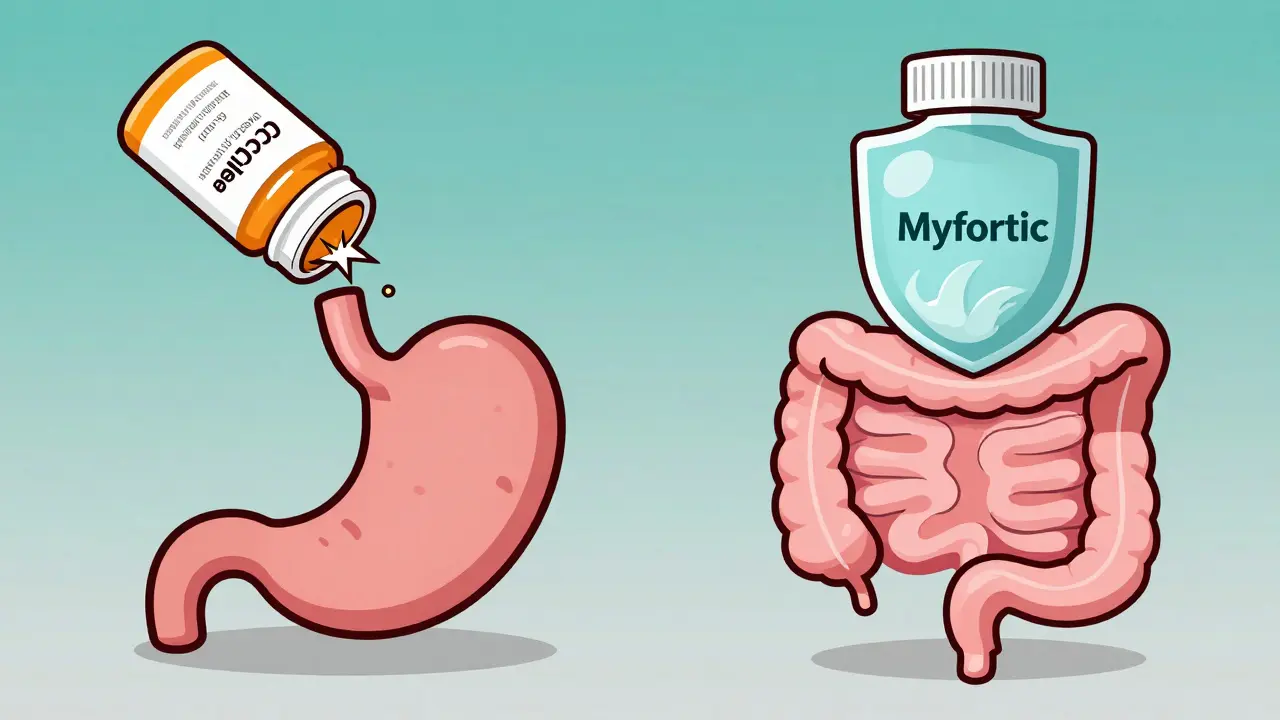
Switching from mycophenolate mofetil (CellCept) to mycophenolate sodium (Myfortic) is a common next step. Myfortic has an enteric coating designed to bypass the stomach and release the drug further down the intestine. While it delivers the same active ingredient (mycophenolic acid), many patients find it easier on their stomachs. However, it doesn’t work for everyone, particularly if the issue is lower intestinal irritation.
In severe cases, such as confirmed mycophenolate-induced colitis, doctors may temporarily stop the drug entirely. Once symptoms clear, they reintroduce it at a lower dose. Recurrence is possible, but careful titration often finds a balance where you get the protection you need without the debilitating side effects.
Monitoring and Long-Term Outlook
Living with mycophenolate long-term requires vigilance. Your healthcare team will likely monitor your drug levels. Recent guidelines from the International Mycophenolate Pharmacokinetics Study Group suggest that area-under-the-curve (AUC) monitoring provides a better picture of exposure than single trough levels. This precision can help minimize toxicity while keeping rejection rates low.
Remember, non-adherence is a major risk. Dr. Sarah G. Kim from Massachusetts General Hospital notes that GI toxicity is the leading cause of patients skipping doses, which directly contributes to late acute rejection episodes. By actively managing your side effects, you are protecting your graft and your future. You have options, from simple dietary tweaks to advanced pharmacological switches. Use them.
Can I take mycophenolate with food?
Standard guidance recommends taking mycophenolate mofetil on an empty stomach (1 hour before or 2 hours after food) for optimal absorption. However, if nausea is severe, your doctor may allow you to take it with a small, bland meal. High-fat meals should be avoided as they can significantly reduce drug absorption.
Is mycophenolate-induced diarrhea dangerous?
While uncomfortable, mild diarrhea is common. Severe or persistent diarrhea (lasting more than 7 days) can lead to dehydration and electrolyte imbalances, which stress the kidneys. It can also indicate mycophenolate-induced colitis or an infection like C. difficile, requiring immediate medical evaluation and possibly colonoscopy.
Will switching to Myfortic stop the nausea?
For many patients, yes. Myfortic (mycophenolate sodium) is enteric-coated, meaning it dissolves in the intestine rather than the stomach. Clinical trials show it resolves GI symptoms in about 65% of patients who struggled with CellCept. However, it may not help if the irritation is in the lower intestine.
Can I take anti-diarrheal medication like Imodium?
Not without consulting your doctor. Slowing gut motility with drugs like loperamide can increase the absorption of mycophenolate, potentially raising blood levels to toxic ranges. Always get clearance from your transplant team before using OTC anti-diarrheals.
How long does it take for GI side effects to improve?
If you adjust the dose or timing, improvement often occurs within 48 to 72 hours. For those switching formulations, it may take a few weeks to fully assess tolerance. If symptoms persist beyond a week despite adjustments, further investigation for colitis or infection is warranted.