
Mental Illness and Medication Interactions: Navigating Complex Polypharmacy
 Jan, 13 2026
Psychiatric Medication Interaction Checker
Check Your Medication Risks
This tool identifies potentially dangerous combinations based on your medications. Always consult your healthcare provider before making changes.
Check Interactions
Click to see potential interactions between your selected medications
Review every 3-6 months - Not annually. Ask: Is this drug still helping? Can anything be removed?
Start low, go slow - Never add more than one new drug at a time. Wait 4-6 weeks before deciding if it's working.
Use one drug per symptom - Don't stack antidepressants for "better mood." Use one, then add therapy or lifestyle changes.
When someone is taking five, six, or even more medications for mental health, it’s not always because they’re being over-treated. Sometimes, it’s because nothing else has worked. But the more drugs you stack together, the higher the risk of dangerous interactions, side effects, and unintended harm - especially for older adults or those with other chronic illnesses. This isn’t just a numbers game. It’s a medical tightrope walk with real consequences.
Why Do People End Up on So Many Psychiatric Drugs?
Psychiatric polypharmacy - the use of two or more psychiatric medications at once - started as a last-resort strategy. If one antidepressant didn’t help, doctors added another. If mood swings kept coming back, they threw in a mood stabilizer. If sleep was broken, a benzodiazepine got added. Over time, this became routine, not rare.
Between 1999 and 2005, the rate of people with schizophrenia taking two or more antipsychotics jumped from 3.3% to 13.7% among Medicaid enrollees. That’s a fourfold increase. And it’s not just antipsychotics. For people with treatment-resistant depression, the percentage taking three or more medications soared from 3.3% in the late 1970s to nearly 44% by the mid-1990s. Many of these combinations weren’t backed by solid science - they were tried because the patient wasn’t getting better.
It’s not always the psychiatrist’s fault. Primary care doctors, who treat most mental health cases, often lack the time or training to untangle complex regimens. A 2024 study found that 37.2% of patients receiving mental health care in primary care settings were on complex polypharmacy - often without a clear plan to simplify it.
When Polypharmacy Makes Sense
Not all combinations are risky or unnecessary. Some have solid evidence behind them.
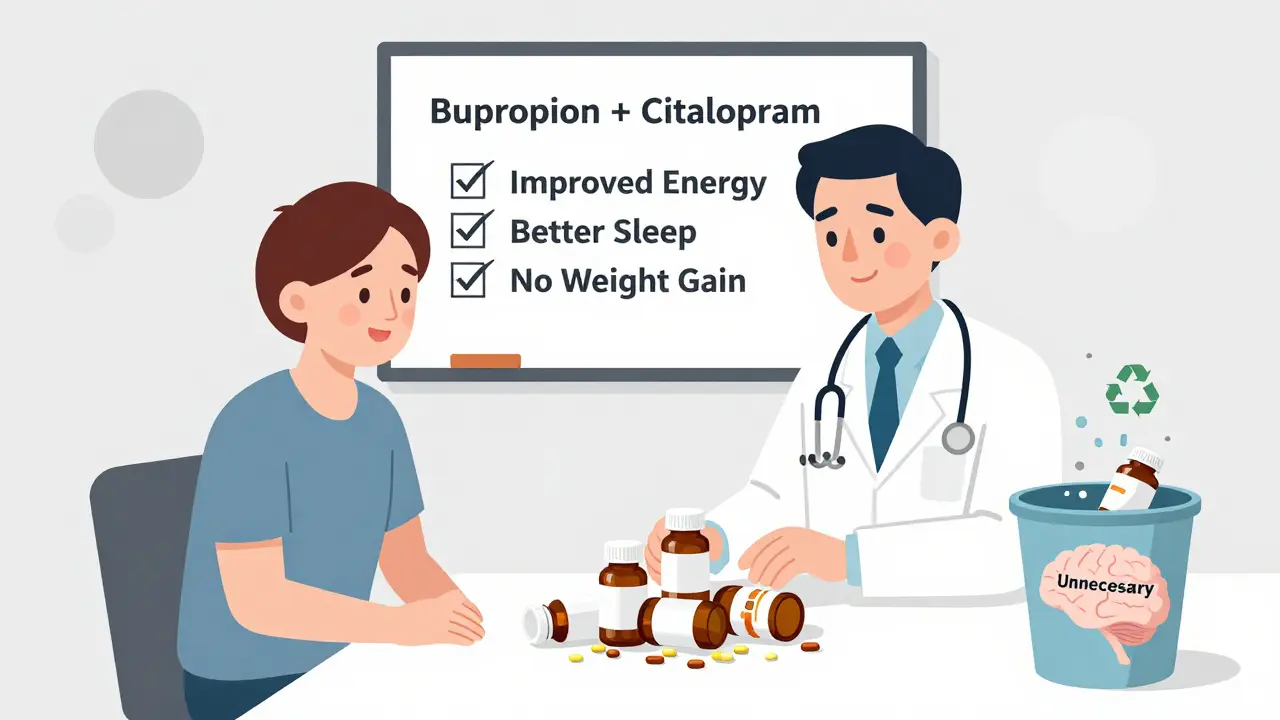
- Adding bupropion to an SSRI like citalopram for someone who’s only partially improved
- Using lithium or valproate with an antipsychotic during acute mania
- Short-term benzodiazepines with antidepressants for severe anxiety alongside depression
- Combining an antipsychotic with an antidepressant when depression comes with psychotic features
These aren’t random guesses. They’re based on clinical trials showing real benefits - improved mood, reduced hallucinations, better sleep. The key is intentionality. When a doctor adds a second drug, they should be able to say: “This is for symptom X, and here’s how we’ll know if it’s working.”
The Hidden Dangers
The real problem isn’t the number of pills - it’s the silence around them.
Take older adults with schizophrenia. They’re often on antipsychotics, plus blood pressure meds, diabetes drugs, cholesterol pills, and pain relievers. Each one can interfere with the others. Antipsychotics can raise blood sugar. SSRIs can increase bleeding risk when taken with NSAIDs. Benzodiazepines can slow breathing when mixed with opioids. And the body’s ability to process drugs slows with age - meaning the same dose that was safe at 50 can become toxic at 70.
A CDC study found that people taking five or more medications had significantly worse physical health quality of life - lower energy, more pain, worse mobility - even if their depression or anxiety scores didn’t change. Their bodies were worn down by the drugs meant to help them.
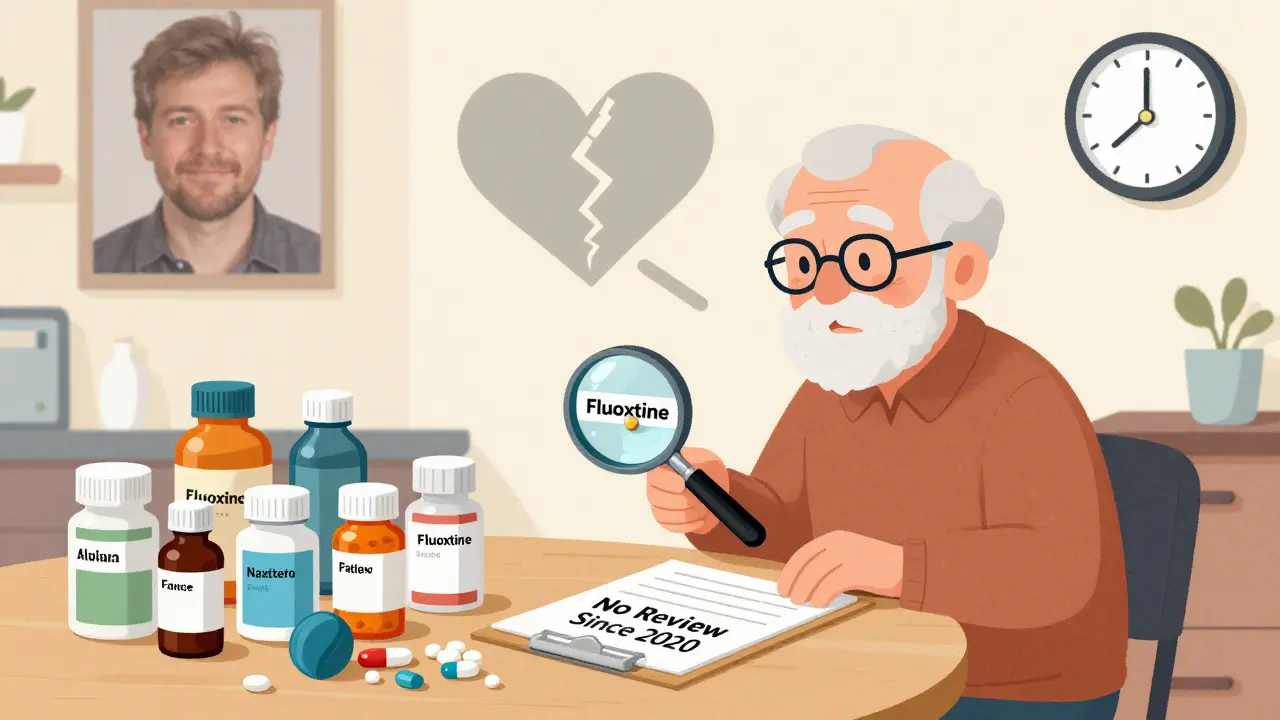
And then there are the silent interactions. A patient on fluoxetine (Prozac) might also be taking metoprolol for heart issues. Fluoxetine blocks the liver enzyme that breaks down metoprolol. Result? The blood pressure drug builds up. Heart rate drops. Dizziness kicks in. The doctor blames it on aging - not the interaction.
The “Kitchen Sink” Approach
Psychiatrist Dr. Joseph Goldberg calls it the “kitchen sink” method - throwing everything at the wall and seeing what sticks. It’s tempting when a patient is suffering. But it’s lazy medicine.
One patient I know was on seven medications: two antipsychotics, two antidepressants, a mood stabilizer, a sleep aid, and a beta-blocker for tremors. She was exhausted, dry-mouthed, and gaining weight. No one had asked if she really needed all of them. After a careful review, three were stopped. Her energy improved. Her weight dropped. Her tremors didn’t get worse. She didn’t relapse.
That’s the myth: more drugs = better results. The truth? Often, less is more. The APA guidelines say polypharmacy should be a last resort - not a default.
Who’s Most at Risk?
It’s not just older adults. People with multiple physical health conditions - diabetes, heart disease, COPD, kidney problems - are at the highest risk. Why? Because each condition brings its own medications. And those meds don’t just sit quietly. They talk to each other.
One study showed that patients with three or more chronic illnesses were 2.7 times more likely to be on polypharmacy than those with just one. And the more conditions they had, the worse their quality of life became - not because their mental illness was worse, but because the drug burden was crushing them.
Children and teens are also vulnerable. Antipsychotics prescribed for behavioral issues can trigger weight gain, insulin resistance, and early metabolic syndrome. Yet many prescribers don’t monitor blood sugar or cholesterol regularly.
What Can Be Done?
Change is possible - and it’s already happening in some places.
In New Zealand and Australia, Early Psychosis Intervention Programs have used structured treatment algorithms to cut antipsychotic polypharmacy by more than half. Instead of adding drugs, they focused on: one antipsychotic at the lowest effective dose, therapy, lifestyle support, and regular reviews.
Another success story came from a 18-month program that reduced average psychotropic meds per patient from 4.2 to 2.1. Side effects dropped. Blood pressure improved. Cholesterol went down. HbA1c levels fell. Patients felt better - not because they got more drugs, but because they got fewer, smarter ones.
Pharmacogenomic testing is another tool. It looks at your genes to predict how your body will process certain drugs. For example, if you’re a slow metabolizer of SSRIs, you’re more likely to have side effects. Testing can help avoid trial-and-error prescribing. One study showed it reduced adverse reactions by 30-50% in psychiatric patients.
But the biggest barrier isn’t science - it’s fear. Doctors worry that removing a drug will trigger relapse. Patients are scared to stop anything they’ve been on for years. That’s why tapering has to be slow, monitored, and supported - not sudden.
The Way Forward
We need to stop thinking of polypharmacy as normal. It’s a symptom of a broken system - where time is short, guidelines are ignored, and complexity is mistaken for thoroughness.
Here’s what works:
- Review every 3-6 months. Not annually. Every six months, ask: Is this drug still helping? Can anything be removed?
- Start low, go slow. Never add more than one new drug at a time. Wait 4-6 weeks before deciding if it’s working.
- Use one drug per symptom. Don’t stack antidepressants for “better mood.” Use one, then add therapy or lifestyle changes.
- Check for physical health impacts. Monitor weight, blood sugar, cholesterol, and kidney/liver function regularly.
- Involve the patient. Ask: “What are you hoping this medication will do?” If they can’t answer, maybe they don’t need it.
There’s no magic pill. But there’s a better way: intentionality over inertia. Precision over quantity.
The goal isn’t to eliminate all polypharmacy. It’s to eliminate unnecessary polypharmacy. To make every pill count - not just fill a prescription.
Is taking multiple psychiatric medications always dangerous?
No, not always. Some combinations, like adding bupropion to an SSRI for partial depression response, or using a mood stabilizer with an antipsychotic during mania, are backed by strong evidence. The danger comes when drugs are added without clear goals, without monitoring, or when they’re kept long after they’ve stopped helping.
Can polypharmacy cause more mental health problems?
Yes. Medication interactions can cause new symptoms - brain fog, fatigue, anxiety, or even depression - that look like the original illness. A patient on multiple drugs might feel worse not because their condition is worsening, but because the drugs are clashing. This often leads to more prescriptions instead of fewer.
Are older adults more at risk for bad interactions?
Absolutely. As we age, the liver and kidneys process drugs slower. The brain becomes more sensitive to sedatives and anticholinergics. Many older patients are on 8-10 medications total - mixing psychiatric drugs with heart, diabetes, or pain meds creates high-risk combinations. Studies show they’re more likely to fall, get confused, or develop metabolic syndrome from these interactions.
How do I know if I’m on too many meds?
Ask yourself: Do I know why each one is prescribed? Can I name the condition it’s for? Do I feel worse since starting the last one? If you’re taking four or more psychiatric drugs and can’t explain why, it’s time for a review. Also, if you’re taking five or more total medications (including non-psychiatric ones), you’re in the polypharmacy range - and should have a formal medication review with your doctor.
Can pharmacogenomic testing help reduce polypharmacy?
Yes. Testing can show if you’re a fast or slow metabolizer of certain drugs. For example, if you’re a poor metabolizer of citalopram, you’re more likely to have side effects at standard doses. This helps avoid trial-and-error prescribing, reduces adverse reactions, and can cut the number of drugs needed by guiding better initial choices.
What should I ask my doctor about my medications?
Ask: “What is this drug supposed to do for me?” “Has it been shown to work in combination with my other meds?” “Are there any side effects I should watch for?” “Can we try stopping one to see if I feel better?” And always ask: “Is there a simpler way?”
What Comes Next?
By 2025, over 60% of academic medical centers plan to launch formal deprescribing programs. But until then, the burden falls on patients and their doctors to ask the hard questions. If you’re managing mental illness and multiple medications, don’t accept complexity as normal. Push for clarity. Demand reviews. Ask for alternatives.
Medication isn’t a life sentence. It’s a tool. And like any tool, it’s best used sparingly - and only when it truly helps.
Damario Brown
January 13, 2026 AT 18:28bro i was on 7 meds for 3 years. one day i just stopped em all. no taper. no doctor. felt like a zombie but now im alive. they were just chemical blankets. no one told me i could quit. now i meditate and eat kale. my brain is cleaner than my fridge.
Nelly Oruko
January 13, 2026 AT 18:35It is not merely a matter of pharmacological complexity; it is an epistemological failure of the medical-industrial complex to prioritize reductionist interventions over holistic, person-centered care. The overprescription of psychotropics reflects a systemic abandonment of therapeutic dialogue in favor of procedural compliance.
Robin Williams
January 15, 2026 AT 13:10you ever feel like your meds are running your life instead of you running them? i did. i started cutting one by one with my therapist. took 8 months. i’m not ‘cured’-but i’m me again. not a walking pharmacy. you deserve that too.
Scottie Baker
January 16, 2026 AT 14:31doctors are just pill pushers with stethoscopes. they dont care if you’re tired, dizzy, or crying in the shower-they just want you to show up for your next appointment. i’ve been on 5 drugs since 2018 and no one’s ever asked if i want to be on them. they just keep adding.
Anny Kaettano
January 17, 2026 AT 10:27As a clinician who’s worked in community mental health for 15 years, I’ve seen firsthand how polypharmacy becomes a default when time is scarce and support systems are absent. But when we implement structured deprescribing protocols-paired with CBT, peer support, and metabolic monitoring-we see dramatic improvements in adherence, cognition, and quality of life. It’s not magic. It’s just intentional care.
Patients don’t need more pills. They need to be heard. And sometimes, that means helping them let go of what’s no longer serving them-even if it’s been part of their identity for years.
Kimberly Mitchell
January 18, 2026 AT 04:37Anyone who takes more than three psych meds is either a drug seeker or has been failed by a system that treats mental illness like a broken appliance you fix by throwing parts at it. This isn’t medicine. It’s pharmaceutical roulette.
Angel Molano
January 18, 2026 AT 12:28Stop blaming doctors. Patients demand pills. They want a magic bullet. They’d rather take 10 pills than go to therapy. The system didn’t create this-people did.
Vinaypriy Wane
January 20, 2026 AT 02:08I am from India, and here, psychiatrists rarely prescribe more than two medications at a time. We have a deep cultural respect for the body’s natural rhythms. In the U.S., it feels like every emotional discomfort is treated as a biochemical defect. Is this healing-or chemical containment?
Diana Campos Ortiz
January 21, 2026 AT 06:00my grandma was on 9 meds. one day she stopped all the psych ones. didn't tell anyone. just... stopped. she said she felt 'lighter.' turns out the antipsychotic was making her hallucinate spiders. she never told anyone because she thought it was part of 'being old.' we need to ask better questions.
Jesse Ibarra
January 22, 2026 AT 12:14Let me be perfectly clear: prescribing polypharmacy without pharmacogenomic screening is malpractice. It’s not negligence-it’s arrogance. You’re gambling with someone’s liver, their heart, their mind-and calling it ‘evidence-based’ because you read a 2012 study? Wake up. This isn’t healthcare. It’s pharmaceutical colonialism.
laura Drever
January 23, 2026 AT 19:35lol. 42% of people on 3+ psych meds? yeah. and 90% of them can’t explain why they’re taking any of them. doctors just keep writing scripts. patients just keep swallowing. nobody checks if it’s working. just like cigarettes in the 50s. history will laugh.