
Medication Errors in Hospitals vs. Retail Pharmacies: A Comparison
 Aug, 25 2026
Imagine you pick up your prescription at a local drugstore. You trust the pharmacist checked it twice. Now imagine getting that same medication in a hospital ward. Which setting is safer? The answer isn't as simple as "hospital" or "store." In fact, the risk profile changes completely depending on where you are and how the system works behind the scenes.
Medication errors happen everywhere, but they look different in hospitals compared to retail pharmacies. One place has high error rates but strong safety nets. The other has lower error rates but fewer chances to catch mistakes before they hurt you. Understanding this difference helps patients, providers, and policymakers know where to focus their attention.
The Core Difference: Who Catches the Mistake?
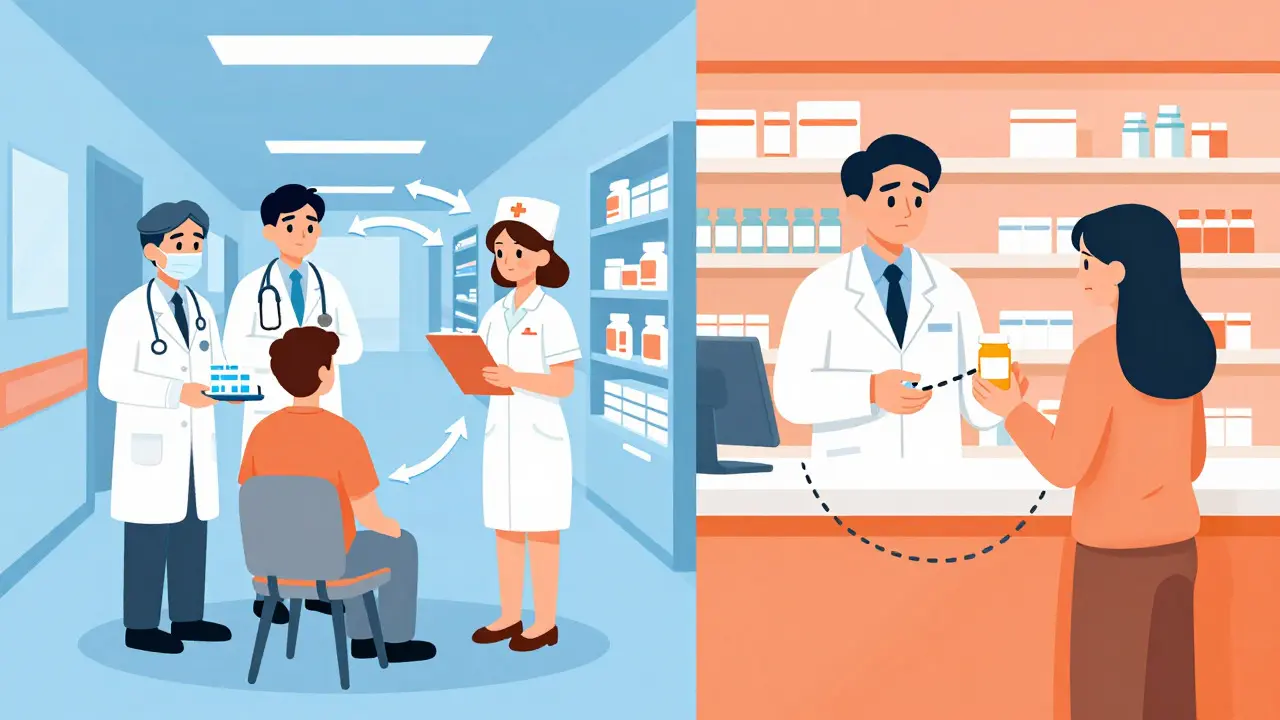
The biggest structural gap between these two settings is the verification chain. In a hospital, the process is closed-loop. A doctor orders the drug, a pharmacist dispenses it, and a nurse verifies it again right before giving it to the patient. If something looks wrong at any step, there’s a chance to stop it.
In a retail pharmacy, the loop is open. The pharmacist checks the prescription against the label, hands it to you, and then... that's it. You become the final checkpoint. According to a 2018 systematic review in the Journal of Patient Safety, this lack of intermediate verification means community pharmacy errors are more likely to reach the patient undetected. It’s not that pharmacists are less careful; it’s that the system relies on you to notice if something feels off.
Error Rates: High Frequency vs. Low Frequency
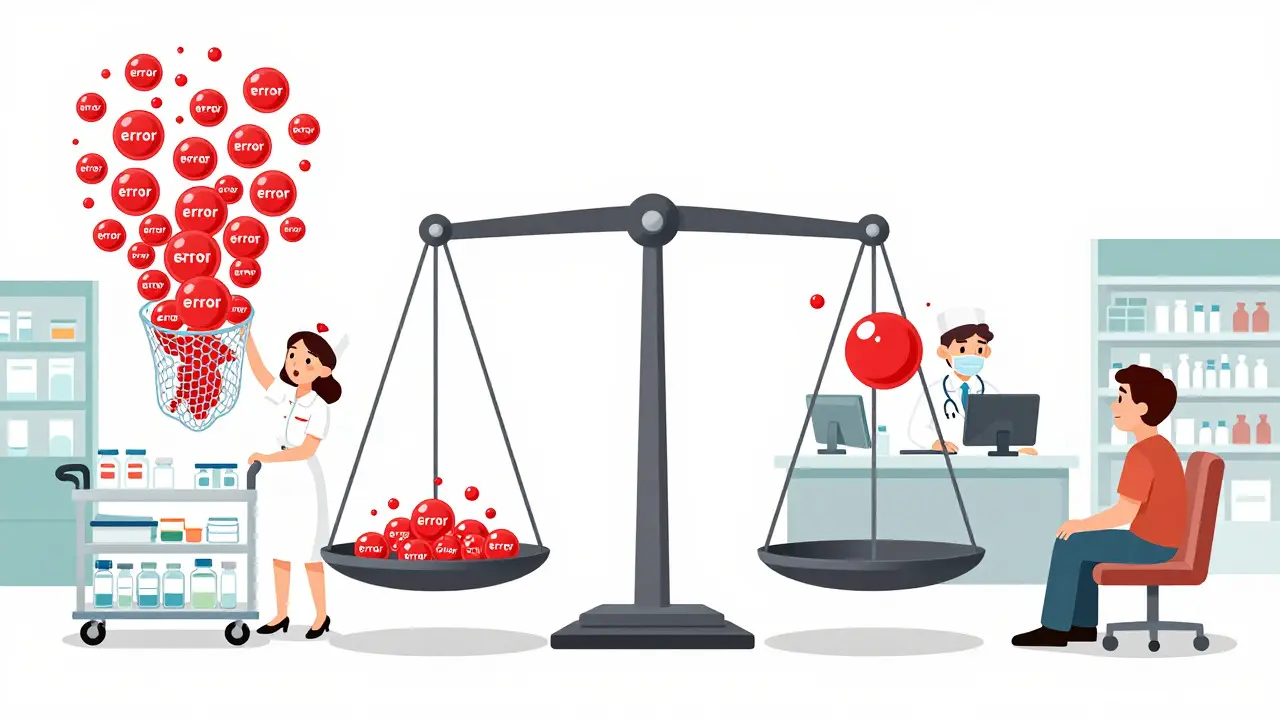
When we talk about numbers, hospitals actually have higher absolute error rates. A landmark 2006 study in JAMA Internal Medicine found that nearly 1 in every 5 doses (20%) contained an error in typical hospital and skilled nursing facilities. During the administration phase specifically, median error rates range from 8% to 25%.
Retail pharmacies tell a different story. A 2018 meta-analysis estimated the overall community pharmacy dispensing error rate at just 1.5%. That sounds impressive, right? But context matters. The National Institutes of Health (NIH) reported that even at this low rate, there are still 23 prescription corrections per 10,000 prescriptions. For a busy pharmacy filling 250 scripts a day, that’s roughly four errors per day. So while hospitals make more mistakes, they also catch most of them. Retail pharmacies make fewer mistakes, but the ones that slip through can be harder to spot.
| Metric | Hospitals | Retail Pharmacies |
|---|---|---|
| Average Error Rate | 8-25% (administration phase) | ~1.5% (dispensing phase) |
| Last Checkpoint | Nurse (before administration) | Patient (after pickup) |
| Common Error Type | Timing, dosage, wrong med | Transcription, incorrect directions |
| Detection Mechanism | Layered staff verification | Patient vigilance & self-report |
| Reporting Culture | Established, continuous monitoring | Historically limited, improving via state boards |
What Kind of Errors Happen Where?
The nature of the mistake varies by environment. In hospitals, errors often involve timing (giving meds too early or late), incorrect dosages due to complex patient conditions, or administering the wrong medication entirely. These are acute issues that require immediate attention because hospital patients are often sicker and on multiple drugs.
In retail pharmacies, the most common errors are transcription mistakes. This happens when a pharmacist misreads a handwritten prescription or enters data incorrectly into the computer system. A classic example from the Agency for Healthcare Research and Quality (AHRQ) involved estradiol. The prescription said "1 tablet twice per week," but it was transcribed as "1 tablet twice per day." The result? An overdose that required a follow-up appointment with the provider. Another frequent issue is incorrect directions on the label, such as saying "take with food" when the drug should be taken on an empty stomach.
Why Do These Errors Occur?
Human error is inevitable, but the causes differ. In retail pharmacies, about 80% of dispensing errors are cognitive, influenced by organizational pressure, task complexity, and the physical environment. Pharmacists work fast, dealing with long lines and high volumes. Automation helps, but it doesn’t eliminate human judgment. If the software isn’t set up correctly, or if the pharmacist is distracted, mistakes happen.
Hospital errors often stem from communication breakdowns. Doctors, nurses, and pharmacists all play roles, and if information gets lost in translation, errors occur. Staffing levels also play a huge role. When nurses are short-staffed, they have less time to double-check each dose. Complex patient conditions, like kidney failure or liver disease, add another layer of difficulty because dosages need to be adjusted carefully.
Economic and Health Impacts
The cost of these errors is staggering. The Academy of Managed Care Pharmacy (AMCP) estimates that medication error morbidity and mortality costs total $77 billion per year in the U.S., with the total economic burden exceeding $177 billion annually. In hospitals alone, extra medical costs for treating drug-related injuries hit at least $3.5 billion a year.
But it’s not just money. The Institute of Medicine estimates that medication errors harm at least 1.5 million people yearly, and approximately 7,000 to 9,000 patients die as a result. While hospital errors might lead to longer stays or intensive care needs, retail pharmacy errors can send healthy individuals to the emergency room. For instance, three cases in one NIH study resulted in hospitalization directly from community pharmacy dispensing errors. When critical medications like insulin or anticoagulants are involved, the consequences can be devastating.
How Are We Preventing These Errors?
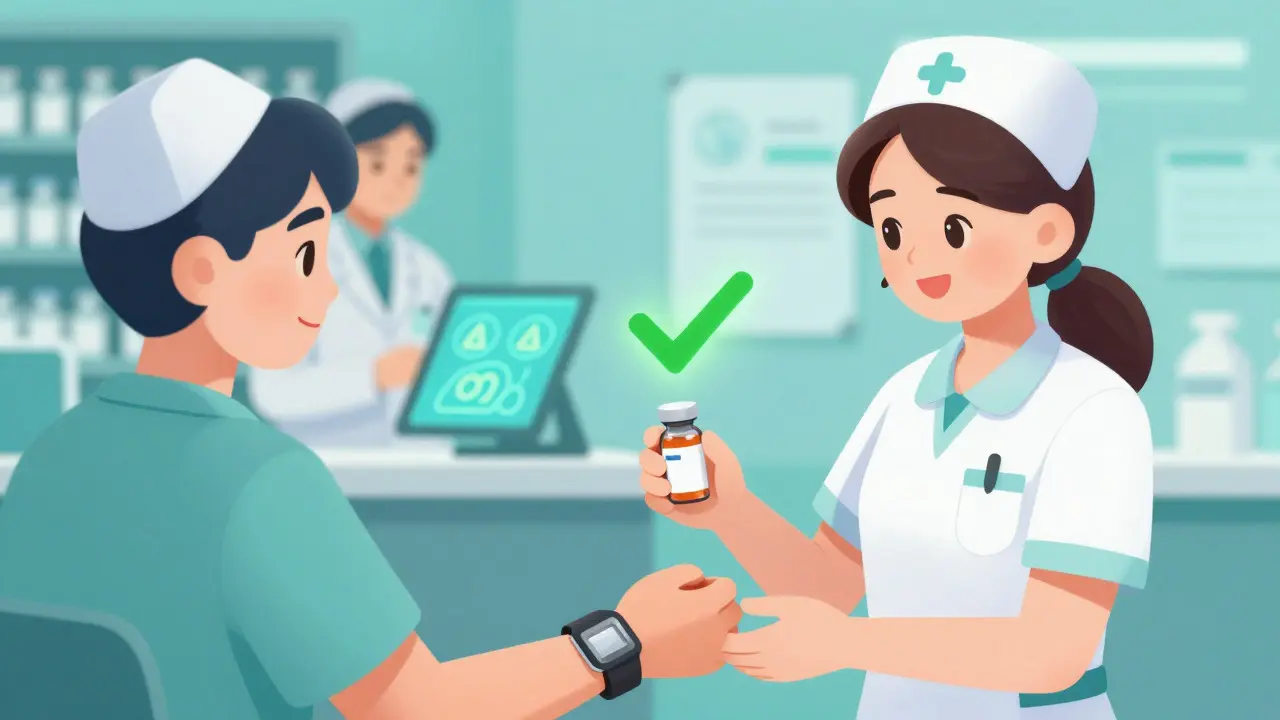
Both settings are working hard to improve, but they use different tools. Hospitals rely heavily on technology like barcode medication administration systems. Research shows these systems can reduce errors by up to 86%. They force nurses to scan both the patient’s wristband and the medication vial, ensuring the right drug goes to the right person at the right time.
Retail pharmacies are adopting Clinical Decision Support Systems (CDSS). This software alerts staff to potential issues during transcription, such as incorrect doses or drug interactions. CVS Health implemented AI-powered prescription verification systems in 2022, which reduced dispensing errors by 37% according to their internal audit. However, many smaller independent pharmacies still rely on manual checks and good old-fashioned experience.
Culture change is also key. Hospitals have established non-punitive reporting systems where staff can log errors without fear of blame. This allows for continuous monitoring and improvement. Community pharmacies are catching up. Many state boards of pharmacy, like California’s, now require errors to be logged and made available for inspection. The goal is to create a culture where near-misses are reported, not hidden.
What Should Patients Do?
You are part of the safety net, especially in retail settings. Here are some practical steps to protect yourself:
- Read the Label Twice: Before leaving the counter, check the name, dose, and instructions. Does it match what your doctor told you?
- Ask Questions: If something looks weird, ask the pharmacist. They would rather explain it than have you take the wrong pill.
- Use Digital Prescriptions: E-prescriptions eliminate handwriting errors, which are a major source of retail pharmacy mistakes.
- Report Issues: If you think you got the wrong medication, report it to the pharmacy and your doctor. Your feedback helps improve the system for everyone else.
In hospitals, stay engaged during handoffs. If you’re admitted, verify that your wristband matches your ID. Ask nurses to confirm the medication name before taking it. Small actions can prevent big problems.
Frequently Asked Questions
Are hospital medication errors more dangerous than retail pharmacy errors?
Not necessarily. Hospital errors are more frequent but caught more often due to layered verification. Retail pharmacy errors are less frequent but more likely to reach the patient unchecked. The danger depends on the specific medication and the patient’s health status. Critical drugs like insulin or blood thinners pose high risks in either setting if mishandled.
What is the most common type of medication error in retail pharmacies?
Transcription errors are the most common. This includes misreading handwritten prescriptions, entering the wrong dose into the computer, or printing incorrect directions on the label. These errors often go unnoticed until the patient starts taking the medication.
How do hospitals detect medication errors before they harm patients?
Hospitals use a closed-loop system involving doctors, pharmacists, and nurses. Barcode scanning, electronic health records, and double-checks at the point of administration allow multiple opportunities to intercept errors. If a nurse scans a medication and it doesn’t match the patient’s chart, the system flags it immediately.
Do e-prescriptions really reduce medication errors?
Yes. E-prescriptions eliminate handwriting ambiguity, which is a leading cause of retail pharmacy errors. They also integrate with clinical decision support systems that can flag drug interactions or dosage issues automatically. Studies show significant reductions in transcription errors when digital prescribing is used.
Should I worry more about medication errors if I’m in a hospital versus picking up meds at a store?
You should be vigilant in both settings, but in different ways. In hospitals, engage with staff and verify IDs. In retail pharmacies, read labels carefully and ask questions. Both environments have robust safety systems, but no system is perfect. Your awareness adds an extra layer of protection.