
Medication Adherence for Older Adults: Practical Solutions to Common Barriers
 Aug, 19 2026
Imagine your mother or father managing seven different pills a day. For many seniors, this isn't just a chore; it's a daily battle against confusion, cost, and physical limits. Medication adherence is the behavior of taking medication exactly as prescribed by a healthcare provider. It sounds simple, but for adults over 65, the odds are stacked against them. According to recent data from the Kaiser Family Foundation, 89% of older adults take at least one prescription drug, and more than half take four or more. When the pile of bottles grows, so does the risk of missing doses, doubling up, or stopping treatment altogether.
The stakes are high. Non-adherence doesn't just mean a missed pill; it can lead to hospitalizations, worsened chronic conditions, and even death. Research indicates that poor adherence contributes to roughly 200,000 deaths annually in the United States alone. But here is the good news: most barriers are solvable with the right tools and support. You don't need to be a medical expert to help an older adult stay on track. You just need to understand where the friction points are.
Why Seniors Struggle with Medications
It’s easy to blame forgetfulness, but the reality is much more complex. Polypharmacy is the use of multiple prescription drugs or more medications than medically necessary, and it is the primary driver of adherence issues. Studies show that 44% of men and 57% of women over 65 take five or more medications weekly. Managing ten or more pills creates a cognitive load that is difficult for anyone, let alone someone dealing with age-related changes in memory or vision.
Beyond the sheer number of pills, several specific factors create hurdles:
- Cognitive Decline: Mild cognitive impairment makes it harder to remember dosing times or understand complex instructions. A patient might know they need to take a pill, but forget if they already did.
- Physical Limitations: Poor manual dexterity makes opening child-proof caps difficult. Decreased vision complicates reading small labels or distinguishing between similar-looking tablets.
- Cost Constraints: Even with insurance, out-of-pocket costs add up. The CDC notes that 3.6% of older adults fail to obtain needed medications due to cost. For those facing food insecurity, this number jumps significantly, forcing tough choices between eating and healing.
- Social Isolation: Social and family support issues account for nearly a third of adherence challenges. Without someone to check in or remind them, routines slip.
The Hidden Cost of Missed Doses
When seniors skip meds, it’s often not because they don’t care. It’s usually because the regimen feels overwhelming or the side effects seem worse than the disease. However, the consequences are tangible. Non-adherence increases the risk of renal disease, coronary artery disease, and peripheral vascular disease. In ambulatory older adults, the annual rate of adverse drug reactions is 35%, with nearly 30% of these requiring hospitalization. Often, these reactions stem from interactions caused by unmanaged polypharmacy or incorrect dosing.
There is also a psychological component. Many older adults attribute unpleasant symptoms like dizziness or fatigue to "just getting old" rather than a medication side effect. This leads to self-adjustment, where patients quietly lower their dose or stop taking a drug without telling their doctor. This silent deviation is dangerous because it disrupts the therapeutic balance intended by the prescribing physician.
Practical Strategies to Improve Adherence
Solving these problems requires a mix of technology, routine, and human connection. Here are actionable steps you can take today to make medication management easier for yourself or a loved one.
- Simplify the Regimen: Talk to doctors about combining medications or switching to once-daily formulations. Reducing the frequency of doses is one of the most effective ways to boost compliance.
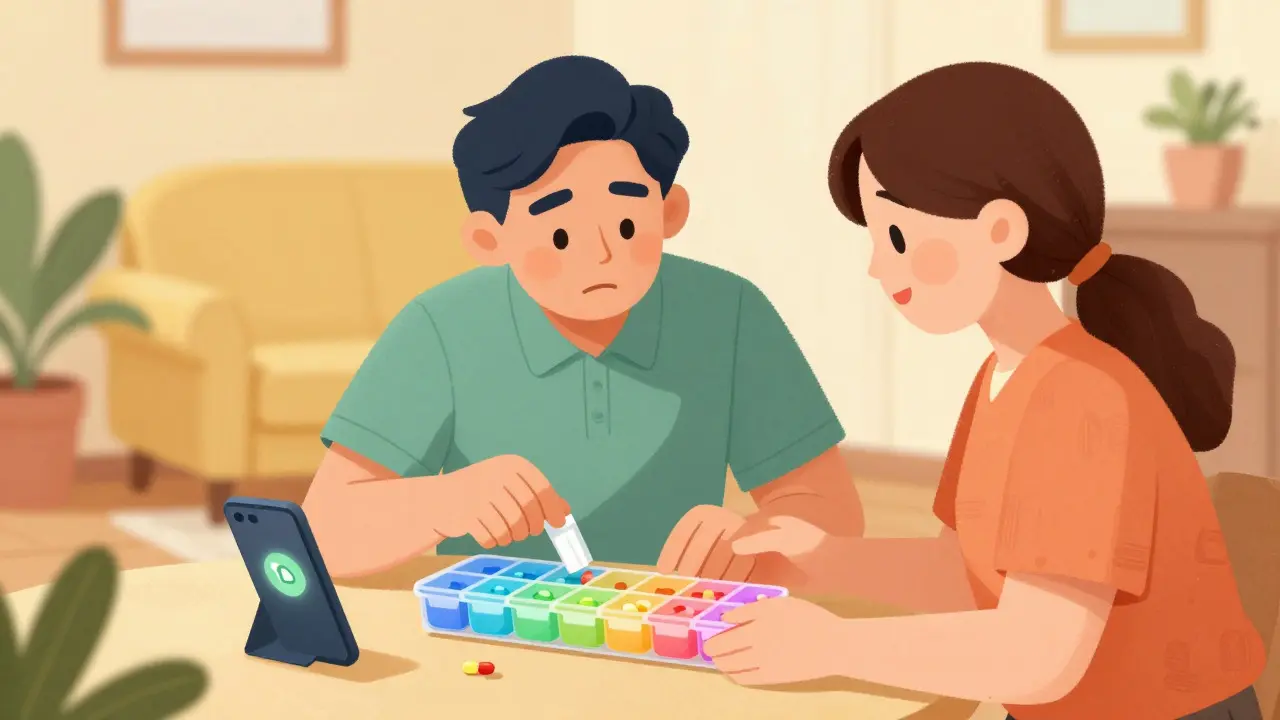
- Use Pill Organizers: A standard weekly pill box helps visualize what has been taken and what remains. For those with dexterity issues, consider large-print organizers or automatic dispensers that lock until the correct time.
- Leverage Technology: Smartphone apps can send push notifications for doses. For tech-savvy seniors, connected pill bottles that light up when it’s time to take a med can be a game-changer.
- Create a Routine Anchor: Link medication times to existing habits. Take blood pressure meds with breakfast, or evening sedatives with brushing teeth. Habit stacking makes remembering easier.
- Conduct Regular Med Reviews: Schedule quarterly appointments with a pharmacist or doctor specifically to review all current medications. Ask: "Is this still necessary? Are there interactions? Can we simplify?"
Comparing Support Methods
Different solutions work better for different people. Choosing the right tool depends on the specific barrier-whether it’s memory, money, or mobility. The table below breaks down common interventions and their best use cases.
| Method | Best For | Key Benefit | Potential Downside |
|---|---|---|---|
| Weekly Pill Boxes | Mild forgetfulness | Visual confirmation of doses taken | Requires manual filling each week |
| Automatic Dispensers | Severe cognitive decline | Locks out early access; alerts caregivers | Higher upfront cost; requires setup |
| Smartphone Reminders | Tech-comfortable seniors | Customizable alerts; low cost | Ineffective if phone isn't charged/carried |
| Pharmacist Syncing | Multiple prescriptions | All refills due on same day; simplifies logistics | Requires coordination between pharmacies |
| Caregiver Check-ins | Isolated individuals | Human accountability; social support | Depends on caregiver availability |
Addressing Financial Barriers
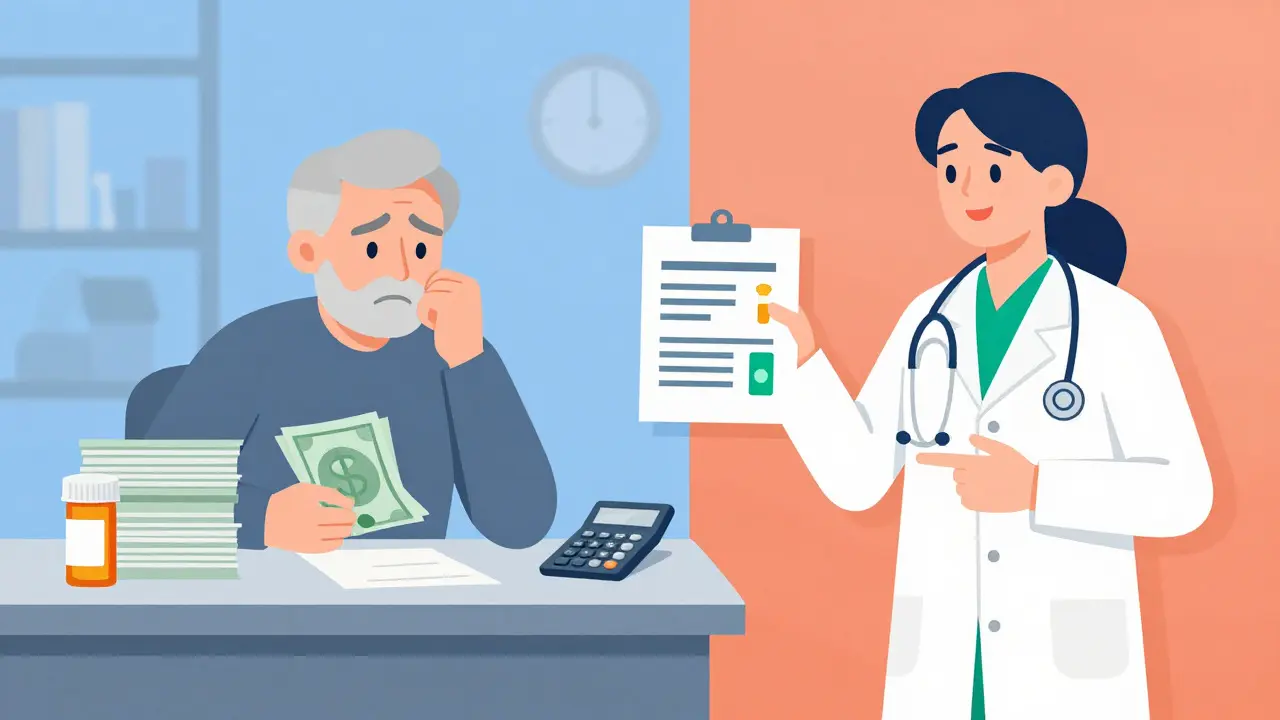
Money talks, especially in healthcare. If cost is the main obstacle, look into generic alternatives whenever possible. They are chemically identical to brand-name drugs but often cost a fraction of the price. Additionally, ask your pharmacy about discount programs. Many chains offer coupons or loyalty cards that reduce out-of-pocket expenses significantly.
For those on fixed incomes, government assistance programs like Medicare Part D can help, but understanding the "donut hole" (coverage gap) is crucial. Speaking with a social worker or a specialized pharmacy consultant can reveal hidden savings opportunities. Sometimes, delaying non-urgent elective procedures to save on medication costs is a valid short-term strategy, provided it’s discussed with a doctor.
The Role of Healthcare Providers
Doctors and pharmacists play a pivotal role, but communication gaps often persist. Patients should feel empowered to ask questions. Instead of nodding along, request written summaries of new medications. Ask specifically about side effects and what to do if a dose is missed. Continuity of care matters too; seeing the same provider who knows your history reduces the risk of conflicting prescriptions.
Health literacy is another key factor. Low education levels contribute to nearly 24% of adherence challenges. Using plain language, avoiding jargon, and providing visual aids can bridge this gap. If a senior struggles to read labels, large-print packaging is available upon request at most pharmacies.
Frequently Asked Questions
What is the biggest reason older adults miss their medications?
While forgetfulness is common, research shows that social and family support issues are actually the largest barrier, accounting for about 33% of challenges. Complex regimens involving multiple daily doses (polypharmacy) are the second major contributor. Simplifying the schedule and adding social accountability are the most effective fixes.
How many medications is considered too many for a senior?
There is no strict cutoff, but taking five or more medications is generally classified as polypharmacy and increases the risk of adverse interactions. Twelve percent of adults over 65 take ten or more medications weekly. Any regimen that causes confusion or requires more than two daily dosing times should be reviewed by a doctor for potential simplification.
Do automatic pill dispensers really work?
Yes, particularly for those with significant cognitive decline. These devices lock compartments until the scheduled time and often have alarms. Some models notify a caregiver via app if a dose is missed. While more expensive than a basic pill box, they provide peace of mind and prevent accidental double-dosing.
What should I do if my parent hides their medications?
Hiding meds usually signals fear of side effects or a desire for autonomy. Avoid confrontation. Instead, observe when they hide them and ask open-ended questions about how the medication makes them feel. Often, a conversation with the doctor to adjust the dosage or switch to a different formulation resolves the underlying issue without needing surveillance.
Are generic medications just as effective as brand names?
Yes. Regulatory agencies require generics to have the same active ingredients, strength, and bioavailability as the original brand-name drug. Switching to generics is one of the easiest and most impactful ways to reduce medication costs without sacrificing efficacy, making it a critical step for budget-conscious seniors.