
Medical Alert Bracelets: When and Why They Matter for Drug Safety
 Jun, 23 2026
Medical Alert Bracelet Builder
Check the boxes that apply to your medical history. This helps prioritize what fits on a standard engraved band.
Simulated Metal Band
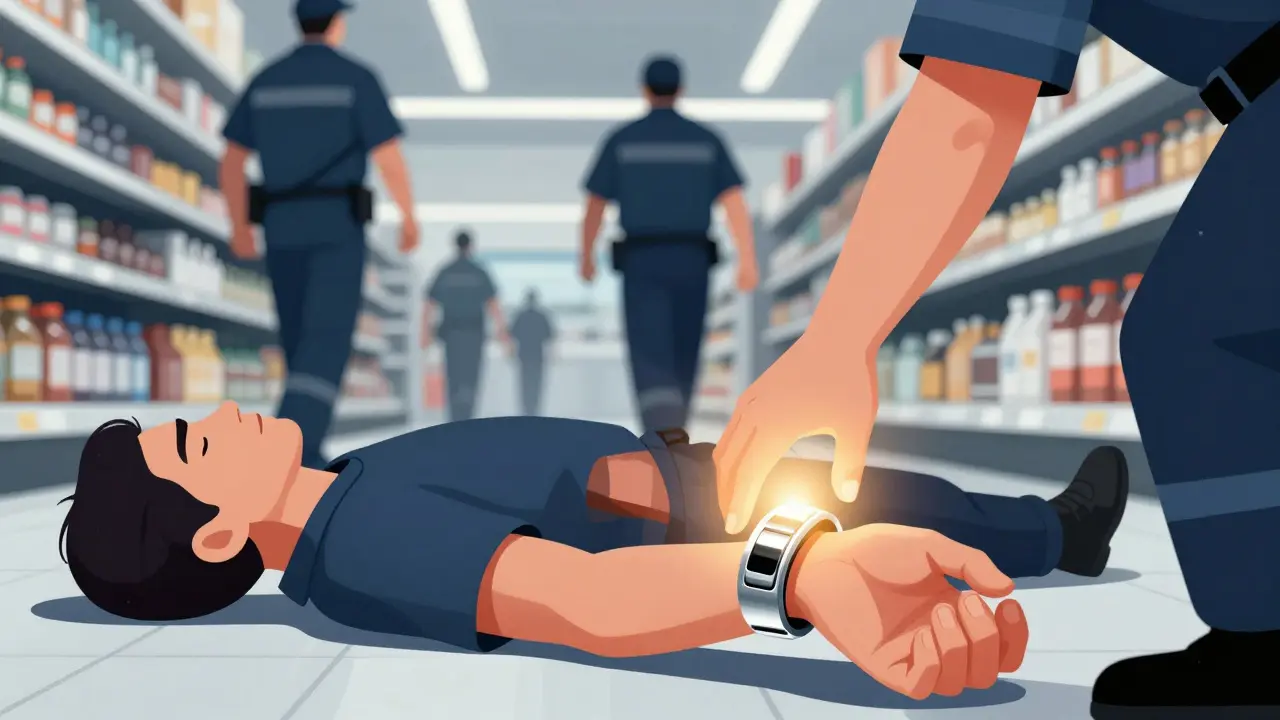
You collapse. You can't speak. The paramedics rush in, ready to stabilize you, but they have one critical question: what are you taking? If the answer involves blood thinners, severe allergies, or insulin, that silence could be fatal. This is exactly why medical alert bracelets are specialized jewelry engraved with vital health data that acts as your voice during emergencies when you cannot communicate. They aren’t just accessories; they are a lifeline designed specifically to prevent catastrophic drug interactions and treatment errors.
In 2022, a study published in the Journal of Emergency Medicine revealed that 37% of emergency room errors involve medication-related issues. That means more than one in three ER mistakes has something to do with drugs. A medical ID bracelet bridges the gap between unconscious patients and life-saving care, ensuring doctors don’t guess-they know.
The Core Problem: Medication Errors in Emergencies
When you’re conscious, you tell the nurse, "I’m on warfarin." When you’re unconscious, that information disappears unless it’s written on your wrist. The American College of Emergency Physicians (ACEP) trains first responders to check wrists and necks immediately because they know time is tissue-and time is truth. Without that visual cue, a doctor might administer a standard painkiller or antibiotic that triggers a deadly reaction.
Consider this scenario: You suffer a fall and hit your head. Paramedics assume you need aspirin for a potential heart issue. But you’re already on warfarin, a powerful blood thinner affecting 2.9 million Americans according to 2023 CDC data. Giving you aspirin could cause internal bleeding. Your bracelet says "ON BLOOD THINNERS," so they skip the aspirin and run a quick clotting test instead. That split-second decision saves your life.
This isn’t hypothetical. Dr. Richard Bradley, a board-certified emergency physician and ACEP spokesperson, stated in a 2022 interview that medical ID bracelets reduce medication error rates by approximately 28% in unconscious patients. That’s nearly one in three errors prevented simply by wearing a piece of metal or plastic around your wrist.
What Information Actually Matters?
Not everything belongs on a bracelet. Space is limited, especially on traditional engraved models. You need to prioritize information that changes immediate treatment protocols. Here’s what experts say should take precedence:
- Drug Allergies: Specifically name the drug. "Penicillin" affects 10% of the U.S. population, but saying "Allergic to Penicillin" prevents anaphylaxis. Latex allergies matter too, especially if surgery is needed.
- Critical Medications: Blood thinners like warfarin, apixaban, or rivaroxaban are top priority. Insulin dependence is next-if you have Type 1 diabetes, rescuers need to know whether to give glucose or insulin.
- Chronic Conditions Requiring Specific Protocols: Epilepsy, severe asthma, or Parkinson’s disease may require specific antidotes or avoidance of certain sedatives.
The ID Band Company reports that 68% of their orders include medication info, with blood thinners making up 42% of those cases. Traditional bracelets usually hold 3-5 key items. If you have a complex regimen, you might need a QR code version that links to a digital profile with unlimited space.
| Information Type | Why It Matters | Example Entry |
|---|---|---|
| Severe Drug Allergies | Prevents anaphylactic shock or organ failure | ANAPHYLACTIC TO PENICILLIN |
| Blood Thinners | Alters trauma and surgical protocols | ON WARFARIN - CHECK PT/INR |
| Diabetes Type & Insulin Use | Determines glucose vs. insulin administration | T1 DIABETES - INSULIN DEPENDENT |
| Epilepsy/Seizure Disorder | Guides seizure management and medication choice | EPILEPSY - DO NOT RESTRAIN |
Traditional Engraved vs. Digital QR Code Bracelets
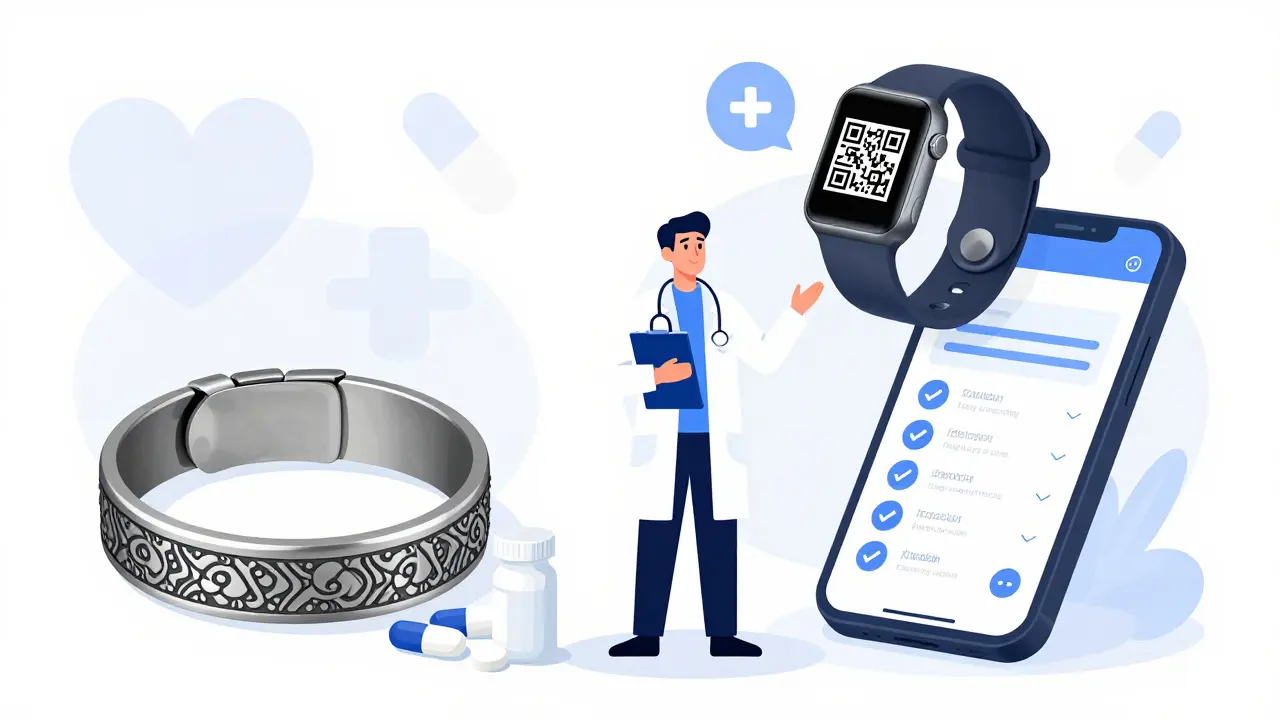
You have two main choices today: the classic engraved metal band or the modern QR code smart bracelet. Each has strengths and weaknesses depending on your needs.
Traditional Engraved Bracelets are simple, durable, and require no battery or internet. First responders recognize them instantly. However, they lack space. If you take five medications, you can’t list them all. You must curate ruthlessly. Prices start around $49.99 from providers like MedicAlert Foundation.
QR Code Smart Bracelets link to a digital health profile. Since 2018, MedicAlert Foundation has offered these, allowing unlimited storage for medication lists, dosages, allergies, and even emergency contacts. In January 2024, they launched SmartProfile, which syncs with pharmacy databases to auto-update your meds-a game-changer for keeping info current. These cost about $69.99 plus a mandatory annual fee of $59.99.
Which is better? If you have one or two critical alerts-like a penicillin allergy or warfarin use-an engraved bracelet works fine. If you manage multiple chronic conditions or change prescriptions often, go digital. The risk with QR codes? Outdated info. Dr. Sarah Thompson of Johns Hopkins Hospital noted in a 2023 JAMA Internal Medicine commentary that 19% of bracelets contained outdated or incomplete data. With SmartProfile, that problem shrinks significantly.
Real-World Impact: Stories from Users
Data tells us these bracelets work. Real stories prove it. On Reddit’s r/medicalalert community, user 'AllergicAmy' shared a documented 2022 emergency where her bracelet listing "ANAPHYLACTIC TO PENICILLIN" stopped an ER nurse from administering the antibiotic during an appendicitis crisis. She wrote, "The ER nurse later told me they were about to give me penicillin before noticing my bracelet-I'd have died within minutes."
Trustpilot reviews for MedicAlert Foundation show a 4.7/5 star rating from over 1,200 verified customers. Notably, 63% cited drug safety as their reason for buying. One customer mentioned avoiding a fatal interaction between their blood thinner and an emergency anticoagulant thanks to their bracelet.
But it’s not perfect. Consumer Reports found that 12% of users complained about engraving limits. One person said, "My bracelet only had room for 'ON BLOOD THINNERS' but not which one, so they still had to do extra tests." That delay matters. It highlights why specifying the exact drug-or using a QR code-is crucial.
Keeping Your Information Current
A bracelet with wrong info is worse than no bracelet. Imagine telling a doctor you’re on metformin when you’ve switched to insulin. That confusion delays proper care. The American Pharmacists Association reports that 35% of users fail to update their bracelets after medication changes.
How do you stay compliant? Set calendar reminders every time you get a new prescription. Or, switch to a digital service that sends update notifications. Medical Guardian’s 2025 system includes AI-powered checks that alert you via smartphone if a new prescription might conflict with your emergency protocols. It’s proactive safety.
Also, consider combining your bracelet with a personal alarm system. The National Council on Aging (NCOA) found that pairing a bracelet with a monitor like Medical Guardian’s increased response effectiveness by 41% for medication-related emergencies. The alarm calls for help; the bracelet tells them what to do.
Who Really Needs One?
You might think, "I’m healthy. I don’t need this." But emergencies don’t care about your age or fitness level. According to the 2024 National Health Interview Survey, adoption is highest among:
- 41% of warfarin users
- 33% of severe allergy sufferers
- 28% of diabetics
If you fit any of these categories, you’re statistically at higher risk for a medication-related emergency. Even if you don’t, consider this: 73% of incidents involving medical ID bracelets happen away from home, per NCOA data. You could slip in a grocery store, have a reaction at a restaurant, or get into a car accident. Your bracelet travels with you.
Market Trends and Future Tech
The global medical ID market was valued at $287 million in 2023, growing at 6.2% annually through 2030, driven largely by medication safety concerns. MedicAlert Foundation holds 65% of the U.S. market, followed by American Medical ID (22%) and newer players like One-Tag (13%).
Regulatory support is strengthening. The 2022 CARES Act mandates that hospital ERs establish protocols for checking medical IDs. As of 2023, 67% of U.S. hospitals have integrated medical ID verification into standard intake procedures. The FDA also launched a Modernization Initiative in 2023 to standardize formatting, improving recognition by first responders.
Looking ahead, integration with electronic health records (EHRs) is coming. Epic Systems and Cerner are developing APIs that will auto-update digital profiles when medication changes occur in patient records. This could slash the 35% update failure rate. By 2027, the NIH projects a 21% increase in adoption among high-risk users. These bracelets are evolving from static tags into dynamic, connected safety tools.
Common Pitfalls to Avoid
Even with the best intentions, people make mistakes. Here’s how to avoid them:
- Vague Language: Don’t write "Heart Condition." Write "On Warfarin." Specificity saves lives.
- Outdated Info: Review your bracelet annually or after every prescription change.
- Ignoring Allergies: Food allergies matter less than drug allergies in acute settings. Prioritize penicillin, latex, aspirin, and NSAIDs.
- Skipping the Fit: Ensure the bracelet is snug enough not to fly off during a fall, but loose enough for comfort.
- Assuming Doctors Will Find It: Wear it consistently. 73% of saves happen outside the home.
Final Thoughts on Drug Safety
A medical alert bracelet costs less than a single ER visit. For many, it costs less than a month’s supply of medication. Yet its value is immeasurable. It turns silence into speech, uncertainty into clarity, and panic into protocol. Whether you choose engraved steel or a smart QR code, the goal is the same: ensure that when seconds count, your body speaks for itself.
Do first responders actually check for medical alert bracelets?
Yes. The American College of Emergency Physicians (ACEP) specifically trains EMS personnel to check wrists and necks for medical IDs during initial assessments. Studies show first responders correctly identify and utilize bracelet information in 89% of cases where they are present.
What is the most important information to put on a medical alert bracelet?
Prioritize drug allergies (specifically naming the drug), critical medications like blood thinners (warfarin, etc.), and conditions requiring specific protocols like Type 1 diabetes. Space is limited, so focus on what changes immediate emergency treatment decisions.
Are QR code medical bracelets reliable?
They are highly reliable for storing detailed information, but depend on cell signal or Wi-Fi to access the digital profile. Newer systems like MedicAlert's SmartProfile sync with pharmacies to keep data current. However, always include critical info like "ALLERGIC TO PENICILLIN" directly on the bracelet in case technology fails.
How much does a medical alert bracelet cost?
Traditional engraved bracelets start around $49.99. QR code versions typically cost about $69.99 plus an annual membership fee (around $59.99) to maintain the digital profile. Some insurance plans may cover part of the cost if prescribed by a doctor.
Who really needs a medical alert bracelet?
Anyone taking blood thinners, having severe drug allergies, managing Type 1 diabetes, or dealing with epilepsy should wear one. Adoption is highest among these groups because the risk of a medication-related emergency is significant. Even healthy individuals benefit if they travel alone or live far from family.