
Ketogenic vs. Atkins Diets: Which Low-Carb Diet Works Better for Weight Loss?
 Dec, 3 2025
When you’re trying to lose weight, not all low-carb diets are created equal. Two of the most popular options - the ketogenic diet and the Atkins diet - promise quick results, but they work in very different ways. One locks you into a strict fat-burning state. The other gives you room to grow into a sustainable eating pattern. So which one actually works better for long-term weight loss? Let’s cut through the noise.
How the Ketogenic Diet Really Works
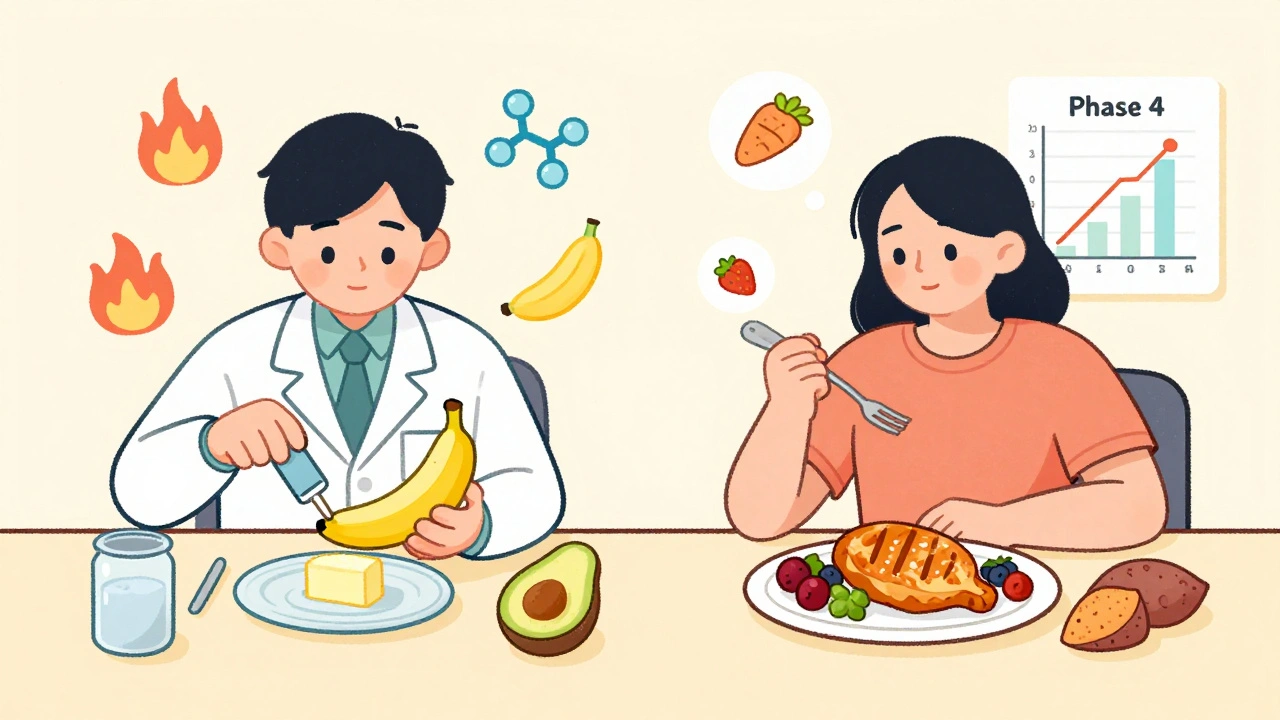
The ketogenic diet, or keto, was originally developed in the 1920s to treat epilepsy in children. Today, it’s used mostly for weight loss. The idea is simple: cut carbs so low that your body runs out of glucose and starts burning fat for fuel instead. That state is called ketosis.To get there, you need to eat about 75-90% of your calories from fat, 15-20% from protein, and just 5-10% from carbs - usually under 50 grams a day. That means no bread, no fruit, no pasta, and very little sugar. Even a small potato or a banana can knock you out of ketosis.
Many people see fast results. In a 12-month study, participants on a low-calorie keto diet lost an average of 44 pounds (20 kg). That’s more than double what people lost on standard low-calorie diets. Part of the reason? Your body doesn’t slow down its metabolism as much on keto. Most diets cause your resting metabolic rate to drop over time, making it harder to keep losing weight. Keto helps avoid that.
But there’s a catch. Getting into ketosis isn’t easy. Around 70-80% of new keto dieters experience what’s called the “keto flu” - headaches, fatigue, brain fog, and irritability - as their body switches fuel sources. It usually lasts 1-2 weeks. And once you’re in ketosis, you have to stay there. One slip-up with carbs can take days to recover from.
Keto also demands precision. You’re not just counting carbs - you’re tracking fat and protein too. Too much protein? Your body can turn it into glucose through gluconeogenesis, which might kick you out of ketosis. That’s why many keto followers avoid protein-heavy foods like lean chicken breast or low-fat yogurt. Instead, they eat fatty cuts of meat, butter, cheese, avocado, and oils.
How the Atkins Diet Is Structured Differently
The Atkins diet, launched in 1972, takes a phased approach. It’s not about staying locked in one state forever. It’s about finding your personal carb tolerance.Atkins has four phases:
- Induction (Phase 1): You eat only 20-25 grams of net carbs per day for at least two weeks. This is the strictest part - similar to keto. You avoid sugar, grains, and starchy veggies.
- Ongoing Weight Loss (Phase 2): You add 5 grams of carbs per week, usually from vegetables, nuts, and berries. You keep losing weight, but slower.
- Pre-Maintenance (Phase 3): You’re close to your goal weight. You keep adding carbs (up to 50-80 grams daily) to find the level where you stop losing weight but don’t gain it back.
- Lifetime Maintenance (Phase 4): You eat up to 100 grams of net carbs daily - and stay at your target weight. This isn’t a temporary fix. It’s a lifelong eating pattern.
Unlike keto, Atkins doesn’t restrict protein. You can eat plenty of chicken, fish, eggs, and lean meats. And while keto pushes whole foods only, Atkins allows processed “diet-friendly” products - think Atkins bars, shakes, and frozen meals. Many people like that flexibility.
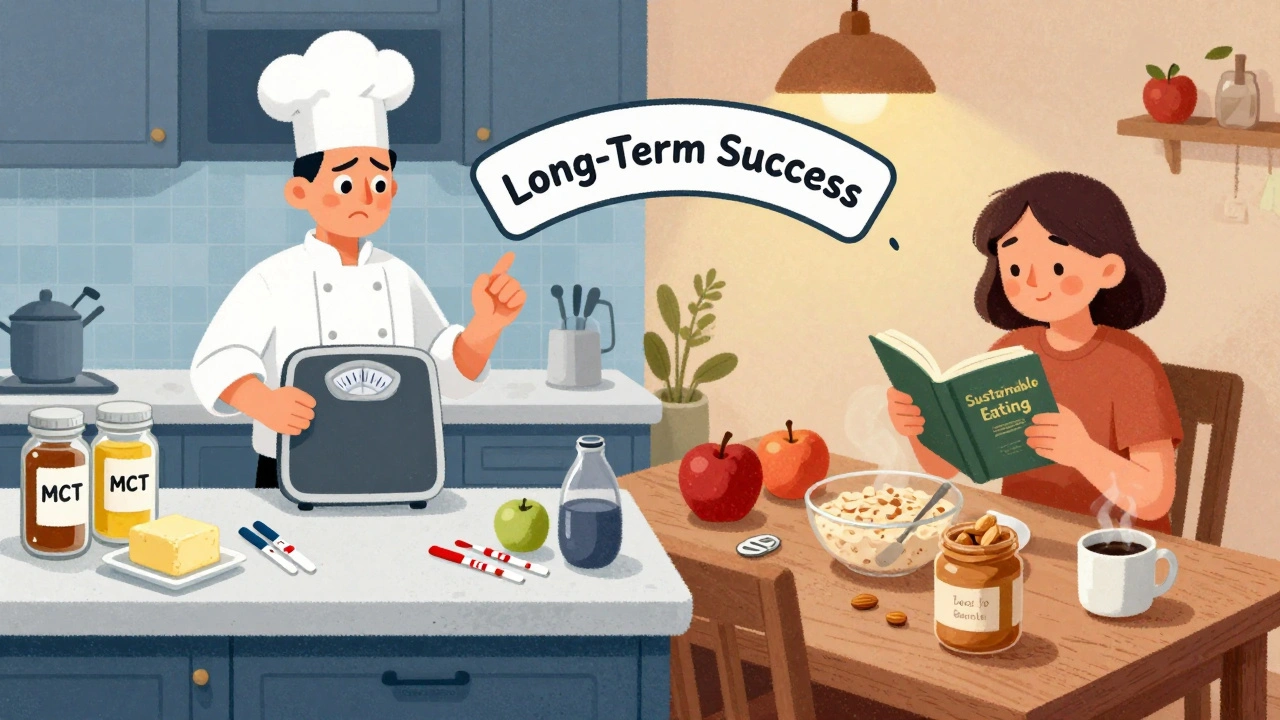
The phased system makes it easier to stick with long-term. People who’ve tried keto and quit often say they felt trapped. With Atkins, you’re always moving toward more freedom. You don’t have to be perfect forever - you just need to find your personal carb balance.
What the Science Says About Weight Loss
Both diets work well in the short term. A 24-week study of 14 adults with type 2 diabetes on Atkins showed weight loss, lower blood sugar, and reduced need for medication. Another study found keto dieters lost 12.1 pounds in six months, compared to 6.2 pounds on a moderate-carb diet.But here’s the twist: over time, the difference fades.
A 2022 study published in the American Journal of Clinical Nutrition tracked people for two years. At six months, keto led to more weight loss. At two years? The difference was tiny - just 1.7 pounds more than the moderate-carb group. That’s not much when you consider how hard keto is to maintain.
The Mayo Clinic says it plainly: “Over the long term, low-carb diets like Atkins are no more effective for weight loss than standard diets.” That doesn’t mean they don’t work - it means they work about the same as any other calorie-controlled plan. The real advantage isn’t magic fat-burning. It’s that cutting carbs reduces hunger. Fewer cravings mean fewer calories eaten without trying.
One big reason keto loses steam is adherence. A 2023 survey found that only 35% of keto dieters stuck with it after 12 months. For Atkins? It was 48%. Why? Because Phase 4 of Atkins lets you eat more foods you actually like - including whole grains, legumes, and fruit - without gaining weight back. Keto doesn’t offer that escape hatch.

Who Each Diet Works Best For
If you’re someone who likes rules, structure, and quick wins, keto might feel satisfying. It’s the “all or nothing” approach. People who thrive on precision - like engineers, programmers, or fitness enthusiasts - often do well with it. And if you have insulin resistance or prediabetes, keto can rapidly improve blood sugar control.But if you hate measuring food, dread the keto flu, or want to eat out without stress, Atkins is probably better. The phased system gives you milestones. You’re not stuck forever in Phase 1. You earn your way into more freedom. That’s why older adults (35-54 years old) are more likely to choose Atkins - they’re looking for a sustainable lifestyle, not a 3-month challenge.
Also, consider your food preferences. If you love cheese, bacon, and butter, keto fits. If you miss apples, oatmeal, or sweet potatoes, Atkins lets you bring them back - slowly and safely.
Practical Challenges and Hidden Costs
Keto isn’t just hard to follow - it’s expensive. Testing ketones with blood strips can cost $40-60 a month. High-quality fats like grass-fed butter, MCT oil, and wild salmon add up. And if you avoid processed foods (as keto recommends), you’re buying more whole ingredients - which usually costs more than packaged snacks.Atkins has its own costs. The branded products - bars, shakes, and frozen meals - are convenient but often loaded with artificial sweeteners and preservatives. Reviews on Trustpilot give Atkins products a 3.8/5 rating, with people praising convenience but complaining about taste and ingredients.
Both diets require label reading. You can’t just grab anything off the shelf. A single serving of almond butter might have 6 grams of carbs - and you only have 20 to spend on a keto day. That’s why apps like Carb Manager and KetoDiet are popular. They help track net carbs, protein, and fat in real time.
And let’s not forget social life. Going out to dinner? Keto makes it awkward. Atkins? You can order a salad with grilled chicken and ask for dressing on the side. No one bats an eye.
Expert Opinions and Warnings
Harvard nutrition experts are cautious. Dr. David Ludwig says keto can produce “impressive short-term weight loss,” but the extreme restriction makes it hard for most people to stick with. Dr. Walter Willett notes that Atkins’ phased approach “may offer a more practical path to sustainable weight management.”But there’s another concern: saturated fat. Many keto meals rely on butter, cream, cheese, and fatty meats. Dr. Neal Barnard from the Physicians Committee for Responsible Medicine warns this could raise LDL cholesterol and increase heart disease risk - even if you lose weight.
The American Diabetes Association says low-carb diets can help with blood sugar control in the short term, but long-term safety data is still limited. That’s why many dietitians recommend a balanced approach: use keto or Atkins to jump-start weight loss, then transition to a Mediterranean-style diet rich in vegetables, whole grains, and healthy fats.
Real People, Real Results
On Reddit, keto users share wins like: “Lost 50 pounds in 6 months - my blood sugar normalized.” But they also say: “The keto flu made me quit after two weeks.”Atkins users say: “Phase 4 let me eat pasta again and I haven’t gained weight.” But others admit: “I hit a plateau in Phase 3 - I added too many carbs too fast.”
One woman from Auckland told me she tried keto for three months, lost 22 pounds, but felt exhausted and couldn’t sleep. She switched to Atkins 40 - added back some fruit and sweet potatoes - and lost another 15 pounds over six months without the brain fog. “I feel like I’m eating, not surviving,” she said.
Final Verdict: Which One Should You Choose?
If you want fast results and don’t mind strict rules, keto might be your starter plan. But if you’re thinking long-term - and you want to actually enjoy your food - Atkins gives you a better path.Here’s a simple way to decide:
- Choose ketogenic if: You’re highly motivated, love fats, don’t mind measuring food, and want rapid results for medical reasons (like insulin resistance).
- Choose Atkins if: You want to lose weight and keep it off, enjoy variety, hate feeling deprived, and want to eventually eat whole grains, legumes, and fruit again.
Most people don’t need to stay on either diet forever. Use them as tools - not life sentences. Start with 6 weeks of keto or Atkins 20 to reset your metabolism. Then, slowly add back healthy carbs and move toward a balanced, whole-foods-based diet. That’s how real, lasting weight loss happens.
Scott van Haastrecht
December 4, 2025 AT 05:34The keto diet is just a corporate-funded scam designed to sell you MCT oil and ketone strips while Big Pharma watches you suffer through the keto flu. They don't want you to know that fat oxidation is just a placebo effect masked by dehydration and electrolyte loss. The real weight loss comes from calorie restriction - not magic ketones. Atkins is the only real option because it lets you eat meat without becoming a human butter dish.
Ollie Newland
December 5, 2025 AT 19:41From a metabolic standpoint, both diets induce insulin suppression - that’s the real driver of fat loss, not ketosis per se. The key differentiator is glycemic load management. Keto’s rigid carb ceiling (under 50g) forces gluconeogenesis suppression, while Atkins’ phased reintroduction allows for adaptive thermogenesis modulation. Most people fail keto not because it’s ineffective - but because they lack metabolic flexibility training. Atkins is essentially a carb titration protocol with built-in feedback loops.
Heidi Thomas
December 7, 2025 AT 06:02Anyone who says Atkins is sustainable hasn't tried eating a 100g carb limit for a year. That's just carb creep disguised as maintenance. I lost 40lbs on keto in 5 months and I'm not going back. You think you're 'eating fruit again' but you're just fooling yourself. The scale doesn't lie. The keto flu was a week. The freedom is forever.
Rebecca Braatz
December 9, 2025 AT 00:25If you're feeling exhausted on keto, it's not the diet - it's your electrolytes. I started with magnesium, potassium, and sodium for 3 days and the brain fog vanished. And yes, you CAN eat berries and avocado on keto. It's not about deprivation - it's about smart swaps. You don't need to live on bacon and butter. Your body isn't a carb-addicted robot. You're worth more than a meal plan that makes you cry in the grocery aisle.
Carolyn Ford
December 10, 2025 AT 22:14Oh, so now we’re pretending Atkins is ‘sustainable’? Please. Phase 4 is just ‘I gave up and started eating Twinkies again.’ And you call that ‘balance’? The science says neither diet works long-term - they just trick your brain into eating less by making you miserable. And now you’re all acting like you’re some kind of biohackers when you’re just counting net carbs like it’s a cult ritual. Wake up. It’s calories. Always calories.
Augusta Barlow
December 12, 2025 AT 13:36Did you know the ketogenic diet was originally developed by the Rockefeller Foundation to control epileptic children so they wouldn’t distract from wartime industrial labor? And now it’s being sold to middle-class Americans as a weight-loss miracle? The Atkins diet? That was funded by the sugar industry to discredit low-fat propaganda - they needed a new scapegoat. Both diets are engineered distractions. The real issue? Ultra-processed foods. Not carbs. Not fat. The system. You’re being sold a bandaid while the cancer spreads. I’ve seen people lose weight on keto, then get type 2 diabetes from the saturated fat overload. They’re not fixing anything - they’re just delaying the inevitable. And now they’re all posting selfies with bacon and calling it ‘health.’ The system wins. Again.
michael booth
December 12, 2025 AT 21:00Both diets reduce hunger by lowering insulin spikes. That's the real win. The rest is noise. I tried keto for 3 weeks - hated the brain fog. Switched to Atkins Phase 2 - lost 12 pounds in 2 months without tracking fat grams. I eat eggs, chicken, broccoli, and the occasional sweet potato. No bars. No shakes. No stress. The goal isn't to live in ketosis. It's to live without cravings. And that? That's possible without becoming a human butter stick.
Alex Piddington
December 14, 2025 AT 20:35For those struggling with adherence, consider this: the ketogenic diet demands neurochemical adaptation - a shift from glucose to ketone utilization that requires 7–14 days of physiological recalibration. Many abandon it during this window. The Atkins phased approach mirrors behavioral psychology principles - incremental reinforcement and variable reward schedules. This increases compliance. Additionally, protein leverage hypothesis suggests higher protein intake (permitted in Atkins) enhances satiety more effectively than high-fat, low-protein keto regimens. Long-term success is not about metabolic state - it’s about behavioral sustainability.
Libby Rees
December 16, 2025 AT 06:21I tried both. Keto made me tired and irritable. Atkins let me eat an apple again. I lost weight on both. But only Atkins made me feel like I was still alive. I don’t need to be perfect. I just need to feel okay. And I do.
Rudy Van den Boogaert
December 17, 2025 AT 04:11My cousin lost 60 lbs on keto and now she can’t eat a single slice of bread without gaining it all back. My mom did Atkins and eats oatmeal every morning and still weighs the same as she did five years ago. The truth? Neither diet is magic. You lose weight because you eat less. The rest is just marketing. Pick the one that doesn’t make you hate food. That’s the one that’ll last.