
Hypoglycemia: How to Recognize, Treat, and Prevent Low Blood Sugar
 Dec, 11 2025
When your blood sugar drops too low, your body doesn’t just feel tired-it can start shaking, sweating, or even confusing you. For people with diabetes, this isn’t rare. In fact, nearly half of those using insulin experience it at least once a month. Hypoglycemia, or low blood sugar, is more than an inconvenience. Left untreated, it can lead to seizures, loss of consciousness, or worse. But here’s the good news: it’s almost always preventable-and treatable-if you know what to look for and what to do.
What Counts as Low Blood Sugar?
| Group | Threshold (mg/dL) | Threshold (mmol/L) |
|---|---|---|
| People with diabetes | 70 | 3.9 |
| People without diabetes | 55 | 3.1 |
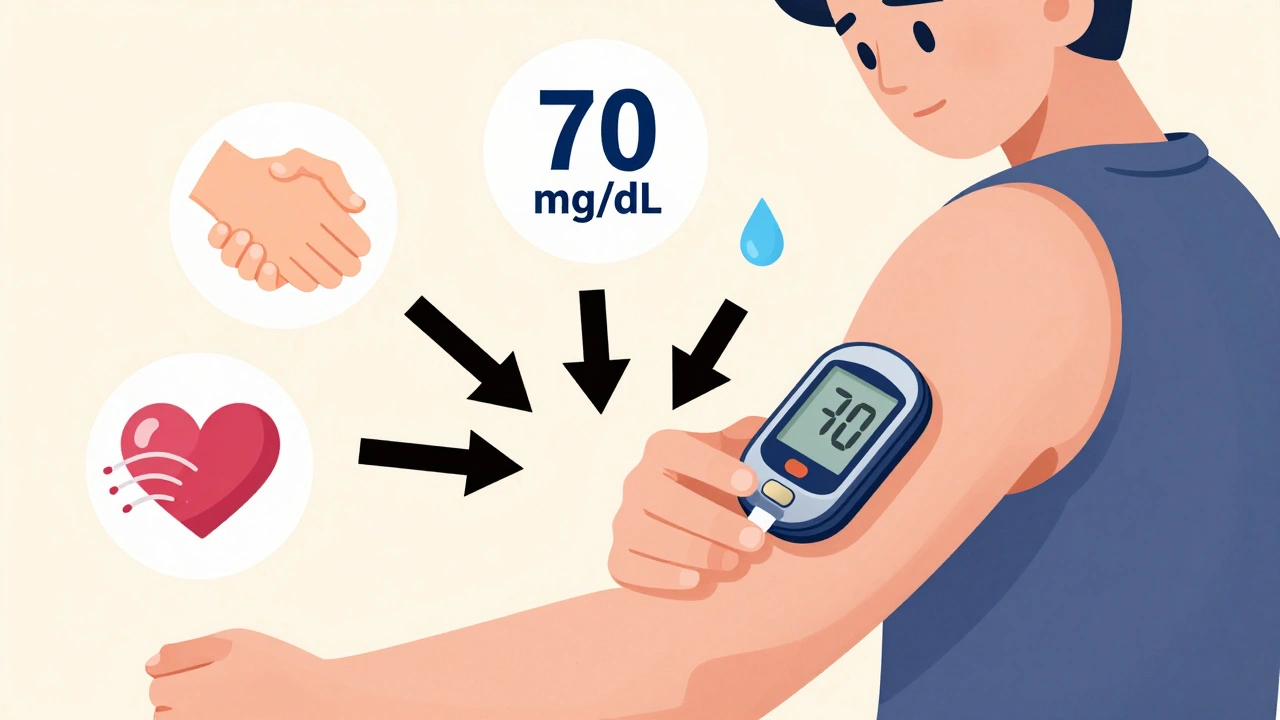
The standard cutoff for low blood sugar in people with diabetes is 70 mg/dL (3.9 mmol/L). This isn’t arbitrary-it’s when your brain starts struggling to get enough fuel. For someone without diabetes, the threshold is lower (55 mg/dL), because their body still has natural defenses to raise blood sugar. But if you have diabetes, your body doesn’t respond the same way. That’s why even a drop to 70 mg/dL can trigger symptoms.
How Do You Know You’re Having a Low?
Your body gives you two kinds of warnings: physical and mental.
Physical (adrenergic) symptoms happen when your body releases adrenaline to fight the drop. You might feel:
- Shaking or trembling hands
- Sudden sweating, even if it’s cool
- Heart racing or pounding
- Hunger that comes out of nowhere
Mental (neuroglycopenic) symptoms show up when your brain is starved of glucose. These are more dangerous because you might not realize what’s happening:
- Blurred vision
- Confusion or trouble focusing
- Slurred speech
- Feeling dizzy or weak
- Seizures or unconsciousness (if it drops below 50 mg/dL)
Here’s the tricky part: symptoms vary. One day you might feel shaky. The next, you might just feel weird-like you’re drunk, but you haven’t had a drink. That’s why so many people end up in emergency rooms mistaken for intoxication. And if you’ve had diabetes for more than 10-15 years, you might lose the ability to feel these symptoms at all. This is called hypoglycemia unawareness. It’s scary, and it affects about 1 in 4 long-term Type 1 users.
What Causes Low Blood Sugar?
In people with diabetes, it’s almost always tied to treatment-not the disease itself. The most common causes:
- Too much insulin or diabetes medication - This causes 73% of episodes. Taking your usual dose but skipping a meal or eating less than planned can trigger it.
- Not eating enough carbs - Even a small change, like skipping a snack or eating a lighter lunch, can throw off your balance.
- Exercise without adjusting - Physical activity lowers blood sugar. A 30-minute walk or bike ride can drop levels if you don’t eat extra carbs or reduce insulin.
- Delayed digestion - If you’re sick, stressed, or taking medications that slow stomach emptying, your carbs may not absorb when expected.
- Alcohol - Especially on an empty stomach. Alcohol blocks your liver from releasing stored glucose.
Non-diabetics can get low blood sugar too, but it’s rare. Two main types: reactive (after eating) and fasting (during long gaps between meals). Reactive hypoglycemia can happen after gastric bypass surgery, and fasting hypoglycemia might signal something serious like a tumor on the pancreas. But for most people reading this, the cause is diabetes-related.
How to Treat It: The 15-15 Rule (And When It Fails)
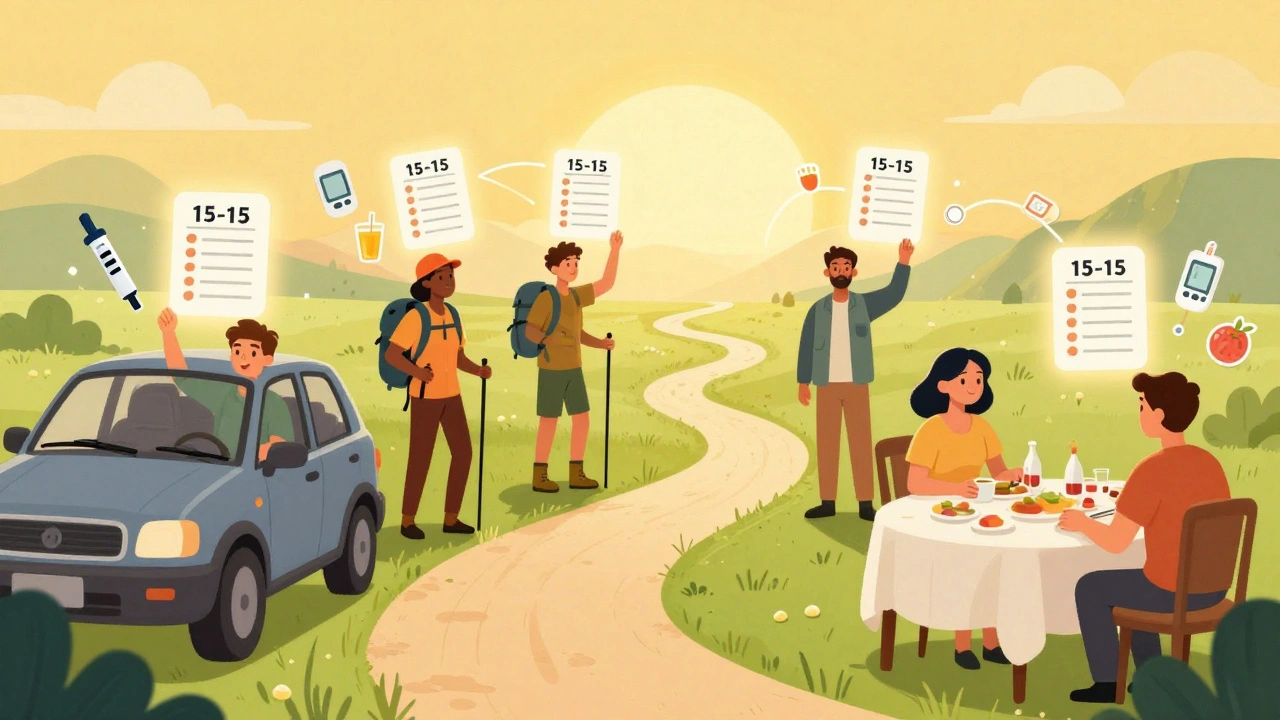
If you’re conscious and your blood sugar is below 70 mg/dL, follow the 15-15 rule:
- Take 15 grams of fast-acting carbohydrates.
- Wait 15 minutes.
- Check your blood sugar again.
What counts as 15g of carbs?
- 4 glucose tablets
- 1/2 cup (4 oz) of fruit juice
- 1 tablespoon of honey or sugar
- 6-8 hard candies (not sugar-free)
Don’t use chocolate or whole foods like bread or peanut butter. They have fat and protein, which slow down absorption. You need sugar that hits fast.
If your sugar rises above 70 mg/dL and you feel better, eat a small snack with protein and carbs-like a piece of toast with peanut butter-to keep it stable.
But here’s the catch: the 15-15 rule doesn’t work if you’re confused, unconscious, or having a seizure. That’s when you need glucagon.
Glucagon: The Emergency Lifeline
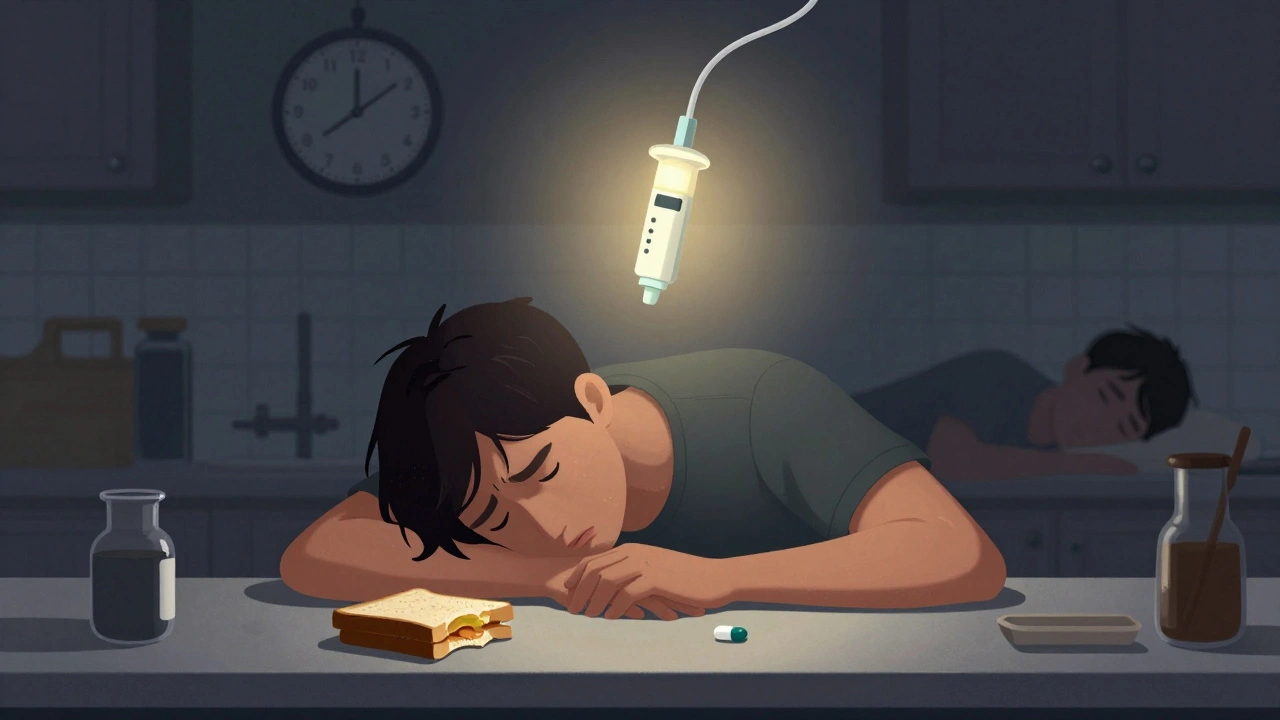
If someone can’t swallow or is unconscious, they need glucagon. This hormone tells the liver to dump stored sugar into the blood. There are two forms now:
- Injectable glucagon - Requires mixing powder and liquid. Takes about 10 minutes to work.
- Nasal glucagon (Zegalogue) - A powder you spray into the nose. Works in under 10 minutes, no mixing needed. Approved in 2023, it’s easier for caregivers to use.
Everyone with diabetes who uses insulin should have glucagon on hand-and so should their family, coworkers, or friends. A 2022 study showed nasal glucagon works in 94% of cases within 15 minutes. That’s life-saving.
And yes, you need to practice using it. Don’t wait until an emergency. Practice with a trainer kit. Know where it’s stored. Tell someone where it is.
Preventing Hypoglycemia Before It Starts
Prevention is smarter than reaction. Here’s how to cut your risk:
- Use a continuous glucose monitor (CGM) - CGMs track your sugar every 5 minutes. Set alerts for when you’re dropping toward 70 mg/dL. Studies show CGMs reduce low-blood-sugar time by 35%. But don’t ignore alarms. Alarm fatigue is real-41% of users turn them off. Set alerts at 70 and 60, not just 50.
- Adjust insulin for exercise - If you’re going to be active for more than 45 minutes, reduce your basal insulin by 20-50% or eat extra carbs. A 10-minute walk might need 10g carbs. A 90-minute hike? You might need 30-40g.
- Don’t skip meals or snacks - Even if you’re not hungry. If you’re on insulin, your body expects fuel at certain times.
- Check before driving - At 50 mg/dL, your reaction time is like having a 0.08% blood alcohol level. That’s legally drunk. Always check your sugar before getting behind the wheel. If it’s below 70, treat it first.
- Plan for nighttime - Nighttime lows are the most dangerous. They’re silent. You might not wake up. Use a CGM with a low-suspend feature. New systems like Guardian 4 can pause insulin delivery if your sugar starts dropping too fast. In trials, this cut nighttime lows by 44%.
What About the Long-Term Risks?
Each severe low can have lasting effects. For older adults, one episode can raise dementia risk by nearly 5%. In young people with Type 1, nocturnal hypoglycemia is linked to “dead-in-bed” syndrome-a rare but devastating cause of death. And if you’re on insulin, repeated lows can make your body less sensitive to the warning signs. That’s a dangerous cycle.
But it’s not inevitable. Training helps. One study found that just 3 hours of focused hypoglycemia education cut severe episodes by 37% in new patients. Know your numbers. Know your triggers. Know your escape plan.
When to Call for Help
Call 911 or get emergency help if:
- Someone is unconscious or having a seizure
- Glucagon was given but no improvement after 15 minutes
- You’re unsure what’s happening and symptoms are worsening
Don’t wait. Don’t assume it’s just stress or fatigue. If you’re unsure, treat it as low blood sugar. Better safe than sorry.
Final Thoughts: You’re Not Alone
Hypoglycemia isn’t a failure. It’s a signal. It means your treatment is working-but it’s out of balance. Millions of people manage this every day. You can too. The tools are better than ever: CGMs, nasal glucagon, smarter insulin pumps, and better education. The goal isn’t perfection. It’s awareness. It’s preparation. It’s knowing your body’s warning signs and having a plan ready-before the next drop hits.
Can low blood sugar happen to people without diabetes?
Yes, but it’s rare. Non-diabetic hypoglycemia usually falls into two categories: reactive (after eating) or fasting (during long gaps without food). Reactive hypoglycemia can occur after bariatric surgery, while fasting hypoglycemia may signal a tumor, liver disease, or hormone problem. If you’re not diabetic and experience frequent lows, see a doctor to rule out underlying causes.
Why do I feel low even when my glucose is above 70?
Your body may be used to higher sugar levels. If your blood sugar has been running high for a while (like 150-200 mg/dL), your brain adapts. When it drops to 80 or 85, it feels like a crash-even though it’s technically not low yet. This is called relative hypoglycemia. Over time, as your average sugar comes down, your symptoms will adjust. Don’t treat it unless your reading is below 70 mg/dL.
Can alcohol cause low blood sugar?
Yes, especially if you drink on an empty stomach or take insulin. Alcohol blocks your liver from releasing glucose for up to 12 hours. A single drink can trigger a low hours later-even while you’re sleeping. Always eat carbs when drinking, and check your sugar before bed. Consider setting a CGM alarm for overnight.
Do I need to carry glucose tablets all the time?
If you’re on insulin or certain diabetes medications, yes. Keep fast-acting carbs in your bag, car, and workplace. Glucose tablets are ideal because they’re measured, portable, and shelf-stable. Don’t rely on candy or juice you might forget or leave behind. Also, tell people close to you where you keep them.
How do I know if my CGM is wrong?
CGMs can lag during rapid changes-like after exercise or eating. If you feel low but the reading says 90, check with a fingerstick. Sensor lag can be 10-20 minutes behind real blood sugar. Trust your symptoms more than the screen if they don’t match. Always confirm with a blood test if you’re unsure or feeling unwell.
Is it safe to drive with diabetes?
Yes-if you manage your risk. Always check your blood sugar before driving. If it’s below 70 mg/dL, treat it and wait until it’s stable. Never drive if you’re feeling shaky, confused, or have blurred vision. Some states require a doctor’s note for people with frequent lows. Use CGM alerts and keep snacks in the car. Your safety and others’ depend on it.
Can hypoglycemia cause long-term brain damage?
Single mild episodes don’t cause damage. But repeated severe lows-especially in older adults-can increase dementia risk over time. Each severe episode is linked to a 4.7% higher risk of cognitive decline. Protecting your brain means preventing lows, not just treating them. Use technology, plan ahead, and talk to your care team about reducing your risk.
Next Steps: Build Your Hypoglycemia Action Plan
Start today. Write down:
- Your personal low blood sugar symptoms (write them on your phone or wallet)
- Where you keep your glucose tablets and glucagon
- Who knows how to use your glucagon (partner, coworker, neighbor)
- Your CGM alert settings (set them at 70 and 55)
- Your emergency contact number (add it to your phone’s ICE list)
Hypoglycemia doesn’t have to control your life. With the right knowledge and tools, you can live fully-without fear.
Audrey Crothers
December 12, 2025 AT 01:38OMG this saved my life last week 😭 I was driving and suddenly felt like I was drunk-no alcohol, just shaking and blurry vision. Checked my CGM-58 mg/dL. Grabbed glucose tabs, waited 15 mins, and was fine. Never ignoring symptoms again!
Adam Everitt
December 12, 2025 AT 18:05hmm... hypoglycemia... its not just a med issue, its a metaphysical one too. the body screams when the soul is outta balance. we chase numbers like gods, but the real low is when we forget to listen. 70mg/dl? maybe its 70mg of meaning we're missing.
wendy b
December 14, 2025 AT 14:15Actually, the threshold for non-diabetics is not universally 55 mg/dL-it’s a consensus derived from population studies, and some newer literature suggests 50 mg/dL as the clinical cutoff for symptomatic hypoglycemia in healthy individuals. Also, ‘reactive hypoglycemia’ is often misdiagnosed; true postprandial hypoglycemia without prior gastric surgery is exceedingly rare and should prompt endocrine workup. Please update your references.
Nathan Fatal
December 15, 2025 AT 20:27Just want to emphasize something the article barely touches: hypoglycemia unawareness isn’t just scary-it’s a neurological adaptation. Your brain stops sending alarms because it’s been lied to too many times by high blood sugar. The only way back is consistent time-in-range for 3-6 months. No shortcuts. CGMs help, but discipline is the real tool. I’ve been Type 1 for 22 years. I lost my warning signs at 15. Got them back at 38. It’s possible.
nikki yamashita
December 17, 2025 AT 18:40You got this!! 💪 Keep glucose tabs in your purse, car, and work drawer. I keep mine in my bra (yes, really) and no one’s ever asked. Safety > modesty. And if you’re scared to talk about lows-say it anyway. We’re all in this together.
sandeep sanigarapu
December 19, 2025 AT 03:23Respectfully, I would like to add that in many developing countries, access to CGMs and nasal glucagon is still a luxury. For many, the 15-15 rule with juice or sugar is the only option. Community education and affordable glucose sources are critical. Let us not forget those without technology.
Robert Webb
December 20, 2025 AT 12:05There’s something deeply human about the way our bodies react to low blood sugar-it’s not just biology, it’s a primal signal, like hunger or fear. But here’s the twist: we’ve turned it into a data point. We obsess over numbers, alarms, and trends, but we forget the lived experience-the trembling hands, the sudden panic, the way your thoughts dissolve like sugar in hot tea. I’ve had lows where I couldn’t remember my kid’s name. I’ve had lows where I cried because I was so tired of being ‘responsible.’ The tools help, yes. But what really saves us? Connection. Someone who knows where your glucagon is. Someone who says, ‘I’ve got you.’ That’s the real technology.
Rob Purvis
December 22, 2025 AT 05:08Just to clarify: nasal glucagon works in under 10 minutes, but it’s not instant-don’t panic if you don’t see improvement in 5. And yes, you absolutely need to practice with the trainer! I used to think I’d remember how to use it… until my friend had a seizure and I froze. Now I do a dry run every month. Also-glucose tablets are better than juice because juice has fructose, which metabolizes slower and can cause a rebound. And don’t forget: alcohol + insulin = dangerous combo, especially if you’re sleeping. I lost 2 nights of sleep last month because I didn’t check before bed. Don’t be me.