
How to Use an Epinephrine Auto-Injector During an Anaphylactic Emergency
 Dec, 10 2025
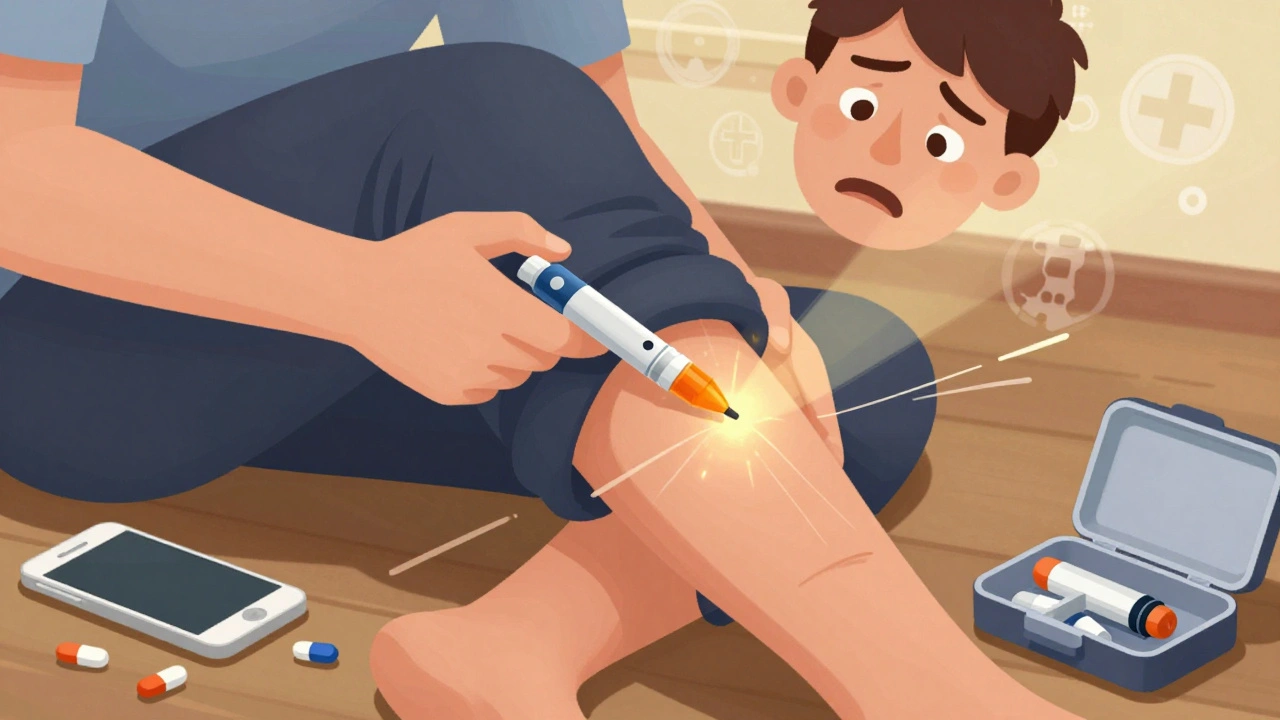
When your body goes into anaphylaxis, time isn’t just important-it’s everything. A severe allergic reaction can turn deadly in under five minutes. Epinephrine is the only thing that can stop it. If you or someone you care about has a history of severe allergies, knowing how to use an epinephrine auto-injector isn’t just a good idea-it’s life-saving. And yet, studies show that nearly 60% of people who need it don’t use it correctly when it matters most.
What Happens During Anaphylaxis?
Anaphylaxis isn’t just a bad rash or a stuffy nose. It’s your immune system going into overdrive, flooding your body with chemicals that cause your airways to swell, your blood pressure to crash, and your heart to struggle. Symptoms come fast: difficulty breathing, swelling of the tongue or throat, hives, dizziness, vomiting, or a feeling that you’re going to pass out. Sometimes, it’s just a sudden feeling of doom.Antihistamines like Benadryl? They don’t cut it. They might help with mild itching, but they won’t stop the collapse of your airway or blood pressure. Only epinephrine can reverse these effects. It tightens blood vessels to raise pressure, opens up your airways, and helps your heart keep pumping. Delaying it-even by a few minutes-doubles your risk of a second, even deadlier wave of symptoms.
Which Auto-Injectors Are Available?
There are a few main brands, each with small but important differences:- EpiPen (by Viatris): The most common in the U.S. Comes in 0.15mg and 0.3mg doses. Has a bright orange tip you press firmly into the thigh. No voice guidance.
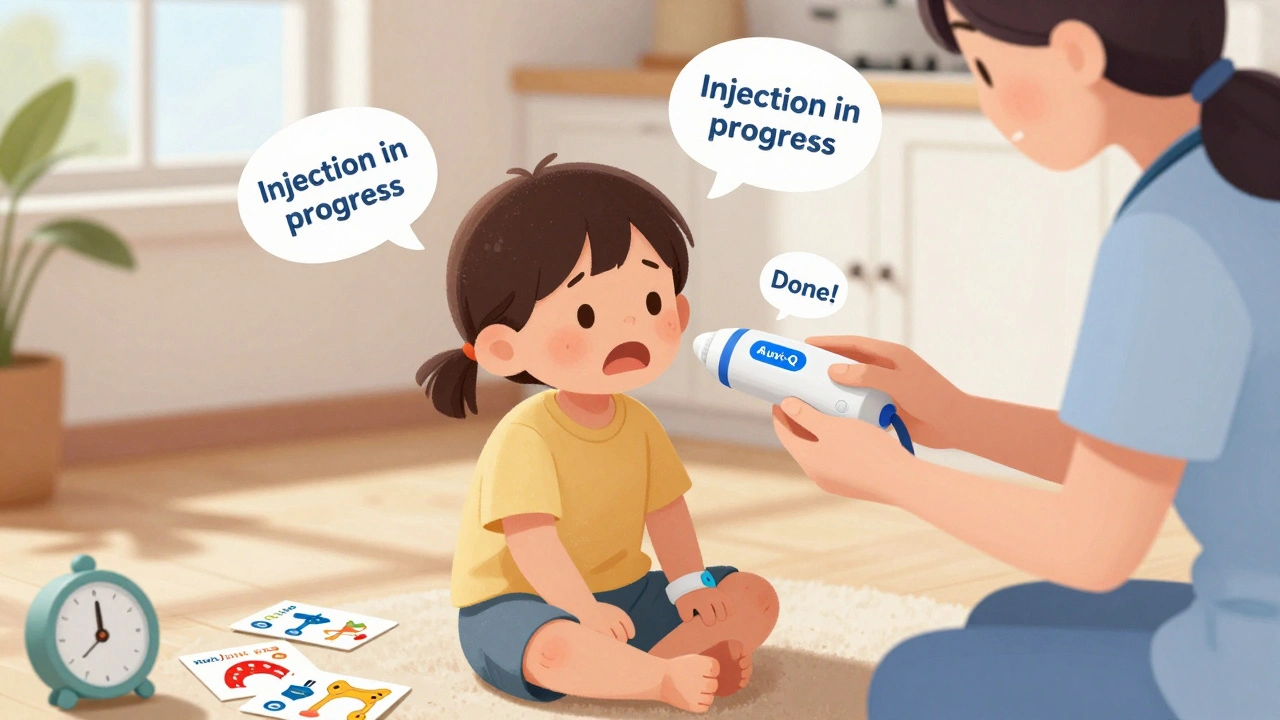
- Auvi-Q (by kaléo): Has a built-in voice prompt that talks you through each step. It even tells you when the injection is done. Often preferred by parents and caregivers.
- Adrenaclick (by Amedra): Cheaper, but you have to manually pull off two safety caps and press a plunger. More steps mean more room for error.
- Neffy (new in 2023): The first needle-free option. You spray it into one nostril. Works well for people terrified of needles, but only if you use it right-32% of people fail the technique in simulations.
EpiPen dominates the market, but it’s not always the best choice for everyone. If you’re nervous about using it under stress, Auvi-Q’s voice instructions can be a game-changer. If cost is a big issue, Adrenaclick is far cheaper. Neffy is promising, but it’s not yet widely available and doesn’t work for everyone.
How to Use an Epinephrine Auto-Injector (Step by Step)
Here’s how to use any standard auto-injector-like an EpiPen or Adrenaclick-correctly. The process is simple, but only if you practice it.
- Remove the device from its case. Don’t wait until you’re panicking to fumble with it. Keep it accessible-pocket, purse, backpack. Don’t store it in a hot car or a dark drawer. Keep it between 59°F and 86°F.
- Hold it in your fist with the orange tip (or black tip on Adrenaclick) pointing down. The blue safety cap is on top. DO NOT point it at yourself or anyone else.
- Remove the blue safety cap. This is where most people mess up. You have to pull it straight off. Don’t squeeze the sides.
- Place the orange tip against the outer thigh. It can go through clothing-jeans, leggings, even thick pants. No need to undress. Aim for the middle of the outer thigh, halfway between hip and knee.
- Push hard until you hear a click. Hold it there for 3 full seconds. Don’t tap it. Don’t wiggle it. Just press and hold. This is critical. Studies show 61% of users don’t hold it long enough.
- Remove it and massage the area for 10 seconds. This helps the medicine absorb faster.
- Call 911 immediately. Even if you feel better. Anaphylaxis can come back. You need to be monitored for at least 4 hours in a hospital.
- Be ready to give a second dose. If symptoms don’t improve-or get worse-after 5 to 10 minutes, use a second injector if you have one. Don’t wait. Don’t hope it’ll get better.
What to Do After the Injection
After you inject epinephrine, you’re not done. Here’s what happens next:
- Have the person lie flat on their back. If they’re vomiting or having trouble breathing, turn them on their side. Never let them stand or walk. Blood pressure drops fast, and standing can cause sudden fainting or cardiac arrest.
- Loosen tight clothing. Remove any jewelry around the neck if swelling is present.
- Stay with them. Talk calmly. Reassure them. Anxiety makes symptoms worse.
- Give them another injection if needed. Don’t wait for symptoms to get worse. Five minutes is the max wait time.
- Even if they feel fine after 10 minutes, still go to the ER. Biphasic reactions-where symptoms return hours later-happen in up to 20% of cases.
Common Mistakes (And How to Avoid Them)
Most errors aren’t due to stupidity-they’re due to panic, lack of practice, or misinformation.
- Not removing the safety cap - 58% of school nurses report this during drills. Always check before you use it.
- Injecting into the wrong spot - Belly, arm, or buttocks won’t work. The outer thigh is the only approved site. It’s thick, has good blood flow, and is easy to reach even through clothes.
- Not holding it long enough - 3 seconds is the minimum. If you pull it off too soon, you might not get the full dose.
- Waiting for antihistamines - This is deadly. Epinephrine is the only treatment that matters in anaphylaxis.
- Not calling 911 - You can’t treat anaphylaxis at home. You need oxygen, IV fluids, and monitoring.
Training and Practice
You don’t learn this by reading once. You learn it by doing.
Use a trainer device-these look like the real thing but have no needle or medicine. Practice every 6 months. Do it with your family, your child’s teacher, your coworkers. Set a reminder on your phone: “Practice EpiPen every June and December.”
Many schools and pharmacies offer free training. Ask your allergist for a demo. Watch videos from the Allergy & Asthma Network or the Asthma and Allergy Foundation of America. Don’t just watch-do it. Hold the trainer, push, hold for 3 seconds, feel the click.
Children should be trained as soon as they’re old enough to understand. Even toddlers can be taught to point to their thigh and say “EpiPen” when they feel sick.
Storage and Expiration
Epinephrine breaks down over time. It can turn pink or cloudy-this means it’s no longer effective.
- Keep it at room temperature. Never leave it in a hot car, a sunny window, or a freezer.
- Check the expiration date every month. Replace it before it expires-even if it looks fine.
- Keep it in its original case. The case protects it from light and accidental bumps.
- Carry two. Always. You might need two doses. You might lose one. You might forget it at home.
What About Cost?
Yes, these devices are expensive. EpiPen can cost over $600 without insurance. But help exists.
- GoodRx coupons can cut the price of Adrenaclick to under $200.
- kaléo offers a patient assistance program for Auvi-Q-94% of users pay $0.
- Some insurance plans cover generic versions or require prior authorization.
- Many schools and community clinics have free or low-cost programs.
If you can’t afford it, talk to your doctor. There are options. Don’t skip having one because of cost. One missed dose can cost a life.
Final Reminder
Epinephrine doesn’t cure allergies. It buys you time. It’s your emergency brake. You don’t use it because you’re scared-you use it because you’re smart. If you’re having symptoms of anaphylaxis, don’t wait. Don’t text your doctor. Don’t call your mom. Don’t wonder if it’s “really bad enough.”
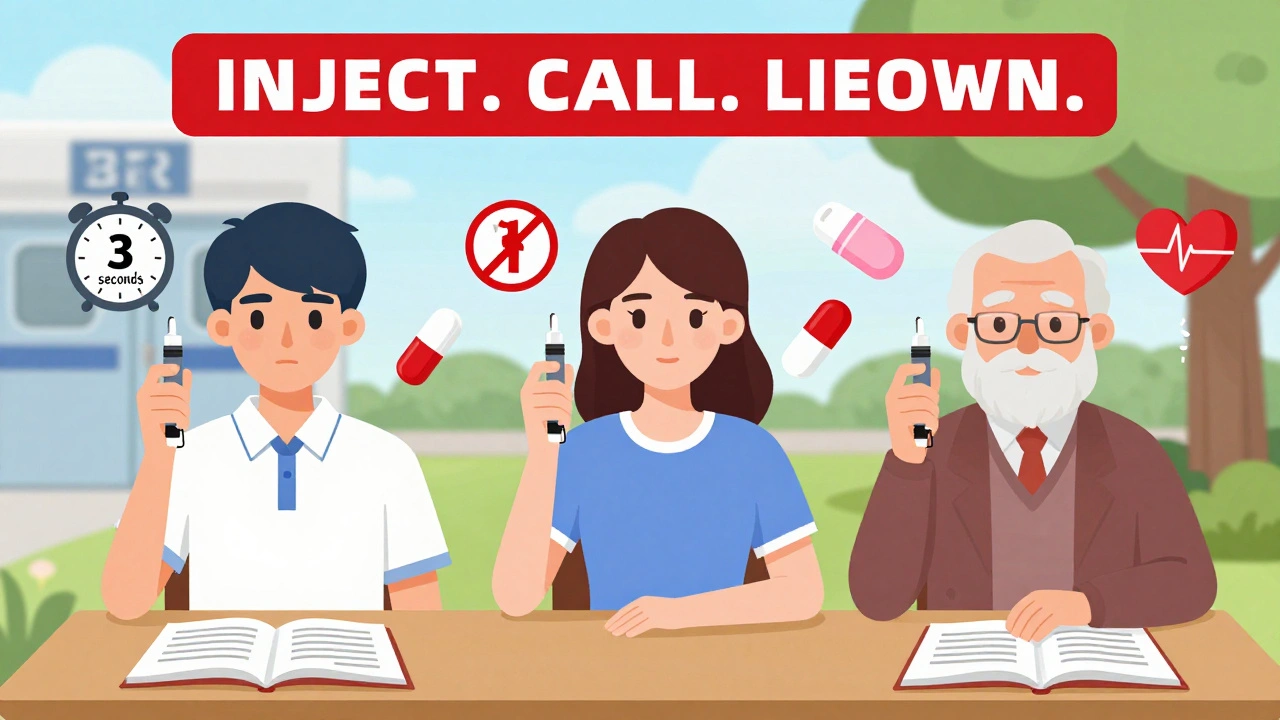
Inject. Call 911. Lie down. Wait for help.
It’s not dramatic. It’s not scary. It’s simple. And it works.
Jimmy Kärnfeldt
December 10, 2025 AT 21:01Just had to use my EpiPen last year after a surprise peanut reaction at a BBQ. I thought I was fine after the first shot, but I didn’t call 911 right away. Big mistake. The ER doc said if I’d waited another 10 minutes, I might’ve gone into cardiac arrest. Now I carry two, practice with the trainer every month, and my whole family knows the drill. It’s not scary when you’re prepared.
Ariel Nichole
December 12, 2025 AT 10:42This is so important. I work in a daycare and we keep two EpiPens on hand. We do monthly drills with the kids-yes, even the 3-year-olds. They point to their thigh and say ‘EpiPen time!’ when they feel weird. It’s sweet and kinda powerful. Also, the Auvi-Q voice thing? Game changer for stressed-out parents.
john damon
December 13, 2025 AT 07:19Brooo I had a kid nearly die in my arms last year 😭 I used an EpiPen and it was like watching a movie but real. I didn’t know how to use it till I watched a YouTube video the night before. Don’t wait. Just learn. 🙏
Taylor Dressler
December 14, 2025 AT 19:57There’s a critical oversight in the article: many people don’t realize epinephrine auto-injectors are designed for intramuscular injection into the anterolateral thigh, not subcutaneous. The thickness of the tissue in that region ensures rapid absorption into the bloodstream. Other sites-like the arm or buttocks-have slower absorption kinetics, which can delay therapeutic effect during a time-sensitive emergency. Always use the outer thigh, and always hold for the full three seconds. No exceptions.
Sylvia Frenzel
December 15, 2025 AT 04:42Why are we even using these overpriced plastic toys when we’ve had injectable epinephrine for decades? The whole system is a scam. I’ve been using a vial and syringe since 2012. It’s cheaper, more reliable, and you know exactly how much you’re getting. If you can’t handle a syringe, maybe you shouldn’t be around food.
matthew dendle
December 16, 2025 AT 19:53so uhh like u need to press the thingy for 3 seconds?? wow who knew?? also why is everyone so scared of needles?? its just a poke. and why is this even a thing?? allergies are just weak people being dramatic. just carry benadryl and chill.
Katherine Liu-Bevan
December 18, 2025 AT 09:21I’m an allergist, and I’ve seen too many patients delay treatment because they thought it was "just a rash" or "maybe it’ll go away." Epinephrine isn’t a last resort-it’s the first and only line of defense. I give every patient a trainer and make them practice in front of me. If they can’t do it correctly, I don’t give them the prescription. It’s not harsh-it’s survival. And yes, two are mandatory. One gets lost. One gets left in the car. One expires. You need a backup. Always.
Courtney Blake
December 18, 2025 AT 23:42Why do we keep pretending these devices are foolproof? I watched a video of a woman inject herself in the stomach because she was too panicked to find her thigh. And the "hold for 3 seconds" thing? Most people don’t even know what a click sounds like. This whole system is built on hope, not training. And don’t get me started on the cost. It’s a monopoly disguised as a lifesaver.
Lisa Stringfellow
December 19, 2025 AT 01:52Everyone’s so obsessed with the EpiPen. But what about the people who can’t afford it? Or the ones who live in rural areas and can’t get refills? This whole post feels like a corporate ad. What about the systemic failures? The insurance denials? The schools that won’t let kids carry them? You’re not fixing the problem-you’re just telling people to buy more plastic.
Kristi Pope
December 20, 2025 AT 09:04My daughter’s first reaction was at a birthday party-cake, no one knew it had nuts. I grabbed her EpiPen, fumbled with the cap, and pressed too lightly. She turned blue. We got to the hospital in time, but I’ve never forgiven myself for not practicing enough. Now I keep a trainer in my purse, my glove compartment, my work bag, and my kid’s backpack. I make my husband, her teacher, and her best friend’s mom practice with me every season. It’s not about being paranoid-it’s about being ready. And yeah, it’s weird to do it in public, but I don’t care. Her life is worth the weird.
Aman deep
December 22, 2025 AT 04:57From India here-our EpiPens are crazy expensive, like 2x the US price. We use Adrenaclick because it’s cheaper, but the double cap thing? Nightmare. I bought a trainer online and taught my wife and 8-year-old son to use it. We practice every Sunday after dinner. No one believes us until we show them. Now my son says, "Mama, if I feel funny, you press my leg like we practiced." It’s not just medicine-it’s love with a click.
Eddie Bennett
December 22, 2025 AT 05:47Real talk: I used to think this was overkill. Then my buddy went into anaphylaxis at a concert. We didn’t have an injector. He survived because someone had a vial and syringe in their first aid kit. But that’s luck, not preparation. I bought two EpiPens after that. I keep one in my backpack, one in my car. I showed my coworkers how to use them. I even made a little sign for my desk: "If I turn purple, press my thigh. No questions." It’s weird, but it’s better than being dead.
Vivian Amadi
December 22, 2025 AT 07:54You’re all missing the point. If you need an EpiPen, you’re just allergic to life. Stop being so fragile. Why not just avoid the allergen? Or get desensitized? Or stop having kids with allergies? This whole thing is a medical industry scam wrapped in emotional manipulation. You don’t need a device-you need discipline.