
How to Update Your Allergy List Across All Healthcare Providers
 Mar, 20 2026
Every time you visit a new doctor, pharmacist, or emergency room, they ask: "Do you have any allergies?" It seems simple. But if your allergy list is outdated, incomplete, or just plain wrong, that one question could put your life at risk. In 2025, nearly 5% of hospitalized patients suffered an adverse drug reaction because their allergy information was wrong. That’s not a small number - it’s preventable harm, and it’s happening right now.
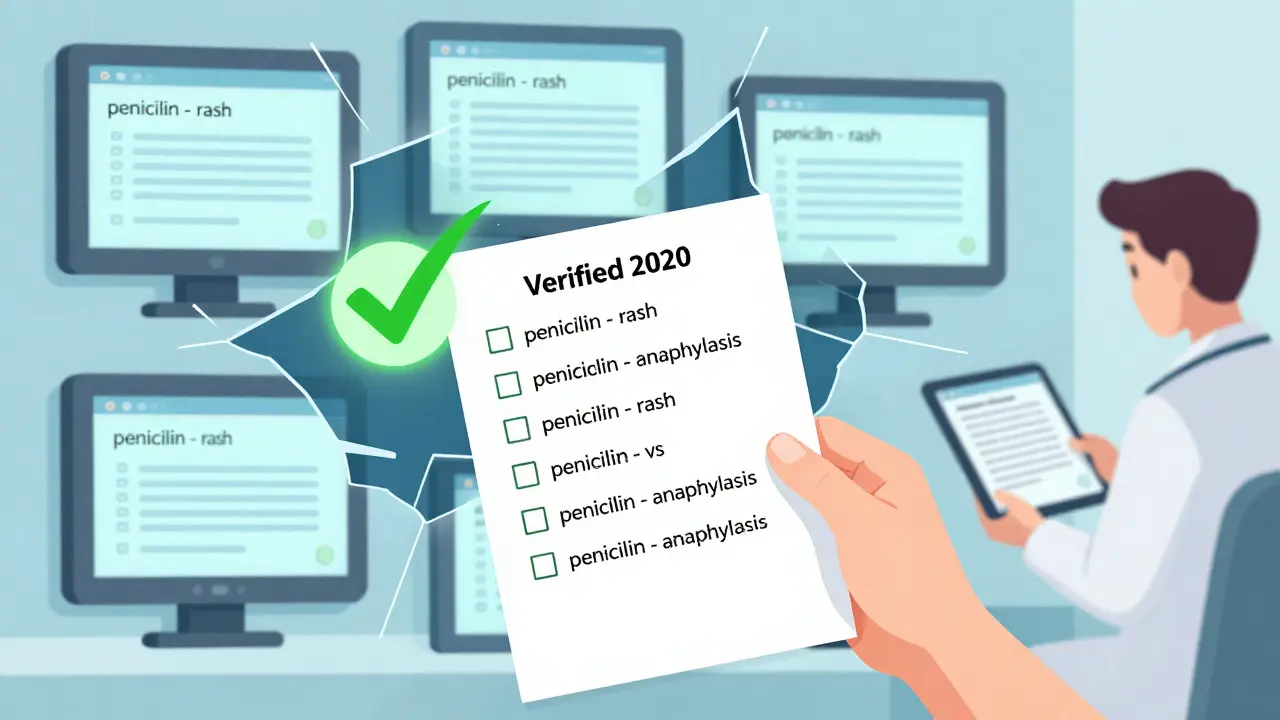
You might think, "I told my last doctor I’m allergic to penicillin." But what if you never had a true reaction? What if you were labeled allergic as a child and never tested again? What if your primary care provider wrote "rash," but your cardiologist’s system only sees "anaphylaxis"? These gaps aren’t just paperwork errors - they lead to wrong antibiotics, longer hospital stays, and sometimes death.
Why Your Allergy List Isn’t as Accurate as You Think
Most people believe their allergy list is locked in. It’s not. Studies show that between 7% and 12.9% of allergy entries in electronic health records (EHRs) are inaccurate. At Parkland Health in Texas, over 12% of recorded allergies needed to be relabeled after review. At Mass General Brigham, 6.8% of patients had active allergy labels despite clear evidence from drug challenge tests that they weren’t allergic.
Why does this happen? Three big reasons:
- Unclear documentation: "Rash," "stomach upset," and "felt weird" aren’t medical terms. They don’t tell a provider if this was a mild reaction or life-threatening.
- Outdated records: Many people outgrow allergies - especially penicillin. Up to 80% of people labeled allergic to penicillin lose that allergy over time if not retested.
- Disconnected systems: Your family doctor’s EHR doesn’t always talk to the hospital’s system. Even if it does, it might just show your list - not check if it’s right.
The result? A patient walks into an ER with a "penicillin allergy" on file. The doctor, unaware the allergy was disproven years ago, prescribes a stronger, more expensive antibiotic. That costs the system over $1.2 billion every year in unnecessary treatment.
What a Modern Allergy List Should Include
As of January 1, 2025, all U.S. healthcare systems using certified EHRs must follow the United States Core Data for Interoperability (USCDI) v3 standard. This means your allergy list should have three key pieces of information for every item:
- Verification status: Is it "verified" (confirmed by testing), "unverified" (based on history), or "patient-reported" (you said so)?
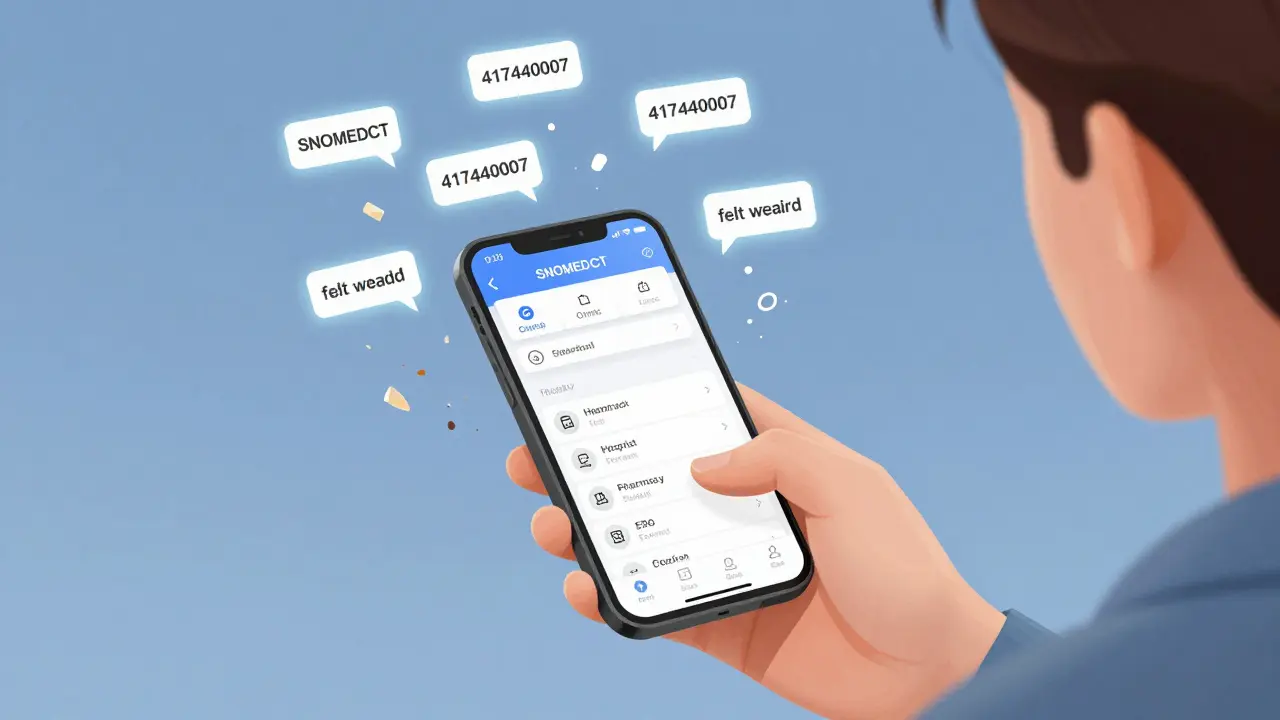
- SNOMED CT code: A standardized medical code - not just a word. For example, "Penicillin allergy" is coded as 417440007. This helps computers understand exactly what you mean.
- Reaction details: Not just "allergic." Was it hives? Swelling? Trouble breathing? When did it happen? How long did it last? Severity matters.
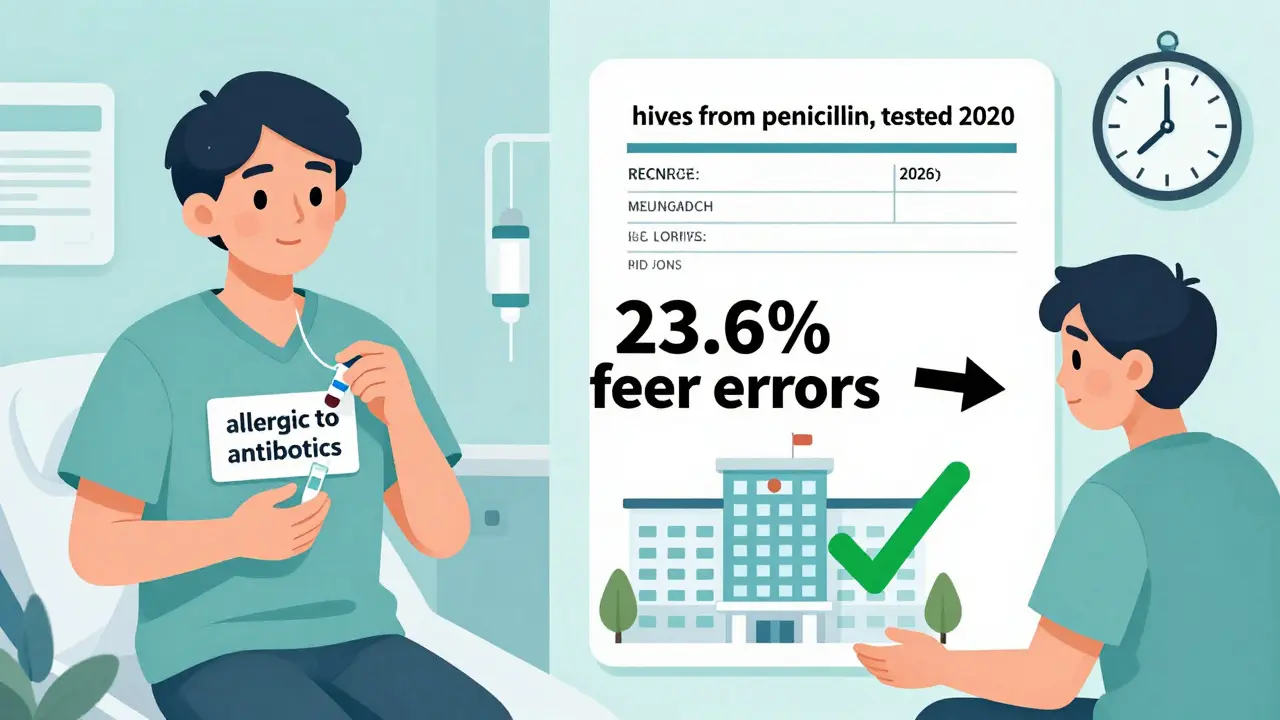
Example: Instead of "Allergic to penicillin," your record should say: "Verified penicillin allergy. Reaction: hives and swelling 30 minutes after ingestion. Severity: moderate. Date of reaction: 2019-08-14. Verified by skin test on 2020-03-22."
This level of detail isn’t just for doctors - it helps pharmacists, nurses, and even automated systems make better decisions. If your record says "hives," a system might still allow a different antibiotic. If it says "anaphylaxis," it blocks everything.
How Healthcare Providers Are Trying to Fix This
Big hospitals aren’t ignoring the problem. Systems like Epic and Cerner - used by 68% of U.S. hospitals - now share allergy lists across networks through something called Care Everywhere. But here’s the catch: they only show you what’s in other systems. They don’t check if it’s correct.
Advanced systems, like the one developed by Mass General Brigham, do more. They use natural language processing (NLP) to scan your entire medical record - notes from nurses, lab results, discharge summaries - and find contradictions. One system caught 37 cases last month where patients had negative penicillin challenges but still had active allergy flags.
These tools process 1,200 patient records per hour. Manual review? About 15 per hour. The difference is life-saving. At institutions using these tools, inappropriate antibiotic prescriptions dropped by 23.6%, and alert overrides (when doctors ignore allergy warnings) fell by 31.4%.
But not every clinic has this tech. Community hospitals? Only 28% have advanced reconciliation. And if your provider uses an older system, your allergy list might still be a handwritten note in a file.
What You Can Do Right Now
You don’t have to wait for your doctor’s office to upgrade. You have power. Here’s how to take control:
- Check your portal. Over 89% of U.S. patients can access their records online. Log in to your provider’s patient portal. Look for "Allergies" or "Medication History." Is everything listed correctly? If not, use the "Request Update" feature.
- Bring your list to every visit. Write down your allergies on paper or in your phone. Include the reaction type, when it happened, and whether it was confirmed. Say: "I’d like you to verify this list."
- Ask about testing. If you were told you’re allergic to penicillin, amoxicillin, or sulfa drugs as a child, ask: "Can I get tested?" Most people outgrow these allergies. A simple skin test takes 20 minutes. It’s free or low-cost with insurance.
- Update your list after every major event. Had a reaction? Got a new diagnosis? Had a drug challenge? Update your record immediately - don’t wait for your next appointment.
Only 34.7% of patients verify their allergy list at every visit. That’s too low. If you’re one of the ones who does, you’re ahead of 65% of the population.
What’s Changing in 2026
The federal government is stepping up. Starting in 2026, Medicare will tie 2.3% of hospital payments to how accurately they document allergies. That means hospitals will be forced to fix this.
Also, the MyHealthEData initiative is rolling out. By mid-2026, you’ll be able to directly update your allergy list across multiple providers using your phone or computer. Your EHR will automatically sync with others via FHIR APIs - no paperwork needed.
But until then, you’re still the best line of defense. No system is perfect. Only 32.6% of EHRs properly document food or environmental allergies. So if you’re allergic to nuts, latex, or pollen, don’t assume it’s recorded.
Common Mistakes and How to Avoid Them
Here are the top three errors patients make - and how to fix them:
- Mistake: "I’m allergic to all antibiotics."
Fix: Be specific. Say "penicillin," not "all antibiotics." Many alternatives exist. - Mistake: "I had a reaction once, so I’m allergic forever."
Fix: Allergies fade. Get tested. Especially for penicillin - over 80% of people lose it. - Mistake: "I didn’t tell the ER doctor because I already told my GP."
Fix: Systems don’t always talk. Say it out loud. Always.
Also, avoid vague terms like "nausea" or "headache." These are side effects, not allergies. True allergic reactions involve your immune system - hives, swelling, wheezing, or anaphylaxis.
What to Do If You’re Turned Away
Some clinics still don’t let you update your record online. Some staff say, "We’ll update it during your visit." But if you leave, it might never get done.
If that happens:
- Ask for a printed copy of your current allergy list.
- Write your corrections clearly on the paper.
- Ask the provider to sign and date it.
- Scan or photograph it and email it to your primary care provider.
Having a signed note gives you leverage. It’s official documentation.
And if you’re ever in an emergency, tell the staff: "I need my allergy list updated. I have documentation." That’s enough to get attention.
How do I know if my allergy is real or just a side effect?
True allergic reactions involve your immune system and usually happen within minutes to hours after taking a drug. Symptoms include hives, swelling of the face or throat, trouble breathing, or low blood pressure. Side effects like nausea, dizziness, or headaches aren’t allergies - they’re common reactions. If you’re unsure, ask for an allergy test. A skin test or oral challenge can confirm it.
Can I remove an allergy from my record if I’ve outgrown it?
Yes - and you should. Many people outgrow drug allergies, especially penicillin. The only way to be sure is to get tested. If the test is negative, your provider can change your status from "verified allergy" to "resolved" or "no longer allergic." This opens up safer, cheaper treatment options.
Why does my allergy list look different at the hospital vs. my doctor’s office?
Because not all systems talk to each other properly. Even when they do, they often just copy your list without checking accuracy. One system might list "penicillin allergy" with no details. Another might have a detailed note saying you were tested and cleared. Always bring your own updated list to every appointment - don’t rely on what’s in the system.
Do food and environmental allergies count on my drug allergy list?
Yes - but many EHRs don’t capture them well. Only about one-third of systems properly document non-drug allergies. If you’re allergic to peanuts, latex, or bee stings, make sure it’s written clearly in your record. Use specific terms: "Anaphylaxis to peanuts" not just "peanut allergy." This matters because some medications contain traces of these allergens.
What if my provider refuses to update my allergy list?
You have the right to request updates under federal privacy laws. If they refuse, ask for a copy of your current record, write your corrections, and send it via certified mail or secure patient portal message. Include a note saying: "I request this be reviewed and updated per my medical history." If needed, contact the provider’s patient advocacy office. You’re not asking for a favor - you’re exercising your right to accurate health data.
Casey Tenney
March 20, 2026 AT 16:27Stop being lazy. Update it. Now.
Chris Dwyer
March 21, 2026 AT 00:25Desiree LaPointe
March 22, 2026 AT 16:08Jackie Tucker
March 23, 2026 AT 19:11Nishan Basnet
March 24, 2026 AT 22:43Allison Priole
March 24, 2026 AT 23:16Thomas Jensen
March 25, 2026 AT 03:58trudale hampton
March 25, 2026 AT 21:41Solomon Kindie
March 27, 2026 AT 03:32Natali Shevchenko
March 28, 2026 AT 12:42Johny Prayogi
March 29, 2026 AT 20:24Nicole James
March 31, 2026 AT 09:39Sandy Wells
March 31, 2026 AT 13:20Bryan Woody
April 1, 2026 AT 01:10Timothy Olcott
April 1, 2026 AT 04:16