
How to Track Post-Marketing Studies for Drug Safety: A Practical Guide
 Dec, 17 2025
Why Post-Marketing Drug Safety Tracking Matters
Drugs approved by regulators like the FDA aren’t tested on millions of people before they hit the market. Clinical trials usually involve fewer than 5,000 participants-often healthy adults, excluding older patients, pregnant women, or those with multiple chronic conditions. That means serious side effects can go unnoticed until the drug is used by real patients in the real world.
That’s where post-marketing studies come in. These aren’t optional checks. They’re legal requirements. The FDA, EMA, and other global agencies demand that drugmakers continue monitoring safety after approval. The goal? Find hidden risks-like liver damage from a diabetes drug or heart rhythm issues from an antidepressant-that only show up after thousands or millions of doses are given.
Between 2018 and 2022, 87% of all safety actions taken by the FDA-like adding black box warnings or restricting use-were triggered by data collected after the drug was already on the market. Without tracking these studies, patients could be exposed to preventable harm.
The Three Core Systems for Tracking Drug Safety
There are three main systems used globally to track drug safety after approval. Each plays a different role, and together they form the backbone of post-marketing surveillance.
- Spontaneous Reporting Systems - These are the most common. Healthcare providers, patients, and pharmacists report adverse events directly to regulators. The FDA’s FAERS (FDA Adverse Event Reporting System) holds over 30 million reports as of 2023. The UK’s Yellow Card system received over 76,000 reports in 2022. These reports are messy-sometimes incomplete, sometimes duplicated-but they’re the first line of detection for rare side effects.
- Active Surveillance Networks - Unlike passive reporting, these systems actively mine data from electronic health records and insurance claims. The FDA’s Sentinel System analyzes data from over 300 million Americans. It looks for patterns: Did patients on Drug X have more kidney failures than those on Drug Y? This method catches signals faster and with more clinical detail than spontaneous reports.
- Required Post-Marketing Studies - These are formal studies drug companies must conduct after approval. They’re often mandated by regulators when there’s uncertainty about long-term safety. For example, a new cancer drug might require a 5-year study tracking heart complications in elderly patients. These studies are costly and complex, but they provide the most reliable data on specific risks.
According to FDA data from 2022, 63% of safety actions came from spontaneous reports, 22% from active surveillance, and 9% from formal studies. All three are needed.
How to Track Required Post-Marketing Studies
If you’re part of a pharmaceutical company, hospital, or research team responsible for running these studies, here’s how to stay on track:
- Start with the regulatory requirement - Every mandated study comes with a specific deadline (usually 3 years, but often extended). Get the official letter from the FDA or EMA. Note the study type, population, endpoints, and reporting schedule.
- Build a centralized tracking dashboard - Use a simple database or project management tool to log every study. Include: study ID, sponsor, start date, deadline, current status, key personnel, and next reporting date. Don’t rely on spreadsheets alone-automate reminders.
- Assign a pharmacovigilance lead - The Drug Information Association found that companies with at least one dedicated pharmacovigilance specialist per $500 million in annual drug revenue completed studies 40% faster. This person owns the timeline, communicates with regulators, and flags delays early.
- Monitor enrollment and data quality - Many studies fail because they can’t recruit enough patients. Use electronic health record systems to identify eligible patients early. Check data entry for errors weekly. Missing lab values or incorrect dosing logs can invalidate results.
- Submit interim reports on time - Even if results aren’t final, regulators expect updates every 6 to 12 months. Late submissions can trigger audits or penalties.
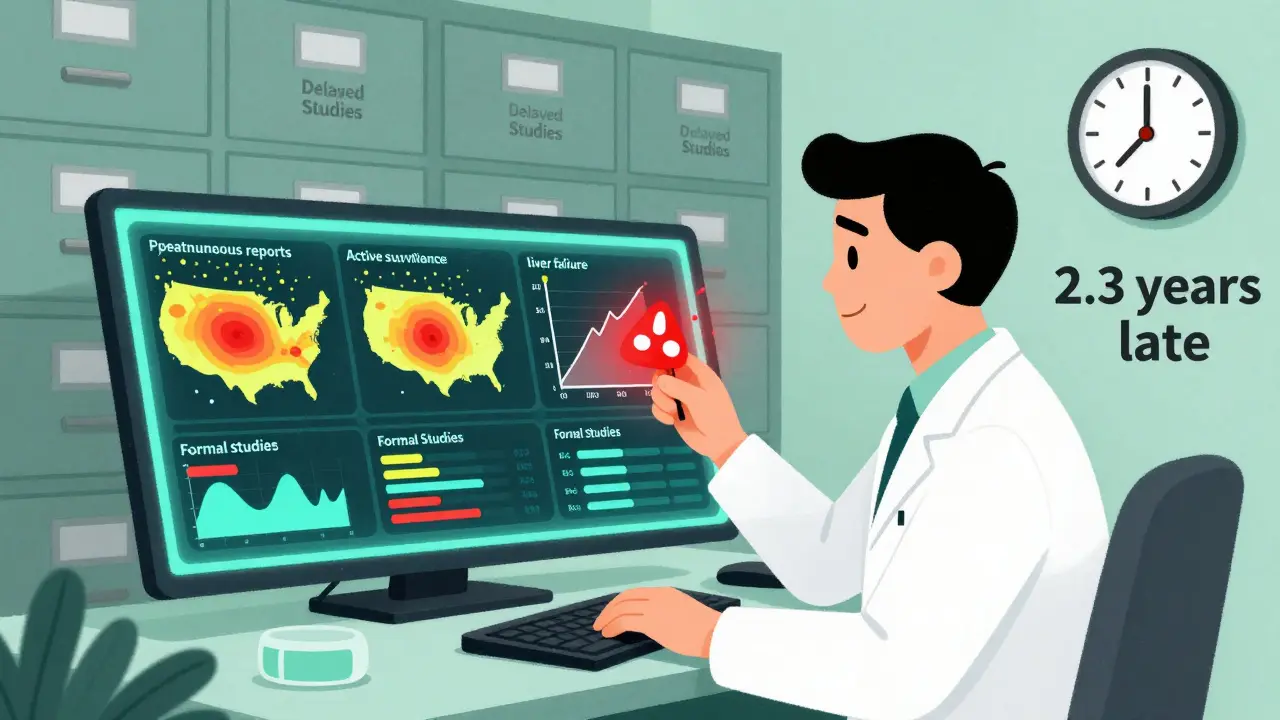
In 2023, the National Academies found that 72% of FDA-mandated post-marketing studies were completed late-with an average delay of 2.3 years. The biggest reason? Poor planning and fragmented data systems. A well-organized team can avoid this.
How to Spot Safety Signals Early
Tracking isn’t just about checking boxes. It’s about spotting danger before it spreads.
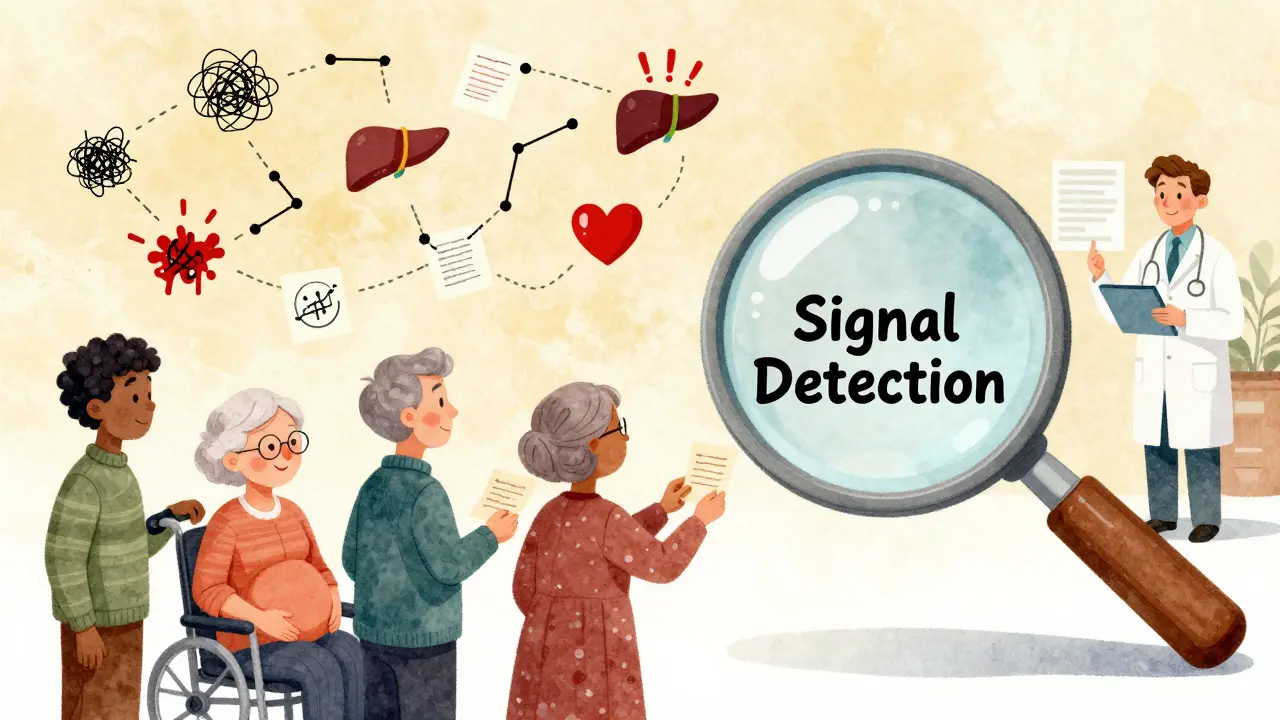
Here’s how experts identify real signals from noise:
- Look for clusters - If three different hospitals report the same rare side effect (like sudden liver failure) in patients taking the same drug within a short time, that’s a red flag.
- Compare rates - Use FAERS or Sentinel data to see if the number of reports for a side effect is higher than expected based on the drug’s usage. For example, if 1 in 10,000 users reports seizures, but the background rate in the general population is 1 in 100,000, that’s a signal.
- Check for new populations - Many side effects appear only in older adults or people with kidney disease. If your drug is being used more in these groups than expected, dig deeper.
- Use automated tools - The FDA now uses machine learning to analyze FAERS data. These tools can detect signals 30% faster than manual review. While not perfect, they’re essential for handling millions of reports.
Between 2018 and 2023, the FDA reduced false positive signals from 34% to 19% by improving these algorithms. That means fewer unnecessary warnings-and more accurate ones.
What Happens When a Safety Issue Is Found?
Finding a problem is just the start. What happens next determines patient safety.
Regulators have a clear escalation path:
- Label updates - Most common (87% of actions). This means adding new warnings to the drug’s prescribing information. Example: “May increase risk of pancreatitis in patients with history of gallstones.”
- Dear Health Care Provider letters - A direct notice sent to doctors, pharmacists, and hospitals. Used for urgent but not life-threatening risks.
- REMS modifications - Risk Evaluation and Mitigation Strategies. These can include mandatory training for prescribers, restricted distribution, or patient registries. Used for high-risk drugs like certain immunosuppressants.
- Market withdrawal - Rare (less than 1% of cases). Happens only when the risk clearly outweighs the benefit. Example: Vioxx was pulled in 2004 after linked to heart attacks.
Between 2020 and 2022, the FDA issued 147 Drug Safety Communications affecting 112 different drugs. These are public notices you can find on the FDA website. If you’re tracking safety, check them weekly.
Emerging Tools and Future Challenges
Post-marketing surveillance is changing fast.
By 2025, the European Union will launch an AI-powered signal detection system in EudraVigilance. The FDA’s Sentinel system is expanding to include genomic data for 50 million patients by 2026. Meanwhile, Large Language Models (LLMs) are being tested to read unstructured notes in electronic health records-like doctor’s handwritten observations-and pull out safety clues automatically.
But there are big problems:
- Data gaps - Insurance claims don’t tell you why a drug was prescribed or what lab results were seen. That makes it hard to confirm if a side effect is real.
- Slow studies - Even with better tools, recruiting patients and getting approvals still takes years. Many studies miss deadlines.
- Global fragmentation - The U.S., EU, and Japan all track safety differently. Sharing data across borders is still limited.
Companies that invest in integrated data systems, trained pharmacovigilance teams, and early signal detection tools will not only meet requirements-they’ll protect patients better than their competitors.
What You Can Do Today
If you’re a healthcare provider, pharmacist, or patient:
- Report any unusual side effect - Even if you’re unsure. A single report might be the first sign of a bigger problem. Use your country’s national reporting system.
- Check for Drug Safety Communications - The FDA, EMA, and Health Canada publish updates every week. Bookmark their safety pages.
- Ask your doctor - If you’re on a new drug, ask: “Has there been any new safety information since this was approved?”
If you work in pharma or research:
- Don’t wait for regulators to ask - Build your own internal safety monitoring system. Use FAERS and Sentinel data to check your product’s performance monthly.
- Use the PMSTI metric - Track your Post-Marketing Study Timeliness Index. If less than 80% of your studies are on time, you’re at risk.
- Partner with EHR vendors - Access to real clinical data is the future. Work with hospitals and clinics to get better data flows.
Drug safety doesn’t end at approval. It only begins there. The systems we have now aren’t perfect-but they’re the best tools we have. And with better tracking, we can catch problems before they hurt someone.
Mike Rengifo
December 17, 2025 AT 16:21Matt Davies
December 17, 2025 AT 23:24Isabel Rábago
December 18, 2025 AT 09:24Ashley Bliss
December 19, 2025 AT 20:19Monte Pareek
December 21, 2025 AT 00:57Sarah McQuillan
December 21, 2025 AT 08:10holly Sinclair
December 21, 2025 AT 22:24Aboobakar Muhammedali
December 23, 2025 AT 11:29Allison Pannabekcer
December 25, 2025 AT 07:14Anna Sedervay
December 26, 2025 AT 01:57