
How to Manage Sexual Side Effects from Medications: A Patient's Guide
 May, 22 2026
Medication Side Effect Management Guide
What type of medication are you currently taking?
Select the medication class that best matches your prescription.
SSRIs
Selective Serotonin Reuptake Inhibitors
- • Fluoxetine (Prozac)
- • Sertraline (Zoloft)
- • Paroxetine (Paxil)
- • Citalopram (Celexa)
SNRIs
Serotonin-Norepinephrine Reuptake Inhibitors
- • Venlafaxine (Effexor)
- • Duloxetine (Cymbalta)
- • Desvenlafaxine (Pristiq)
Bupropion
Norepinephrine-Dopamine Reuptake Inhibitor
- • Wellbutrin
- • Zyban
Mirtazapine
Tetracyclic Antidepressant
- • Remeron
Antipsychotics
Typical and Atypical Antipsychotics
- • Risperidone (Risperdal)
- • Olanzapine (Zyprexa)
- • Quetiapine (Seroquel)
Other / Not Sure
Different medication class or uncertain about classification
- • Beta-blockers
- • Other antidepressants
- • Multiple medications
How would you describe your biological sex?
This helps tailor symptom recognition and strategy recommendations.
Male
Common issues: ED, delayed ejaculation, muted sensation
Female
Common issues: Anorgasmia, dryness, low arousal
Which symptoms are you experiencing?
Select all that apply. Be honest—this information is private and helps provide accurate guidance.
Your Personalized Strategy Guide
Talking Points for Your Doctor
Follow-Up Checklist
- Ask about using the Arizona Sexual Experience Scale (ASEX) for baseline assessment
- Review ALL current medications including supplements
- Discuss specific alternatives with lower sexual side effect profiles
- Schedule follow-up appointment at 4-6 weeks after any changes
- Request referral to therapist if relationship strain exists
You start a new medication to feel better, but suddenly your libido vanishes. You can’t get aroused, or if you do, finishing feels impossible. It’s frustrating, embarrassing, and it might make you want to stop the medicine entirely. But here is the hard truth: stopping cold turkey often leads to a return of depression or anxiety, leaving you worse off than before.
Sexual dysfunction is one of the most common reasons people quit psychiatric medications. Yet, it is also one of the most manageable side effects-if you know how to talk about it and what options exist. This guide breaks down exactly what is happening in your body, why certain drugs cause these issues, and the specific steps you can take with your doctor to fix it without sacrificing your mental health.
Why Do Medications Affect Your Sex Life?
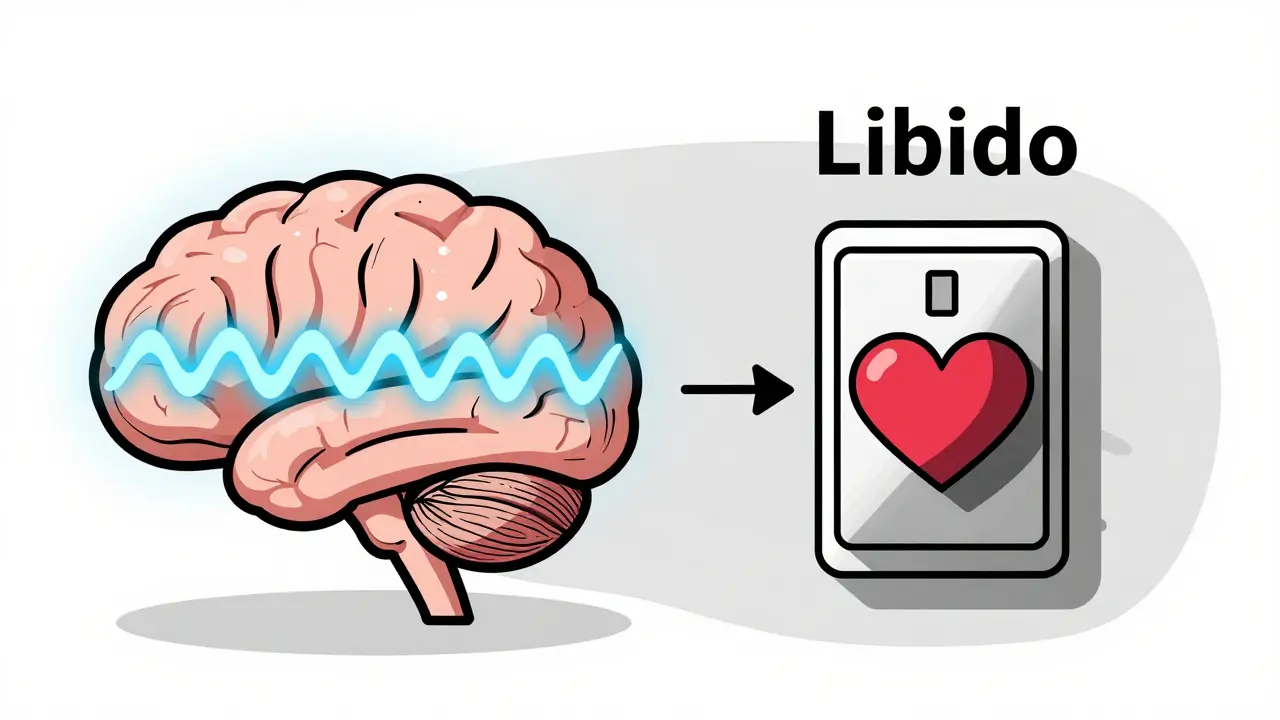
To understand the problem, you have to look at the chemistry. Many medications, especially selective serotonin reuptake inhibitors (SSRIs), work by increasing levels of serotonin in the brain. Serotonin helps stabilize mood, but it also acts as a brake on sexual desire and function. Think of it like a dimmer switch: turning up the brightness for your mood might accidentally lower the voltage for your sex drive.
| Medication Class | Common Examples | Risk Level | Primary Symptom |
|---|---|---|---|
| SSRIs | Fluoxetine, Sertraline, Paroxetine | High (50-70%) | Low desire, delayed orgasm |
| SNRIs | Venlafaxine, Duloxetine | High (40-60%) | Erectile dysfunction, anorgasmia |
| Bupropion | Wellbutrin | Low (5-10%) | Rarely causes sexual issues |
| Mirtazapine | Remeron | Low (5-10%) | Weight gain may affect body image |
| Antipsychotics | Risperidone, Olanzapine | Moderate-High | Hormonal changes, low libido |
The data is clear. SSRIs carry the highest risk, affecting up to 70% of users. In contrast, medications like bupropion and mirtazapine affect neurotransmitters differently-dopamine and norepinephrine-and rarely interfere with sexual function. If you are currently suffering from severe sexual side effects, knowing this distinction is your first step toward a solution.
Recognizing the Symptoms: Men vs. Women
Sexual dysfunction isn't just "low libido." It manifests differently depending on biology and the specific drug mechanism. For men, the most common complaints are erectile dysfunction (difficulty getting or keeping an erection) and delayed ejaculation. Some men report that while they can achieve an erection, the sensation is muted, making climax difficult or painful.
For women, the symptoms often center around arousal and orgasm. Anorgasmia-the inability to reach orgasm despite stimulation-affects at least 30% of women taking serotonergic antidepressants. Others experience dyspareunia, which is pain during intercourse due to vaginal dryness. Loss of interest is universal across genders, reported in over 60% of cases for men and nearly 60% for women.
It is crucial to distinguish between side effects and underlying conditions. Up to 50% of people with untreated major depression already experience sexual dysfunction. If your sex drive was low before starting medication, the drug might not be the sole culprit. However, if the change happened abruptly after starting the pill, the medication is likely the primary factor.

The Communication Gap: Why Patients Stay Silent
Here is where the system fails. A survey by the National Alliance on Mental Illness (NAMI) found that 73% of patients who experienced sexual side effects did not tell their doctor for an average of four months. Why? Embarrassment. Fear that the doctor will dismiss them. Or the assumption that there is nothing that can be done.
This silence is costly. When patients don’t report these issues, they often stop taking their medication secretly. This leads to relapse. Dr. Andrew C. Levine, a psychiatrist, notes that untreated sexual dysfunction significantly impacts quality of life and recovery. The goal of counseling is to break this cycle by normalizing the conversation.
Your doctor should ask about your sexual health before prescribing. If they don’t, you must bring it up. Use direct language: "I’ve noticed my sex drive has dropped since starting this medication," or "I’m having trouble reaching orgasm." Most providers prefer directness because it allows them to adjust treatment proactively rather than reacting to a relapse later.
Proven Strategies to Manage Sexual Side Effects
If you are experiencing these side effects, you are not stuck. Clinical guidelines outline several evidence-based strategies. Discuss these options with your healthcare provider:
- Dose Reduction: Sometimes, a slightly lower dose maintains mental health benefits while reducing side effects. This works in about 25-30% of cases.
- Drug Holidays: For medications with short half-lives (like paroxetine), some doctors suggest skipping a dose for 2-3 days before planned sexual activity. Note: This carries a risk of withdrawal symptoms or relapse and is not suitable for all drugs.
- Switching Medications: Moving from an SSRI to bupropion or mirtazapine shows a 65-70% success rate in resolving sexual dysfunction. This is often the most effective long-term solution.
- Add-On Therapies: Adding bupropion to an existing SSRI regimen can counteract sexual side effects in many patients.
- PDE5 Inhibitors: Drugs like sildenafil (Viagra) are effective for erectile dysfunction in men (55-60% effectiveness) but less so for orgasmic issues. They do not typically help with low libido.
For those on antipsychotics, hormonal imbalances (hyperprolactinemia) may be the cause. Switching to aripiprazole can resolve this in 75% of cases. These solutions require medical supervision, but they prove that sexual side effects are treatable, not inevitable.
Non-Pharmacological Approaches
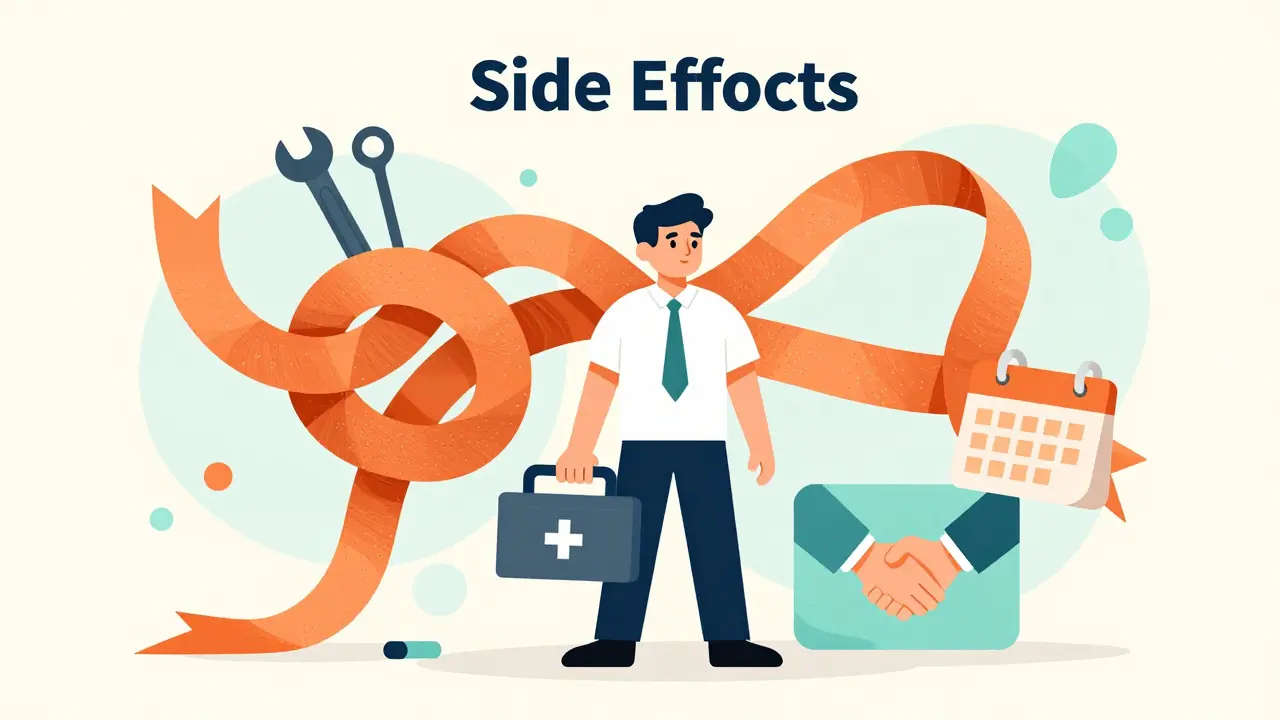
Medication changes aren't the only tool. Behavioral and psychological strategies play a significant role, especially when relationship strain has developed due to intimacy issues.
Sensate Focus Exercises: Developed by Masters and Johnson, these exercises remove the pressure to perform. Couples engage in non-sexual touch to rebuild physical connection without the goal of orgasm. This reduces performance anxiety, which often worsens medication-induced dysfunction.
Scheduling Intimacy: Timing matters. Some patients find that their medication levels are lowest at certain times of day. Planning intimacy for these windows can maximize natural responsiveness.
Couples Therapy: If the side effect has caused distance in your relationship, a therapist can help bridge the gap. Research shows that addressing the psychological component improves outcomes in 50% of cases where relationship stress is present.
What to Expect at Your Next Appointment
Effective management requires a structured approach. Here is a checklist for your next visit:
- Baseline Assessment: Ask your doctor to use a standardized tool like the Arizona Sexual Experience Scale (ASEX). It takes five minutes and provides objective data on your function.
- Review Current Meds: List all prescriptions, including over-the-counter drugs and supplements, as interactions can exacerbate side effects.
- Discuss Alternatives: Ask specifically: "Are there alternatives to my current medication with lower sexual side effect profiles?"
- Set a Follow-Up: Schedule a check-in at 4-6 weeks after any change to assess both mood and sexual function.
Remember, your mental health and your sexual health are connected. Ignoring one harms the other. By advocating for yourself and utilizing these clinical strategies, you can maintain your treatment plan without sacrificing your intimacy.
Will sexual side effects go away on their own?
In some cases, yes. The body may adapt to the medication within 4-8 weeks, and side effects might lessen. However, for many patients, particularly with SSRIs, sexual side effects persist as long as they take the medication. Relying on adaptation alone is risky; proactive management is recommended.
Can I take Viagra if I am on antidepressants?
Generally, yes. PDE5 inhibitors like sildenafil are often prescribed alongside antidepressants for men with erectile dysfunction. However, you must consult your doctor first, as there can be interactions, and these drugs do not address low libido or anorgasmia.
Is bupropion safe for everyone?
No. Bupropion is not suitable for patients with a history of seizures, eating disorders (anorexia/bulimia), or those undergoing abrupt alcohol or benzodiazepine withdrawal. It is an excellent option for sexual side effects but has specific contraindications.
How long does it take to see improvement after switching meds?
Improvement in sexual function often occurs within 2-4 weeks after switching to a medication like bupropion or mirtazapine. Full therapeutic benefits for mood may take longer, but sexual side effects usually resolve faster than depressive symptoms emerge.
Does therapy help with medication-induced sexual dysfunction?
Yes. While therapy cannot change the chemical impact of the drug, it addresses the secondary effects: anxiety, relationship strain, and performance pressure. Cognitive-behavioral therapy (CBT) and sensate focus exercises have shown moderate success in improving sexual satisfaction despite ongoing medication use.