
How to Dispose of Medications in Household Trash Safely
 Mar, 17 2026
Keeping unused or expired medications in your medicine cabinet isn’t just messy-it’s dangerous. Every year, thousands of children accidentally swallow pills they find at home. Others misuse them intentionally. And when meds get flushed or tossed carelessly, they end up in rivers, soil, and even drinking water. The good news? You can safely get rid of them using just your household trash-if you follow the right steps.
Why You Shouldn’t Just Toss Pills in the Trash
Many people think throwing meds in the trash is fine. It’s not. If you leave pills in their original bottles and toss them out, someone-like a curious kid, a pet, or even a stranger rummaging through bins-can find them. The FDA estimates that 15% to 30% of prescribed medications go unused. That’s a lot of potential poison sitting around. And it’s not just about safety. Pharmaceuticals in landfills can leak into groundwater. Studies show traces of drugs like antidepressants, antibiotics, and painkillers show up in water systems across the U.S. Even though the amounts are tiny, scientists are still studying long-term effects on wildlife and human health.What the FDA Says About Trash Disposal
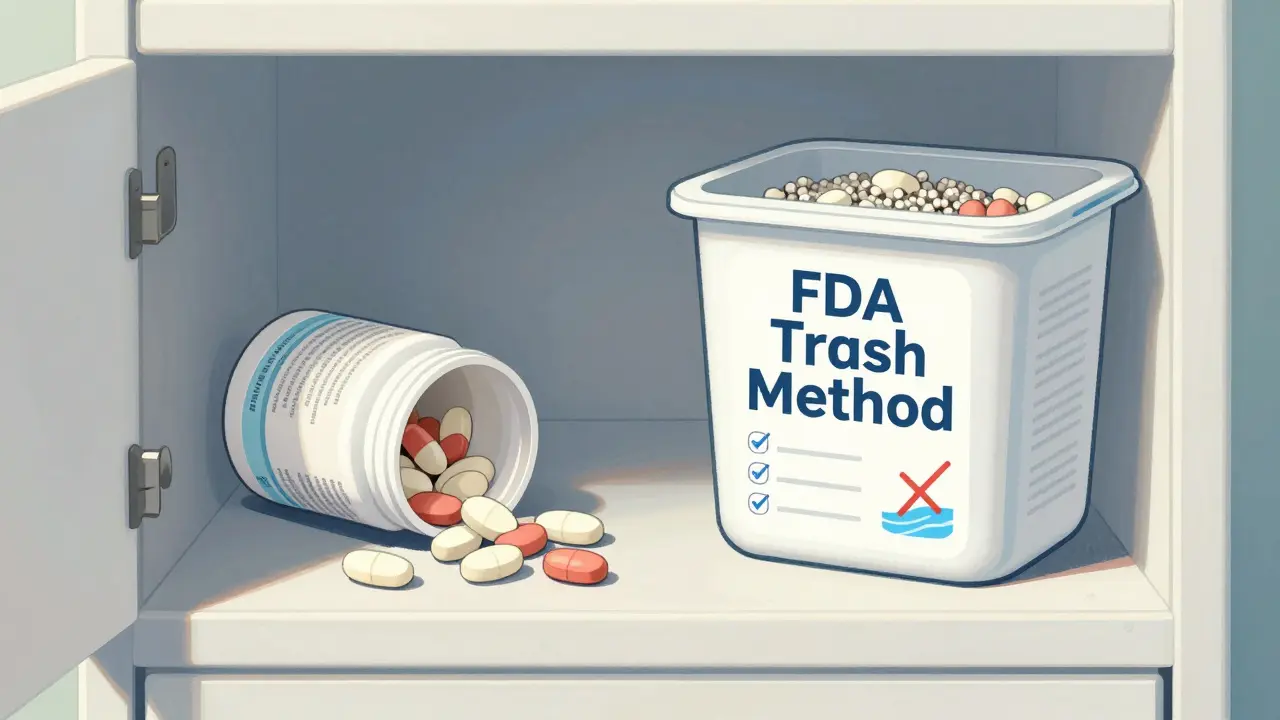
The U.S. Food and Drug Administration (FDA) has clear rules for this. They say: don’t flush unless your medication is on their official Flush List. That list has just 15 drugs-mostly powerful opioids and sedatives-because they’re so dangerous if misused. If your pill isn’t on that list, flushing it does more harm than good. For everything else, the FDA recommends mixing it with something gross, sealing it up, and tossing it in the trash. This method cuts the risk of accidental poisoning or misuse by about 90%.Step-by-Step: How to Dispose of Medications in Household Trash
Follow these five steps exactly. Skipping even one increases the risk.- Check if your medicine is on the FDA Flush List. If it is, you can flush it. The list includes drugs like fentanyl patches, oxycodone, and naloxone. You can find the full list on the FDA’s website. If it’s not there, move to step two.
- Remove pills from their original bottles. Prescription labels have your name, address, and prescription number. That’s private info under HIPAA. Don’t let someone else use it to steal your identity or find out what you’re taking. Take the bottle out of the trash before you put it in the recycling bin-most #5 amber plastic vials can’t be recycled in most cities.
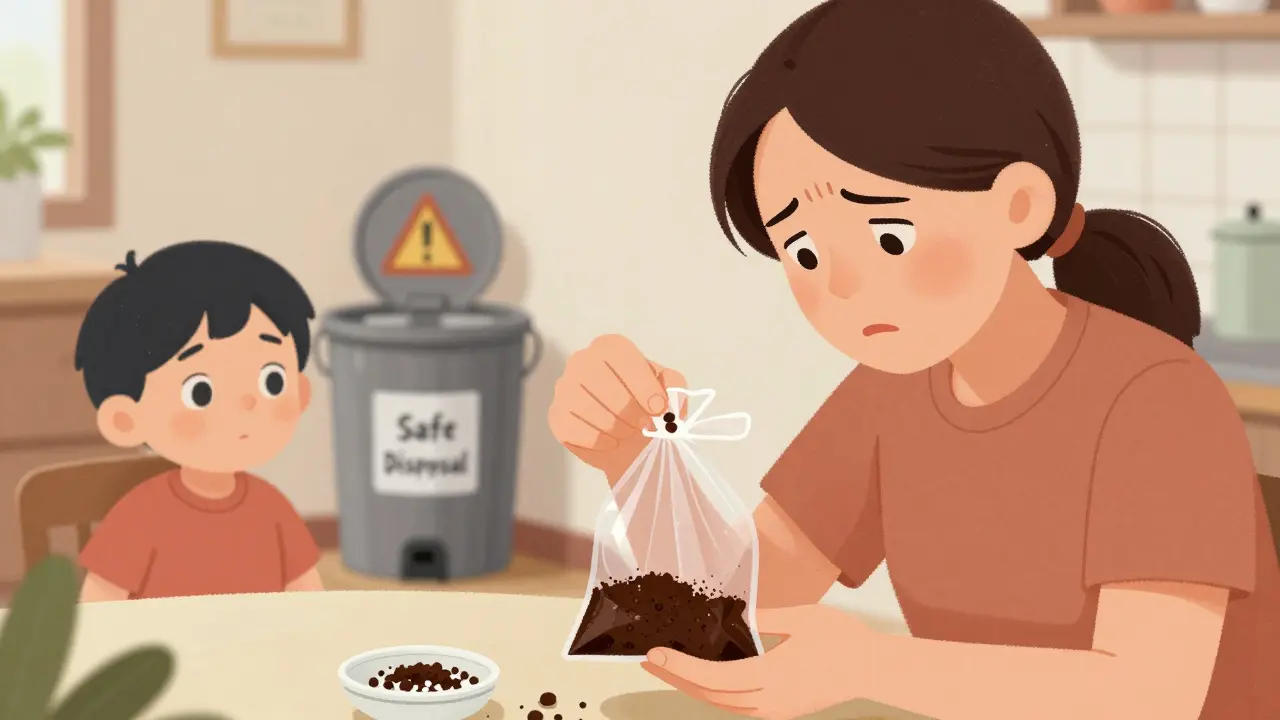
- Mix the meds with an unappealing substance. Use something that makes the mixture smell bad or look disgusting. Used coffee grounds, cat litter, or dirt from your garden work great. You need at least a 1:1 ratio-so if you have a handful of pills, add an equal amount of grounds or litter. Don’t crush pills. That can release dangerous dust into the air. Just drop them in whole.
- Seal it in a leak-proof container. Pour the mixture into a resealable plastic bag, an empty yogurt tub, or a jar with a tight lid. This stops leaks and keeps it contained. A sealed container means less chance of pets or kids getting into it, even if someone digs through your trash.
- Hide your personal info on the empty bottle. Use a permanent marker to black out your name, address, and prescription number. Or wrap the label in duct tape. Scratching it off with a knife works too. Then toss the bottle in the recycling if it’s clean and accepted locally. If not, put it in the trash.
What NOT to Do
There are common mistakes people make-and they’re risky.- Don’t just dump pills in the trash. Even if they’re expired, leaving them loose invites trouble.
- Don’t flush everything. Only flush the 15 drugs on the FDA list. Everything else belongs in the trash, not the toilet.
- Don’t use water to dissolve pills. Some people think dissolving them in water makes them safer. It doesn’t. It just creates a messy, hard-to-control liquid that can leak.
- Don’t wait too long. The longer you keep unused meds, the higher the chance someone will find them. Dispose of them within a week of deciding you don’t need them.
What About Drug Take-Back Programs?
The best way to get rid of meds? Take them back. There are over 14,600 collection sites across the U.S.-including pharmacies like Walgreens, CVS, and local police stations. These kiosks accept pills, patches, liquids, and even syringes. They’re free, secure, and environmentally safe. But here’s the catch: only 42% of rural counties have consistent access. If you live in a city, you’re probably within 10 miles of a drop-off. If you’re in a small town or on a farm, you might not have one nearby. That’s why trash disposal is still a necessary backup.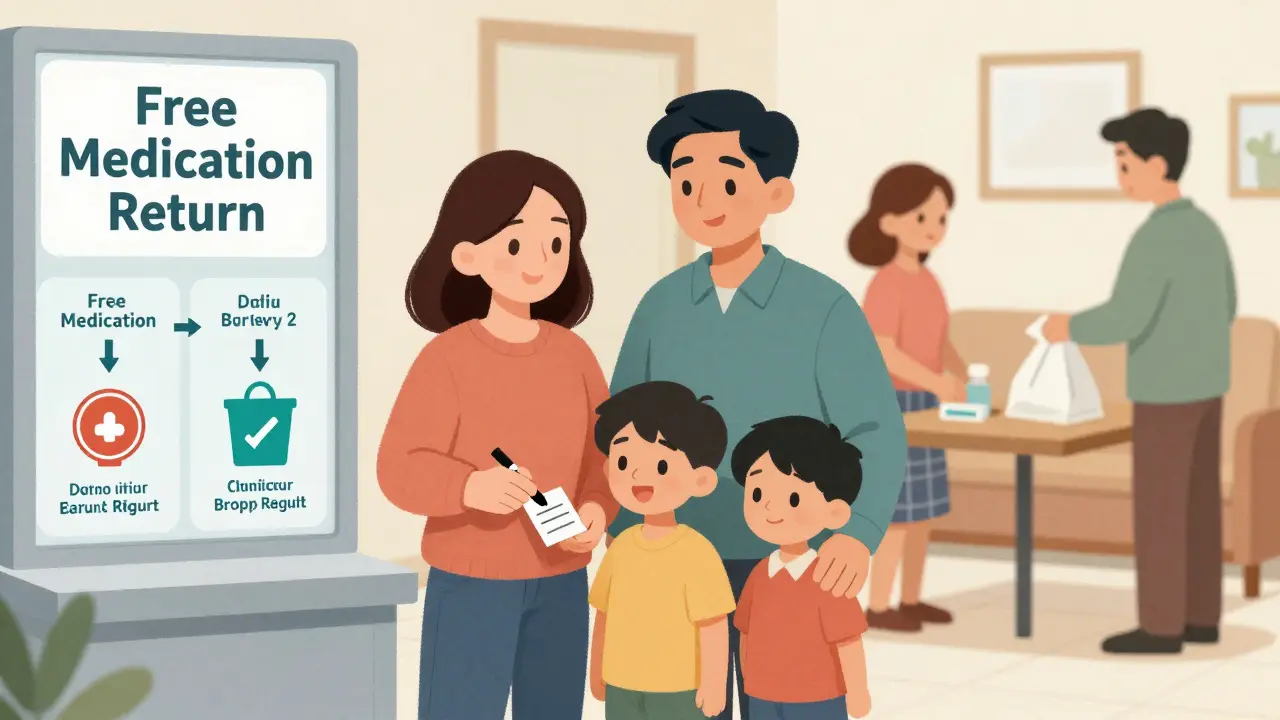
What’s Changing in 2026?
New rules are coming. In January 2024, California started requiring all pharmacies with four or more locations to offer free disposal kiosks. That means 98% of Californians now have access. Other states are watching. The FDA is testing curbside pickup in 12 communities, and the EPA is preparing new national guidelines expected in mid-2024. In the future, we might see water-soluble packaging that dissolves safely when flushed-three companies are already testing it. But for now, the trash method is your best option if you can’t get to a drop-off.Why This Matters for Everyone
It’s not just about your home. When you dispose of meds safely, you’re helping your community. Accidental poisonings in kids under six lead to 45,000 emergency room visits every year. Prescription drug misuse kills over 70,000 people annually. And pharmaceutical pollution affects 41 million Americans’ water supply. You can’t fix all of it-but you can stop one bottle from becoming someone else’s tragedy.What If You Live in New Zealand?
If you’re in Auckland or anywhere else in New Zealand, the rules are different. Here, the Ministry of Health recommends returning unused meds to your pharmacy. Most pharmacies have return bins, and they’re free. Flushing or trashing meds is discouraged because of strict environmental protections. If you can’t get to a pharmacy, mix them with coffee grounds and seal them in a bag before tossing them in the trash. But always try the pharmacy first.Can I mix medications with food like peanut butter or jam?
No. While it might seem like a good idea, sticky or sweet substances like peanut butter, jam, or honey can attract animals or people who might eat the mixture. The FDA recommends using unappealing, non-edible materials like used coffee grounds, cat litter, or dirt. These are less likely to be tempting and more effective at deterring misuse.
What if I have liquid medications like cough syrup?
For liquids, pour them into a sealable container with absorbent material like cat litter, paper towels, or coffee grounds. Don’t pour them down the sink or toilet unless they’re on the FDA Flush List. Mix thoroughly, seal the container, and place it in the trash. You can also leave the original bottle open to dry if it’s a small amount, then seal and discard.
Can I recycle the empty prescription bottles?
It depends. Most #5 amber plastic vials are not accepted in curbside recycling programs in 87% of U.S. cities. Check your local recycling rules. If they’re not accepted, remove the label, obscure your personal info, and throw the bottle in the trash. If recycling is available, rinse the bottle, remove the label, and recycle it.
Is it safe to dispose of controlled substances like opioids in the trash?
Yes-if you follow the steps exactly. Controlled substances like oxycodone or hydrocodone are dangerous if misused. Mixing them with coffee grounds or cat litter, sealing them in a container, and hiding your personal info makes them unattractive and unusable. But if you have access to a take-back program, that’s always the safest option.
What should I do if I find someone else’s expired medication?
Don’t take it home. If you find meds in a shared space, like a relative’s medicine cabinet or a public area, encourage them to dispose of them properly. If they’re unable to, you can help by following the five-step method: remove from container, mix with unappealing substance, seal, obscure labels, and trash. Never keep someone else’s meds-even if they’re expired.
Srividhya Srinivasan
March 19, 2026 AT 00:56Oh, thank GOD someone finally said this! We’re living in a dystopian hellscape where people think flushing Xanax is just ‘eco-friendly’-like, no, Karen, your toilet isn’t a magic portal to the moon. I’ve seen neighbors dump entire cabinets of antidepressants into the sewer because ‘they’re expired.’ EXPIRED? So’s my marriage, but I don’t flush it! Mix with coffee grounds? YES. Seal in a yogurt tub? ABSOLUTELY. And for the love of all that’s holy-BLACK OUT THE LABELS with a Sharpie, not a half-hearted scribble like your kid did on the living room wall. This isn’t a suggestion. It’s a survival tactic.
Prathamesh Ghodke
March 19, 2026 AT 01:39Hey, I appreciate this breakdown-seriously. I used to just toss pills in the trash until my dog got into a bottle last year. Scary stuff. The coffee grounds + cat litter trick? Game-changer. I started doing this after my mom passed, and now I do it for all my meds. Also, love that you mentioned the recycling thing-my city doesn’t take #5 plastic, so I’ve been hoarding those vials. Now I know to just black them out and trash ‘em. Small acts, big impact.
Stephen Habegger
March 19, 2026 AT 01:41Simple. Effective. Done right, this saves lives. No drama, no fluff. Just clear steps. Thanks for laying it out.
Justin Archuletta
March 20, 2026 AT 12:23YES YES YES! I’ve been doing this for years-coffee grounds, ziplock, Sharpie on the bottle-and I tell everyone I know. My cousin just asked me how to do it last week. I sent her this exact list. Why isn’t this on every pharmacy flyer?? We need a public service campaign. ‘Don’t flush, don’t toss-mix and seal!’
Kyle Young
March 20, 2026 AT 16:59It’s fascinating how a seemingly mundane act-disposing of medication-becomes a microcosm of societal neglect. We outsource responsibility to institutions (take-back programs) while ignoring the systemic gaps that leave rural communities without access. The FDA’s guidance is pragmatic, yet it reveals a deeper failure: we treat pharmaceutical waste as an individual burden rather than a public health infrastructure issue. Is it ethical to rely on citizens to bury our collective toxicity in backyard landfills? Perhaps. But it’s also a symptom of a system that commodifies care and abdicates stewardship.
Aileen Nasywa Shabira
March 22, 2026 AT 05:43Oh, so now we’re supposed to trust the FDA? The same agency that approved OxyContin with a ‘safe’ dosage of 80mg? Let me guess-next you’ll tell me the CDC is trustworthy. And ‘coffee grounds’? Please. That’s just a Band-Aid on a bullet wound. If you really cared about the environment, you’d demand pharmaceutical companies take back ALL their waste, not just the opioids they want to flush. This is greenwashing with extra steps. And don’t get me started on ‘sealing in a yogurt tub’-that’s just plastic waste with extra guilt.
lawanna major
March 24, 2026 AT 00:41Thank you for the clarity and precision in this guide. The step-by-step approach is not only practical but deeply humane. It’s easy to overlook how much danger lies in the mundane-unused pills, forgotten labels, neglected bottles. What you’ve outlined isn’t just waste disposal; it’s an act of quiet compassion-for children, for pets, for strangers who might dig through trash, for ecosystems we can’t see but still rely on. And the note about rural access? Crucial. We must advocate for broader infrastructure, but until then, this method is dignity wrapped in a ziplock bag.
Ryan Voeltner
March 25, 2026 AT 17:01Linda Olsson
March 26, 2026 AT 04:04Let’s be real-this is all a distraction. The real problem is Big Pharma flooding the market with addictive drugs and then telling you to ‘just throw them away.’ Why aren’t they footing the bill for nationwide take-back systems? Why are we being asked to handle toxic waste like it’s a DIY home project? And don’t even get me started on ‘used coffee grounds’-that’s just an excuse to keep using plastic bags. This whole system is a scam. You’re being manipulated into thinking you’re doing good while the corporations laugh all the way to the bank.
Ayan Khan
March 27, 2026 AT 03:52This is a thoughtful, practical guide that honors both safety and environmental responsibility. In India, we often see discarded medicine bottles lining roadside drains-no one thinks twice. But the principles here-removing labels, mixing with unappealing substances, sealing tightly-are universal. They require no special tools, only awareness. I’ve shared this with my community center. Small changes, when multiplied, become cultural shifts. We must teach this not as a chore, but as an act of care-for our families, our neighbors, our earth.
Emily Hager
March 28, 2026 AT 23:49I’m sorry, but this entire guide feels like a performative gesture. You’re telling people to mix pills with cat litter? That’s just creating a new kind of biohazard. And why are we still using plastic bags? This isn’t ‘safe disposal’-it’s just slightly less dangerous disposal. If we truly cared about the environment, we’d ban single-use pharmaceutical packaging entirely. And let’s not pretend flushing a few opioids is the real issue when 99% of pharmaceutical pollution comes from manufacturing runoff. This feels like a distraction from the real villains.
Melissa Starks
March 29, 2026 AT 19:51Okay so I just want to say-I’ve been doing this wrong for YEARS. Like, I used to just throw pills in the trash with the bottle still on. I thought that was fine because ‘they’re expired.’ But then I read this and I had a full-on emotional breakdown because I realized I could’ve hurt my nephew. He’s 4 and he’s always climbing on counters. I cried. I’m not even joking. I went to the garage, dug up all the old meds from my medicine cabinet-like, I had stuff from 2017-and I did the coffee grounds thing. I used my cat’s litter box (don’t judge, she’s a good cat) and I sealed it in a Tupperware and I blacked out the labels with a Sharpie and I felt like I’d just saved the world. I told my mom. I told my sister. I told my neighbor. I’m gonna start a little sign in my trash can: ‘DO NOT TOUCH-MIXED WITH CAT LITTER.’ I’m not even sorry. I’m a changed woman. Thank you. I love you. I’m gonna send this to my whole family group chat. I’m done with being careless. I’m done.