
How to Create a Medication Schedule That Minimizes Interactions
 Jul, 8 2026
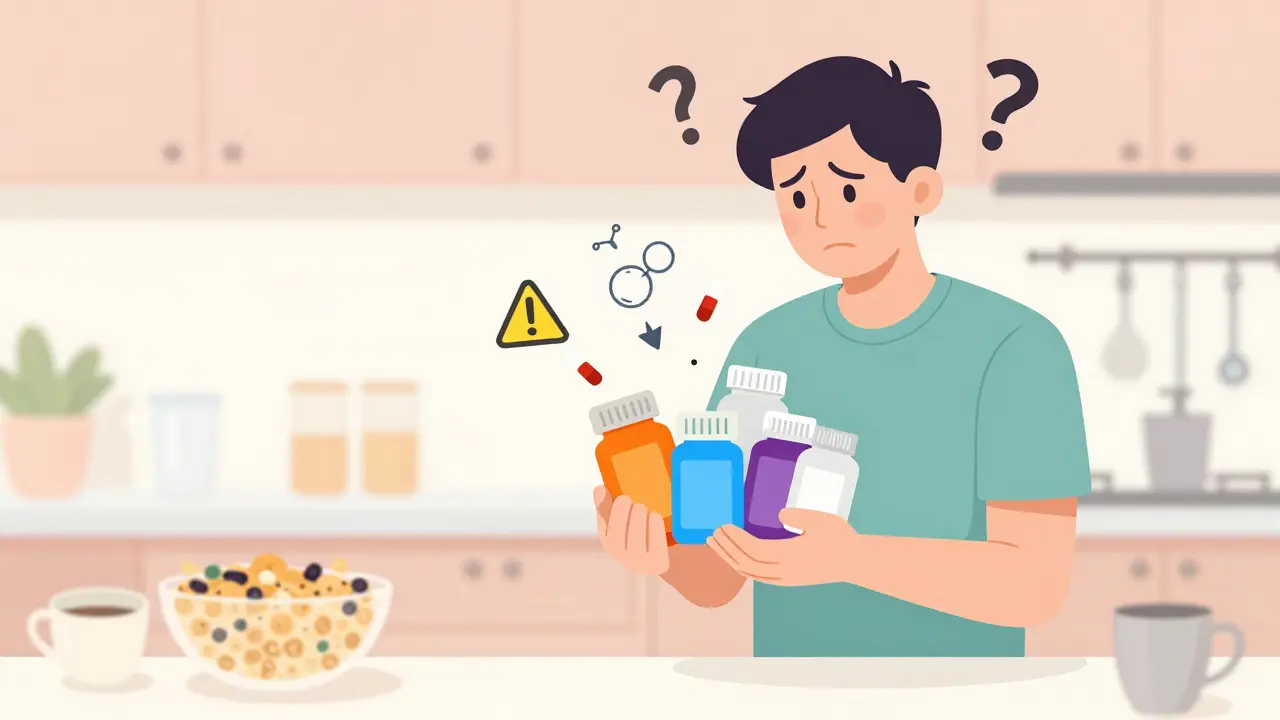
Imagine taking five different pills every day. One for your blood pressure, one for cholesterol, a vitamin, an antibiotic, and a thyroid supplement. You grab them all at breakfast because that’s when you remember. But what if the thyroid med needs an empty stomach? What if the antibiotic fights with the calcium in your morning cereal? This isn’t just a hypothetical headache; it’s a daily reality for millions of people managing complex health conditions.
We often think of medications as simple helpers, but they are chemical agents that interact with each other, our food, and our bodies in predictable ways. When we ignore these interactions, we don’t just risk reduced effectiveness-we risk serious side effects. The goal here isn’t just to take your pills; it’s to create a medication schedule that works *with* your body’s chemistry, not against it. Let’s build a system that keeps you safe and healthy without turning your life into a pharmacy shift.
The Hidden Danger of "Take Twice Daily"
Have you ever read a bottle that says "take twice daily" and assumed that means breakfast and dinner? If so, you’re in good company, but you might also be making a mistake. Vague instructions like this are the root cause of many medication errors. Research from Northwestern University Feinberg School of Medicine showed that ambiguous terms lead to misinterpretation rates as high as 34% among patients.
To fix this, experts developed the Universal Medication Schedule (UMS), which is a standardized approach that replaces vague timing instructions with specific time windows. Instead of "twice daily," UMS uses clear blocks: Morning (6 AM-10 AM), Noon (10 AM-2 PM), Evening (2 PM-6 PM), and Bedtime (8 PM-12 AM). This small change in language reduced misinterpretation to just 6% in clinical studies. By anchoring doses to these specific windows, you eliminate the guesswork. You know exactly where a pill fits in your day, ensuring consistent spacing between doses.
Step 1: The Brown Bag Review
Before you can schedule anything, you need to know exactly what you are working with. Many people forget about over-the-counter drugs, herbal supplements, or old prescriptions they still have in the cabinet. This is where the "Brown Bag Review" comes in. It’s a simple process: gather every single medication, supplement, and even topical cream you use into one bag and bring it to your pharmacist or doctor.
Why is this critical? Pharmacists report that this method identifies an average of 3.2 medication discrepancies per patient-errors that verbal histories miss 40% of the time. These discrepancies include duplicate drugs (taking two painkillers that do the same thing) or dangerous combinations. For example, combining certain blood thinners with non-steroidal anti-inflammatory drugs (NSAIDs) like ibuprofen can increase bleeding risk by up to 70%. Getting a professional to screen your entire inventory using tools like Lexicomp takes only 10-15 minutes but can prevent severe adverse events.
Step 2: Grouping by Timing and Food Requirements
Not all pills are created equal. Some need acid to dissolve, others need fat to absorb, and some fight each other for absorption sites in your gut. Once you have your list, group your medications into four categories based on their strictest requirements:
- Empty Stomach Only: These must be taken at least 30-60 minutes before eating or 2 hours after. Examples include levothyroxine (for thyroid) and certain antibiotics like tetracycline. Take these first thing in the morning with water only.
- With Food Required: These need food to reduce stomach upset or improve absorption. Statins (like simvastatin) and metformin often fall here. Schedule these with your largest meal.
- Flexible Timing: Most blood pressure meds and vitamins can be taken anytime, as long as they are spaced out from the restricted groups. Use these to fill gaps in your schedule.
- Separation Needed: Some drugs block each other. Calcium supplements, for instance, should be taken 2-4 hours apart from thyroid medication or certain antibiotics. If you take both, put the thyroid med in the "Morning" slot and the calcium in the "Noon" or "Evening" slot.
This grouping prevents the common error of dumping everything into one cup at breakfast. By separating conflicting agents, you ensure each drug does its job effectively.

Step 3: Visualizing Your Day
Memory fades, especially when you’re tired or busy. Relying on mental notes is risky. Instead, create a visual map of your week. A large chart posted near your medication station works best. Studies show that 72% of successful users maintain such a chart. Here is how to structure it:
- Create Time Slots: Draw columns for Morning, Noon, Evening, and Bedtime.
- List Medications: Write the name of each drug under its assigned slot. Use color-coding if you have multiple conditions (e.g., blue for heart, green for diabetes).
- Add Notes: Include reminders like "with food" or "stand up slowly" next to the relevant drug.
- Check Off Doses: Physically marking a dose as taken provides immediate feedback and prevents double-dosing.
If paper feels outdated, digital apps like Medisafe or MyTherapy offer automated reminders. Data shows these apps can boost adherence by 20-35% compared to paper systems. However, keep in mind that technology adoption varies; only 38% of users over 65 consistently engage with app reminders. Choose the tool that fits your lifestyle, whether that’s a smartphone notification or a magnetic whiteboard on the fridge.
Simplifying Refills: The 90 x 4 Strategy
A major source of confusion is mismatched refill dates. If your blood pressure pill runs out on the 1st, your statin on the 15th, and your vitamins on the 20th, you’re constantly managing logistics. This fragmentation leads to missed doses.
Ask your doctor about medication synchronization, often called the "90 x 4" strategy. This involves aligning all your prescriptions to be refilled on the same day, typically every 90 days. The American Medical Association’s STEPS Forward program highlights that this approach saves clinicians time and significantly improves patient adherence. With fewer trips to the pharmacy and a single date to remember, the mental load decreases. Just ensure your insurance plan supports 90-day supplies for chronic maintenance medications.
Tools for Success: Organizers and Alerts
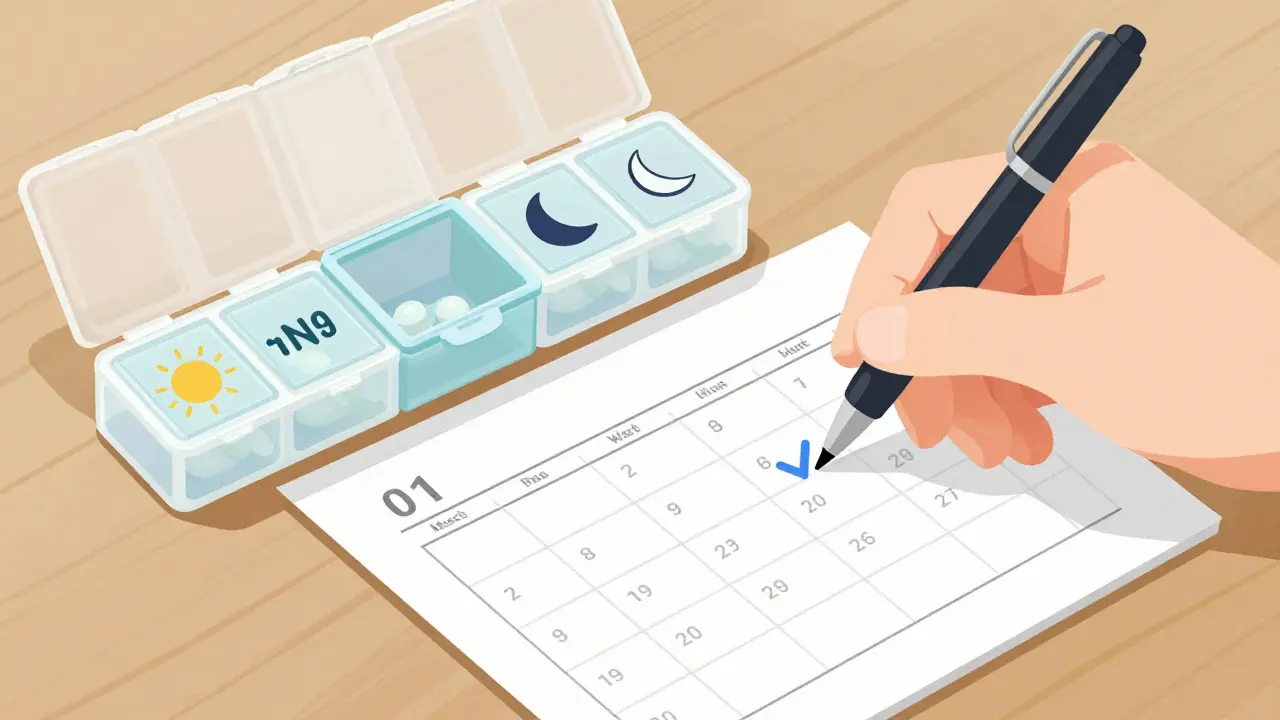
Once your schedule is set, you need hardware to support it. Pill organizers are not just for the elderly; they are practical tools for anyone managing more than three daily medications. A meta-analysis in the Annals of Internal Medicine found that segmented containers (AM/PM or 7-day split) reduce dosing errors by 45%.
| Tool Type | Best For | Pros | Cons |
|---|---|---|---|
| Paper Calendar | Low-tech users, visual learners | No battery needed, easy to update | No automatic reminders, can be lost |
| Smartphone Apps | Tech-savvy users, complex regimens | Automated alerts, interaction checks | Requires charging, learning curve for seniors |
| Weekly Pill Box | Daily routine reinforcement | Visual confirmation of doses, portable | Must be refilled weekly, no interaction warnings |
| Smart Dispensers | High-risk polypharmacy patients | Locks until dose time, alerts caregivers | Expensive, bulky, requires technical setup |
For those with highly complex schedules involving 10+ medications, smart dispensers like Hero Health devices can lock compartments until the correct time, achieving 92% adherence in pilot studies. While costly, they provide peace of mind for caregivers and patients alike.
When to Seek Help
Creating a schedule is proactive, but monitoring is essential. Watch for signs that your regimen is causing issues. Unexplained dizziness, gastrointestinal distress, unusual bruising, or sudden changes in energy levels can signal an interaction. Don’t wait for your next annual checkup. If you feel off, call your pharmacist. They are the most accessible drug experts and can often resolve timing conflicts immediately.
Additionally, review your schedule every time you start a new medication, stop one, or see a new specialist. Fragmentation across providers is a huge risk; patients see an average of 13 specialists over five years. Ensure everyone has your updated "Brown Bag" list. Consistency is key to safety.
Frequently Asked Questions
What is the Universal Medication Schedule (UMS)?
The Universal Medication Schedule (UMS) is a standardized system that replaces vague instructions like "take twice daily" with specific time windows: Morning (6-10 AM), Noon (10 AM-2 PM), Evening (2-6 PM), and Bedtime (8 PM-12 AM). This clarity reduces patient misinterpretation of dosing times from 34% to just 6%, improving overall adherence and safety.
How do I know if my medications interact?
You cannot always tell by looking at the bottles. Drug interactions depend on chemical properties, metabolism pathways, and timing. The safest way to check is through a "Brown Bag Review" with a pharmacist, who uses specialized software to screen for conflicts. Common signs of interaction include unexpected side effects like dizziness, nausea, or increased bleeding.
Can I take all my pills at once with breakfast?
Generally, no. Many medications require specific conditions to work properly. For example, thyroid medication needs an empty stomach, while some antibiotics need food to prevent nausea. Taking everything together can cause drugs to block each other's absorption or irritate your stomach. Always separate medications based on their specific dietary and timing requirements.
What is the "90 x 4" medication strategy?
The "90 x 4" strategy is a medication synchronization method where all your chronic maintenance prescriptions are aligned to be refilled on the same day, every 90 days (four times a year). This reduces the number of pharmacy visits, simplifies refill management, and helps prevent missed doses due to confusing, staggered expiration dates.
Are digital apps better than pill boxes?
It depends on your tech comfort level. Digital apps offer automated reminders and interaction checks, boosting adherence by 20-35% for many users. However, traditional weekly pill boxes reduce dosing errors by 45% and require no battery or internet. For older adults or those less comfortable with technology, a physical organizer combined with a paper calendar is often more effective.
Alana Frassinelli
July 8, 2026 AT 21:05it really is wild how we just throw pills at our bodies without thinking about the chemistry involved i mean sure it feels easier to just grab them all at once but that thyroid med needs an empty stomach and if you eat cereal with calcium right after you basically wasted the dose and then there is the antibiotic fighting with the food so yeah its not just about remembering to take them its about taking them right which is why this brown bag review thing sounds like a lifesaver because half the time we forget what supplements we are even taking or have old ones lying around that might clash with the new stuff so gathering everything up and letting a pharmacist look at it makes total sense since they can spot those duplicate drugs or dangerous combos like blood thinners and ibuprofen which could actually cause serious bleeding issues so yeah dont be lazy do the review
Gavin Edley
July 10, 2026 AT 17:34oh please spare me the lecture on universal medication schedules as if anyone actually has the discipline to follow some rigid morning noon evening bedtime block system in their chaotic lives besides who cares if you misinterpret twice daily by ten minutes its not like the world is going to end and honestly this whole brown bag review idea is just another way for pharmacists to pad their hours and sell you more consultations when you could just google interactions yourself instead of relying on these so-called experts who probably dont know any better than you do anyway so keep your charts and your apps i will take my pills when i remember them and deal with the consequences thanks very much
jeremy pritchett
July 12, 2026 AT 13:58listen up folks because this stuff matters more than you think and if you want to stay sharp and healthy you gotta get your act together with these meds stop treating your body like a trash can for random chemicals and start respecting the process because every pill has a job to do and if you mess up the timing you are sabotaging your own progress so go ahead and do that brown bag review right now dont wait till next week because procrastination is the enemy of health and once you see what you are actually taking you might be shocked by how many unnecessary things you are popping so clean house sync your refills and get organized because life is too short to be sick from bad habits so lets go crush this wellness goal together yeah
Kimberly Simbulan
July 12, 2026 AT 18:34sure because nothing says trust me bro than assuming your average patient can perfectly navigate complex pharmacokinetics without professional guidance oh and did i mention that most people cant even read a label properly so expecting them to self-manage drug interactions is just setting them up for failure but hey let us all pretend that common sense applies here and that everyone has the executive function required to separate their thyroid meds from their calcium supplements by exactly two hours every single day without fail because thats totally realistic right lol
kavitha kumar
July 14, 2026 AT 11:41i tried doing this once and it was such a disaster because i forgot to put my vitamins in the right slot and then i felt terrible all day so now i just take everything at night before bed because its easier and my doctor never complains so i guess it works for me even though my energy levels are kinda low sometimes but whatever it is what it is and i dont have time to stress over charts and apps because life is already hard enough without adding more tasks to my plate so maybe try living in the real world before giving advice ok
fred morgan
July 16, 2026 AT 08:33The Universal Medication Schedule provides a necessary framework for reducing ambiguity in dosing instructions. Standardizing time windows significantly decreases the likelihood of patient error.
Sarah Boomgaard
July 17, 2026 AT 11:08this whole concept of scheduling your life down to the minute is just another form of control society uses to keep us compliant and obedient instead of trusting our bodies to know what they need we are forced into these artificial boxes of morning and evening slots as if nature operates on a clock and frankly it is morally wrong to make people feel guilty for not following these strict rules because health should come from within not from a chart on the fridge so reject the system and listen to your gut instead of a pharmacist who only cares about selling pills
Gilbert Bankual
July 18, 2026 AT 02:46great tips everyone especially the part about syncing refills because nobody likes running to the pharmacy constantly so just do it and save yourself the hassle
Ashley Loera
July 19, 2026 AT 21:53omg this post is so basic like seriously who doesnt know you shouldnt mix certain meds its not rocket science but i guess some people need hand holding so here is my two cents just use an app because paper is so last decade and if you cant manage a phone then maybe you shouldnt be managing your own health lol jk but seriously stop making excuses and just get organized already its 2024 not 1999
Dawn Renee
July 21, 2026 AT 12:00one must consider the deeper implications of pharmaceutical dependency masked as healthcare solutions for the masses these schedules are merely tools of compliance designed to keep the populace sedated and manageable under the guise of safety while ignoring the root causes of illness which lie elsewhere in the systemic corruption of modern medicine itself thus creating a cycle of perpetual consumption that benefits only the corporate entities behind the scenes rather than the individual seeking true holistic healing through natural means unencumbered by chemical interference
Divya Prakash
July 21, 2026 AT 19:24it is quite amusing to observe the sheer lack of intellectual rigor displayed by those who fail to appreciate the nuanced complexities of pharmacological kinetics as outlined in this rather elementary discourse one would assume that individuals capable of navigating the digital landscape would possess the cognitive faculties requisite to comprehend basic temporal separation protocols yet alas we find ourselves instructing the masses on the rudimentary necessity of avoiding concurrent ingestion of antagonistic compounds a testament perhaps to the declining standards of general education and critical thinking skills prevalent in contemporary society where convenience trumps efficacy at every turn rendering such detailed explanations not merely helpful but absolutely essential for the preservation of public health amidst a backdrop of widespread ignorance
Mohit Patil
July 23, 2026 AT 07:25they want you to believe in these schedules but its all a conspiracy to track your health data and sell it to insurance companies who then raise your premiums based on your adherence levels so dont fall for it just take your meds randomly to confuse the algorithm and protect your privacy because big pharma knows exactly what you are taking if you follow their rules so stay vigilant and question everything including this post which is likely sponsored by some drug company trying to push their latest product line onto unsuspecting victims of the medical industrial complex
Chandan Sharma
July 24, 2026 AT 20:45the art of medication management is akin to conducting a symphony where each instrument must enter at the precise moment to create harmony rather than cacophony one must approach the regimen with the sophistication of a seasoned maestro understanding that the interplay between chemical agents requires not merely rote memorization but a deep appreciation for the subtle nuances of metabolic pathways and absorption dynamics thus elevating the mundane act of pill-taking into a disciplined practice of self-care that reflects one's commitment to excellence in all aspects of life including the maintenance of physiological equilibrium through informed and deliberate action
Vinay Bairagi
July 25, 2026 AT 14:21why are we listening to foreign ideas about medication when our traditional systems have worked for centuries without all this complicated scheduling nonsense it seems like western influence is creeping into every aspect of our lives even something as personal as health care and it is sad to see people abandoning their roots for these so-called scientific methods that strip away the spiritual connection to healing so perhaps we should focus on preserving our cultural heritage rather than adopting these sterile approaches that treat the human body as a machine to be fixed with parts and timers instead of a holistic entity guided by ancient wisdom and natural balance
Blythe Ward
July 27, 2026 AT 11:04honestly this is peak content for anyone who takes more than three pills a day which is probably most of us by now 🤷♂️ the brown bag trick is genius because i know i have at least five bottles in my bathroom cabinet that i have no idea what they are for anymore 😅 and the part about separating thyroid meds from calcium is huge because i used to take them together and wonder why i felt like garbage all day so yeah sync your refills use a chart and stop being lazy about your health because your future self will thank you later 💊✨ #healthhack #medicationmanagement