
How to Access FDA-Required Medication Guides: A Clear Step-by-Step Guide
 Jan, 12 2026
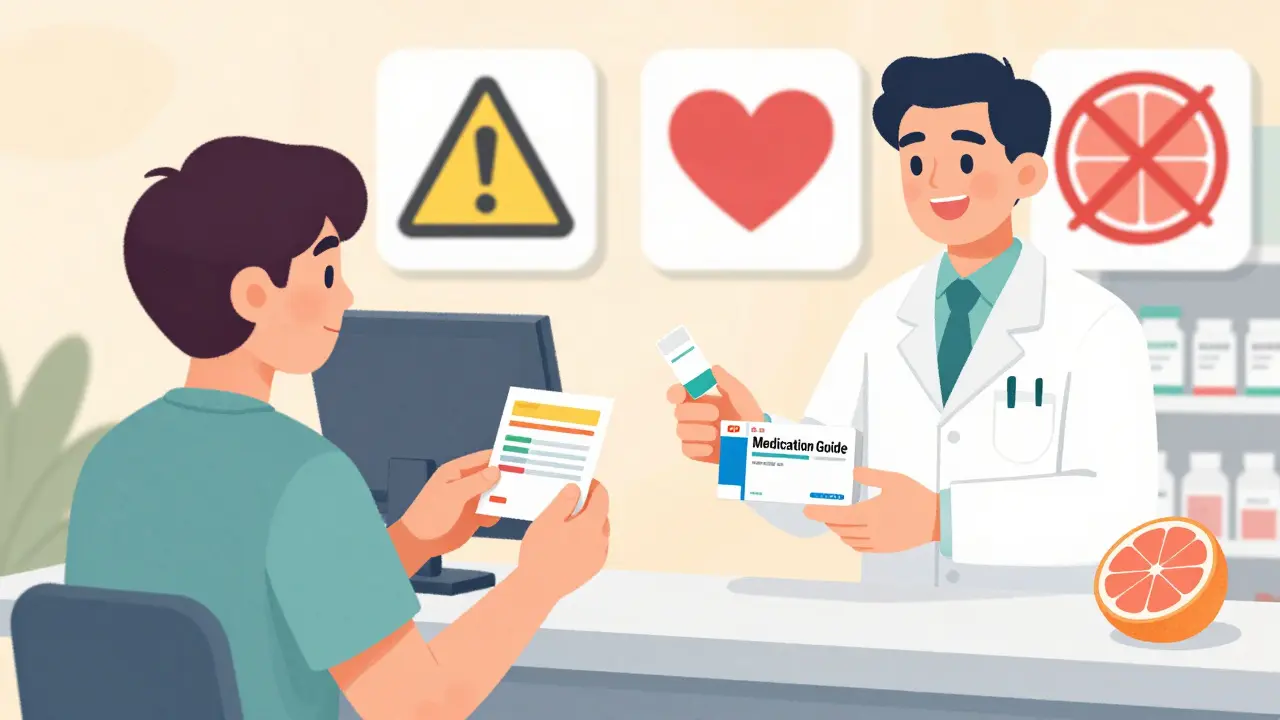
When you pick up a prescription, you might not notice it-but there’s a small paper insert in the box that could save your life. These are Medication Guides, required by the U.S. Food and Drug Administration (FDA) for certain high-risk drugs. They’re not marketing brochures or fine print. They’re official safety documents, written in plain language, that explain serious risks, how to avoid them, and what to do if something goes wrong. If you’re taking a drug that needs one, you have the right to get it-every time you refill. But knowing how to get it isn’t always obvious.
What Are FDA Medication Guides and Why Do They Exist?
Medication Guides (MGs) are not optional. They’re legally required for about 305 prescription drugs in the U.S., as of 2011, and the number keeps growing. The FDA mandates them when a drug has risks so serious that patients need to understand them before using it. This could mean the drug might cause life-threatening reactions, requires strict adherence to dosing, or has side effects that patients might ignore unless clearly warned.
For example, drugs like warfarin (a blood thinner), certain antidepressants with suicide risk warnings, or diabetes medications that can cause severe low blood sugar all come with these guides. They’re designed to help you make informed choices. Without them, patients might not realize they shouldn’t drink grapefruit juice with their medication, or that skipping doses could make the drug useless-or dangerous.
These guides are created by drug manufacturers but must be approved by the FDA. They’re not just summaries-they’re legally binding patient safety tools. The FDA reviews every word to make sure it’s clear, accurate, and not buried in jargon. Still, many people don’t know they exist, or how to get them.
How Do You Get a Medication Guide?
The easiest and most common way is through your pharmacy. When you pick up a prescription for a drug that requires a Medication Guide, the pharmacist is required to give you one-every single time. This applies to new prescriptions and refills. It doesn’t matter if you’ve taken the drug for years. If the FDA requires it, the guide must be handed to you at the counter.
If you don’t get one, ask for it. Don’t assume it’s not needed. Pharmacists are trained to provide these, but sometimes they forget, or assume you’ve already received it. Say: “Can I get the FDA Medication Guide for this drug?” That’s all it takes. You have the legal right to receive it.
There are exceptions. If you’re in a hospital and the drug is given to you by a nurse or doctor, you won’t automatically get a printed guide. But if you ask for it, they must provide one. The same applies if you’re getting an infusion at a clinic or dialysis center. The rule is simple: if you’re taking the medication yourself at home, you get the guide. If a professional gives it to you, they don’t have to hand it out-but they still must give it if you request it.
Can You Get It Electronically Instead of Paper?
Yes. While paper is the default, you can ask for an electronic version. Many pharmacies now offer email or text delivery of Medication Guides. You can also download them directly from the FDA’s website. To do this, go to the FDA’s Patient Labeling Resources page and search by drug name. You’ll find approved guides in PDF format, ready to print or save.
Some drug manufacturers also offer digital access through their patient portals. If your pharmacy doesn’t offer electronic delivery, ask them to email you a copy. If they say they can’t, ask for the FDA’s website link so you can get it yourself. The FDA requires that electronic access be available upon request-even if the pharmacy doesn’t offer it as a standard option.
What’s in a Medication Guide?
Every guide follows a strict FDA format. It must include:
- The name of the drug (brand and generic)
- What the drug is used for
- Important safety information-like life-threatening risks
- Common side effects and what to do if you experience them
- Who should not take the drug
- Directions for use, including how to store it
- What to avoid while taking it (like alcohol, other drugs, or foods)
- When to call your doctor or go to the ER
They’re written in plain English. No medical jargon. No tiny font. The FDA requires that the language be understandable to someone with a sixth-grade reading level. If you can’t read it, it’s not meeting the standard.
What If Your Drug Doesn’t Come With a Guide?
Not every prescription needs one. Only drugs the FDA has specifically flagged for serious risks require a Medication Guide. If you’re unsure, check the FDA’s online list. You can search by drug name on their website. If your drug isn’t listed, it doesn’t mean it’s safe-it just means the FDA hasn’t required a guide for it yet.
But if you believe your drug should have one-say, it causes serious side effects you weren’t warned about-you can report it to the FDA. Use their MedWatch system to file a safety report. This helps the agency decide whether to add a guide in the future.
What’s Changing? The New Patient Medication Information (PMI) System
The current Medication Guide system has major problems. A 2012 study found that despite the number of guides growing from 40 to over 300 in just five years, their readability didn’t improve. Many were too long, poorly formatted, and hard to understand.
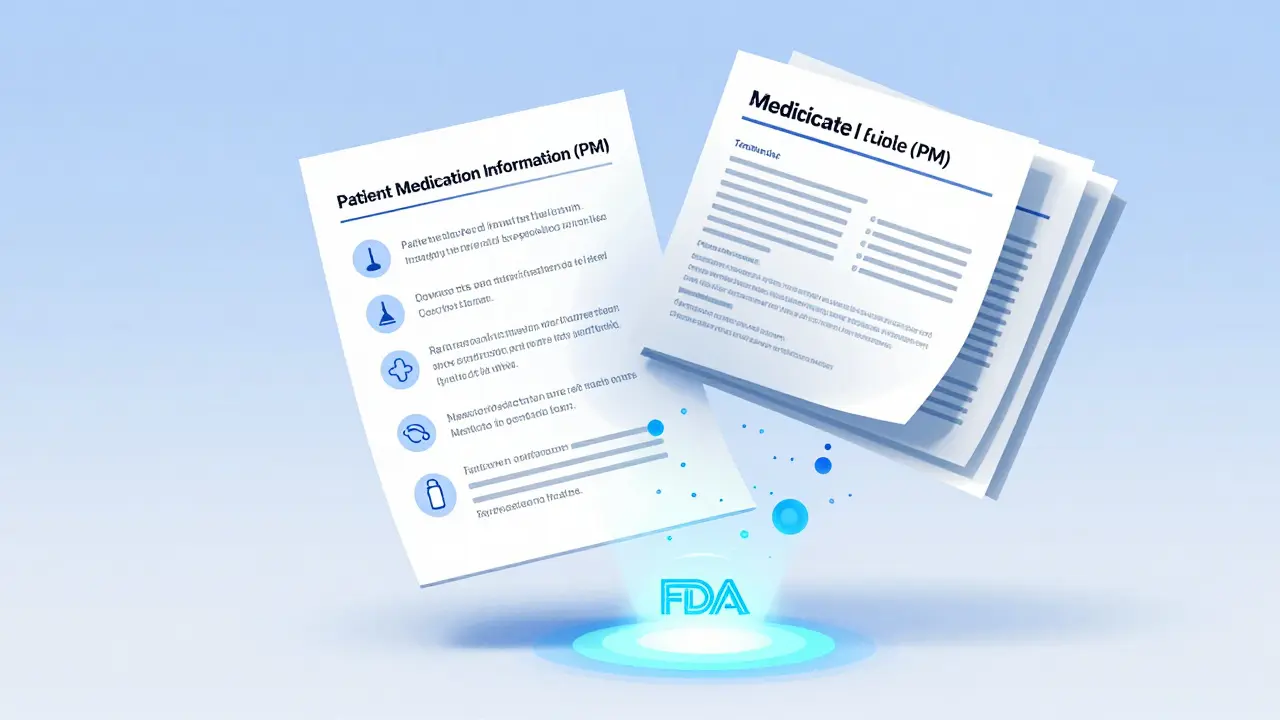
To fix this, the FDA proposed a new system called Patient Medication Information (PMI). It’s a big change. Instead of varying lengths and formats, every PMI will be one page, with the same headings, same layout, and same language rules. It will be stored in a free, public FDA database-accessible to anyone, anytime, on any device.
The rollout is staggered. Drugs approved before 2023 will have up to five years to switch. New drugs will use PMI from day one. This means over the next few years, you’ll start seeing a cleaner, simpler version of these safety guides. The goal? No more confusing booklets. Just one clear page that tells you what you need to know.
What You Can Do Right Now
Don’t wait for the system to improve. Take control now:
- Ask for your Medication Guide every time you pick up a prescription-even if you’ve taken the drug before.
- If you don’t get one, ask again. Say: “I need the FDA Medication Guide for this drug.”
- Request it in digital form if you prefer email or PDF.
- Save it. Don’t throw it away. Keep it with your other medical records.
- Check the FDA website to confirm your drug has a guide and download a copy for your records.
- Report any side effects or confusion about your medication to the FDA’s MedWatch program.
These guides exist because people have been hurt-sometimes fatally-because they didn’t know the risks. You don’t have to be one of them. Getting your Medication Guide is your right. Using it is your power.
Angel Molano
January 13, 2026 AT 05:40Pharmacists forget. Always ask. No excuses. If they don't give you the guide, file a complaint with the FDA. It's your life.
Kimberly Mitchell
January 14, 2026 AT 20:47The FDA's Medication Guide framework is fundamentally flawed. The regulatory architecture fails to account for cognitive load, linguistic accessibility, and behavioral inertia among patient populations. Even with plain language mandates, the documents remain epistemologically inert when divorced from clinical context and patient counseling infrastructure.
Furthermore, the proliferation of guides without standardization creates informational entropy-patients are overwhelmed by volume, not empowered by clarity. The PMI initiative is a necessary but insufficient intervention. Without mandatory integration into EHRs and pharmacist reimbursement for guided review, this remains performative compliance.
And don't get me started on the 30% of guides that still use passive voice to describe life-threatening interactions. 'It is recommended that patients avoid...'-no, it's not recommended. It's a death sentence if you ignore it.
Diana Campos Ortiz
January 16, 2026 AT 04:03i always ask for the guide now-even if i’ve been on the med for years. last month i found out i shouldn’t have been drinking grapefruit juice with my statin. who knew? thanks for the reminder, this post saved me from a bad day at the er.
Vinaypriy Wane
January 17, 2026 AT 07:51I understand the urgency of patient safety, but let us not forget that many elderly patients, non-native English speakers, and those with cognitive impairments cannot process even 'plain language' documents without support. The FDA's mandate is well-intentioned, yet insufficiently compassionate. We must pair these guides with mandatory pharmacist consultation-not just distribution.
And yes-I’ve seen patients throw them away, confused, overwhelmed. A one-page PMI is a step forward, but we must also train pharmacists to *explain*, not just hand over a sheet of paper.
James Castner
January 18, 2026 AT 06:09While the Medication Guide system is a critical component of pharmaceutical risk mitigation, its current implementation reveals a systemic disjunction between regulatory intent and real-world utility. The FDA's reliance on manufacturer-generated content, however vetted, introduces an inherent conflict of interest: the entity with the greatest financial stake in product adoption is also responsible for framing the narrative of its dangers.
Moreover, the absence of enforceable standards for comprehension testing-beyond the sixth-grade reading level-renders the entire framework vulnerable to linguistic minimalism rather than true clarity. A document may be grammatically simple, yet conceptually opaque. The PMI initiative, if it includes independent third-party readability validation and cognitive load assessment, may finally bridge this chasm.
Until then, we are engaging in a form of procedural ethics: checking the box without ensuring the soul of the message is received.
lucy cooke
January 19, 2026 AT 02:51Oh, darling, how quaint. The FDA thinks a pamphlet will save us from our own poor life choices? We live in a world where people still microwave metal, yet we’re surprised they don’t read a 12-page PDF about their blood thinner? This isn’t patient empowerment-it’s performative bureaucracy dressed up as care. The real problem? We treat people like data points, not humans who need conversation, not handouts.
And don’t even get me started on the PMI. One page? Please. If it’s not a sonnet with footnotes and a QR code to a therapist, it’s not meaningful. We need narrative, not bullet points.
John Tran
January 20, 2026 AT 18:34you ever notice how these guides always say 'call your doctor if you experience X' but never say 'here's what X actually feels like'? like, 'severe dizziness'-okay, but is that like spinning in a washing machine? or just a little woozy? i had to google it. the guide didn't help. they're not written for patients, they're written for lawyers. and the FDA approves them? that's the joke.
and why do they always put the 'who should NOT take this' at the bottom? like, i'm reading this because i'm worried i'm one of those people! put it on page one, you maniacs!
Robin Williams
January 21, 2026 AT 03:43Bro. This is the most important thing you'll read today. Seriously. That little paper in your pill bottle? It's not trash. It's your armor. I used to toss them. Then my cousin went to the hospital because she didn't know her antidepressant and wine was a bad combo. She's fine now. But she almost wasn't. Don't be that person. Ask. Save. Read. Repeat.
mike swinchoski
January 21, 2026 AT 08:47why do people even need these? if you can't follow simple instructions, maybe you shouldn't be taking meds at all. just take it like the doctor says. stop making everything a big deal. this is why healthcare is so expensive-because we treat people like babies.
Anny Kaettano
January 22, 2026 AT 04:42As someone who works in patient advocacy, I’ve seen firsthand how these guides change outcomes. But the real win isn’t just getting them-it’s having them integrated into care. I’ve trained community health workers to use them as conversation starters. One woman, 78, said, 'I never knew my blood pressure med could make me dizzy when I stood up-now I sit for 30 seconds first.' That’s power. The PMI? It’s not just a redesign-it’s a rehumanization.
And yes, ask for the digital copy. Save it on your phone. Share it with your family. This isn’t just paperwork. It’s peace of mind.
Scottie Baker
January 23, 2026 AT 18:14you know what's wild? i took my meds for 3 years without ever reading the guide. then i found out the thing i thought was 'just anxiety' was actually a side effect. i almost died. now i keep them in a folder next to my insurance card. if you're not reading these, you're gambling with your body. stop being lazy.
Adam Rivera
January 25, 2026 AT 02:39Just wanted to say thanks for this. I'm from the Philippines, but my sister lives in Texas and she told me about this. I showed her the FDA page and she finally got her guide for the first time after 5 years. Small thing, huge difference. Keep spreading the word, y'all.