
History of Generic Drugs in the United States: How Cheaper Medicines Became the Norm
 Jan, 16 2026
Before generic drugs were common, most Americans paid full price for every prescription. Today, more than 9 in 10 prescriptions filled in the U.S. are for generic versions of brand-name drugs. That shift didn’t happen by accident. It was the result of decades of lawmaking, public health crises, and quiet but powerful changes in how medicine is made and sold.
The First Steps Toward Standardized Medicine
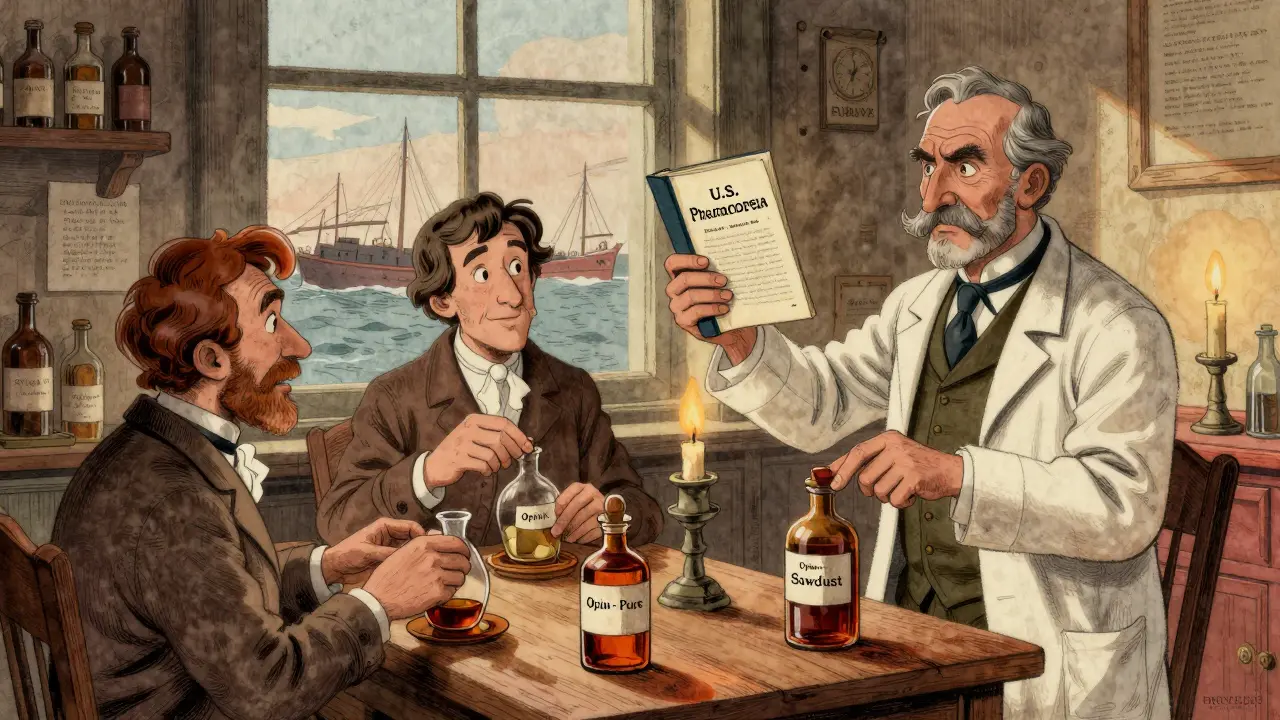
The story of generic drugs in the U.S. starts long before anyone used the term "generic." In 1820, eleven doctors met in Washington, D.C., and created the first U.S. Pharmacopeia - a list of approved drug ingredients and how to make them. At the time, medicines were often mixed by hand in pharmacies, and quality varied wildly. One batch of opium might be pure; the next could be cut with sawdust or chalk. The Pharmacopeia was the first attempt to set a standard, so doctors and pharmacists knew what they were working with. By 1848, the federal government stepped in with the Drug Importation Act. It gave U.S. Customs the power to stop bad drugs from entering the country. This was a big deal. Many medicines back then were imported from Europe, and some were dangerously fake. The law didn’t stop counterfeiting, but it made it harder. In 1888, the American Pharmaceutical Association published the National Formulary, which added more rules for drug purity. These early efforts laid the groundwork for what would become the FDA. But without enforcement, standards meant little. That changed in 1906, when President Theodore Roosevelt signed the Federal Food and Drugs Act. For the first time, drugs had to be labeled correctly. If a product claimed to cure cancer but didn’t contain the ingredient it promised, the government could take action. This law didn’t require drugs to be safe - only honest.A Tragedy That Changed Everything
In 1937, a pharmaceutical company in Tennessee released a liquid antibiotic called Elixir Sulfanilamide. To make it taste better, they dissolved the drug in diethylene glycol - a chemical used in antifreeze. It killed 107 people, mostly children. There was no law requiring safety testing. No one had checked if the solvent was poisonous. The public outcry was immediate. Congress responded in 1938 with the Federal Food, Drug, and Cosmetic Act (FDCA). This time, drugmakers had to prove their products were safe before selling them. The FDA gained real power. The agency could now review new drugs before they reached the market. But here’s the catch: the law didn’t require proof that drugs actually worked. Only that they wouldn’t kill you. That changed in 1962. The thalidomide crisis in Europe - where a drug given to pregnant women caused severe birth defects - shocked the U.S. Even though thalidomide hadn’t been approved here, the FDA had blocked it, thanks to an inspector named Frances Kelsey. Her caution made headlines. In response, Congress passed the Kefauver-Harris Drug Amendments. For the first time, drug companies had to prove their medicines were not just safe, but effective. They also had to show the benefits outweighed the risks. And here’s the twist: the law required all drugs approved between 1938 and 1962 to go back and prove their effectiveness. Thousands of drugs were re-evaluated. Many were pulled off the market because they didn’t work. This was the first major cleanup of the U.S. drug supply.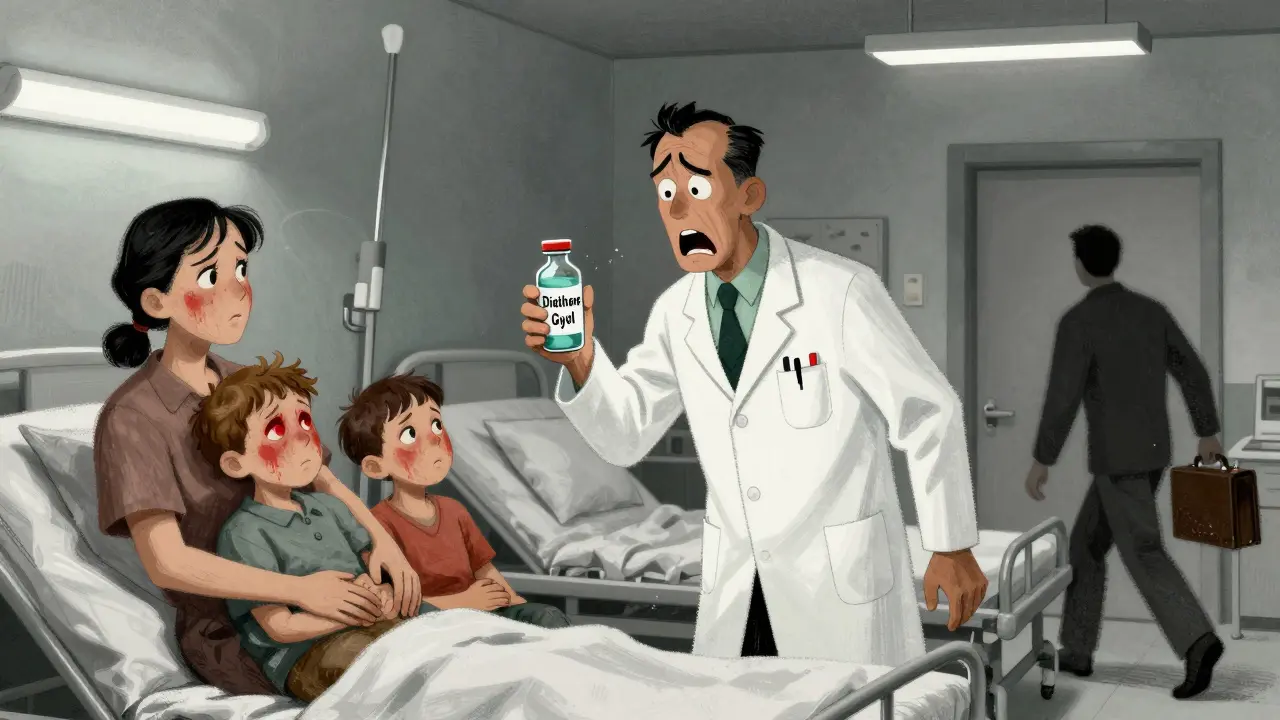
The Birth of the Modern Generic System
Even after 1962, generics were rare. In 1980, only about 19% of prescriptions were for generic drugs. Why? Because brand-name companies held patents that blocked anyone else from making the same medicine. And even when patents expired, there was no easy way for other companies to get approval. That changed in 1984 with the Hatch-Waxman Act. Officially called the Drug Price Competition and Patent Term Restoration Act, it created the Abbreviated New Drug Application (ANDA) process. Before Hatch-Waxman, a generic maker had to run full clinical trials - the same expensive, years-long tests as the original drugmaker. That made generics financially impossible for most companies. Hatch-Waxman changed that. Generic companies no longer had to prove safety or effectiveness again. They only had to show their version was bioequivalent - meaning it released the same amount of active ingredient into the bloodstream at the same rate as the brand-name drug. That cut approval time from years to months and slashed development costs. The law also gave brand-name companies a 30-month extension on their patents if a generic maker challenged them in court. That was meant to balance innovation and competition. But over time, it became a tool for delay. Some brand-name companies filed dozens of lawsuits - not to win, but to stall. This tactic, called "patent evergreening," kept generics off the market long after patents should have expired.Why Generics Took Over
The real push for generics came from the government. In 1965, Medicare and Medicaid were created. These programs needed to control costs. They started encouraging hospitals and pharmacies to use generic drugs whenever possible. By the 1990s, Medicaid programs required pharmacists to substitute generics unless the doctor said no. Insurance companies followed. They started putting generics on the lowest cost tier. Patients paid less out of pocket. Pharmacies made more profit selling generics. Doctors got used to prescribing them. The numbers speak for themselves. In 2022, generic drugs made up 90.5% of all prescriptions filled in the U.S. But they accounted for only 23.4% of total drug spending. That’s the power of competition. The Congressional Budget Office found that generics cut prescription costs by 80% to 85% compared to brand-name drugs. The savings are staggering. In 2021 alone, generic drugs saved the U.S. healthcare system $373 billion. Over the past decade, total savings exceeded $3.7 trillion. That’s more than the annual GDP of most countries.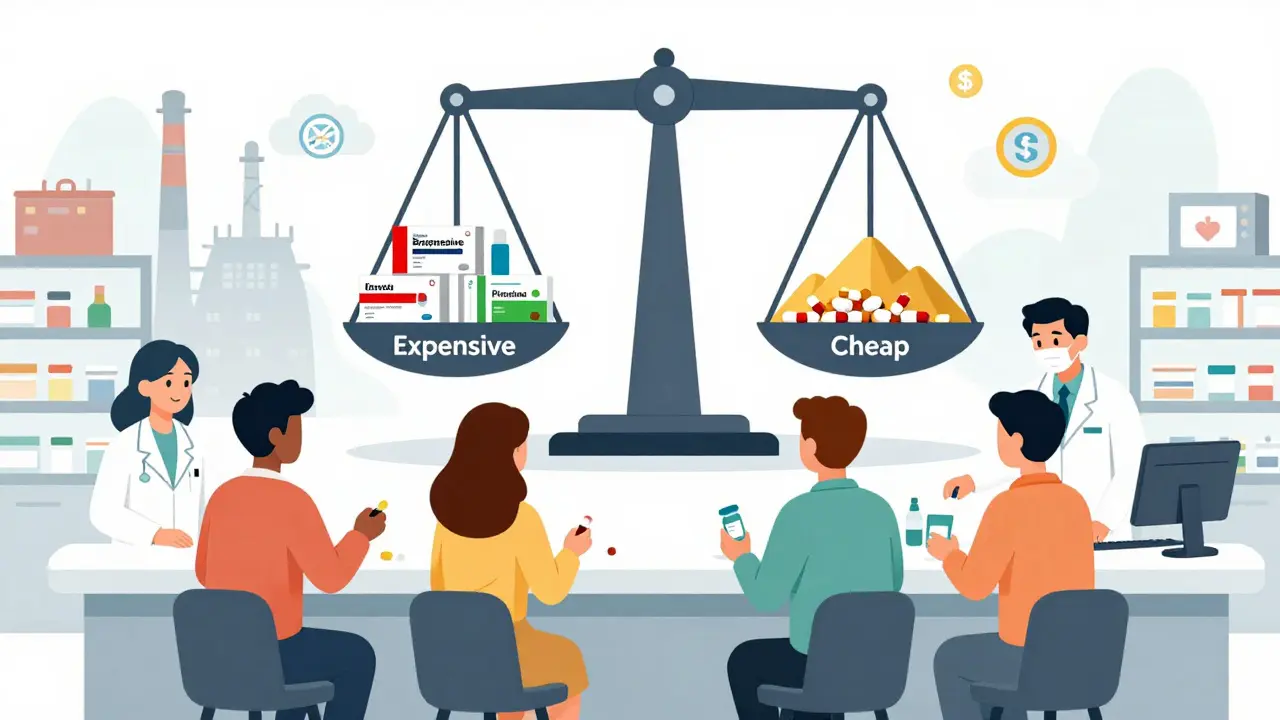
Ryan Hutchison
January 16, 2026 AT 23:38Let me break this down for you real quick - America didn’t get cheap drugs because of some noble public health mission. We got them because the government finally got tired of paying full price for brand-name crap while corporations laughed all the way to the bank. Hatch-Waxman? That was a backroom deal between pharma lobbyists and congressmen who wanted to look like heroes without actually fixing the system. And don’t even get me started on how India and China run the whole supply chain now. We outsourced our medicine like it was a call center. Pathetic.
Joie Cregin
January 17, 2026 AT 12:10honestly? this is one of those stories that makes me feel weirdly proud to be alive during a time when we figured out how to make healthcare a little less of a gamble. i mean - think about it. 90% of prescriptions are generics now, and people are still getting better. no tv ads, no flashy packaging, just quiet, reliable science keeping folks alive. it’s not glamorous, but it’s beautiful in its own way. 🌱
Melodie Lesesne
January 18, 2026 AT 08:46so cool how the elixir sulfanilamide tragedy actually led to real change. sometimes it takes something heartbreaking to make people listen. i hope we never forget that lesson - especially now with all the drug shortages and price spikes. we can’t go back to letting profit decide who gets medicine.
Corey Sawchuk
January 19, 2026 AT 14:51the part about frances kelsey holding the line on thalidomide still gives me chills. one person saying no when everyone else said yes. that’s the kind of quiet courage we need more of. also i never realized how much of our medicine comes from overseas. kinda scary when you think about it
Rob Deneke
January 19, 2026 AT 21:40you guys are missing the big picture. generics aren’t just cheap - they’re a win for everyone. patients save money, insurers save money, the whole system runs smoother. yeah there are hiccups with supply chains and price spikes but that’s not a failure of generics - that’s a failure of capitalism. fix the system not the solution
evelyn wellding
January 20, 2026 AT 07:35OMG I JUST REALIZED GENERIC DRUGS SAVED ME OVER $12K IN 5 YEARS JUST FOR MY BP MED 😭🙏 THANK YOU HATCH-WAXMAN!!! 🎉💊
Chelsea Harton
January 20, 2026 AT 21:00medicine is capitalism with a stethoscope. we got generics because the market cracked. not because we cared. the truth is ugly. and cheap
Corey Chrisinger
January 21, 2026 AT 22:05there’s something poetic about how the most life-saving innovations are the least celebrated. no billboards for generics. no influencers holding up pills. just quiet bottles on pharmacy shelves keeping people alive. maybe humanity’s greatest triumphs aren’t the fireworks - but the steady glow
also 🤖🩺
Bianca Leonhardt
January 22, 2026 AT 20:59you people act like this is some moral victory. it’s not. it’s just the result of greedy corporations being forced to compete after decades of monopolistic fraud. the fact that we needed a law to stop them from ripping us off says everything about this country. and now we’re dependent on factories in countries with zero oversight. brilliant.
Travis Craw
January 24, 2026 AT 18:36the creates act was long overdue. i read about one guy who had to wait 18 months just to get samples so he could make a generic version of his dad’s med. that’s not innovation thats cruelty. glad the fda is finally stepping in
Christina Bilotti
January 24, 2026 AT 22:35oh wow look at this feel-good history lesson. did you forget that most generics are made in places where inspectors get bribed? or that the same companies that made the brand-name drugs now own the generic versions? this isn’t progress - it’s rebranding with a lower price tag. and you’re all clapping like it’s a TED Talk
brooke wright
January 26, 2026 AT 18:21wait so if generics are 90% of prescriptions why are my co-pays still so high? and why did my insulin go from $30 to $400 in 3 years? are we being scammed? someone explain this because i dont get it
Nick Cole
January 27, 2026 AT 07:17the real story isn’t how we got cheap drugs - it’s how we stopped caring about quality control. we optimized for cost and forgot that medicine isn’t a commodity. when your entire supply chain is overseas and you’re running on 2 weeks of inventory - you’re not saving money. you’re just gambling with lives