
Generic Drug Profitability: Business Models and Sustainability in 2026
 Aug, 11 2026
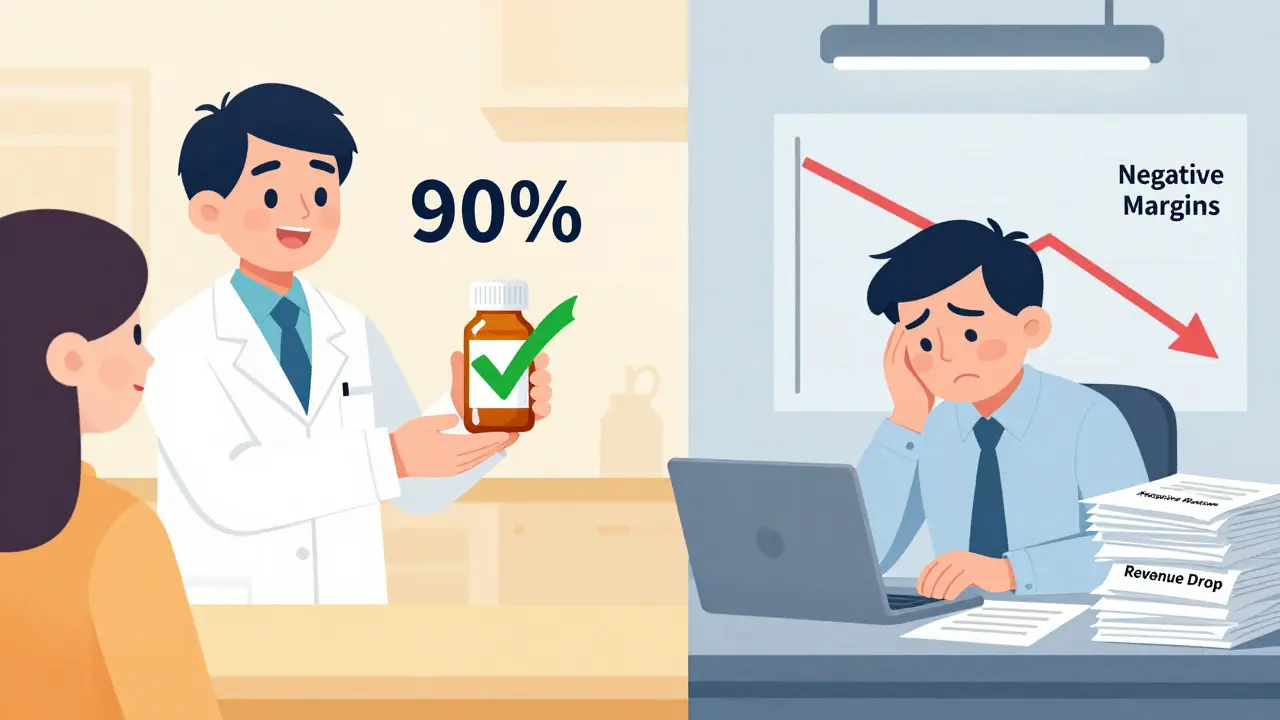
Walk into any pharmacy in the United States today, and you’ll likely see a familiar scene. The pharmacist hands you a prescription that looks identical to the brand-name version but costs a fraction of the price. This is the result of generic pharmaceuticals, which are therapeutically equivalent alternatives to brand-name drugs produced after patent expiration. In fact, these medications now make up about 90% of all prescriptions filled in the U.S., yet they account for only 10% of total spending on prescription drugs (Association for Accessible Medicines, 2025). That sounds like a win-win, right? Affordable medicine for patients and high volume for manufacturers. But look closer at the balance sheets, and the picture changes dramatically.
The reality is that making money from generic drugs has become incredibly difficult. The U.S. Generic Pharmaceutical Manufacturing sector saw its revenue drop by a compound annual growth rate (CAGR) of 6.1% over the five years leading up to 2025, settling at $35.0 billion (IBISWorld, 2025). For some major players, this isn't just slow growth; it's a loss. Teva Pharmaceutical Industries Ltd, one of the world’s largest generic makers, reported a negative profit margin of -4.6% in 2025, losing $174.6 million despite generating nearly $3.8 billion in revenue. Meanwhile, Mylan Inc. (now part of Viatris) managed a slim 4.3% profit margin. So, how do these companies survive when the margins are so thin? And more importantly, can this model sustain itself without causing widespread drug shortages?
Why Are Generic Drug Margins Shrinking?
To understand why profitability is vanishing, we have to look at the structure of the market. When a brand-name drug’s patent expires, multiple generic manufacturers rush to enter the market. They submit an Abbreviated New Drug Application (ANDA) to the Food and Drug Administration (FDA), proving their version is bioequivalent to the original. The first few companies to get approval often enjoy a period of exclusivity, but once that window closes, the floodgates open.
This creates intense price competition. If five or six companies can make the same simple pill-like a basic antibiotic or blood pressure medication-they undercut each other to win contracts with Pharmacy Benefit Managers (PBMs) and hospital formularies. Historically, gross margins for these commodity generics sat between 50% and 60%. Today, those margins have compressed to below 30%, and sometimes even lower. It becomes a race to the bottom where efficiency is the only differentiator.
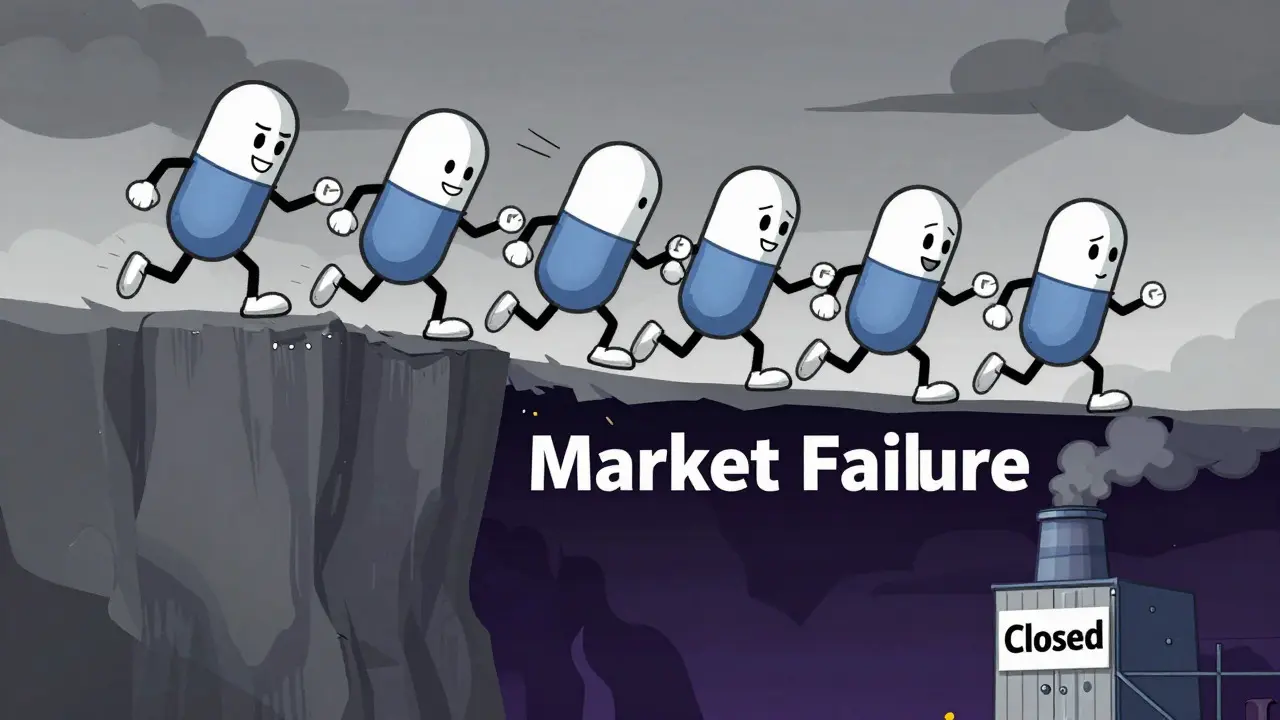
Dr. Aaron Kesselheim, a Professor of Medicine at Harvard Medical School, pointed out in a 2024 analysis for the Journal of the American Medical Association that this relentless price competition has created a "market failure." Essentially, the prices are so low that manufacturers cannot profitably produce certain essential medicines. When production becomes unprofitable, plants close, and supply chains break. This dynamic is a primary driver behind the recent wave of generic drug shortages across the U.S. healthcare system.
Three Paths to Sustainable Profitability
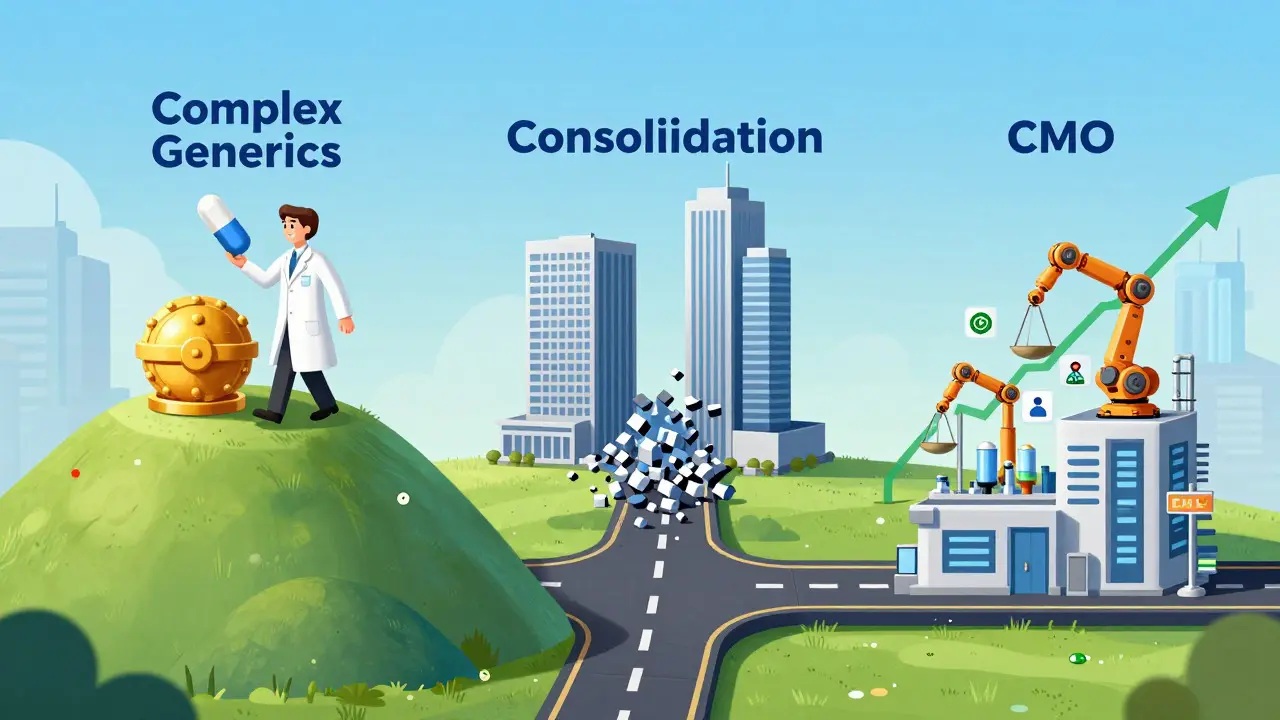
Faced with shrinking profits on simple pills, generic manufacturers are forced to evolve. The industry is no longer a monolith; it has split into three distinct business models, each with different risk profiles and profit potential.
| Business Model | Description | Profit Margin Potential | Key Challenges |
|---|---|---|---|
| Commodity Generics | Simple, off-patent small-molecule drugs with many competitors. | Low (<30%) | Intense price wars, low barriers to entry, supply chain volatility. |
| Complex Generics | Difficult-to-formulate drugs, combination products, specialty delivery systems. | Moderate to High | High R&D costs, technical barriers to entry, regulatory complexity. |
| Contract Manufacturing (CMO) | Providing manufacturing services to branded and generic companies. | Steady Growth | Capital intensive, requires strict compliance with cGMP standards. |
1. The Shift to Complex Generics
The most common survival strategy is moving away from simple tablets toward complex generics. These are drugs that are harder to copy. Think of extended-release formulations, inhalers, injectables, or combination pills that merge two active ingredients. Because these products require sophisticated engineering and face fewer competitors, they command higher prices and better margins.
Teva Pharmaceutical has embraced this approach through its "Pivot to Growth" strategy. In 2024, Teva increased its research and development spending by 5% to $998 million. They aren’t just looking for new molecules; they are focusing on immunology, immuno-oncology, neuroscience, and biosimilars. Their financial results for 2024 showed a 4% revenue increase to $16.5 billion, largely driven by specialty generics like lenalidomide for multiple myeloma and Austedo XR for movement disorders. By adding layers of complexity, they create a moat that protects them from the worst price erosion.
2. Strategic Consolidation and Divestiture
Another path is consolidation. The industry has seen massive merger and acquisition activity, escalating from $1.86 billion in 2014 to $44 billion by 2016. This trend continues as smaller players struggle to survive alone. However, consolidation isn't always about getting bigger; sometimes it's about getting focused.
Viatris, formed by the merger of Mylan and Upjohn in 2020, took a different route. Instead of expanding into every corner of the market, they divested non-core assets. They sold their biosimilars unit to Biocon, shed their over-the-counter arm, and exited the active pharmaceutical ingredient (API) business. This allowed them to streamline operations and focus on their core pipeline. In 2024, Viatris reported $14.7 billion in total revenues with 2% operational growth. By cutting the fat, they aimed to improve efficiency and stabilize margins in a volatile market.
3. Contract Manufacturing Organizations (CMOs)
A third, rapidly growing model is becoming a service provider rather than a product owner. Contract Manufacturing Organizations (CMOs) build the facilities and run the processes for both branded and generic companies. This segment is projected to grow significantly, expanding from $51.96 billion in 2024 to $90.95 billion by 2030 (Grand View Research, 2025).
Why is this model attractive? It shifts the risk. Instead of betting millions on whether a specific drug will sell well, the CMO gets paid for the manufacturing service. Companies like Egis Pharmaceuticals launched "Egis Pharma Services" in late 2023 to expand into API contract development. This model benefits from the global demand for reliable, compliant manufacturing capacity, especially as biotech startups lack the infrastructure to produce drugs at scale.
The Hidden Costs of Entry and Compliance
If you’re thinking of entering this space, be warned: the barriers to entry are formidable. It’s not enough to have a good formula. You need regulatory approval, massive capital investment, and time.
- Regulatory Costs: According to a 2024 analysis by the Tufts Center for the Study of Drug Development, the average cost to file an ANDA is approximately $2.6 million. This doesn’t include the years of pre-clinical work and stability testing required before you can even file.
- Facility Investment: Building a manufacturing plant that complies with current Good Manufacturing Practices (cGMP) costs upwards of $100 million. These facilities require state-of-the-art air filtration, water purification, and quality control labs.
- Time to Market: Even if you have the money and the facility, it takes 18 to 24 months to establish regulatory compliance and secure formulary placements with insurers and hospitals. During this time, you are burning cash with no revenue.
A 2024 McKinsey & Company analysis found that failure rates exceed 65% for companies that focus solely on commodity generics. The learning curve is steep, and the penalty for error is severe-one contamination event or failed inspection can shut down a plant for months, costing millions in lost sales and reputational damage.
Regional Differences in Profitability
Not all markets are created equal. Where you sell your generic drugs matters just as much as what you sell.
In North America, particularly the U.S., the pricing pressure is highest due to the dominance of PBMs. These middlemen negotiate rebates and discounts that often leave manufacturers with pennies on the dollar. While North America remains the largest market for generic contract manufacturing, the margins are squeezed.
European markets generally offer healthier margins. Pricing and reimbursement structures in Europe are more stable, and governments often prioritize long-term supply security over immediate lowest-cost bidding. Emerging markets in Asia and Latin America offer high growth potential, but they come with currency risks, political instability, and varying regulatory standards. A manufacturer might find it easier to make a profit selling a generic antihypertensive in Germany than in Texas, despite the latter having a larger population.
The Future of Generic Sustainability
So, is the generic industry dying? Not necessarily, but it is changing shape. The traditional model of mass-producing simple pills is unsustainable. The future lies in value-added services and complex formulations.
Industry advocates remain optimistic. Chip Davis, President and CEO of the Association for Accessible Medicines, argues that current challenges are temporary. He points to the projected $600 billion global generics market by 2033 (PharmaBoardroom, 2025). Dozens of blockbuster brand-name medications are set to lose patent protection between 2025 and 2033, creating new opportunities for generic entrants. Additionally, the FDA estimates that generic drugs approved in 2022 alone generated $18.9 billion in healthcare savings, with total annual savings from generics and biosimilars exceeding $408 billion. The societal need for affordable medicine is undeniable.
However, sustainability requires balancing this societal need with business viability. If manufacturers can’t make a profit, they won’t produce the drugs. We’ve already seen the consequences in the form of shortages. To fix this, the industry must continue to innovate in drug delivery, embrace complex generics, and perhaps explore new payment models that reward reliability and quality, not just the lowest bid.
For investors, policymakers, and healthcare providers, understanding these shifting dynamics is crucial. The era of easy money in generic pharmaceuticals is over. The next decade will belong to those who can navigate complexity, manage supply chains efficiently, and provide value beyond just a chemical compound.
Why are generic drug manufacturers struggling to make a profit?
Generic manufacturers face intense price competition because multiple companies can produce the same simple drug once patents expire. This leads to a race to the bottom on pricing, compressing gross margins from historical levels of 50-60% to below 30%. Additionally, rising costs for regulatory compliance and manufacturing facilities further squeeze profits.
What are complex generics, and why are they more profitable?
Complex generics are drugs that are difficult to formulate, such as extended-release tablets, inhalers, or injectables. They are more profitable because they have higher technical barriers to entry, meaning fewer competitors can produce them. This reduces price competition and allows manufacturers to maintain healthier margins.
How does the Hatch-Waxman Act impact generic drug profitability?
The Hatch-Waxman Act of 1984 created the Abbreviated New Drug Application (ANDA) pathway, allowing generics to bypass costly clinical trials by proving bioequivalence. While this lowered entry barriers and increased access to affordable drugs, it also led to oversupply and intense price competition, contributing to current profitability challenges.
What role do Contract Manufacturing Organizations (CMOs) play in the industry?
CMOs provide manufacturing services to both branded and generic pharmaceutical companies. This model is growing rapidly, projected to reach $90.95 billion by 2030, because it offers steady revenue streams based on service contracts rather than relying solely on the sales performance of specific drug products.
Are generic drug shortages related to low profitability?
Yes. Experts like Dr. Aaron Kesselheim note that when prices drop too low, manufacturers can no longer profitably produce certain essential medicines. This leads to plant closures and supply chain disruptions, resulting in shortages. The market failure occurs when the price signal doesn't support sustainable production levels.
How do regional differences affect generic drug margins?
Margins vary significantly by region. The U.S. market faces severe pricing pressure due to Pharmacy Benefit Managers (PBMs) negotiating deep rebates. European markets often have more stable pricing structures and higher margins. Emerging markets offer growth but carry currency and regulatory risks.
What is the "Pivot to Growth" strategy mentioned by Teva?
Teva's "Pivot to Growth" strategy involves shifting focus from low-margin commodity generics to higher-value complex generics, specialty medicines, and biosimilars. This includes increasing R&D spending to develop innovative assets in areas like immunology and neuroscience to improve overall profitability.