
Foreign Manufacturing Issues: Quality Concerns in Overseas Production
 Sep, 1 2026
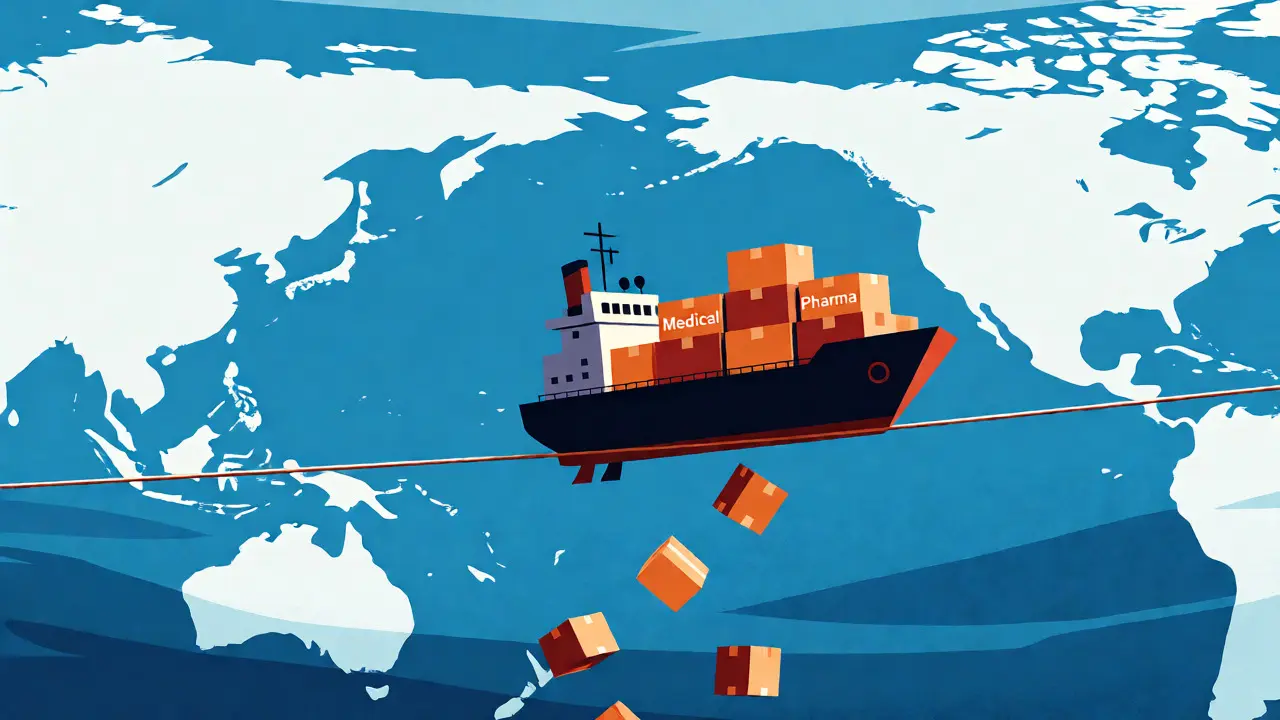
You think you’re saving money by moving production overseas. Then a batch of medical devices fails biocompatibility testing because a supplier swapped medical-grade silicone for industrial junk. Or your pharmaceutical shipment gets held at customs because the documentation doesn’t match the actual impurity levels. These aren’t rare horror stories anymore; they are the new normal in global supply chains. If you are sourcing products from abroad, specifically in regions like China or India, you are walking a tightrope between cost savings and catastrophic quality failure.
The Reality of Global Supply Chain Risks
Globalization promised efficiency, but it also created a blind spot. When production moves thousands of miles away, oversight becomes difficult. The core issue isn't just that mistakes happen; it's that the systems designed to catch them often fail due to distance, cultural differences, and regulatory gaps. In 2024 alone, foreign facilities accounted for 62% of drug recalls in the United States despite producing only 43% of the volume. That discrepancy tells you everything you need to know about the current state of overseas quality assurance.
| Region/Factor | FDA Form 483 Observations Rate | Announced Inspection % | Primary Risk Factor |
|---|---|---|---|
| China | 47% | 78% | Material substitution & fraud |
| India | Data varies (high alert rate) | High | Systemic QMS weaknesses |
| European Union | 33% | Low | Regulatory divergence |
| United States | 29% | 5% | Operational complexity |
Why Inspections Often Miss the Mark
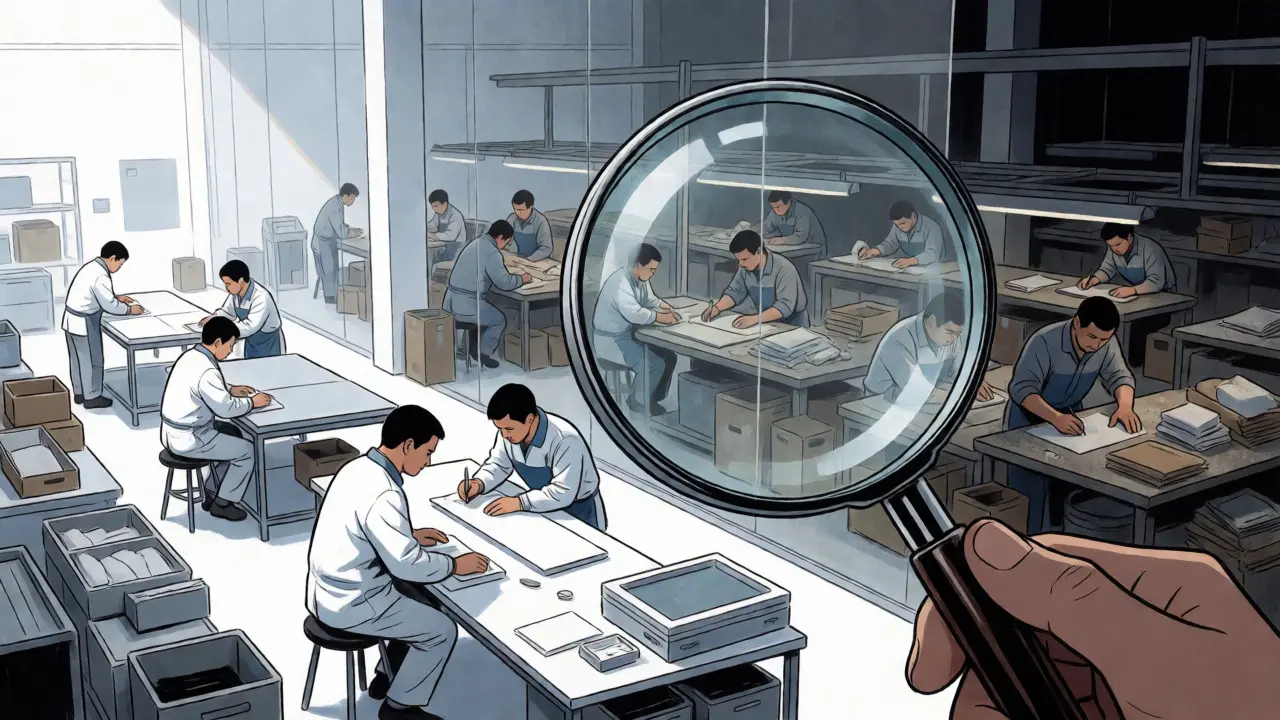
Here is the dirty secret of international compliance: most inspections are scheduled. Brookings Institution data reveals that up to 78% of FDA inspections in China were announced in advance through 2024. Compare that to just 5% for domestic U.S. facilities, and you see the problem. A factory can clean up its act for a week, show off its best equipment, and then revert to old habits the moment the inspectors leave. This "double standard" allows non-compliant operations to slip through the cracks, exposing consumers to unsafe products long after certification paperwork is signed.
Dr. Aaron Kesselheim from Harvard Medical School warns that weak quality management systems in foreign generic manufacturers create a "perfect storm" for undetected failures. When quality assurance units lack authority within the factory hierarchy, they cannot stop bad batches from shipping. It’s not just about bad apples; it’s about a broken orchard system where the manager prioritizes output over integrity.
Common Failure Modes in Overseas Production
If you look closely at why products fail, patterns emerge. It’s rarely one giant mistake; it’s usually a series of small compromises that add up. According to recent analyses of FDA data, material substitution occurs in 68% of inspected Chinese facilities. This means the raw materials used aren’t what was specified. Maybe it’s cheaper plastic, lower-grade steel, or unverified chemical precursors.
- Material Substitution: Swapping specified components for cheaper alternatives without notifying the buyer.
- Inadequate Process Validation: Failing to prove that the manufacturing process consistently produces high-quality results (seen in 42% of non-compliant sites).
- Falsified Documentation: Creating paper trails that don’t match reality, detected in 29% of inspected sites.
These issues are exacerbated by financial pressure. Harris Sliwoski notes that manufacturing risks have evolved into "desperate survival tactics." Suppliers facing economic stress may cut corners to stay afloat, leading to coordinated fraud rather than simple negligence. For example, a German importer recently faced a $1.2 million claim from Sinosure (China’s export credit agency) despite receiving substandard goods, highlighting how legal and financial structures can trap buyers.
The Rise of Technology as a Safety Net
Human inspection is no longer enough. Traditional visual checks by humans achieve about 85-90% defect detection accuracy. That leaves a significant margin for error. Enter AI-powered visual inspection systems. Recent industry surveys indicate these systems achieve 99.2% accuracy in detecting defects. However, adoption is slow. Only 22% of Chinese manufacturers had fully integrated AI quality control systems as of Q2 2025.
For companies serious about safety, technology offers a path forward. Digital quality ecosystems combining AI, blockchain, and IoT sensors allow for real-time monitoring. Early adopters of these systems report 33% fewer defects. Blockchain traceability ensures that once data is recorded, it cannot be altered retroactively, preventing the falsification of records. But remember, technology is a tool, not a replacement for oversight. You still need people on the ground who understand both the local context and your quality standards.
Strategic Shifts: Friend-Shoring and Regulatory Changes
The landscape is shifting. With rising geopolitical tensions and quality concerns, many companies are looking at "friend-shoring"-moving production to allied nations. Deloitte reports that 41% of surveyed manufacturers plan to shift production to allied countries by 2027. While this reduces some risks, it introduces new ones as supply chains transition and new suppliers are vetted.
Regulators are catching up too. The FDA has announced plans to increase unannounced inspections, targeting 40% of foreign inspections to be unannounced by Q4 2025, rising to 75% by 2027. Commissioner Marty Makary stated this will address the double standard and expose non-compliant operations. Additionally, executive orders mandating increased user fees for foreign manufacturers are expected to raise compliance costs by 18-25%. This means the era of cheap, unchecked overseas production is ending. You either pay more for rigorous compliance, or you pay later for recalls and brand damage.

Practical Steps for Safer Sourcing
So, what do you actually do? First, extend your vetting timeline. Allocate 8-12 weeks for comprehensive supplier assessment. Don’t just look at certificates; audit the facility. Interview the management. Check references with previous clients. Vague contracts cause 58% of recoverable losses, so specify exact quality metrics in your agreements.
Second, establish direct relationships with quality control personnel, not just sales managers. Salespeople sell dreams; QC staff tell the truth. Third, consider adopting elements of the EU’s Qualified Person (QP) system, where a locally-based professional certifies each batch. This personal accountability significantly reduces failures. Finally, budget for oversight. Successful companies invest around $18,500 per year per facility in QA training. It seems expensive until you calculate the cost of a single recall.
Why are foreign manufacturing quality issues increasing?
Issues are rising due to a combination of economic pressures on suppliers, inconsistent regulatory enforcement across borders, and a historical reliance on announced inspections that allow factories to temporarily improve conditions. As globalization matures, the hidden costs of poor quality are becoming more visible.
How does the 'double standard' in inspections affect product safety?
Most foreign inspections are announced in advance, unlike domestic ones. This allows non-compliant facilities to prepare specifically for the visit, hiding ongoing operational flaws. Consequently, problems go undetected until they result in consumer harm or market recalls.
Can technology completely solve overseas quality control?
No. While AI and blockchain improve detection rates and prevent document tampering, they require proper implementation and human oversight. Technology enhances visibility but cannot replace ethical business practices or robust quality management systems.
What is the biggest risk when sourcing from China?
Material substitution and falsified documentation are major risks. Suppliers may use cheaper materials than specified or create fake test results to meet deadlines. High-profile cases show that even certified facilities can fail basic biocompatibility or purity standards.
Is friend-shoring a guaranteed solution to quality issues?
Not necessarily. Moving production to allied nations reduces geopolitical risk and may improve regulatory alignment, but it requires establishing new supply chains. New suppliers still need rigorous vetting, and quality culture varies even among developed nations.
Final Thoughts on Navigating Quality Risks
Overseas production isn’t going away. The labor cost advantages are too significant for most industries to ignore entirely. But the model of "set it and forget it" is dead. If you want safe products, you must treat quality assurance as an active, continuous process. Invest in local presence, demand transparency, and use technology to bridge the distance. The companies that thrive will be those that view quality not as a checkbox, but as a core component of their supply chain strategy.