
Fever Medication for Kids: Acetaminophen vs. Ibuprofen Safety Guide for Parents
 Dec, 28 2025
What to Know Before Giving Fever Medicine to Your Child
Every parent has been there: your baby is hot to the touch, fussy, and won’t settle. You reach for the medicine cabinet, but then you pause. Acetaminophen or ibuprofen? Which one is safer? Which one actually works better? And how much should you give?
The truth is, both medications are safe when used correctly-but they’re not the same. Mixing them up, guessing the dose, or using adult medicine can lead to serious harm. In fact, dosing errors are the #1 reason kids end up in the ER for fever medicine accidents. The good news? With clear, up-to-date facts, you can give the right dose, at the right time, with confidence.
Age Limits: When You Can (and Can’t) Use Each Medicine
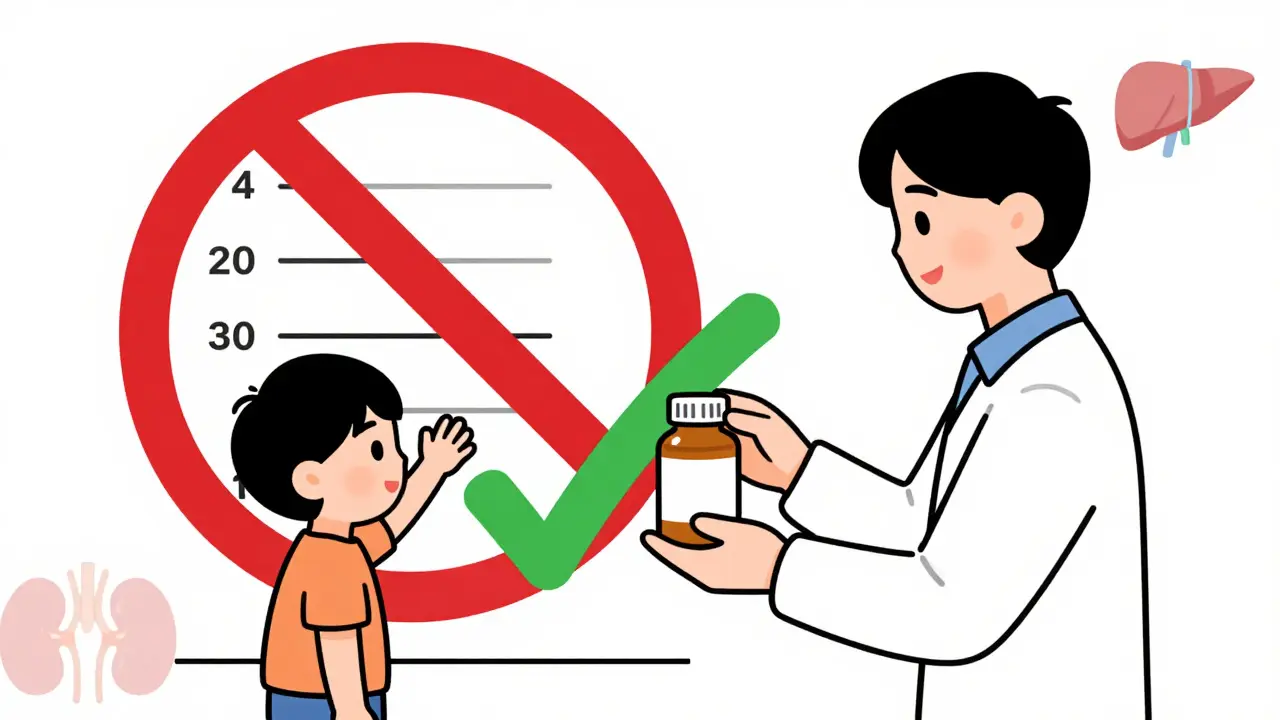
The American Academy of Pediatrics (AAP) has clear rules based on age. For babies under 3 months, don’t give acetaminophen unless a doctor says so. For babies under 6 months, don’t give ibuprofen unless a doctor approves it. Why? Because very young infants have immature kidneys and livers. Their bodies process these drugs differently, and the safety data just isn’t strong enough yet.
Once your child is 6 months or older, both medications are considered safe options. But if your baby is younger than 6 months and has a fever, call your pediatrician before giving anything. Fever in a young infant can be a sign of something serious-like an infection-that needs medical attention, not just a pill.
Dosing: Weight Matters More Than Age
Stop using the age chart on the bottle. It’s misleading. The only accurate way to dose fever medicine is by your child’s weight in kilograms (kg). Most pediatricians recommend:
- Acetaminophen: 7-15 mg per kg of body weight, every 4-6 hours
- Ibuprofen: 4-10 mg per kg of body weight, every 6-8 hours
Never exceed the maximum daily dose: 75 mg/kg for acetaminophen, 40 mg/kg for ibuprofen. If your child weighs 10 kg (about 22 pounds), that means:
- Acetaminophen: 70-150 mg per dose
- Ibuprofen: 40-100 mg per dose
Most infant drops are 160 mg per 5 mL. A 10 kg child would need 2.2-4.7 mL of acetaminophen per dose. That’s not easy to eyeball. Always use the dosing syringe or cup that came with the bottle-not a kitchen spoon. A 2015 study found that using the right tool reduced dosing errors by 43%.
Here’s the hard truth: 68% of dosing mistakes in kids under 2 come from parents guessing based on age, not weight. If you’re unsure, write down your child’s weight and call your doctor or pharmacist before giving the first dose.
Which One Works Better for Fever?
If your main goal is to bring down the fever fast, ibuprofen wins. Multiple studies show it lowers temperature more effectively than acetaminophen, especially after 4 hours. One large review of 85 studies found that kids given ibuprofen were 2.2 times more likely to be fever-free at 4-24 hours than those given acetaminophen.
Why? Ibuprofen lasts longer. It peaks in the bloodstream in 1-2 hours and stays active for 6-8 hours. Acetaminophen works faster-within 30-60 minutes-but wears off sooner. That’s why some parents feel like acetaminophen “doesn’t work.” It does. It just doesn’t last as long.
For pain, like teething or an ear infection, both are about equal. But ibuprofen has a slight edge for longer-lasting relief. A 2020 review found kids on ibuprofen reported less pain at 4-24 hours than those on acetaminophen.
Safety: What Are the Real Risks?
Both medications are safe for most kids when used right. But each has a different risk profile.
Acetaminophen is easy to overdose on because it’s in so many other medicines-cold remedies, cough syrups, combination products. If you give your child acetaminophen and another product that contains it, you could accidentally hit a toxic dose. That’s how liver damage happens. In fact, 29% of acetaminophen-related liver injuries in kids under 6 come from accidental double-dosing.
Ibuprofen can be harder on the stomach and kidneys. Some kids get mild upset stomach or nausea. That’s rare with correct dosing, but if your child is dehydrated, sick with vomiting or diarrhea, or has kidney issues, ibuprofen may not be the best choice. It’s also not recommended for kids with chickenpox or certain viral infections, as it can rarely worsen skin complications.
There’s also new research linking early acetaminophen use (especially in the first year of life) to a slightly higher risk of developing asthma later. A 2022 meta-analysis found a 1.6-fold increase in asthma risk. That doesn’t mean you should never use it-but it does mean you should use it only when needed, not routinely.
Alternating or Combining Medications?
Many parents alternate acetaminophen and ibuprofen to keep fever down longer. You’ll see this advice on parenting blogs and forums. But the AAP doesn’t recommend it-unless a doctor tells you to.
Why? It’s confusing. You might give the wrong dose, too soon, or double up. One parent on Reddit said their 14-month-old got sick after they mixed the two because they lost track of the timing. Emergency room data shows alternating increases the risk of accidental overdose by 30%.
If one medicine isn’t working, wait the full recommended interval before switching. If fever stays high after 2-3 doses, call your doctor. Don’t just keep dosing.
What About Brand Names vs. Generics?
Children’s Tylenol and Children’s Motrin are brand names. But the active ingredients are the same as generics. Generics make up 76% of all pediatric fever medicine sales because they cost less and work just as well.
Check the label. Make sure the concentration is 160 mg per 5 mL for both acetaminophen and ibuprofen. In 2011, the FDA required this standardization to cut down on errors. If you have an old bottle with 80 mg per 0.8 mL, throw it out. Using the wrong concentration is how overdoses happen.
Also, avoid multi-symptom products. Don’t give “Children’s Cold + Fever” if your child only has a fever. Those products often contain extra ingredients you don’t need-and could be harmful.
How to Give Medicine Safely
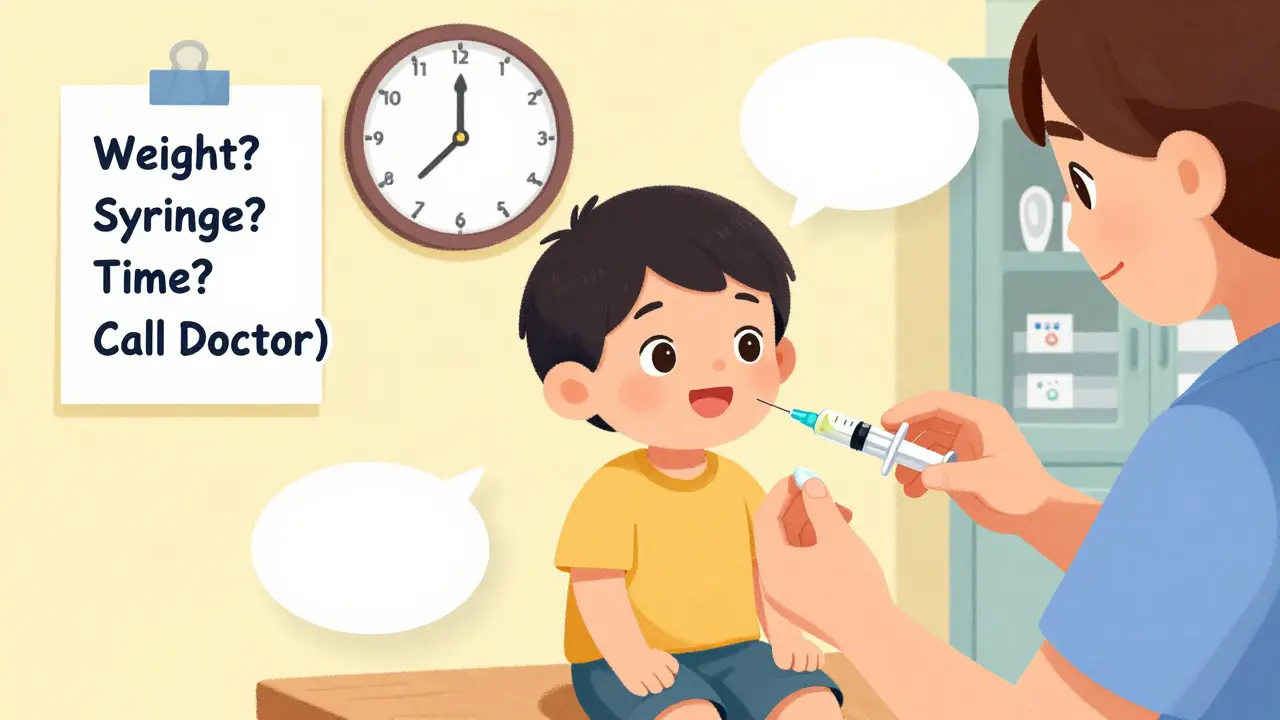
- Always use the dosing tool that came with the medicine.
- Hold your child upright. Never give medicine while they’re lying down-it increases choking risk.
- Double-check the weight-based dose before giving it.
- Write down the time and amount of each dose to avoid repeats.
- Keep all medicine locked up and out of reach. Even a few extra milliliters can be dangerous.
Most dosing errors happen because parents are tired, stressed, or distracted. If you’re unsure, wait. Call your pediatrician. Better safe than sorry.
When to Call the Doctor
Give medicine to make your child more comfortable-not to eliminate the fever entirely. Fever is a sign your child’s body is fighting something. You don’t need to get the temperature to 98.6°F.
Call your pediatrician if:
- Your child is under 3 months and has a fever of 100.4°F or higher
- Fever lasts more than 72 hours
- Your child is lethargic, not drinking, has a rash, or is having trouble breathing
- They vomit repeatedly or show signs of dehydration (dry mouth, no wet diaper in 8 hours)
- You’re unsure whether you gave the right dose
What’s Coming Next?
The AAP is updating its fever guidelines in January 2025. New data on acetaminophen and asthma risk, plus more research on ibuprofen safety in infants under 6 months, will shape future recommendations.
Right now, the evidence is clear: for kids over 6 months, ibuprofen is more effective for fever and pain, and just as safe as acetaminophen when dosed correctly. For younger babies, acetaminophen is the go-to-but only after talking to your doctor.
The bottom line? Don’t fear these medicines. Fear the mistakes. Get the dose right. Use the right tool. Know the limits. And when in doubt, call your pediatrician. Your child’s safety isn’t about which pill you choose-it’s about how carefully you give it.
Janette Martens
December 28, 2025 AT 17:23Marie-Pierre Gonzalez
December 29, 2025 AT 09:19Louis Paré
December 29, 2025 AT 18:57Payton Daily
December 29, 2025 AT 21:41Hakim Bachiri
December 31, 2025 AT 16:39Celia McTighe
January 1, 2026 AT 22:30Samantha Hobbs
January 1, 2026 AT 23:05Nicole Beasley
January 3, 2026 AT 05:43sonam gupta
January 3, 2026 AT 16:39Mimi Bos
January 5, 2026 AT 10:32Sydney Lee
January 6, 2026 AT 14:05oluwarotimi w alaka
January 7, 2026 AT 07:58Debra Cagwin
January 9, 2026 AT 02:46Ryan Touhill
January 9, 2026 AT 10:00