
Exercise for Cardiac Health: Safe Training After Heart Events
 Dec, 26 2025
After a heart attack, bypass surgery, or other major cardiac event, the last thing you want to do is sit still. But jumping back into your old routine? That’s dangerous. The truth is, moving your body safely after a heart event isn’t just okay-it’s life-saving. Studies show people who stick to a structured exercise plan after a heart event cut their risk of another one by up to 30%. And yet, fewer than one in three eligible patients even enroll in a cardiac rehab program. Why? Fear, confusion, or just not knowing where to start.
Why Exercise After a Heart Event Isn’t Optional
Your heart isn’t broken beyond repair. It’s healing. And like any muscle, it gets stronger with the right kind of use. But here’s the catch: not all exercise is created equal after a heart event. Pushing too hard too soon can trigger dangerous rhythms or strain weakened tissue. Going too slow means missing out on the biggest benefit: improved circulation, lower blood pressure, and better mood.
Cardiac rehabilitation isn’t a luxury. It’s standard care. Backed by decades of research from the American Heart Association and the Cleveland Clinic, it’s the only program proven to reduce hospital readmissions by 47% in the first year after a heart attack. That’s not a guess-it’s data from over 1.2 million patients tracked over 20 years. The program doesn’t just give you a workout plan. It gives you safety nets: monitored heart rates, trained staff on standby, and a clear understanding of what your body can handle.
The Three Phases of Safe Recovery
Recovery isn’t a single step. It’s a process divided into three clear phases, each with its own goals and limits.
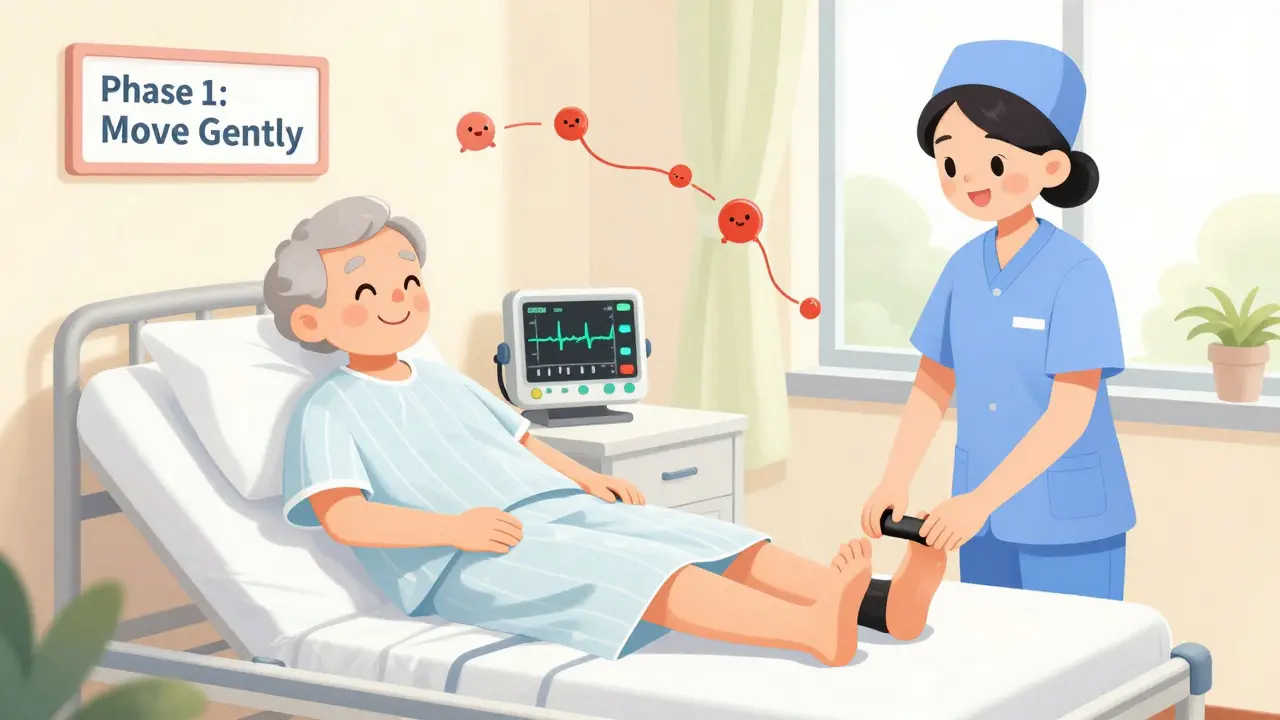
Phase 1: Hospital and Early Days
This starts while you’re still in the hospital. Your heart is fragile. The goal isn’t fitness-it’s circulation. You’ll do simple moves: ankle pumps (flexing your feet up and down), seated marches (lifting knees gently while sitting), and deep breathing. These aren’t exercises you’d call ‘workouts.’ They’re survival tools. They prevent blood clots, reduce swelling, and gently wake up your cardiovascular system. Most patients do 10-15 reps, two to three times a day. Intensity? Around 1-2 METs. That’s less than walking slowly around your room.
Don’t rush this. Even if you feel fine, your heart is still healing. Pushing too hard here can undo progress.
Phase 2: Early Outpatient (Weeks 2-8)
This is where real recovery begins. You’re home, cleared by your doctor, and ready to move more. This phase is where most people fail-not because they’re lazy, but because they don’t know how to measure effort safely.
You start with walking. Five minutes a day. Then seven. Then ten. By week six, aim for 30 minutes, five days a week. That’s it. No running. No lifting heavy weights. Just steady, controlled movement.
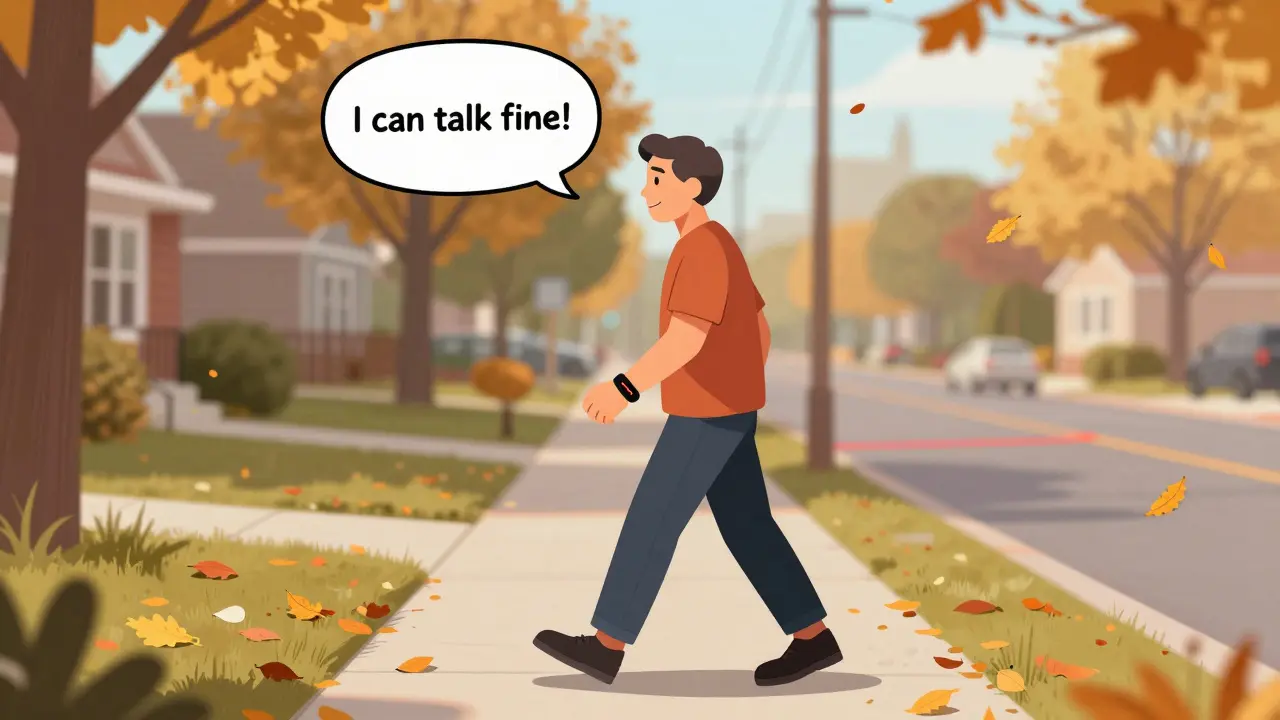
Here’s how to know if you’re going too far: use the talk test. If you can’t say a full sentence without gasping, you’re overdoing it. If you can sing along to a song in your head, you’re probably underdoing it. The sweet spot? Talking comfortably, with just a little breathlessness.
Heart rate targets matter too. Most patients are told to keep their heart rate at their resting rate plus 20-30 beats per minute. So if your resting heart rate is 70, aim for 90-100 during exercise. But if you’re on beta-blockers (common after heart events), your max heart rate might be 20-30% lower. That’s normal. Don’t fight it. Your doctor will adjust your target based on your meds.
Phase 3: Long-Term Maintenance (After 8 Weeks)
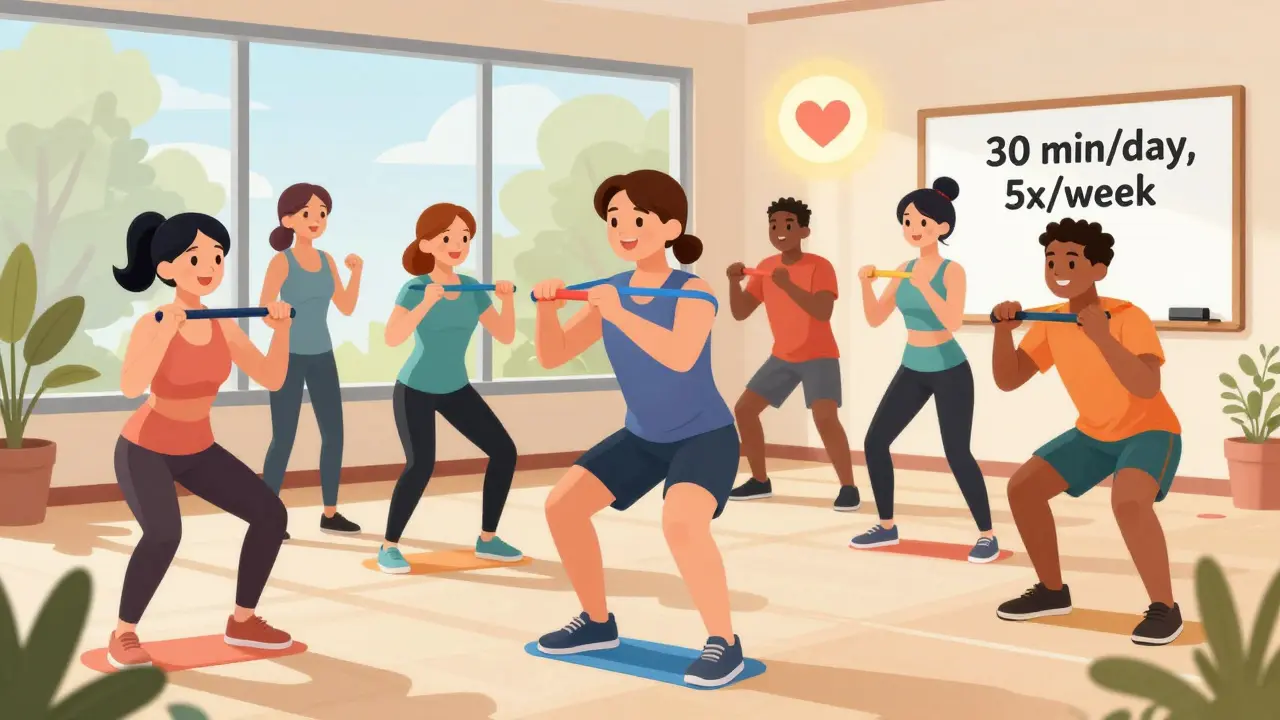
Now you’re not just recovering-you’re rebuilding. The goal? 150 minutes of moderate aerobic activity per week. That’s 30 minutes, five days a week. Or 75 minutes of vigorous activity. Add two days of light strength training-bodyweight squats, wall push-ups, resistance bands. That’s it.
Recent studies, including a March 2024 paper in JAMA Cardiology, show that even high-intensity interval training (HIIT)-short bursts of faster walking or cycling followed by rest-is safe and effective for stable patients. But only if you’ve already completed Phase 2 and have medical clearance. Don’t jump into HIIT on your own.
What to Avoid
There are warning signs you must never ignore. Stop exercising immediately if you feel:
- Chest pain or pressure
- Pain radiating to your arm, neck, or jaw
- Dizziness or lightheadedness
- Irregular heartbeat or palpitations
- Sudden, unusual shortness of breath
- Slurred speech or weakness on one side of your body
These aren’t signs to push through. They’re red flags. Call your doctor. Don’t wait. Even if it turns out to be nothing, it’s better to be safe.
Also avoid:
- Exercising in extreme heat or cold
- Working out right after a big meal
- Skipping warm-ups or cool-downs
- Using heavy weights or straining (no weightlifting competitions, no pushing heavy furniture)
Supervised vs. Self-Directed: The Real Difference
You might think, “I’ve read the guidelines. I can do this on my own.” And maybe you can-but only if you’ve already been through a supervised program.
Patients who start exercise without supervision are 27% more likely to push past safe heart rate limits, according to Baptist Health. That’s not a small risk. In one study, 8% of unsupervised patients ended up in the ER within the first month because of exercise-induced symptoms.
Supervised cardiac rehab isn’t just about watching your heart rate. It’s about learning how your body responds. One patient in Auckland, after a stent placement, was told to walk 20 minutes a day. She did, but kept feeling dizzy. Turns out, her blood pressure dropped when she stood up too fast. Her rehab physiotherapist taught her to sit for 30 seconds before standing. Simple fix. Life-changing.
Another big advantage: psychological support. Two-thirds of heart patients report fear of another event. That fear can paralyze them. In rehab, you hear others talk about the same fears. You learn it’s normal. And you learn you’re not alone.
What If You Can’t Get to a Program?
Only 20-30% of eligible patients in the U.S. enroll in cardiac rehab. Reasons? Transportation, work schedules, insurance confusion. But it’s not all or nothing.
Many programs now offer hybrid models-12 in-person sessions, the rest virtual. Wearables like Bluetooth heart rate monitors and ECG patches let your care team track your progress remotely. Medicare and many private insurers now cover these hybrid programs.
If you’re on your own:
- Get a doctor’s clearance first
- Use a simple heart rate monitor (they cost under $40)
- Stick to the talk test
- Keep a journal: write down how you felt after each session
- Walk indoors if it’s too hot, cold, or rainy-malls, shopping centers, or even your hallway work
And don’t skip the strength training. Muscle loss after a heart event is common. Light resistance bands or bodyweight exercises twice a week help you stay independent as you age.
Long-Term Success: It’s About Habits, Not Just Workouts
The Mayo Clinic tracked 1,200 patients who completed 36 cardiac rehab sessions. At one year, 92% were still exercising regularly. Only 45% of those who went it alone stuck with it.
Why? Because rehab isn’t just about exercise. It’s about learning how to live differently. You’ll get advice on nutrition, stress management, quitting smoking, and taking meds correctly. These are the real game-changers.
One patient in New Zealand, after a quadruple bypass, started walking every morning at 7 a.m. He did it rain or shine. He joined a walking group. He swapped soda for water. He slept better. Five years later, he’s off most of his meds. His doctor says he’s in better shape than most 50-year-olds.
That’s not luck. That’s consistency.
Final Thoughts: You Can Move Again
After a heart event, your world shrinks. You feel vulnerable. You think you’ve lost control. But exercise gives it back. Not all at once. Slowly. Safely. With support.
You don’t need to run a marathon. You don’t need to lift heavy. You just need to move-daily, consistently, and within your limits. And if you’re unsure, ask. Your doctor, your physiotherapist, your rehab team-they’re there to help. Don’t wait for permission. Ask for it.
Cardiac rehab works. Not because it’s magic. But because it’s smart. And you deserve to live well after a heart event-not just survive it.
Can I start exercising right after leaving the hospital?
Yes-but only gentle movement. Most patients begin with seated ankle pumps and short walks around the room while still hospitalized. Intensity should be very low (1-2 METs), and you should never feel chest pain, dizziness, or extreme shortness of breath. Always follow your care team’s instructions. Don’t assume you’re ready for more just because you feel better.
Is it safe to do high-intensity workouts after a heart attack?
Only after completing the early phases of cardiac rehab and with explicit approval from your doctor. Recent studies show high-intensity interval training (HIIT) can be safe and effective for stable patients, producing up to 37% greater improvements in heart function than moderate exercise. But this is not something to try on your own. HIIT must be introduced gradually under supervision, typically only after 8-12 weeks of steady, low-intensity training.
What if I’m on beta-blockers? Can I still exercise safely?
Yes, but your heart rate won’t rise as much as it used to. Beta-blockers can lower your maximum heart rate by 20-30%. That doesn’t mean you’re not working hard enough. Use the talk test instead of heart rate targets. If you can talk comfortably during activity, you’re in the right zone. Your rehab team will adjust your exercise plan to account for your meds.
How do I know if I’m pushing too hard?
Watch for seven warning signs: chest pain or pressure, pain spreading to your arm or jaw, dizziness, palpitations, sudden shortness of breath, slurred speech, or weakness on one side. If you feel any of these, stop immediately and call your doctor. Also, if you can’t speak in full sentences without gasping, you’re overdoing it. The talk test is your best tool.
Do I need to join a cardiac rehab program, or can I do this alone?
You can exercise on your own-but only after getting medical clearance and completing at least a few supervised sessions. Most people who start alone end up exercising too hard or too fast, which increases risk. Cardiac rehab gives you personalized plans, real-time monitoring, and emotional support. Studies show those in rehab are 25% faster to recover and 30% less likely to die within five years. It’s the safest path.
Will insurance cover cardiac rehab?
Yes, in most cases. Medicare Part B covers up to 36 sessions of cardiac rehab after a heart attack, bypass surgery, or other qualifying events. Many private insurers cover it too. Some now cover hybrid programs that mix in-person and virtual sessions. Check with your provider, but don’t assume you’re not eligible. Even if you think you can’t afford it, there are often financial assistance options.
What’s the best time of day to exercise after a heart event?
When your medications are working best. For example, if you take blood pressure meds in the morning, avoid exercising right after taking them-your pressure might drop too low. Many patients find late morning or early afternoon works best. Avoid exercising right after meals or in extreme weather. Consistency matters more than timing, but listen to your body.
Matthew Ingersoll
December 27, 2025 AT 23:17Cardiac rehab saved my life after my bypass. I thought I knew better-until I almost ended up back in the hospital. The talk test? Lifesaver. No fancy gear needed. Just listen to your body.
carissa projo
December 29, 2025 AT 20:50It’s not about how fast you move-it’s about how gently you reclaim your life. After my heart event, I thought I had to earn my second chance. Turns out, I just had to show up. Slowly. Consistently. With kindness. The rehab center wasn’t just a clinic-it became my sanctuary. People there didn’t judge my pace. They walked beside me. And for the first time since the diagnosis, I didn’t feel broken. Just human. And humans heal-not with grit, but with grace.
josue robert figueroa salazar
December 30, 2025 AT 21:54Rehab is mandatory because people are dumb
david jackson
December 31, 2025 AT 10:52I used to think exercise after a heart event was like putting out a fire with gasoline-just make it worse. But then I read the JAMA Cardiology study on HIIT and realized: our hearts aren’t porcelain dolls. They’re resilient. They remember how to beat strong. I started with ankle pumps in the hospital, then walked the hallway, then the parking lot, then the neighborhood. Now I do intervals on the treadmill. I’m not cured. I’m rebuilt. And every time my heart races during a climb, I don’t fear it-I thank it. It’s still here. Still fighting. Still mine.
Jody Kennedy
December 31, 2025 AT 22:29YES YES YES. I did this. Walked 5 minutes a day at first. Felt like I was climbing Everest. Now I walk 4 miles with my dog. My doctor says I’m in better shape than when I was 40. Don’t wait for perfect. Just start. Even if it’s just standing up and stretching. That’s victory.
christian ebongue
January 2, 2026 AT 21:36beta blockers? yeah i guess you cant use your heart rate monitor. just guess. lol
jesse chen
January 4, 2026 AT 15:57I just want to say-this article is everything. I lost my dad to a second heart attack because he thought he could push through. He didn’t know the talk test. He didn’t know about rehab. He thought it was weakness to ask for help. Please, if you’re reading this and you’re scared-reach out. Someone out there gets it. You’re not alone. And you’re not weak for needing support.
Joanne Smith
January 5, 2026 AT 04:40Hybrid rehab is a game-changer. I did 12 in-person, then used my Apple Watch to track my HR and sent logs to my PT. She caught that I was overdoing it on Tuesdays-turns out, I was doing it right after my coffee. Caffeine + beta-blockers = bad combo. Who knew? Now I wait an hour. Small tweak. Huge difference.
Prasanthi Kontemukkala
January 5, 2026 AT 15:01In India, many people don’t even know cardiac rehab exists. My cousin had a stent and went straight back to work-no rest, no monitoring. He’s doing better now, but it took years. This information should be everywhere. Not just in clinics. On TV. On buses. On WhatsApp groups. Everyone deserves to know they can move again.
Alex Ragen
January 5, 2026 AT 15:57It’s fascinating how modern medicine has reduced a profoundly existential experience-surviving cardiac arrest-to a 36-session compliance program, complete with heart rate targets and talk-test metrics… as if the soul’s recalibration can be quantified by METs and Medicare codes.
Lori Anne Franklin
January 5, 2026 AT 22:50omg i did this and it worked!! started walking around my kitchen at first lol. now i hike on weekends. my meds are down, my mood is up, and i finally stopped crying every night. thank you for writing this. i needed to hear someone say it’s okay to go slow.