
Eczema Barrier Repair: How Ceramides and Bathing Tips Improve Skin Health
 Feb, 5 2026
The Skin Barrier: Your Body's First Line of Defense
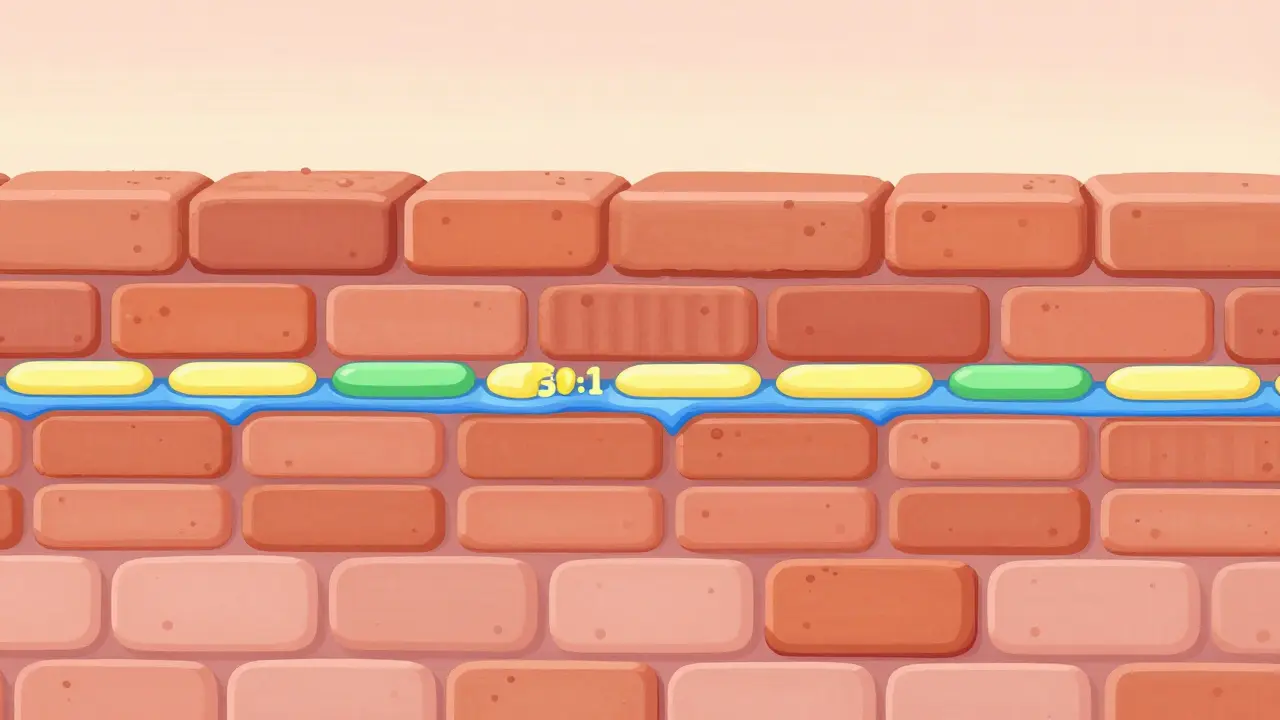
The skin's outer layer, called the stratum corneumis the top layer of the epidermis that acts as the body's primary barrier against environmental threats and moisture loss, works like a brick wall. The bricks are dead skin cells (corneocytes), and the mortar is made of lipids-ceramides, cholesterol, and free fatty acids. For this wall to hold together, these lipids need to be in the exact 3:1:1 ratio, as proven by research from the Journal of Investigative Dermatology in 2012. When this system breaks down, moisture escapes easily and irritants get through, leading to dryness, itching, and inflammation.
How Eczema Breaks Your Skin Barrier
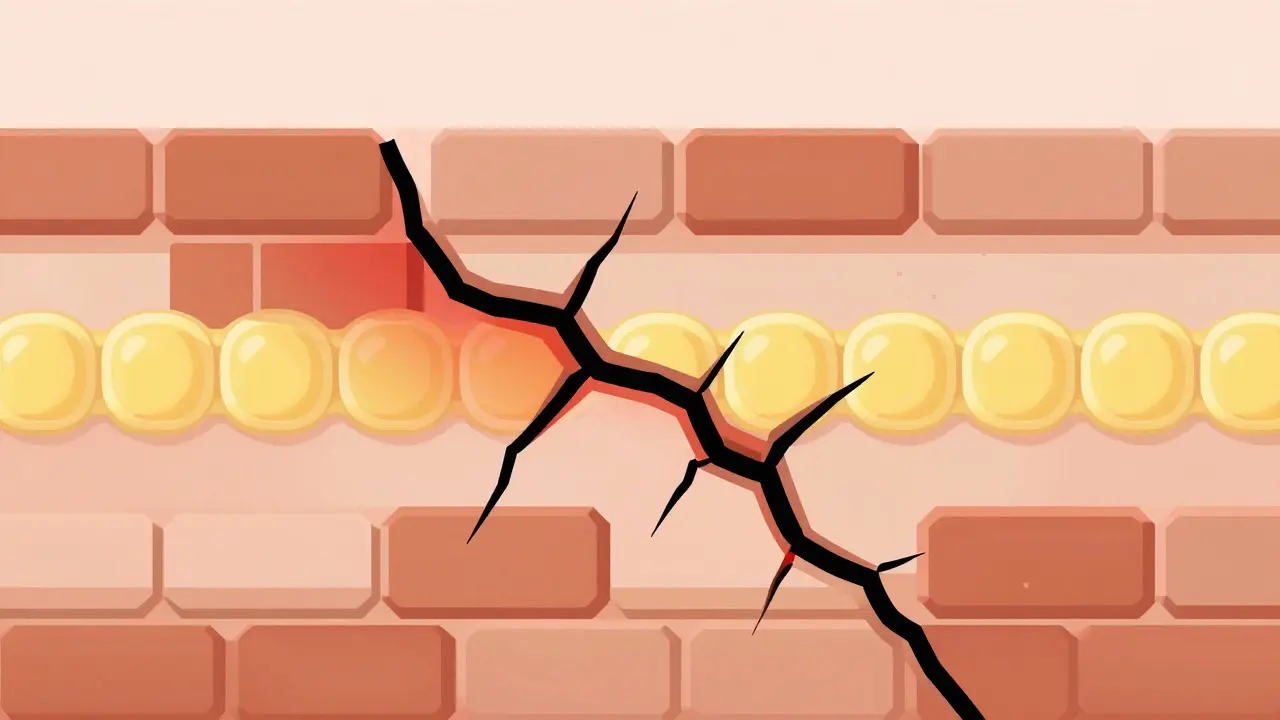
People with eczema have a damaged barrier from the start. Research shows ceramidesare lipid molecules that make up 50% of the skin's barrier mortar and are crucial for maintaining moisture and protection levels drop by 30-50% in eczema patients. This means the mortar is weak and uneven. A 2022 study in the British Journal of Dermatology found this leads to 40-60% higher water loss through the skin (called transepidermal water lossthe measurement of moisture escaping from the skin, indicating barrier weakness). Worse, the types of ceramides change-less of the long-chain ones that protect and more of the short-chain ones that irritate. This isn't just dry skin; it's a broken system that makes eczema worse.
The Science Behind Ceramide Repair
Fixing this requires replacing missing lipids with the right combination. Prescription products like EpiCerama prescription barrier repair emulsion with the exact 3:1:1 ceramide-cholesterol-free fatty acid ratio and TriCerama dermatologist-recommended emollient containing physiological lipids for eczema contain the precise 3:1:1 ratio of ceramides, cholesterol, and free fatty acids. Using just ceramides alone doesn't work-the 2012 study by Menon et al. found incomplete lipid mixtures slow barrier recovery by 15-25% compared to the full combination. The skin barrier repairthe process of restoring the skin's protective function through lipid replacement depends on getting all three components in the right proportions. Real-world data shows prescription products reduce water loss by 35-50% for over 72 hours, while regular moisturizers only block 20-30% temporarily.
Bathing Habits That Support Healing
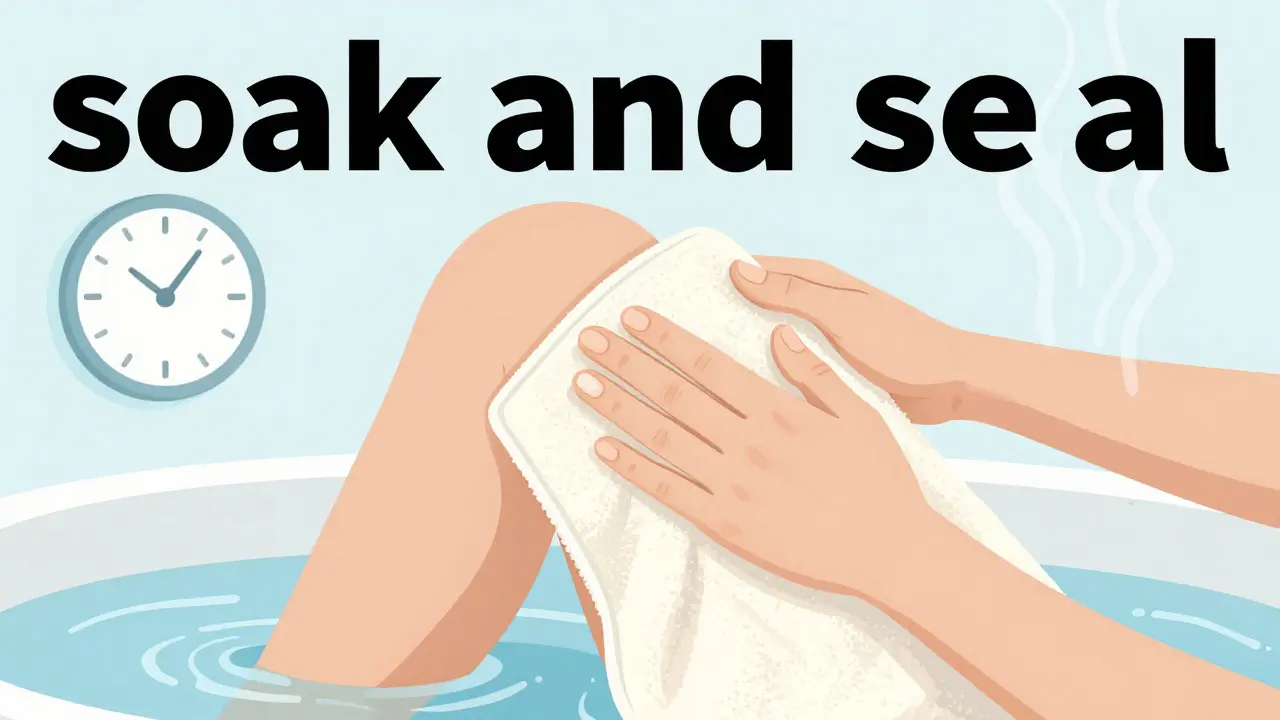
How you bathe matters as much as what you put on your skin. Experts recommend a "soak and seal" method: take a 10-15 minute lukewarm bath (no hotter than 90°F), then pat your skin gently and apply your ceramide moisturizer within three minutes. This locks in moisture and boosts absorption by 50-70%, according to a 2016 study in the Journal of Dermatological Science. Avoid hot water-it strips natural oils and worsens dryness. Use fragrance-free cleansers with a pH of 5.5 and less than 0.5% sodium lauryl sulfate. Higher concentrations increase water loss by 25-40% within an hour, as shown in the International Journal of Cosmetic Science (2019). Bathing too often also hurts; limit to once daily to prevent further damage.
Choosing the Right Product for Your Skin
Not all ceramide products are created equal. Over-the-counter options like CeraVea popular OTC moisturizer containing ceramides for sensitive skin are affordable ($10-$15 for 200g) and help mild eczema. A 2023 Trustpilot review of 9,452 CeraVe products showed 68% of 5-star reviews mentioned "barrier repair" as a key benefit. But for severe eczema, prescription products like EpiCeram® ($25-$35 per tube) often work better. They contain higher concentrations of the right ceramide types-NP(18) and AP(18)-which increased by 19% and 24% in clinical trials, correlating with a 17% drop in water loss. The American Academy of Dermatology's 2022 survey found 85% of pediatric dermatologists recommend prescription ceramide products for children with eczema versus 65% for adults, showing stronger evidence in younger patients.
What to Expect When You Start Using Ceramides
Patience is key. Most people see improvements in 2-4 weeks. On Reddit's eczema community, 78% of users reported significant relief from dryness and itching within that timeframe. One user, u/EczemaWarrior, noted: "After trying 10+ moisturizers, EpiCeram reduced my nightly scratching from 8-10 times to 1-2 times within 3 weeks." For severe cases, consistent use for 4-6 weeks is needed. A 2021 Dermatology Online Journal case study documented a woman reducing her steroid use from daily to once weekly after 8 weeks of EpiCeram® use. Common complaints include a greasy texture (27% of negative reviews) or slow results for acute flares (15%). But for long-term management, barrier repair is foundational. As Dr. Eric Simpson from Oregon Health & Science University states: "Restoring the skin barrier with physiological lipids addresses the root cause of eczema, not just the symptoms."
Frequently Asked Questions
How long does it take to see results from ceramide products?
Most people notice improvements in dryness and itching within 2-4 weeks of consistent use. Clinical trials show significant barrier repair in 21-28 days, but severe cases may need 4-6 weeks for full results. Daily application is key-skipping days slows recovery.
Can I use ceramide products with steroid creams?
Yes, but timing matters. Apply steroid creams first, wait 15 minutes for absorption, then apply ceramide moisturizer. This combination is common in dermatology practices: steroids reduce inflammation quickly, while ceramides rebuild the barrier long-term. Never stop prescribed steroids without consulting your doctor.
Why do some ceramide products feel greasy?
Prescription products like EpiCeram® have higher lipid concentrations for maximum repair, which can feel heavy. OTC options like CeraVe use lighter emulsions but may have lower ceramide levels. If greasiness bothers you, try applying at night or look for "non-greasy" formulas. The trade-off is that richer textures often deliver better barrier repair.
Are there side effects from ceramide products?
Very few. The American Contact Dermatitis Society named ceramide-dominant emollients "Contact Allergen of the Year-Honorable Mention" in 2019 for their safety. Only 1.2% of users report mild tingling upon application (vs. 8.7% for steroid creams). If you get redness or burning, stop use and check for other ingredients like fragrances or preservatives that might irritate your skin.
Should I use ceramides for mild eczema?
Absolutely. Starting early prevents the barrier from breaking down further. A 2023 National Eczema Association survey found 62% of people with mild eczema who used ceramide moisturizers daily reduced flare frequency by 40% within 3 months. Prevention is easier than treating severe damage-don't wait until symptoms worsen.
Mayank Dobhal
February 7, 2026 AT 03:05The skin barrier is like a brick wall. Bricks are dead cells, mortar is lipids. Ceramides are half the mortar. Eczema patients lose 30-50% of them. That's why the wall crumbles. Moisture leaks, irritants get in. Prescription products like EpiCeram have the exact 3:1:1 ratio. Regular moisturizers? They're missing the boat. Bathing tips matter too. Lukewarm water, pat dry, moisturize fast. That's the game-changer.
Marcus Jackson
February 8, 2026 AT 16:17Ceramides make up 50% of the skin's barrier lipids. Research shows eczema patients have 30-50% less. The 3:1:1 ratio is critical. Studies confirm incomplete lipid mixtures slow recovery by 15-25%. That's why prescription products like EpiCeram work better. OTC options like CeraVe help mild cases but severe eczema needs stronger stuff. Bathing habits are just as important. No hot water, use pH 5.5 cleansers. Simple science, but most people ignore it.
Natasha Bhala
February 8, 2026 AT 20:04this is exactly what i needed the brick wall analogy makes so much sense ceramides are the mortar eczema means missing mortar the 3:1:1 ratio is key prescription products like epiceram have it right bathing in lukewarm water then sealing moisture works wonders simple steps but so effective your skin will thank you for it
Gouris Patnaik
February 10, 2026 AT 14:13The western approach to skin care is flawed. India has traditional remedies like neem and turmeric that have been used for centuries. Modern science is just catching up. Ceramides are important, but indigenous knowledge should be respected. Why rely on expensive prescriptions when natural solutions exist?
Jesse Lord
February 11, 2026 AT 12:40i really appreciate the info on ceramides. it's important to remember that everyone's skin is different. some people have mild eczema and ceraVe works great. others need prescription strength. the bathing tips are spot on. lukewarm water and patting dry makes a huge difference. we all need to be gentle with our skin
AMIT JINDAL
February 11, 2026 AT 17:45Oh wow, this is such a deep explanation! 🤯 The skin barrier is like a brick wall? That's genius! But you know what's even more genius? The fact that ceramides are 50% of the mortar. I mean, who would've thought? 🤔 The 3:1:1 ratio is everything. Without it, the wall crumbles. But here's the thing: most people don't know that prescription products like EpiCeram have the exact ratio. Regular moisturizers? They're just watered-down versions. 😒 Bathing tips are crucial too. Lukewarm water, not hot. Pat dry, then slap on the moisturizer within 3 minutes. It's simple, really. But most people skip it. I'm just saying, if you want real results, you need to do it right. 🌟
Catherine Wybourne
February 13, 2026 AT 16:18Ah, the skin barrier. A brick wall of life. But let's not forget that cultural differences matter. In the UK, we have our own traditions, like using oatmeal baths. But science is science. The 3:1:1 ratio is undeniable. Though, honestly, it's a bit ridiculous that we need prescription products to fix something so basic. But hey, progress is progress. Just remember to bathe gently. Hot water is the enemy. Pat dry, moisturize fast. Simple as that.
Eric Knobelspiesse
February 14, 2026 AT 12:07science? more like marketing. epiceram is just another overpriced product. the real solution is lifestyle changes. but most people don't want to hear that. they just want a quick fix. and bathing? lukewarm water yes. but don't forget the 3 minute rule. it's all about the science. 😊
Heather Burrows
February 14, 2026 AT 14:49Science? More like marketing. EpiCeram is just another overpriced product. The real solution is lifestyle changes. But most people don't want to hear that. They just want a quick fix. And bathing? It's all about the water temperature. But honestly, who cares? It's not like it's going to change anything. Just use whatever moisturizer you like. It's all the same.
Savannah Edwards
February 14, 2026 AT 21:11I love how this post breaks down the science of the skin barrier. It's fascinating how the stratum corneum works like a brick wall with ceramides as mortar. But what's really interesting is the cultural angle. In many Asian countries, traditional skincare uses rice water and green tea extracts which have been shown to support the skin barrier. However, the scientific consensus is clear: the 3:1:1 lipid ratio is non-negotiable for barrier repair. Prescription products like EpiCeram and TriCeram are formulated to deliver this exact ratio, which is why they outperform most OTC options. Bathing habits are equally important. Lukewarm water, gentle patting dry, and immediate moisturizing can boost absorption by 50-70%. It's a holistic approach-science and tradition can coexist if we respect the evidence.
Ashley Hutchins
February 15, 2026 AT 23:42you think traditional remedies are valid but science says otherwise. the 3:1:1 ratio is the only way. anything else is a waste of time. prescription products are the answer. stop relying on old wives tales. the data is clear. bathing in lukewarm water and sealing moisture is key. but most people ignore it. they want quick fixes. but reality is harsh. you need to do it right
Lakisha Sarbah
February 16, 2026 AT 09:48this changed my skin