
Crushing Tablets and Splitting Pills: What’s Safe and What’s Dangerous
 Jan, 6 2026
Every year, thousands of people split or crush their pills to save money, make them easier to swallow, or match a lower dose. It seems simple-snap a pill in half, grind it up, mix it with applesauce. But what looks like a harmless shortcut can turn into a medical emergency. The truth is, crushing tablets and splitting pills isn’t always safe. In fact, doing it wrong can lead to overdose, treatment failure, or even death.
Why People Split or Crush Pills
Most people don’t start this habit because they’re reckless. They’re trying to make life easier. Maybe their doctor prescribed a 20mg tablet, but they only need 10mg. Maybe the 10mg version costs twice as much. Or maybe swallowing a full pill feels like choking. These are real problems. A 2022 survey by Express Scripts found that nearly half of people who split pills do it to cut costs. Another 30% say they’d stop if they understood the risks better. That’s not ignorance-it’s desperation. But here’s the catch: not all pills are created equal. What works for one medication can destroy another. Splitting a scored atorvastatin tablet might save you $35 a month. Crushing an OxyContin tablet could send you to the ER.The Hidden Dangers of Crushing Tablets
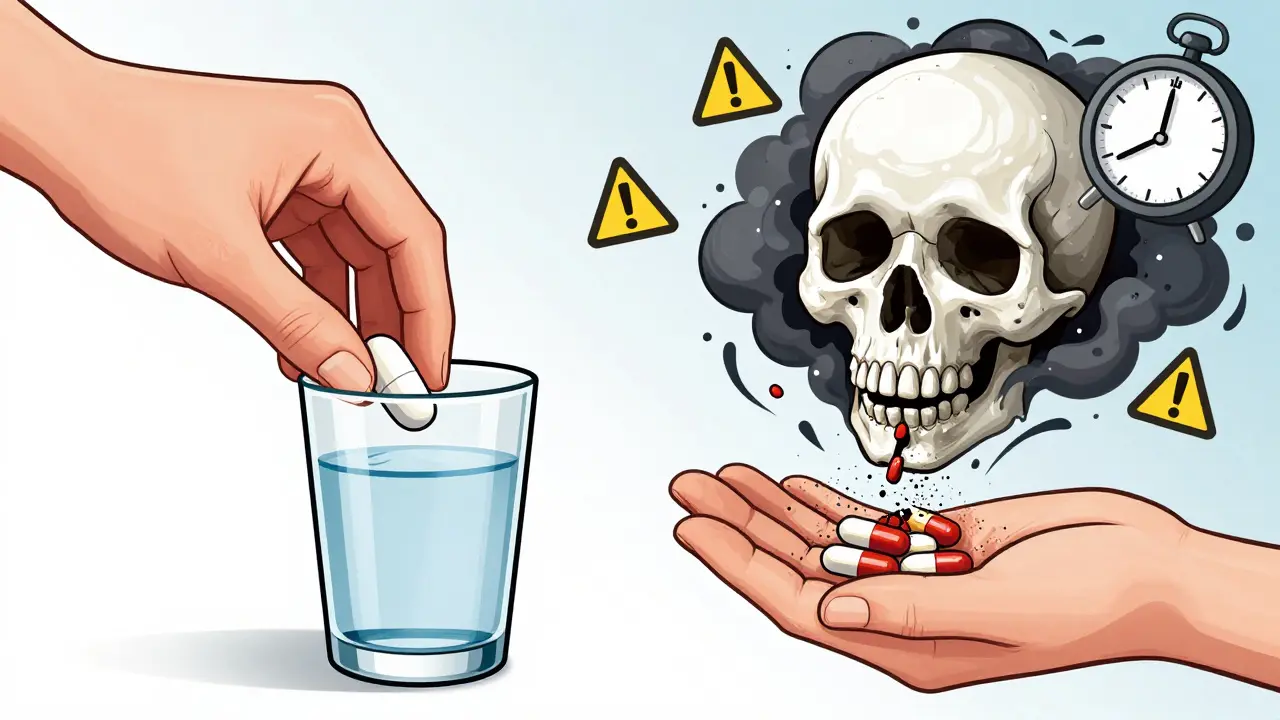
Crushing a tablet doesn’t just make it smaller-it changes how the drug works in your body. Many pills are built with special coatings or slow-release mechanisms. When you crush them, you destroy that design. Extended-release pills are designed to release medication slowly over hours. Think of drugs like OxyContin (oxycodone), Concerta (methylphenidate), or Topamax (topiramate). Crush these, and the entire dose floods into your system at once. For opioids like oxycodone, that can spike blood levels by 300-500% in under 30 minutes. There are documented cases of people dying after crushing extended-release pain pills. Enteric-coated tablets are made to survive stomach acid and dissolve in the intestines. Drugs like Ecotrin (aspirin) or Asacol (mesalamine) use this coating to protect the stomach lining. Crush them, and you’re exposing your stomach to harsh chemicals. That can cause ulcers, bleeding, or severe pain. Hazardous drugs like chemotherapy agents (methotrexate, cyclophosphamide), certain antidepressants (paroxetine), or hormone therapies (tamoxifen) are especially dangerous. When crushed, they become airborne dust. Healthcare workers have developed reproductive issues after handling just one unprotected dose. If you’re crushing these at home, you’re not just risking your own health-you’re exposing everyone around you.When Pill Splitting Is Actually Okay
Not all pills are risky. Some are designed to be split. The key is knowing which ones. Medications that are generally safe to split include:- Atorvastatin (Lipitor)
- Rosuvastatin (Crestor)
- Citalopram (Celexa)
- Paroxetine (Paxil)
- Sertraline (Zoloft)
- Lisinopril (Prinivil, Zestril)
- Losartan (Cozaar)
- Fosinopril (Monopril)
What You Should Never Split
Here’s a hard rule: if it’s not on the safe list, assume it’s dangerous. These medications should never be split or crushed:- Extended-release or sustained-release tablets (OxyContin, Concerta, Procardia XL)
- Enteric-coated tablets (Ecotrin, Asacol, Entocort)
- Sublingual tablets (nitroglycerin for angina)
- Effervescent tablets (like Alka-Seltzer)
- Drugs with narrow therapeutic indexes (digoxin, carbamazepine, warfarin)
- Any drug on the NIOSH hazardous drugs list (chemotherapy, certain antivirals, some psychiatric meds)
How to Split Pills Safely (If You Must)
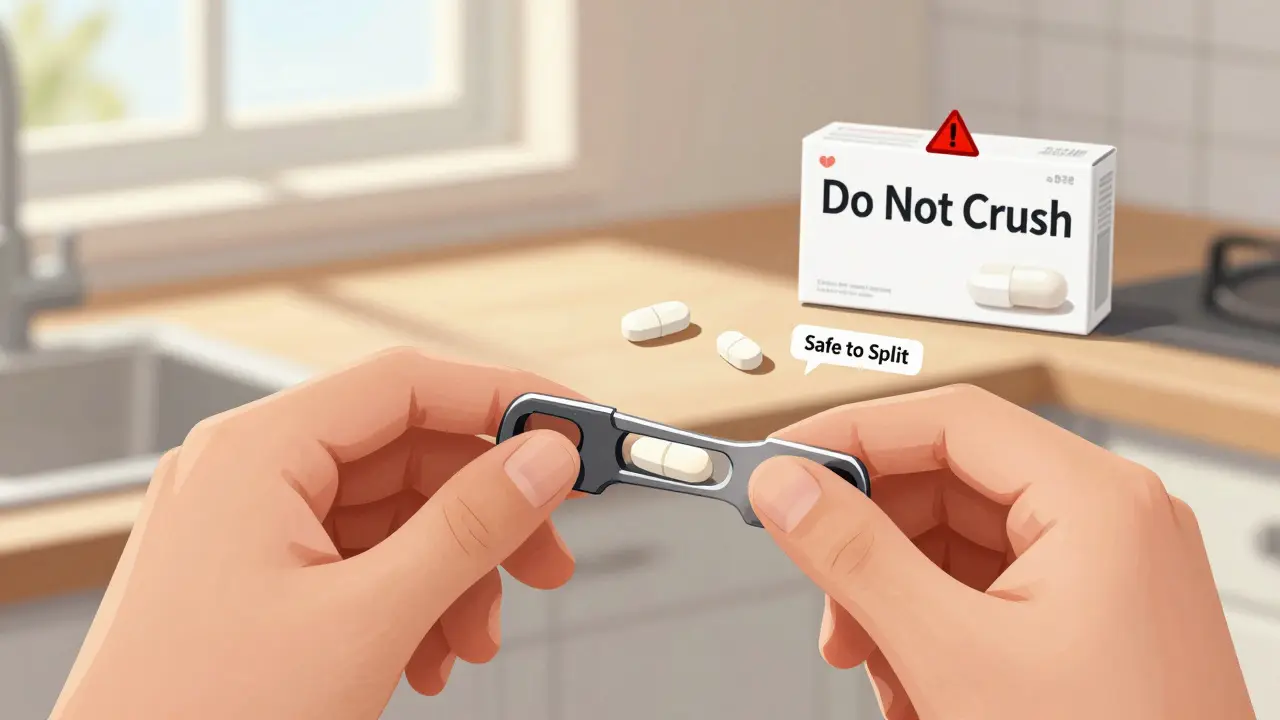
If your doctor or pharmacist says it’s okay to split your pill, here’s how to do it right:- Use a dedicated pill splitter-not a knife, not scissors. A V-shaped holder with a retractable blade keeps the pill stable and cuts cleanly.
- Place the score line exactly in the center of the splitter. Don’t guess.
- Press down quickly and firmly. Slow pressure causes crumbling. Fast pressure gives you a clean break.
- Split only one pill at a time. Don’t pre-split a week’s supply.
- Store the unused half in a dry, cool place. Split pills lose potency 2-3 times faster than whole ones. Some, like clopidogrel (Plavix), become ineffective within 48 hours.
- Wash your hands after handling. If the pill is hazardous (like methotrexate), wear gloves and avoid breathing dust.
Cost Savings Aren’t Worth the Risk
Let’s talk money. Splitting a 40mg atorvastatin tablet to get two 20mg doses can save you around $35 a month. That’s real money, especially on a fixed income. But here’s what no one tells you: the cost of a hospital visit for an overdose or treatment failure? That’s thousands. The cost of a missed dose leading to a stroke or heart attack? That’s life-changing. Pharmacies and insurers know this. That’s why more drug manufacturers are now offering multiple strengths. Between 2018 and 2023, the percentage of new drugs approved with multiple doses jumped from 52% to 67%. You don’t have to split anymore-you can just get the right size.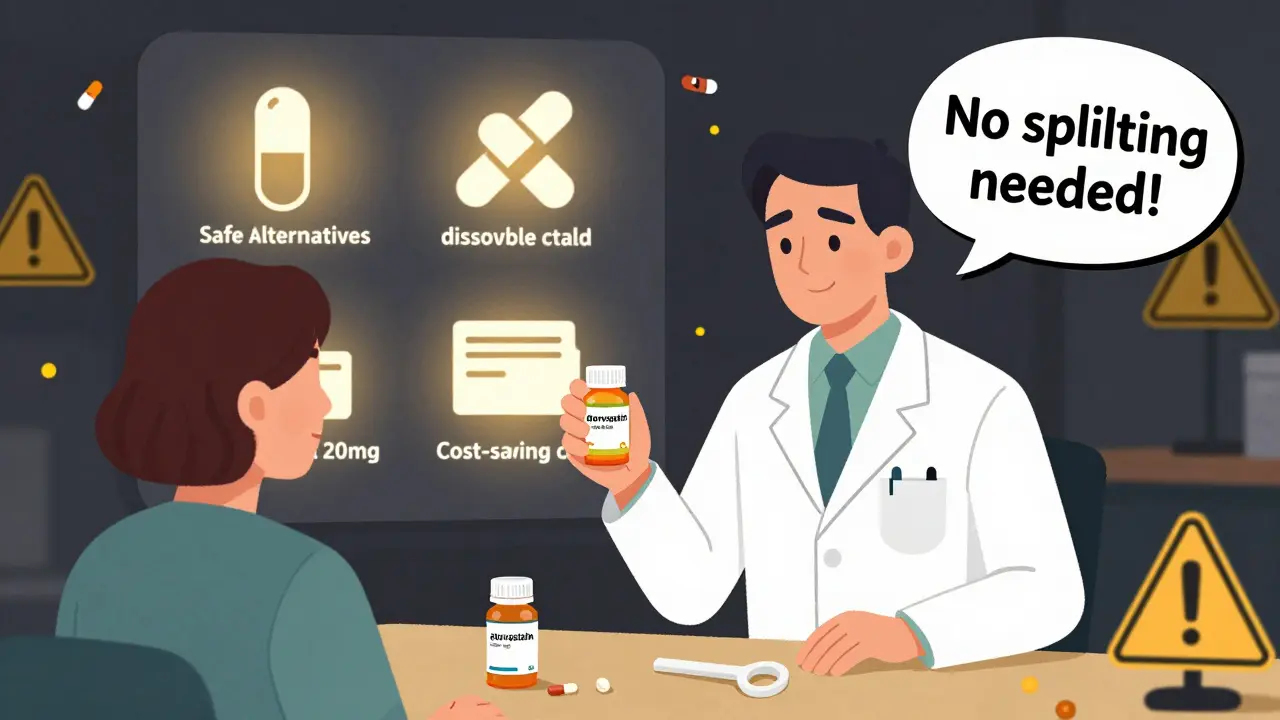
What to Do Instead
If you’re splitting pills because you can’t afford them, talk to your pharmacist. They can help you find:- Generic versions that cost less
- Patient assistance programs
- Mail-order discounts
- Alternative medications with lower-cost options
When to Call Your Doctor or Pharmacist
Don’t guess. Don’t Google. Don’t ask Reddit. Ask a professional. Call your pharmacist if:- You’re unsure if your pill can be split or crushed
- The pill crumbles when you try to split it
- You notice side effects after splitting (too strong, too weak, nausea, dizziness)
- You’re giving a split pill to someone else (like an elderly parent)
Can I crush my pills to mix them with food?
Only if your doctor or pharmacist says it’s safe. Crushing extended-release, enteric-coated, or hazardous drugs can be dangerous. For example, crushing a time-release painkiller can cause a deadly overdose. Crushing chemotherapy drugs exposes you to toxic dust. Always check before mixing any pill with food.
Is it safe to split pills without a pill splitter?
No. Using a knife, scissors, or your fingers increases the risk of uneven splits, crumbling, and contamination. Studies show manual splitting leads to dose variations of 15-25%. A proper pill splitter reduces that to 5-8%. If you don’t have a splitter, ask your pharmacy for one-they often give them out for free.
Why do some pills have a score line but still can’t be split?
The score line is often for manufacturing purposes, not patient use. Some pills are scored so they can be broken during packaging or for bulk dispensing-not because they’re safe for home splitting. The FDA estimates only 50-60% of scored tablets are actually safe to split. Always confirm with your pharmacist.
What should I do if I accidentally crushed a pill I shouldn’t have?
If you’ve already crushed or split a pill that shouldn’t be altered, stop using it. Call your pharmacist or doctor immediately. If you’ve taken it and feel unwell-like dizziness, rapid heartbeat, nausea, or confusion-seek medical help right away. Don’t wait for symptoms to get worse.
Are there alternatives to splitting pills for cost savings?
Yes. Many medications have lower-cost generics, patient assistance programs, or mail-order options. Some pharmacies offer discount cards or coupons. Talk to your pharmacist-they can often find a way to lower your cost without risking your health. For example, switching from brand-name Lipitor to generic atorvastatin can cut your bill by 80% without needing to split anything.
Beth Templeton
January 8, 2026 AT 02:34Cam Jane
January 8, 2026 AT 18:27Saylor Frye
January 9, 2026 AT 04:18Gabrielle Panchev
January 9, 2026 AT 19:12Wesley Pereira
January 11, 2026 AT 10:44Pavan Vora
January 12, 2026 AT 08:51Stuart Shield
January 13, 2026 AT 06:05Isaac Jules
January 13, 2026 AT 12:28Dana Termini
January 15, 2026 AT 00:52Indra Triawan
January 15, 2026 AT 19:34Lily Lilyy
January 17, 2026 AT 16:26Susan Arlene
January 19, 2026 AT 07:12Amy Le
January 19, 2026 AT 14:06Mukesh Pareek
January 20, 2026 AT 04:49Wesley Pereira
January 20, 2026 AT 21:04