
Chronic Sinusitis Guide: Managing Allergies, Infections, and Surgery
 Apr, 17 2026
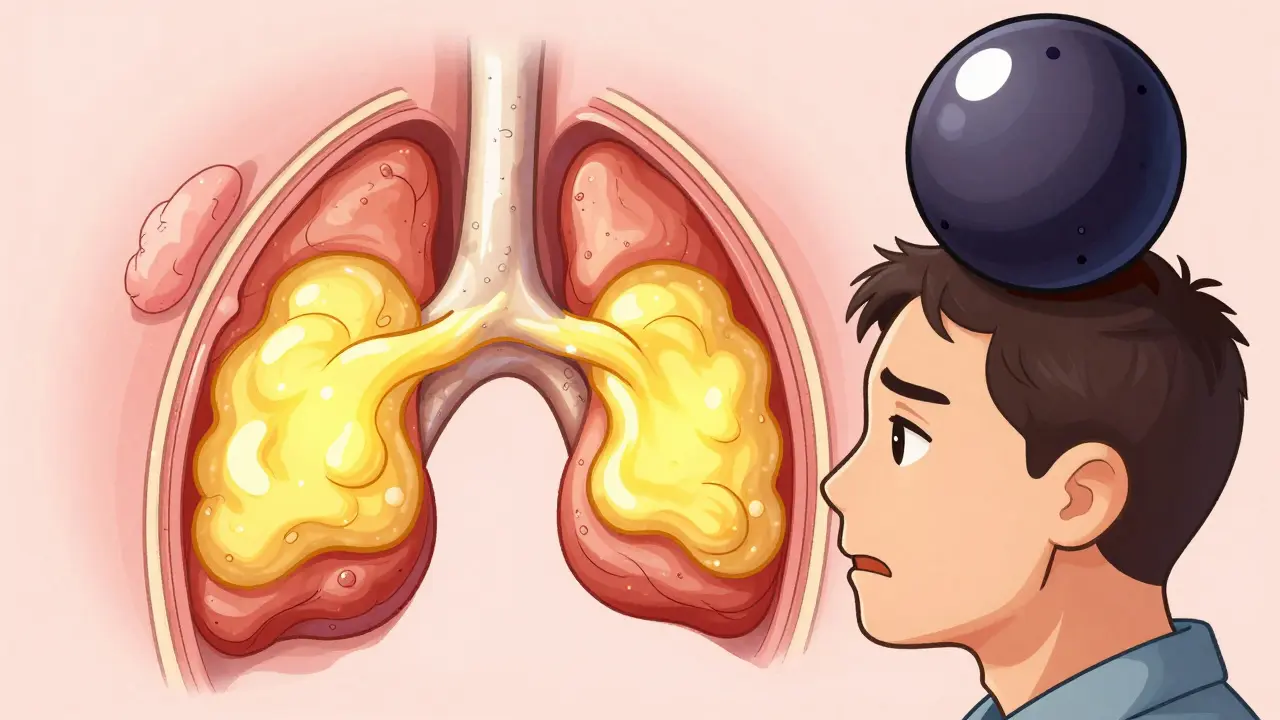
Waking up with a head that feels like a bowling ball and a nose that refuses to cooperate isn't just a "bad cold." When that congestion, facial pressure, and thick mucus stick around for more than 12 weeks, you're likely dealing with chronic sinusitis is a persistent inflammation of the sinus and nasal passages that lasts for three months or more despite medical treatment. It's a frustrating cycle that affects about 9% of people globally, and for many, it's not about a simple germ, but a complex inflammatory response in the body.
If you've spent months cycling through over-the-counter sprays with no luck, it's important to understand that this isn't a one-size-fits-all condition. Whether it's triggered by allergies, structural issues in your nose, or stubborn polyps, the goal is the same: get the sinuses draining again and stop the inflammation from taking over your day.
What exactly is happening in your sinuses?
To understand the problem, think of your sinuses as a series of connected caves in your skull that produce mucus to keep your nose moist. In a healthy system, this mucus drains freely. With chronic sinusitis, the lining of these caves becomes swollen and inflamed, which traps the mucus inside. This creates a perfect breeding ground for bacteria and causes that signature feeling of pressure in your cheeks and forehead.
Not all cases are the same. Doctors generally group the condition into three main types: chronic sinusitis without nasal polyps, chronic sinusitis with nasal polyps, and allergic fungal rhinosinusitis. Nasal polyps are noncancerous growths that act like tiny balloons blocking the sinus openings, which makes treating the inflammation much trickier.
You can tell you're moving from a seasonal issue to a chronic one when you hit the 12-week mark. Common red flags include a total loss of smell, constant postnasal drip, and a feeling of blockage that doesn't budge. Interestingly, if you have asthma, you're 3 to 4 times more likely to deal with this, as the same inflammatory pathways often affect both your lungs and your sinuses.
The link between allergies and chronic infections
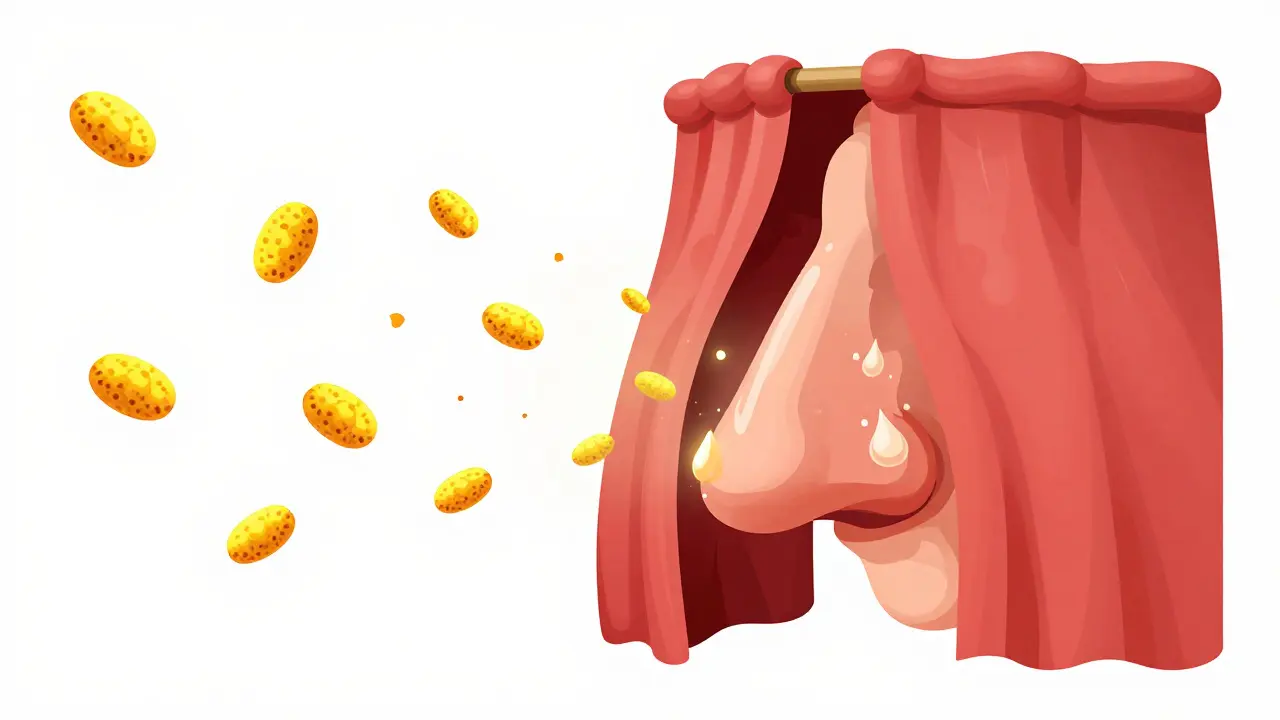
Many people assume they need antibiotics for every sinus flare-up, but here's the reality: about 70% of chronic cases are driven by inflammation or structural problems, not an active bacterial infection. When you have allergies, your body overreacts to things like pollen or pet dander, causing the nasal passages to swell. This swelling blocks the drainage holes, and then a secondary bacterial infection might move in because the mucus is trapped.
When bacteria do cause the problem, the usual culprits are Streptococcus pneumoniae or Haemophilus influenzae. However, using antibiotics as a first-line defense for chronic cases often fails because the medicine can't reach the infection through the swollen tissue. This is why focusing on reducing inflammation first is the gold standard of care.
| Subtype | Key Characteristic | Common Trigger | Typical Response to Steroids |
|---|---|---|---|
| Without Polyps | Inflamed mucosal lining | Environmental irritants/Smoke | High |
| With Polyps | Soft tissue growths in nasal cavity | Asthma/Genetics | Moderate (may need biologics) |
| Allergic Fungal | Fungal debris (allergic mucin) | Fungal spores | Low (often requires surgery) |
Medical management: The first line of defense
Before anyone talks about surgery, there is a standard 12-week medical trial. The goal is to shrink the swelling and clear the "plumbing." The most effective starting point is a combination of nasal saline irrigation (like a Neti pot) and intranasal corticosteroid sprays, such as fluticasone or mometasone. These sprays don't work instantly like a decongestant-they take days or weeks of consistent use to reduce the inflammation.
For those whose sinusitis is driven by allergies, adding antihistamines like cetirizine or loratadine can reduce symptoms by up to 60%. If you have the more severe version with polyps, traditional sprays might not be enough. This is where modern medicine has made a huge leap. Dupilumab is a biologic therapy approved by the FDA that targets the specific inflammatory signals causing polyps to grow. In clinical trials, it has shown a 50-60% reduction in polyp size, often allowing patients to avoid surgery entirely.
A pro tip for those using steroid sprays: don't point the nozzle straight up your nose. Aim it slightly outward toward your ear to avoid irritating the septum and to ensure the medicine actually reaches the sinus openings.
When medical treatment fails: Surgical options
If you've tried the sprays and rinses for three months and still can't breathe, it's time to look at structural fixes. Surgery isn't about "curing" the inflammation, but about creating a wider opening so that mucus can drain and medical treatments can actually reach the inside of the sinuses.
The most common procedure is Functional Endoscopic Sinus Surgery (FESS). During FESS, a surgeon uses an endoscope to navigate the nasal passages and removes the blocking bone or tissue. It's highly effective, with a 75-90% success rate for symptom improvement. Recovery is relatively quick, with most people returning to their routine in about a week.
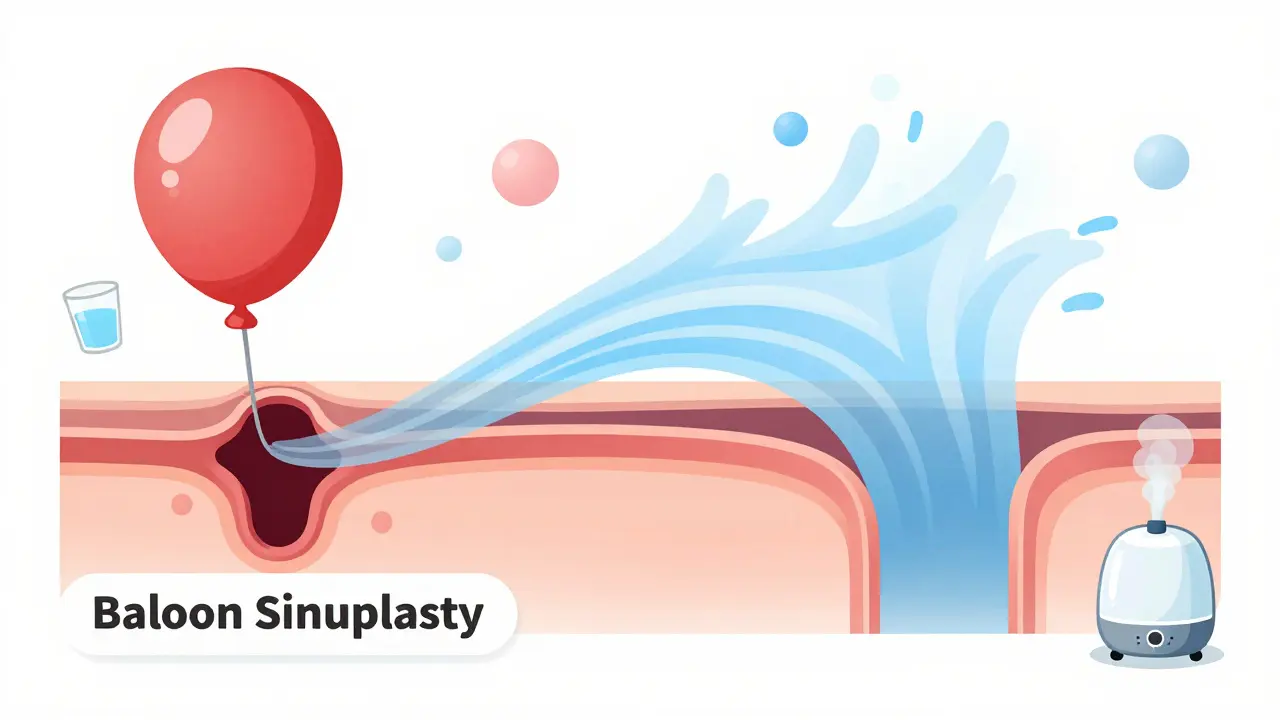
For a less invasive approach, some patients opt for Balloon Sinuplasty. Imagine a tiny balloon being inserted into the sinus opening and inflated to push the blockage aside. It has a faster recovery time (3-5 days) and less bleeding, though it may not be as effective as FESS for people with large polyps or severe structural deformities.
In some cases, your sinuses are blocked because your nasal wall is crooked. A septoplasty to straighten a deviated septum is often done alongside sinus surgery to ensure the airway is completely open. Just keep in mind that if you have nasal polyps, surgery alone isn't a permanent fix-they can return in 40-50% of cases within 18 months if you don't keep up with your steroid sprays.
Lifestyle shifts for long-term relief
Medical and surgical treatments are the heavy lifting, but daily habits keep the symptoms from coming back. If you live in a dry climate, using a humidifier in your bedroom can reduce irritation for nearly half of all patients. Hydration is equally important; drinking plenty of water keeps the mucus thin, making it much easier to drain.
Avoid environmental triggers whenever possible. Tobacco smoke and strong chemical fumes can increase your risk of sinusitis by 35% because they irritate the delicate lining of the nasal passage. If you've been diagnosed with Samter's triad (a combination of asthma, nasal polyps, and aspirin sensitivity), you might want to talk to your doctor about aspirin desensitization, which can significantly reduce symptom severity.
The best results usually come from a "team" approach. Instead of just seeing one doctor, coordinating care between an ENT specialist (for the structure), an allergist (for the triggers), and an immunologist (for the biologic therapies) leads to significantly better long-term outcomes.
Why don't antibiotics work for my chronic sinusitis?
Most chronic sinusitis is caused by long-term inflammation or structural blockages rather than a persistent bacterial infection. If the sinus openings are swollen shut, antibiotics cannot penetrate the area effectively. While they help during an acute "flare-up," they don't treat the underlying cause of chronic inflammation.
How do I know if I have nasal polyps?
While you can't always see them, common signs include a persistent feeling of nasal blockage, a complete loss of smell, and a voice that sounds constantly "nasal." A doctor can confirm their presence using a nasal endoscope-a tiny camera that looks deep into the nasal cavity.
Is Balloon Sinuplasty better than FESS?
It depends on your anatomy. Balloon Sinuplasty is less invasive, involves less bleeding, and has a faster recovery. However, FESS is generally more effective for removing polyps or correcting severe structural issues. Your ENT will decide based on your CT scan results.
Can chronic sinusitis lead to more serious problems?
In very rare cases (less than 0.5%), untreated infection can spread to the eyes, brain, or spine. While unlikely, this is why it's important to seek medical help if you experience sudden vision changes, an excruciating headache, or a high fever accompanying your sinus symptoms.
How long should I use steroid nasal sprays before they work?
Unlike decongestant sprays (which work in minutes), corticosteroids take time to change the tissue's inflammatory response. You typically need to use them consistently for 2 to 4 weeks before you notice a significant difference in breathing and pressure.
Next Steps and Troubleshooting
If you're currently struggling, start with a 12-week trial of saline rinses and a corticosteroid spray. If you find the spray irritating, ask your doctor about "budesonide" rinses, which are mixed directly into the saline solution and can be gentler on the nasal lining.
For those who have already had surgery but find their symptoms returning, don't panic. Surgery opens the door, but medical management (sprays and biologics) is what keeps the door open. Focus on a strict maintenance schedule and consider an allergy test to identify and remove triggers from your home environment.
Valorie Darling
April 20, 2026 AT 05:05imagine actually thinking a neti pot is a game changer lol some of you are just lazy and wont actually see a specialist
Shalika Jain
April 22, 2026 AT 02:07Oh please, the obsession with these basic medical guidelines is just exhausting. As if the nuanced reality of nasal physiology can be reduced to a little table in a blog post. It's frankly amateurish to assume that a 12-week trial is the gold standard for everyone when some of us have much more sophisticated biological responses.
Mike Beattie
April 22, 2026 AT 07:27The systemic failure to address the eosinophilic inflammatory cascade in the early stages is precisely why we see such high recurrence rates post-FESS. Most practitioners are merely treating the symptomatic manifestation rather than the underlying molecular pathology. It's a classic case of mismanagement of the mucosal homeostasis.
Aaron McGrath
April 22, 2026 AT 12:40STOP WAITING AROUND! If your airway is compromised, you need to push for a CT scan IMMEDIATELY. Get that volumetric data and stop guessing with over-the-counter garbage! Aggressive intervention is the only way to optimize your respiratory throughput! GET IT DONE!
dallia alaba
April 24, 2026 AT 01:36Adding to the part about steroid sprays, it's also worth mentioning that keeping a consistent schedule is key. Many people stop the moment they feel a bit better, but that's usually when the inflammation is just starting to subside. Pushing through that initial window is what prevents the relapse.
julya tassi
April 25, 2026 AT 13:49I've been using a humidifier for years and it really does make a difference for the morning congestion! 😊 Does anyone else feel like the salt concentration in the rinse matters?
I always try to get the mix just right so it doesn't sting.
Wendy Ajurín
April 25, 2026 AT 17:16The mention of budesonide rinses is a very pertinent addition to this guide. For patients who experience significant mucosal irritation with standard sprays, the diluted saline mixture often provides a more tolerable alternative while maintaining the necessary therapeutic efficacy.
Truman Media
April 26, 2026 AT 04:38It is truly a blessing when we find ways to breathe freely again. 🌟 Life is too short to spend it in a fog of congestion. May we all find the peace and clarity that comes with a clear mind and a clear nose! 🌿
Aman Tomar
April 27, 2026 AT 23:07My heart goes out to everyone struggling with this. It is truly a mizerable feeling when you cannot smell your favorite foods. I have tried the rinses and they really do help, though the process can be a bit overwhelming at first. Please do not lose hope in your recovery journey!
Lucy Kuo
April 29, 2026 AT 10:49It is simply marvelous to see such a comprehensive overview of the various modalities of treatment. We must remember to treat ourselves with utmost kindness and patience during these grueling 12-week trials, for the path to wellness is often paved with tedious repetition and steadfast hope!
Grace Grace
April 30, 2026 AT 02:17I am so incredibly thrilled to see biologics mentioned here! It is an absolute lifesaver for those of us who have failed every other treatement. I can honestly say my quality of life has improved ten-fold since starting my new medictation regime. I feel like I can finally breathe for the first time in a decade and it is just wonderfuly liberating!