
Chronic Opioid-Induced Nausea: Diet, Hydration, and Medication Options That Actually Work
 Dec, 27 2025
Opioid Nausea Medication Guide
When you’re taking opioids for long-term pain, nausea isn’t just an annoyance-it can make you stop taking your medicine altogether. About 1 in 3 people on chronic opioid therapy deal with persistent nausea that doesn’t go away, even after weeks or months. This isn’t something you’ll outgrow. It’s not just in your head. It’s a real, measurable side effect caused by how opioids interact with your brain and gut. And if you’re one of the 1.8 million Americans managing chronic pain with opioids, you’re not alone in struggling with this.
Why Does This Happen?
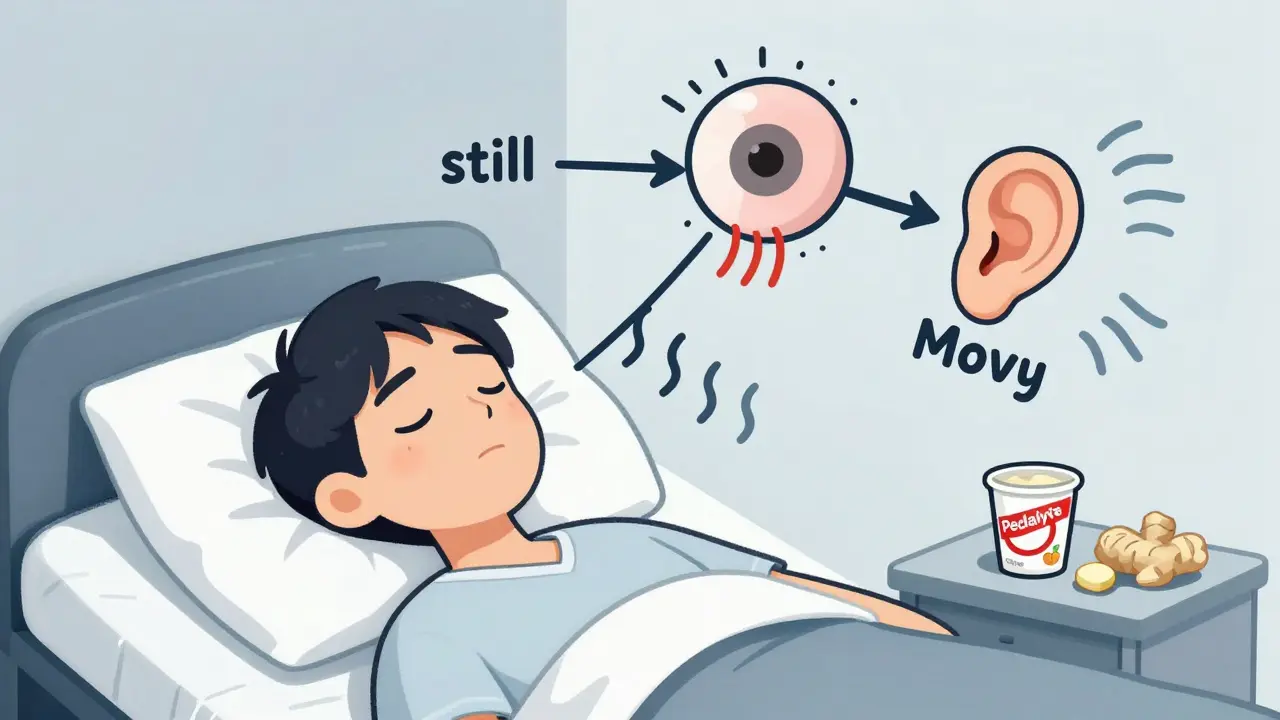
Opioids don’t just block pain signals. They also hit receptors in three key places: your brainstem’s chemoreceptor trigger zone, your inner ear’s vestibular system, and your gut lining. When these receptors get activated, your body thinks it’s been poisoned. That’s when nausea kicks in.Some people develop tolerance within a week or two. But 15-20% of patients never do. For them, nausea sticks around-sometimes worse in the morning, sometimes triggered by moving their head. A 2017 study showed that even blindfolded, people on opioids felt more nauseous when they turned their heads. That’s because opioids mess with your balance system. Your brain gets conflicting signals: your eyes say you’re still, but your inner ear says you’re moving. That mismatch? Pure nausea fuel.
Diet Changes That Make a Difference
Most doctors tell you to eat bland food. Rice, toast, crackers. But here’s what patients actually report working:- Small, frequent meals-6 to 8 tiny meals a day, around 150-200 calories each. One study found 55% of patients felt better switching from three big meals to this pattern.
- Protein snacks-Many patients say cheese, nuts, or boiled eggs help more than carbs. Protein stabilizes blood sugar and slows stomach emptying, which reduces nausea spikes.
- Ginger chews-Not tea. Not capsules. Actual chewable ginger. One survey of nearly 90 chronic pain users found 78% got moderate to strong relief from Briess Ginger Chews. It’s not magic, but it’s backed by real data on ginger’s effect on nausea pathways.
- Avoid heavy, greasy foods-Fried food, creamy sauces, and large portions slow digestion and make nausea worse. Your gut is already sluggish from opioids. Don’t overload it.
Don’t trust blanket advice like "eat bland." Try what works for your body. If you feel better with a handful of almonds at 10 a.m. and a hard-boiled egg at 2 p.m., stick with it. Your gut doesn’t care about food groups-it cares about what keeps you from vomiting.
Hydration: It’s Not Just About Water
Drinking eight glasses of water a day sounds good. But if you’re sipping a full glass every few hours, you’re probably making nausea worse. Your stomach is already irritated. Overfilling it triggers more vomiting.Instead:
- Sip 2-4 ounces every 15-20 minutes. That’s about half a cup, not a full glass.
- Use electrolyte drinks like Pedialyte or homemade versions (water + pinch of salt + squeeze of lemon + teaspoon of honey). Opioids cause fluid shifts. Replacing lost minerals helps.
- Avoid caffeine and alcohol. Both dehydrate you and irritate your stomach lining.
- Try ice chips or frozen fruit pops if swallowing liquid is hard. Slow, cold intake is easier on the system.
A 2020 study found 47% of patients reported less nausea severity just by switching from large-volume drinking to small, frequent sips. It’s simple. It’s cheap. And it’s often ignored.
Medication Options: What Works, What Doesn’t
There are three main ways to treat opioid-induced nausea: switch the opioid, use an antiemetic, or combine both.Opioid Rotation: The Most Effective Move
Not all opioids are created equal when it comes to nausea. Some are far worse than others.- Worst offenders: Oxymorphone, morphine
- Moderate: Oxycodone
- Best options: Tapentadol, fentanyl patches, methadone
Switching from morphine to a fentanyl patch can cut nausea by up to 50% in patients who didn’t respond to antiemetics. The key? Reduce your dose by 50-75% when switching to methadone-your body doesn’t cross-tolerate fully, and too much can be dangerous.
Patients on Reddit and pain forums report 52% improvement after switching to fentanyl patches. That’s not anecdotal-it matches clinical trends. If your nausea hasn’t improved in 14 days despite stable dosing, rotation is your next step.
Antiemetics: First-Line Choices
These are drugs that block nausea signals. Not all are equal.- Prochlorperazine (Compazine)-65-70% effective. Cheap. Available as a pill or suppository. Side effects: drowsiness, dry mouth.
- Promethazine (Phenergan)-Similar efficacy. Can cause dizziness. Avoid if you have low blood pressure.
- Metoclopramide (Reglan)-Only prokinetic available in the U.S. It speeds up stomach emptying. Works in about 60% of cases. But it carries a black box warning for movement disorders if used over 12 weeks. Not ideal for long-term use.
- Ondansetron (Zofran)-Expensive ($35 per dose), but effective for breakthrough nausea. Used more in hospitals. Some studies suggest it’s better than phenothiazines for sudden spikes.
- Dexamethasone-Steroid. Works in 40-50% of cases. Often used in cancer care. Not for daily long-term use due to side effects like high blood sugar.
Most palliative care teams start with prochlorperazine. It’s affordable, effective, and doesn’t carry the same long-term risks as metoclopramide. If it doesn’t work after 3-5 days, try switching to ondansetron or rotating the opioid.
What Doesn’t Work (And Why)
Some popular advice is misleading:- Eye closure-Some think closing your eyes helps. It adds only 5-7% more relief beyond just resting your head.
- Bed rest-Lying still helps, but only if you’re not moving your head. Just lying flat won’t fix vestibular-triggered nausea.
- Over-the-counter motion sickness pills-Meclizine or dimenhydrinate? They help with motion sickness, but not opioid-induced nausea. They don’t target the right receptors.
- Waiting for tolerance-If you’ve been on the same dose for 14+ days and nausea is still there, tolerance didn’t happen. Don’t wait. Act.

Real-World Challenges
The biggest problem? Most primary care doctors don’t have protocols for this. Only 42% of them do. In contrast, 78% of palliative care programs have a step-by-step plan for opioid nausea.Another issue: the nausea-anxiety cycle. If you’re scared you’ll throw up, your body tenses up. That makes nausea worse. It’s a loop. Breathing exercises, distraction techniques, or even low-dose naltrexone (under study) might help break it.
And there’s no test to predict who won’t develop tolerance. So if you’re still nauseous after two weeks, assume you’re in the 15-20% group that needs intervention-not patience.
What’s Next?
New treatments are coming. A drug targeting the kappa-opioid receptor (the one linked to balance issues) is in Phase III trials and could be available by 2025. Low-dose naltrexone (0.5-1 mg daily) is showing promise in early studies-cutting nausea by 45% without reducing pain relief.Research into gut bacteria is also underway. Early data shows people with certain microbiome profiles respond better to dietary changes. Future treatments might include probiotics tailored to opioid users.
For now, your best tools are simple: eat small, sip slowly, rotate opioids if needed, and pick the right antiemetic. Don’t suffer in silence. Nausea isn’t a side effect you have to accept. It’s a signal that your treatment plan needs tweaking.
How long does opioid-induced nausea last?
For most people, nausea improves within 3 to 7 days as tolerance develops. But for 15-20% of patients, it persists beyond 14 days-this is called chronic opioid-induced nausea. If it lasts longer than two weeks at a stable dose, tolerance hasn’t kicked in, and you need to adjust your treatment plan.
Can I take ginger with my opioid medication?
Yes. Ginger is safe to use with opioids and doesn’t interfere with pain relief. Many patients find ginger chews (like Briess) help reduce nausea without side effects. Stick to 1-2 chews per day, or up to 1 gram of powdered ginger in capsule form. Avoid large doses if you’re on blood thinners.
Is metoclopramide safe for long-term use?
No. Metoclopramide carries a FDA black box warning for tardive dyskinesia-a movement disorder that can be permanent. It’s best used short-term (under 12 weeks). For chronic opioid-induced nausea, it’s not recommended as a long-term solution. Prochlorperazine or opioid rotation are safer options.
Why does my nausea get worse when I move my head?
Opioids activate receptors in your inner ear’s vestibular system, which controls balance. When you move your head, your brain gets conflicting signals-your eyes say you’re still, but your inner ear says you’re moving. This mismatch triggers nausea. Resting your head still helps, but closing your eyes adds little extra benefit.
Should I switch opioids if nausea doesn’t go away?
Yes-if nausea lasts more than 14 days at a stable dose. Switching from morphine or oxycodone to fentanyl patches or tapentadol can cut nausea by 40-50%. Always reduce your dose by 50-75% when switching to methadone due to incomplete cross-tolerance. Talk to your doctor about a safe rotation plan.
Are there any natural remedies that work?
Ginger is the only natural remedy with strong patient-reported and clinical support. Peppermint tea and acupressure wristbands have little to no evidence for opioid-induced nausea. Avoid unregulated supplements like CBD oil-there’s no reliable data on their interaction with opioids or nausea pathways.
Can dehydration make opioid nausea worse?
Yes. Opioids slow digestion and can cause fluid loss through reduced intake or vomiting. Dehydration thickens stomach contents and slows gastric emptying, making nausea feel worse. Sipping small amounts of electrolyte fluids (like Pedialyte) helps more than plain water because it replaces lost minerals and keeps your gut working better.
Next Steps
If you’re struggling with chronic opioid nausea:- Track your symptoms for 14 days. Note when nausea hits, what you ate, and whether movement triggers it.
- Try small meals and ginger chews for 5 days. If no change, move to step three.
- Ask your doctor about switching to a less emetogenic opioid-fentanyl patch or tapentadol.
- If rotation isn’t an option, start with prochlorperazine (5-10 mg once or twice daily).
- Stay hydrated with small sips of electrolyte fluid throughout the day.
This isn’t about enduring pain-it’s about managing your whole treatment. Nausea doesn’t mean your pain isn’t being controlled. It means your body needs a better plan. And you deserve one that lets you live without constant sickness.
ANA MARIE VALENZUELA
December 27, 2025 AT 21:31Let me guess-you’re one of those people who thinks ginger chews are a cure-all. Newsflash: if your body’s drowning in opioids, chewing candy won’t fix your brain’s poisoned signal cascade. You’re not ‘managing’ nausea-you’re just delaying the inevitable collapse of your treatment plan. And don’t even get me started on fentanyl patches. People die from those if they’re not monitored like a damn lab rat. This isn’t a wellness blog. It’s a medical minefield, and you’re handing out glitter bombs.
Samantha Hobbs
December 28, 2025 AT 09:59OMG I tried the ginger chews and it was like a miracle?? I was puking every morning until I started eating those little Briess things like snacks. Now I can actually get out of bed without feeling like I’m gonna die. Also, sipping Pedialyte instead of chugging water? Game. Changer. Why does no one tell you this stuff???
Vu L
December 30, 2025 AT 05:47Wait, so you’re telling me the only reason people get nauseous on opioids is because they’re too lazy to eat tiny meals? Bro. I’ve been on oxycodone for 8 years. I eat like a monk. I sip water like a teapot. I chew ginger like it’s my job. And I still feel like I’m gonna hurl every time I blink. This whole post is just placebo marketing dressed up like science.
James Hilton
December 31, 2025 AT 15:53Y’all are overcomplicating this. You want less nausea? Stop being a drama queen. Your body’s not broken-it’s just mad you’re feeding it junk and then acting surprised when it rebels. Ginger? Sure. Small meals? Obviously. But the real fix? Stop taking opioids like they’re candy. Pain isn’t a life sentence. Maybe your body’s screaming, ‘I’m not a pill dispenser.’
Kelsey Youmans
January 1, 2026 AT 17:09Thank you for this meticulously researched and clinically grounded overview. The distinction between vestibular-mediated nausea and gastric stasis is often overlooked in primary care settings, and the data on opioid rotation-particularly the comparative emetogenic profiles of tapentadol versus morphine-is both clinically significant and underutilized. I would respectfully suggest that future iterations include references to the 2021 Cochrane review on antiemetic efficacy in chronic opioid therapy, as it further validates the recommendations presented herein.
Sydney Lee
January 2, 2026 AT 22:09Oh, please. You’ve written a 2,000-word manifesto on how to ‘manage’ the consequences of a fundamentally flawed medical paradigm-while ignoring the elephant in the room: opioids are not sustainable for chronic non-cancer pain. You offer ginger chews and Pedialyte like they’re moral victories, while the real issue is systemic overprescribing, lazy diagnostics, and the pharmaceutical industry’s decades-long assault on medical ethics. This isn’t a ‘treatment plan’-it’s a Band-Aid on a hemorrhage. And you’re selling it like it’s wisdom.
oluwarotimi w alaka
January 3, 2026 AT 15:08they say ginger works? lol. i think this is all part of the westen pharmo conspiracy. they want you to keep taking pills and buy fancy chews so you never question why your body is falling apart. america got you hooked on painkillers then sold you ginger candy to make you feel better about it. they dont want you to heal-they want you to keep paying.
Debra Cagwin
January 5, 2026 AT 07:21I just want to say how much I appreciate this post. I’ve been on opioids for over a decade, and no one ever told me about the head-movement nausea or the electrolyte trick. I tried the ginger chews last week-and honestly? I cried because I hadn’t felt normal in years. You’re not alone. And you don’t have to suffer silently. Small steps matter. Keep going.
Hakim Bachiri
January 7, 2026 AT 03:20Okay, but-why is no one talking about the fact that this whole ‘opioid rotation’ thing is basically a gamble with your kidneys, liver, and mental health? You’re swapping one poison for another and calling it ‘science.’ And now you’re telling people to sip Pedialyte like it’s holy water? I’ve seen patients on Zofran for six months straight-still puking. Still addicted. Still broken. This isn’t a guide-it’s a glorified pamphlet from a pharma rep who got fired from the sales team for being too aggressive.