
Canagliflozin and Amputation Risk: What You Need to Know Now
 Jan, 27 2026
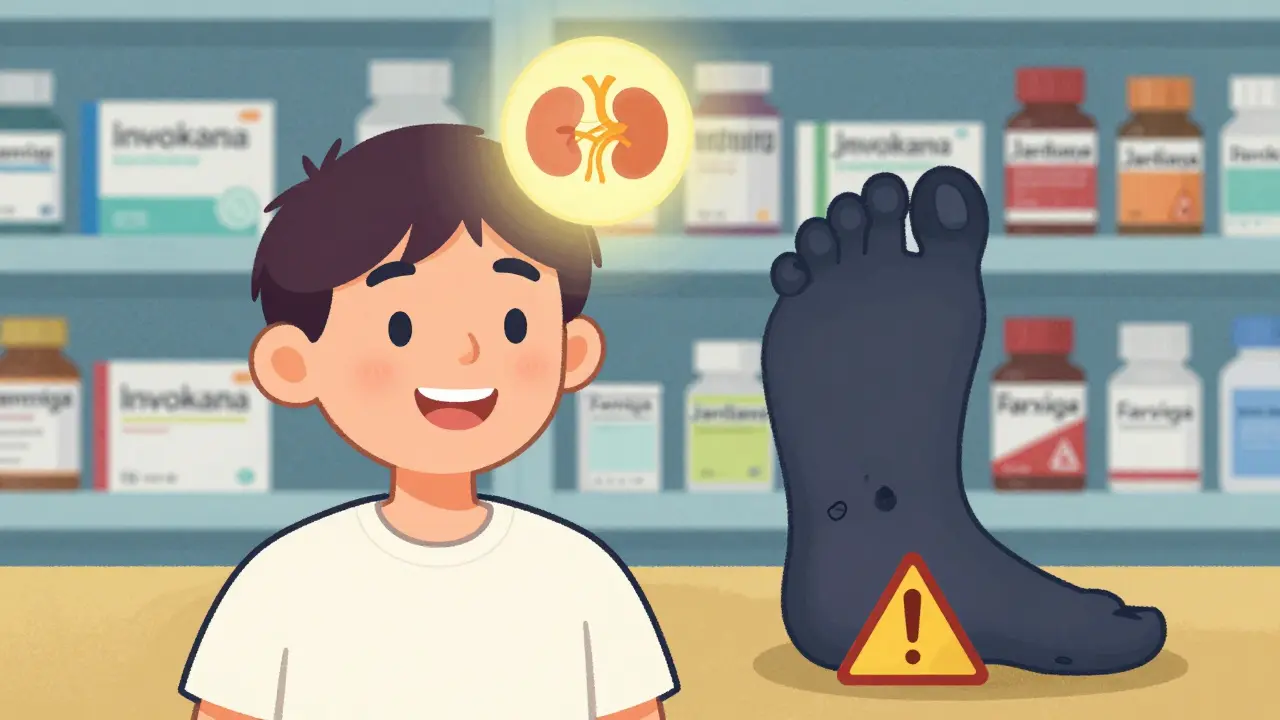
When you're managing type 2 diabetes, finding a medication that lowers blood sugar, protects your heart, and helps with weight loss feels like a win. Canagliflozin - sold as Invokana - does all that. But since 2017, a quiet but serious concern has shadowed it: the risk of leg and foot amputations. Even though the FDA removed its boxed warning in 2020, the risk hasn’t disappeared. It’s still there, quietly listed in the prescribing info, and it’s something every patient and doctor needs to take seriously.
What the data actually shows
The biggest red flag came from the CANVAS Program, a massive study that tracked over 10,000 people with type 2 diabetes who took either canagliflozin or a placebo. The results were startling. For every 1,000 people taking canagliflozin each year, about 4 to 5 had a lower-limb amputation. That’s nearly double the rate seen in those taking a placebo - 2.8 per 1,000. The risk was higher with the 300 mg dose than the 100 mg dose, suggesting a dose-response pattern. But here’s what’s often missed: most of these amputations weren’t major. About 80% were minor - toes or part of the foot, like the metatarsals. Only 1 in 5 involved amputation above the ankle. That’s still devastating, but it changes how we think about the risk. It’s not about losing a leg overnight. It’s more often about a small wound that doesn’t heal, turns infected, and eventually requires removal of a toe or part of the foot. The absolute increase in risk? About 1.8 extra amputations per 1,000 people per year. That means you’d need to treat 556 people with canagliflozin for one year to cause one additional amputation. For many, the heart and kidney benefits outweigh that risk. But for others - especially those with existing foot problems - that math doesn’t add up.It’s not all SGLT2 inhibitors
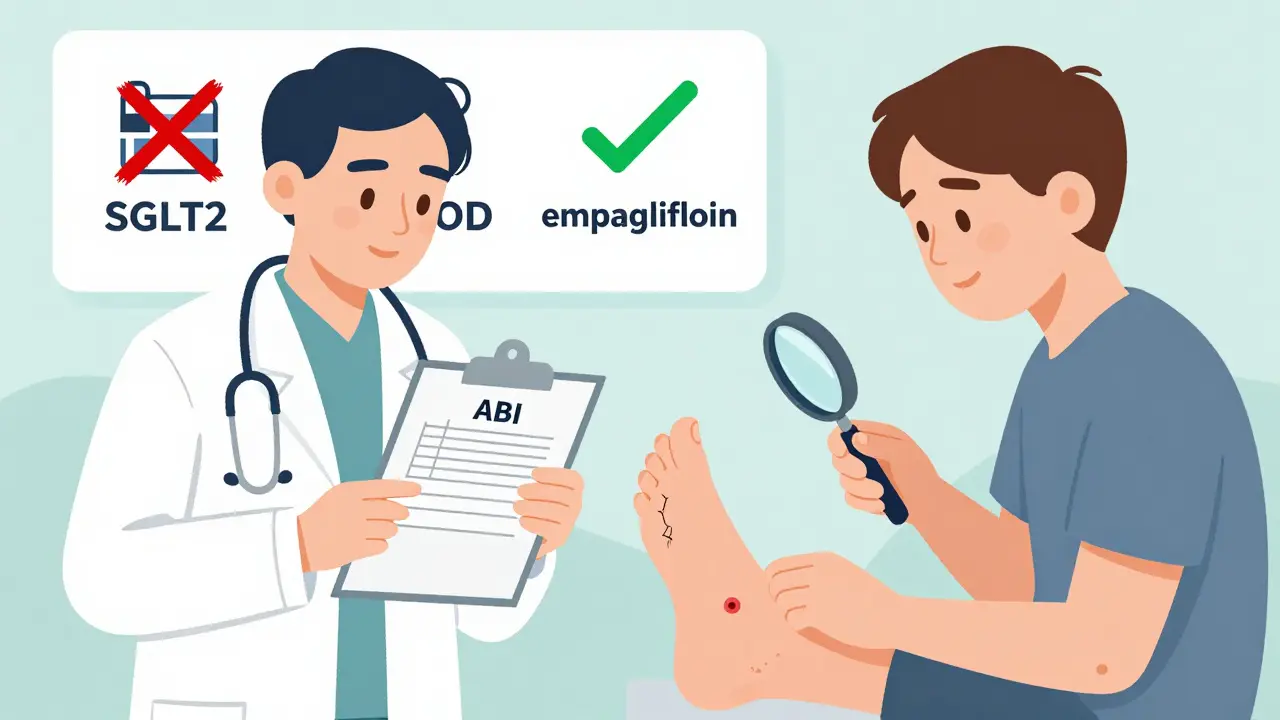
This is critical: the amputation risk appears to be specific to canagliflozin. Other drugs in the same class - like empagliflozin (Jardiance) and dapagliflozin (Farxiga) - don’t show the same signal. In fact, studies on empagliflozin found no increased risk. Dapagliflozin even showed a slight trend toward fewer amputations, though not statistically significant. A 2023 meta-analysis of over 74,000 patients confirmed this: only canagliflozin was linked to a clear increase in amputation risk. Other SGLT2 inhibitors were not. That means if you’re worried about this side effect, switching to another drug in the class is a real option. Why does this happen with canagliflozin and not others? The exact reason isn’t known, but experts suspect it’s tied to how strongly it lowers blood pressure and body weight. Canagliflozin tends to reduce systolic blood pressure by about 3.7 mmHg more than other drugs in its class. That drop, combined with weight loss, might reduce blood flow to already compromised feet in people with poor circulation or nerve damage - making small injuries harder to heal.Who’s at highest risk?
Not everyone on canagliflozin is at risk. The danger is concentrated in people who already have foot problems. If you have:- Diabetic neuropathy (numbness or tingling in feet)
- Peripheral artery disease (PAD) - poor blood flow to legs
- A history of foot ulcers or prior amputations
- Current smoking
- Absent foot pulses
What patients are saying
Real people are sharing their experiences online. On PatientsLikeMe, nearly 7% of canagliflozin users reported foot problems. A small number - about 1% - mentioned amputation concerns. One Reddit user, u/DiabetesWarrior2020, wrote: “After 18 months on Invokana, my podiatrist found a non-healing ulcer that led to a toe amputation. My endocrinologist immediately switched me to Jardiance.” But not everyone has bad outcomes. Another user, u/SugarFreeLife, said: “I’ve been on Invokana for 3 years with no foot issues. My A1c dropped from 8.5% to 6.2%.” The FDA’s own database shows a stark contrast: for every 1 million prescriptions, there were 45 amputation reports for canagliflozin versus just 3 for empagliflozin. That’s a 15-fold difference in reporting rates. It’s not proof of causation, but it’s a strong signal.How to prevent amputation if you’re on canagliflozin
If your doctor has prescribed canagliflozin and you don’t have high-risk factors, you can still take it safely - but you need to be proactive. Here’s what works:- Check your feet daily. Look for cuts, blisters, redness, swelling, or sores. Use a mirror if you can’t see the bottom of your feet. If you have numbness, you won’t feel the injury until it’s serious.
- Wash and dry feet every day. Moisturize, but not between the toes - damp skin invites fungus.
- Never go barefoot. Even indoors. Wear shoes that fit well. No flip-flops or sandals.
- See a podiatrist every 3-6 months. Not just your regular doctor. A foot specialist can catch early signs of nerve damage or poor circulation.
- Report any new pain, warmth, or sores immediately. Don’t wait. A small ulcer can turn into an amputation in weeks if ignored.
- Quit smoking. Smoking narrows blood vessels. If you’re already at risk, this is the single biggest thing you can change.
What doctors are doing differently now
Since 2020, prescribing patterns have shifted. Canagliflozin made up 35% of SGLT2 inhibitor prescriptions in 2017. By 2023, that dropped to 22%. But it didn’t disappear - it got smarter. Doctors now screen patients before prescribing. They avoid it in high-risk groups. They choose empagliflozin or dapagliflozin for patients with heart failure, kidney disease, or foot complications. Medicare data shows that 68% of new canagliflozin prescriptions in 2023 came with a mandatory medication guide explaining amputation risk. That’s up from 42% in 2017. The message is clear: doctors know the risk. They’re just being more careful. The FDA now requires all SGLT2 inhibitors to include standardized foot care advice in their patient guides. That’s a direct result of the canagliflozin experience. Even drugs without the same risk are now teaching better foot care - because we learned how important it is.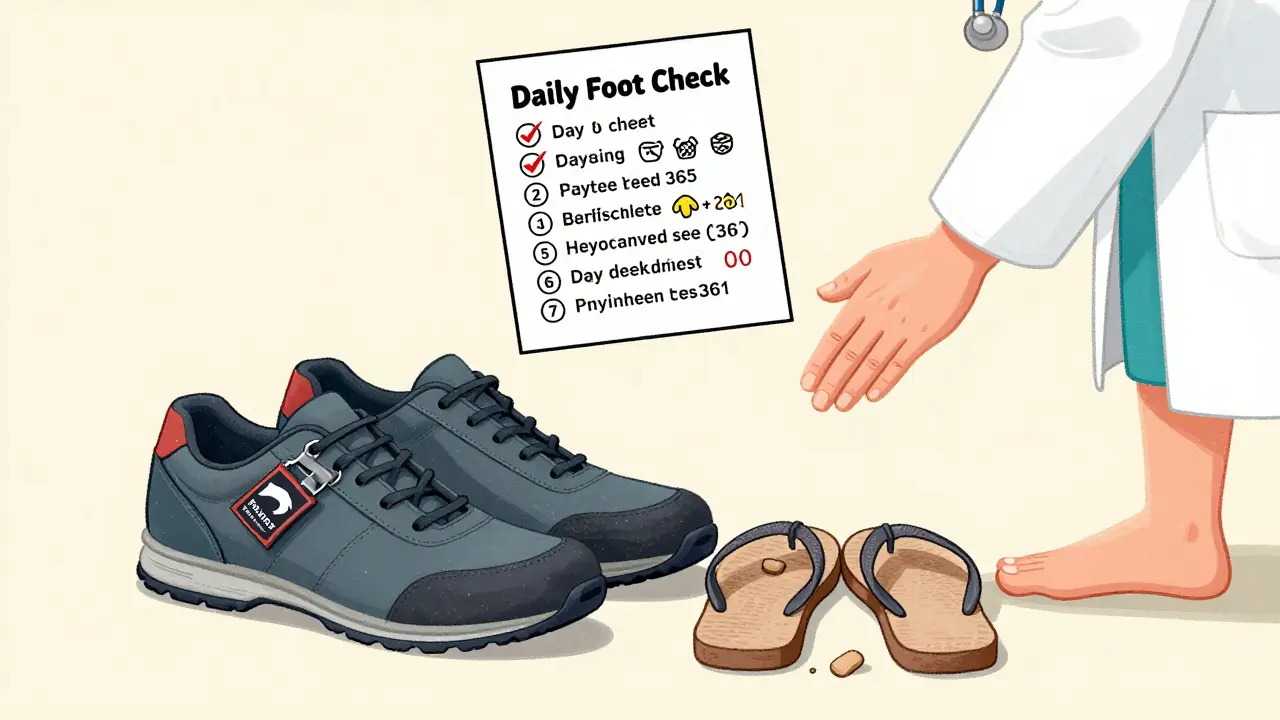
doug b
January 28, 2026 AT 15:20Been on Invokana for 2 years. No issues. Check my feet every morning like my doc said. No barefoot walking, even in the house. Simple stuff. If you got numb feet, don’t ignore it. That’s on you, not the drug.
SRI GUNTORO
January 28, 2026 AT 22:43How can anyone still prescribe this? It’s a walking amputation machine. Big Pharma doesn’t care about your toes-they care about your insurance payments. Wake up, people. This isn’t medicine, it’s a scam wrapped in a clinical trial.
Rhiannon Bosse
January 29, 2026 AT 04:20Ohhh so now the FDA ‘removed the warning’ but it’s still there? 😂 Classic. Like when your ex says ‘I’m not mad’ but leaves 17 voicemails. Canagliflozin’s got a secret ‘foot death’ clause tucked in the 47th page of the pamphlet. And guess who reads that? Nobody. The real danger isn’t the drug-it’s the fact that doctors still hand it out like candy to people who can’t feel their own feet. #PharmaMarketingMagic
Timothy Davis
January 30, 2026 AT 23:15Let’s get real. The 1.8 extra amputations per 1,000 is statistically insignificant compared to the 30% reduction in heart failure hospitalizations. You’re cherry-picking a scary number while ignoring the bigger survival benefit. The real issue is lack of screening-not the drug. If you’re not doing an ABI test before prescribing, you’re doing it wrong. End of story.
Brittany Fiddes
January 31, 2026 AT 23:13Oh, so now we’re comparing American drugs to British ones? Empagliflozin is fine because it’s made by a German company with a fancy name? Please. The only reason Jardiance doesn’t have the same signal is because they didn’t test it on enough people with bad circulation. It’s all in the design. And don’t even get me started on how the FDA bends over backwards for Big Pharma. We’re all lab rats here.
Ambrose Curtis
February 1, 2026 AT 04:47My cousin got her toe taken off after 14 months on Invokana. She didn’t know she had neuropathy. No one checked. Now she’s on Jardiance and feels like a new person. If you’re on this stuff, get your feet checked. Like, right now. Don’t wait till you’re missing a foot. It’s not hard. It’s free at most clinics. Just go. Please.
Linda O'neil
February 2, 2026 AT 05:11Just want to say: if you’re reading this and you’re on canagliflozin-don’t panic. But DO check your feet. Every. Single. Day. Put a sticky note on your bathroom mirror. Set a phone alarm. Make it a habit. Your future self will thank you. You’ve got this. 💪
Robert Cardoso
February 2, 2026 AT 12:01It’s not about the drug. It’s about the paradigm. We’ve reduced diabetes to a pill-popping exercise while ignoring the root causes: processed food, sedentary lifestyles, and systemic neglect of preventative care. Canagliflozin is a symptom of a broken system. The amputation risk? That’s just the tip of the iceberg. We’re treating symptoms with chemistry while the body screams for change. The real question isn’t ‘Is this drug safe?’-it’s ‘Why are we still relying on drugs to fix what lifestyle could cure?’