
Buspirone Augmentation with SSRIs: Side Effects, Efficacy, and Dosage Guide
 Aug, 18 2026
Buspirone Augmentation Dosing Planner
Enter your doctor-prescribed target daily dose to generate a safe titration plan.
Stuck on an SSRI that isn't doing the job? You are not alone. For many patients, standard antidepressants hit a plateau, leaving them feeling flat, anxious, or just "not quite right." This is where Buspirone enters the picture. Often prescribed off-label as an augmentation strategy, this medication works differently than your current antidepressant to push through that resistance. But does it actually work? And is it worth the risk of adding another pill to your routine? The short answer is yes, for the right patient. Buspirone has a distinct mechanism of action that complements SSRIs without stacking up the same side effects. However, understanding its specific profile-especially regarding sexual dysfunction and metabolic health-is crucial before you ask your doctor about it. Here is what the data says about using Buspirone augmentation effectively.
How Buspirone Works Differently Than SSRIs
To understand why this combination works, you have to look at how each drug interacts with serotonin. Selective serotonin reuptake inhibitors (SSRIs) like sertraline or fluoxetine block the reuptake of serotonin in the synaptic cleft, essentially increasing the amount available in the brain. It’s a blunt instrument that helps many people but can cause issues like sexual dysfunction or emotional blunting.
Buspirone, on the other hand, acts as a partial agonist at the 5-HT1A receptor. Think of it this way: if an SSRI turns the faucet on full blast, buspirone fine-tunes the valve. It doesn’t just increase serotonin levels; it modulates how those receptors respond. This fundamental difference means they don’t compete for the same space in your brain chemistry. Instead, they create a synergistic effect that can unlock progress when monotherapy fails.
This mechanism also explains why buspirone is often preferred over benzodiazepines for anxiety comorbid with depression. Unlike benzos, which act on GABA receptors and carry a high addiction risk, buspirone has no sedative properties and no withdrawal syndrome. It takes longer to kick in for anxiety (2-4 weeks), but for depression augmentation, the timeline is different.
Efficacy: Does It Actually Lift the Depression?
The evidence base for buspirone augmentation has grown significantly since the STAR*D trial provided early support. A pivotal 2023 double-blind, randomized, placebo-controlled study involving 102 outpatients showed that adding buspirone to SSRI treatment led to significant improvements in Montgomery-Asberg Depression Rating Scale (MADRS) scores as early as week one. That speed is notable because most augmentation strategies take months to show results.
The benefits were most pronounced in patients with severe baseline depression (MADRS scores above 30). In these cases, buspirone produced significantly greater score reductions compared to placebo. Another analysis from *Clinical Psychopharmacology and Neuroscience* reported response rates of 62.3% in the buspirone group versus 41.7% in the placebo group for patients with severe presentations. If you are dealing with treatment-resistant major depressive disorder, these numbers suggest a real chance of breakthrough rather than just marginal improvement.
Dr. Andrew Nierenberg, principal investigator of the STAR*D trial, noted that buspirone represents one of the safest pharmacological strategies for treatment-resistant depression. Its effect sizes are comparable to second-generation antipsychotics, but without the metabolic baggage that comes with drugs like quetiapine or aripiprazole.
Side Effects: What to Expect and How They Compare
Adding a new medication always raises concerns about side effects. Fortunately, buspirone has a relatively benign profile compared to other augmentation options. The most common adverse reactions, based on pooled FDA clinical trial data, include:
- Dizziness: Occurs in about 14.3% of patients (vs. 7.2% on placebo). This is usually transient and resolves within the first week of consistent dosing.
- Headache: Reported by 11.1% of users.
- Nausea: Affects roughly 9.6% of patients.
- Nervousness: Noted in 9.1% of cases.
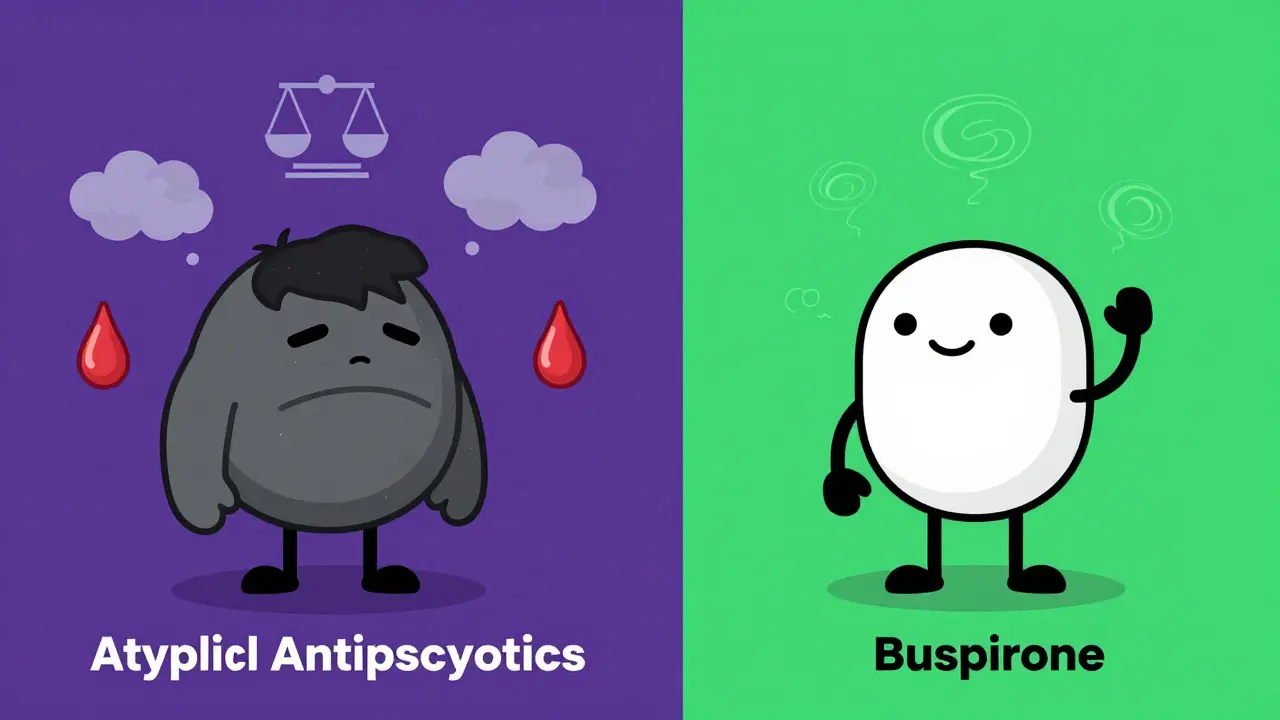
What stands out is what is *missing*. Buspirone does not cause significant weight gain. While atypical antipsychotics can add 2.5 to 4.2 kg to your body weight, buspirone shows an average change of only 0.3 kg. There are no significant alterations to lipids or glucose levels, making it a safer choice for patients worried about metabolic syndrome.
Perhaps the most compelling benefit for many patients is the impact on sexual dysfunction. SSRIs affect 40-60% of patients sexually, leading to decreased libido or delayed ejaculation. A 2021 systematic review found that buspirone resolved SSRI-induced sexual dysfunction in 63% of cases. One case study detailed a 38-year-old man whose sertraline-induced delayed ejaculation completely resolved within two weeks of adding 15 mg of buspirone daily, without losing his antidepressant efficacy.
| Feature | Buspirone | Aripiprazole/Quetiapine |
|---|---|---|
| Weight Gain | Minimal (~0.3 kg) | Significant (2.5 - 4.2 kg) |
| Blood Monitoring Required | No | Often Yes (Lipids/Glucose) |
| Sexual Dysfunction Risk | Low / Can Reverse SSRI Effects | Moderate to High |
| Metabolic Syndrome Risk | Very Low | Moderate to High |
| Sedation | None | Common (Especially Quetiapine) |
Dosing Protocols and Practical Implementation
Getting the dose right is key to avoiding side effects while maximizing efficacy. Because buspirone has a short half-life of 2-3 hours, it requires multiple daily doses to maintain stable blood levels. The typical protocol looks like this:
- Start Low: Begin with 5-10 mg twice daily.
- Titrate Slowly: Increase by 5 mg every 3-5 days.
- Target Dose: Most patients stabilize at 20-30 mg daily. Some treatment-resistant cases may require up to 45-60 mg daily under close monitoring.
- Timing: Take in the morning and evening to keep levels steady.
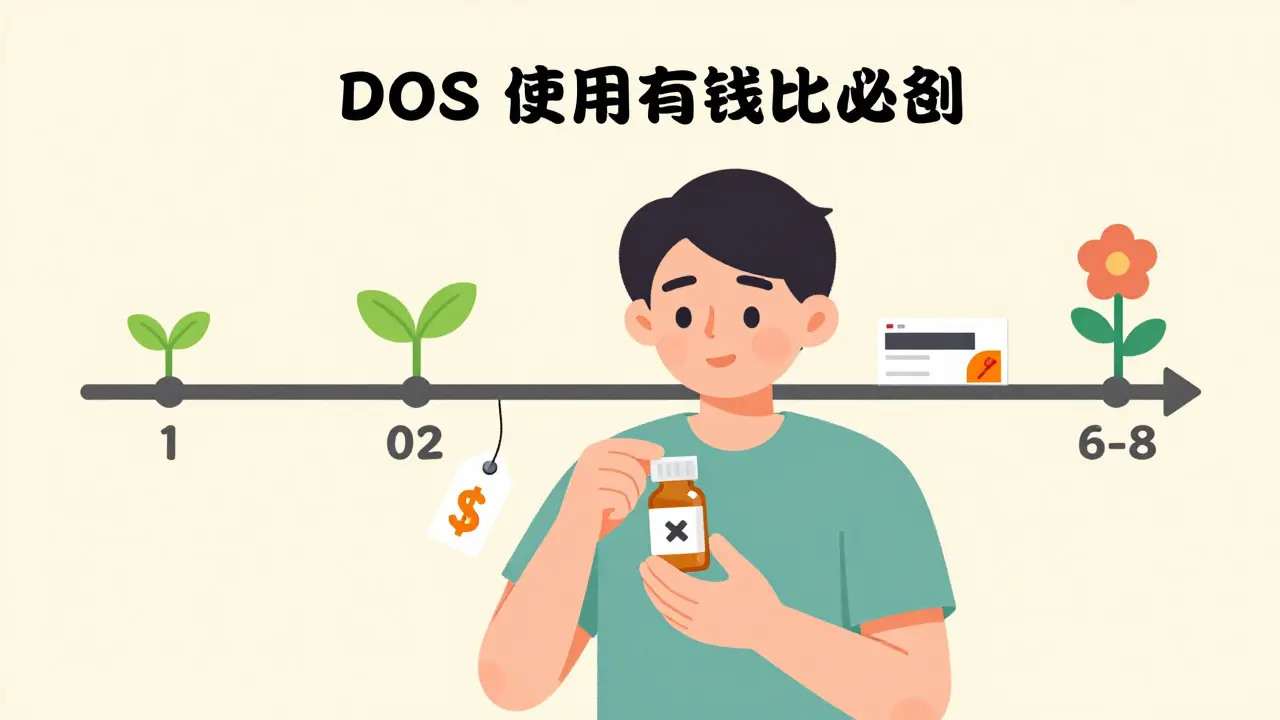
You should expect to wait 6-8 weeks to fully assess efficacy, though some patients notice changes sooner. Be mindful of drug interactions. Buspirone is metabolized by CYP3A4 enzymes. Taking strong inhibitors like ketoconazole or erythromycin can increase buspirone exposure by up to 4-6 times. Even grapefruit juice can increase exposure by approximately 4-fold. If you consume grapefruit regularly or take medications affecting CYP3A4, talk to your pharmacist about potential dose adjustments.
Who Is the Best Candidate for This Strategy?
Buspirone augmentation isn't a magic bullet for everyone. It shines in specific scenarios:
- Treatment-Resistant Depression: Patients who have failed one or more adequate trials of SSRIs.
- Severe Baseline Symptoms: Data suggests those with higher initial depression scores benefit most.
- SSRI-Induced Sexual Dysfunction: If sexual side effects are driving non-adherence, buspirone can help resolve them.
- Elderly Patients: Geriatric psychiatrists favor buspirone for seniors because it lacks anticholinergic effects and has minimal cardiac risk.
However, it may be less effective if your primary issue is pure anxiety without a depressive component, or if you have a history of heavy benzodiazepine use, as prior benzo treatment can diminish buspirone's anxiolytic effects.
Cost and Accessibility
One of the biggest barriers to trying new augmentation strategies is cost. Branded alternatives like Abilify (aripiprazole) can cost around $780 for a 30-day supply. Generic buspirone, however, is remarkably affordable. A 60-tablet supply of 10 mg tablets costs approximately $4.27 according to recent pricing data. This makes it one of the most cost-effective interventions in psychiatric practice, allowing patients to try a new strategy without financial strain.
Can I take buspirone with any SSRI?
Yes, buspirone is commonly used with all major SSRIs including sertraline, fluoxetine, paroxetine, citalopram, and escitalopram. There are no direct pharmacokinetic conflicts, but always inform your prescriber of all current medications to check for indirect interactions.
How long does it take for buspirone to work for depression?
While it takes 2-4 weeks for anxiety relief, studies show that for depression augmentation, significant improvements can be seen as early as week one. However, clinicians typically recommend a full 6-8 week trial to determine complete efficacy.
Does buspirone cause weight gain?
No. Unlike atypical antipsychotics, buspirone has a neutral metabolic profile. Clinical trials show an average weight change of only 0.3 kg, which is statistically insignificant for most patients.
Can I drink alcohol while on buspirone?
Moderate alcohol consumption is generally considered safe, but excessive drinking can exacerbate dizziness and nausea. Since buspirone is metabolized in the liver, chronic heavy alcohol use may affect how the drug is processed.
What should I do if I feel dizzy after starting buspirone?
Dizziness is the most common side effect and usually resolves within the first week as your body adjusts. Stay hydrated, stand up slowly from sitting positions, and ensure you are taking the medication with food if nausea is present. If it persists beyond two weeks, consult your doctor.