
Blood Pressure Targets: Is 120/80 Right for Everyone?
 Apr, 14 2026
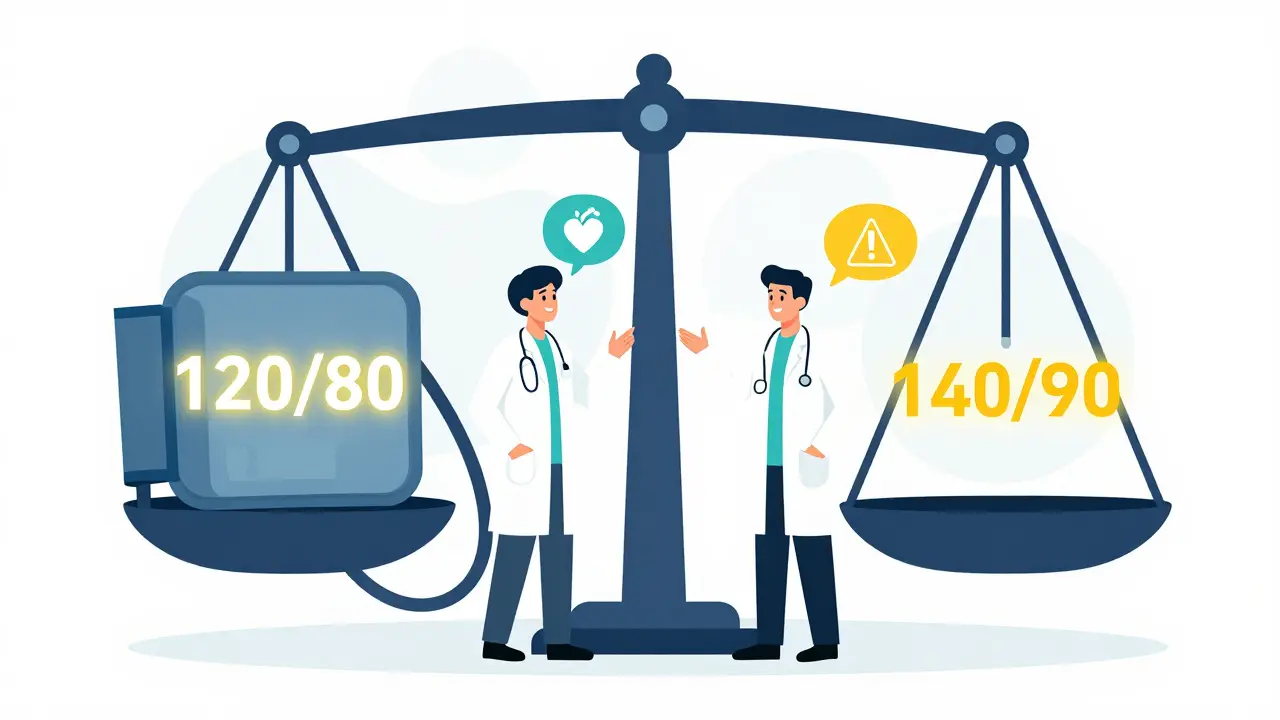
You've probably heard that 120/80 mmHg is the "gold standard" for blood pressure. For years, that number has been the benchmark for health. But if you ask three different doctors what your target should be, you might get three different answers. Some push for that strict 120/80 mark, while others suggest that 140/90 is perfectly fine depending on your age and health history. This isn't just a minor disagreement; it's a massive debate in the medical world about whether aggressive treatment actually saves more lives or just creates more side effects.
The Great Debate: One Size Fits All vs. Personalized Goals
At the heart of the conflict are two different philosophies. On one side, you have organizations like the American Heart Association (AHA) and the American College of Cardiology (ACC). In their 2025 updates, they've doubled down on lower targets. They generally want adults with hypertension to aim for a systolic pressure below 130 mmHg, and if possible, even below 120 mmHg. Their logic is simple: lower pressure equals less strain on your heart and arteries, which means fewer strokes and heart attacks.
On the other side, the American Academy of Family Physicians (AAFP) takes a more cautious approach. Their 2022 review suggests a primary target of 140/90 mmHg for most adults. Why the difference? They argue that pushing the numbers too low doesn't significantly change the death rate but does increase the chance of "number needed to harm." Essentially, they've found that for every 33 people treated to reach those ultra-low targets, one person suffers a significant adverse event like fainting or a dangerous drop in blood pressure.
| Organization | Primary Target | Core Philosophy | Key Concern |
|---|---|---|---|
| AHA/ACC | <130/80 mmHg | Aggressive prevention | Cardiovascular events |
| AAFP | 140/90 mmHg | Balanced risk/benefit | Treatment side effects |
| JSH (Japan) | <130/80 mmHg | Universal strict targets | Organ damage |
| ESH (Europe) | Age-based tiers | Tolerability by age | Elderly frailty |
When is 120/80 Actually the Goal?
For some people, aiming for 120/80 isn't just a suggestion-it's a necessity. If you have existing cardiovascular disease, diabetes, or chronic kidney disease, the risks of leaving your pressure at 140/90 are far higher than the risks of medication side effects. The AHA/ACC uses a tool called the PREVENT risk score to determine who needs this stricter control. If your 10-year risk of a cardiovascular event is 7.5% or higher, the push for blood pressure targets below 130/80 becomes much more urgent.
The evidence for this aggressive approach comes largely from the SPRINT trial. This massive study showed that targeting a systolic pressure of under 120 mmHg reduced fatal and nonfatal major cardiovascular events by 25% compared to targeting 140 mmHg. If you're relatively young and healthy, getting your numbers down to that 120/80 range can act like an insurance policy for your brain and heart.
The Risks of Going Too Low
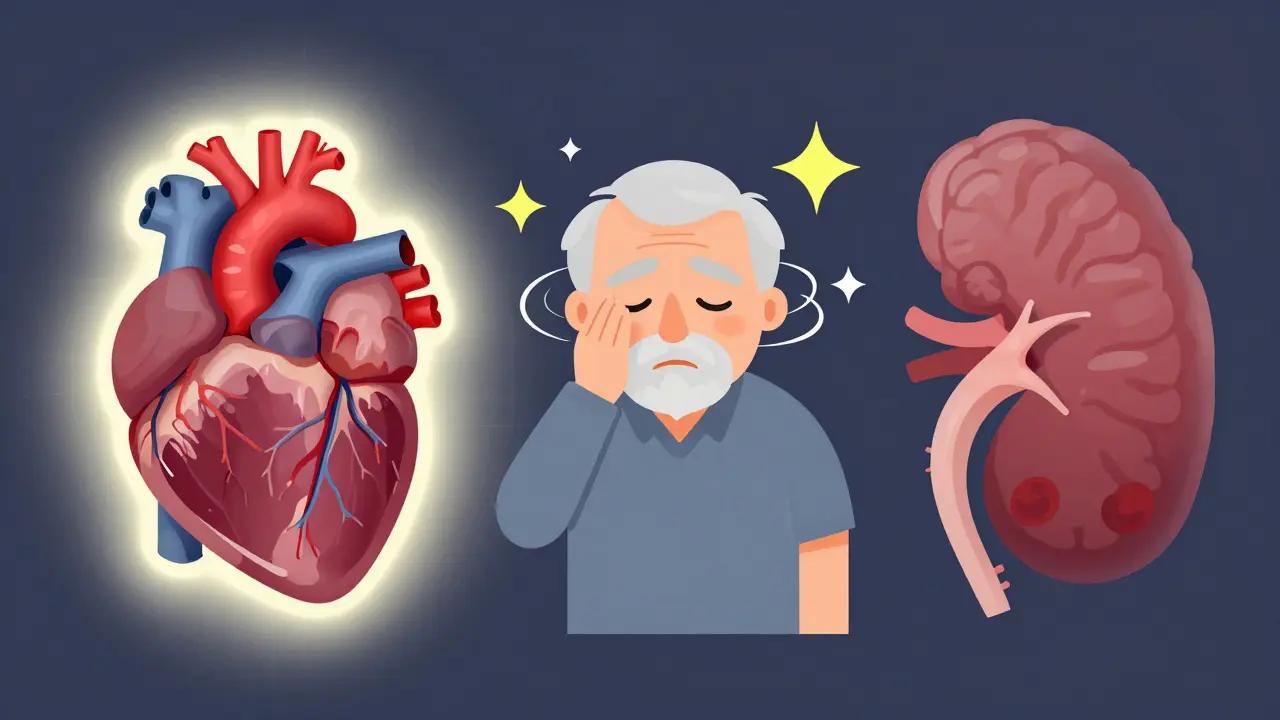
It sounds great to have the lowest numbers possible, but blood pressure is a balancing act. Your brain and kidneys need a certain amount of pressure to get the oxygen and nutrients they need. When you push the pressure too low-especially in older adults-you run into a problem called symptomatic hypotension. This is a fancy way of saying you feel dizzy, lightheaded, or even faint (syncope) when you stand up.
Beyond the dizzy spells, there are more serious risks. Pushing blood pressure too low can lead to Acute Kidney Injury (AKI) or hyperkalemia (too much potassium in the blood). This is why the Japanese Society of Hypertension (JSH), despite recommending a strict <130/80 target for everyone, insists on intense monitoring. They know that while the heart loves low pressure, the kidneys might not.
Age and Individualized Targets
The European Society of Hypertension (ESH) handles this by using "tiers." They recognize that a 30-year-old and an 85-year-old are not the same patient. For adults under 65, they aim for 120-129 systolic. For those 80 and older, they are much more lenient, often targeting 140-150 mmHg. This prevents the elderly from experiencing falls due to dizziness, which can be far more dangerous than a slightly elevated blood pressure reading.
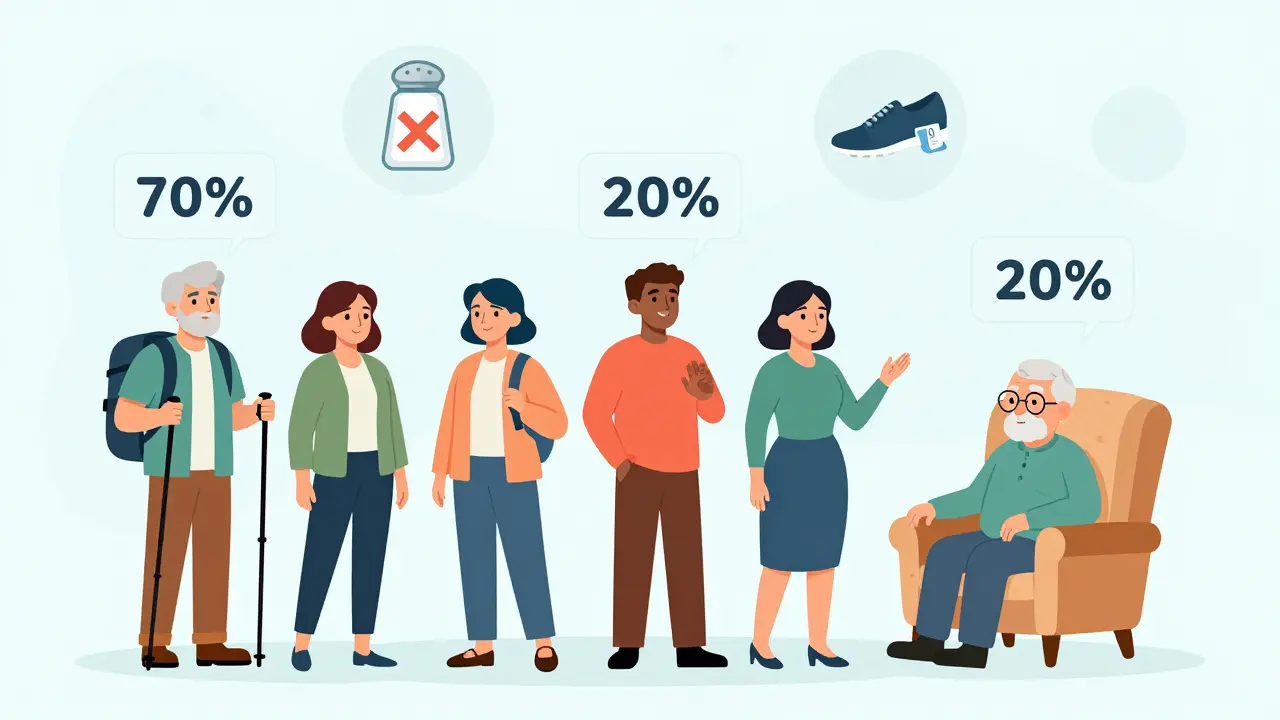
This is where shared decision-making comes in. You and your doctor should look at your "frailty level." If you're an active 70-year-old who hikes every weekend, you might thrive with a 120/80 target. If you're a 70-year-old who struggles with balance and takes five different medications, pushing for 120/80 might be a recipe for a hip fracture.
The Cost of Control: Medications and Complexity
There is a practical side to this debate: the pharmacy bill and the pill organizer. To get from 140/90 down to 120/80, most patients need at least one additional medication. More pills mean a higher chance of forgetting a dose or dealing with conflicting side effects. To fight this, many doctors now use fixed-dose combinations-two different medications in one single pill. While this helps with adherence, it can make it harder to tweak your dosage if you start feeling too dizzy.
If you have Stage 1 hypertension (130-139 systolic), and your risk score is low, you might not even need medication yet. In these cases, the first line of defense is lifestyle therapy: cutting salt, increasing potassium, and moving more. These changes can often drop your pressure by 10 points without a single prescription.
Looking Ahead: The Future of BP Management
We are moving away from the era of the "universal number." The next big step is the SPRINT-2 trial, which is currently looking at how intensive control works in a more diverse, real-world population-including people with diabetes and those at high risk for falls. We're also seeing the rise of AI and machine learning to predict how an individual will react to a specific target based on their genetics and biomarkers.
Ultimately, the goal isn't to hit a specific number on a screen; it's to keep you out of the hospital. Whether that happens at 120/80 or 140/90 depends entirely on your unique health profile.
Is 120/80 the only healthy blood pressure?
No. While 120/80 is considered "normal," the ideal target varies by person. For some, especially older adults or those with certain comorbidities, a target of 140/90 may be safer to avoid dizziness and kidney issues.
What happens if my blood pressure is too low?
Extremely low blood pressure can lead to symptomatic hypotension, causing dizziness, fainting, and increased risk of falls. In severe cases, it can reduce blood flow to the kidneys, potentially leading to acute kidney injury.
Why do different guidelines give different targets?
Different organizations weigh the risks differently. The AHA/ACC prioritizes the reduction of long-term heart disease and stroke, while the AAFP prioritizes reducing the immediate burden of medication side effects and adverse events.
How is the PREVENT risk score used?
The PREVENT score helps doctors decide how aggressive to be with your targets. If your 10-year risk for cardiovascular events is 7.5% or higher, doctors are more likely to push for a target below 130/80 mmHg.
Can I lower my blood pressure without medication?
Yes, for those with Stage 1 hypertension and low cardiovascular risk, lifestyle changes such as reducing sodium intake, increasing physical activity, and managing stress are often recommended before starting medication.
Joshua Nicholson
April 16, 2026 AT 09:46Kinda feels like the medical industry just wants to put more people on pills lol
Cheryl C
April 17, 2026 AT 18:53USA is way better at this stuff than those other countries anyway 🇺🇸🇺🇸 just follow the AHA and be gud!!
ira fitriani
April 18, 2026 AT 05:03Omg this is so important! 🌟 We really need to encourage everyone to track their numbers and be their own health advocates! It is literally a game changer for longevity! ✨💖
Nell O'Leary
April 19, 2026 AT 02:12The dichotomy between the SPRINT trial data and the AAFP's caution regarding the number needed to harm is a classic example of competing clinical endpoints in hypertension management :)
Autumn Bridwell
April 20, 2026 AT 13:13I actually had a dizzy spell last Tuesday and I'm convinced it's because my doctor is trying to force me into a 120/80 box when my body is clearly screaming for more! It's practically a medical assault on my autonomy! I can't even stand up to get a glass of water without feeling like I'm on a spinning carnival ride!
Rob Schlautman
April 21, 2026 AT 21:48honestly the whole system is just a mess and these guidelines change every few years like it's some kind of fashion trend and nobody actually cares about the patient as long as the insurance pays out and the pharma companies make their billions while we all just wander around feeling lightheaded because some board in a fancy office decided 130 was the new 140 without considering that some of us actually have lives to live outside of a clinic
Nathan Berlin
April 22, 2026 AT 12:19Imagining people actually think US guidelines are the peak of medical science is hilarious 🙄 India is leading the way in affordable healthcare and we dont need these western labels to tell us how to breathe 🇮🇳💪🔥
Rock Stone
April 23, 2026 AT 10:08Just keep moving and staying active people! Whatever the number is, just do your best to stay healthy and support each other in the journey!