
Asthma Control: How to Use Inhalers Right, Avoid Triggers, and Manage Symptoms Long-Term
 Jan, 26 2026
For millions of people, asthma isn’t just a cough or a wheeze-it’s a constant balancing act. One wrong move, one puff of smoke, one missed dose, and suddenly breathing feels like trying to suck air through a straw. The good news? Asthma can be controlled. Not cured, but controlled. And the way we manage it today is completely different from just a few years ago.
Why Your Inhaler Might Be Making Things Worse
If you’ve been told to use your blue inhaler (usually albuterol or salbutamol) whenever you feel tightness, you’re not alone. For decades, that was the standard advice. But that’s changed. As of 2024, global guidelines from GINA and the VA/DOD now say: SABA-only treatment increases your risk of severe attacks and even death.Here’s the new reality: if you’re using your rescue inhaler more than twice a week, your asthma isn’t under control. And relying on it alone is like putting a bandage on a broken bone. The fix isn’t more rescue puffs-it’s daily preventive medication.
Today, every adult and adolescent with asthma should be on an inhaled corticosteroid (ICS), even if symptoms are mild. That means your daily inhaler isn’t optional. It’s the foundation. And the best part? You don’t need to take five different inhalers. For many people, a single combination inhaler containing ICS and formoterol (a fast-acting LABA) works as both controller and reliever. You take it every day, and if you feel symptoms coming on, you use it then too. No separate blue inhaler needed.
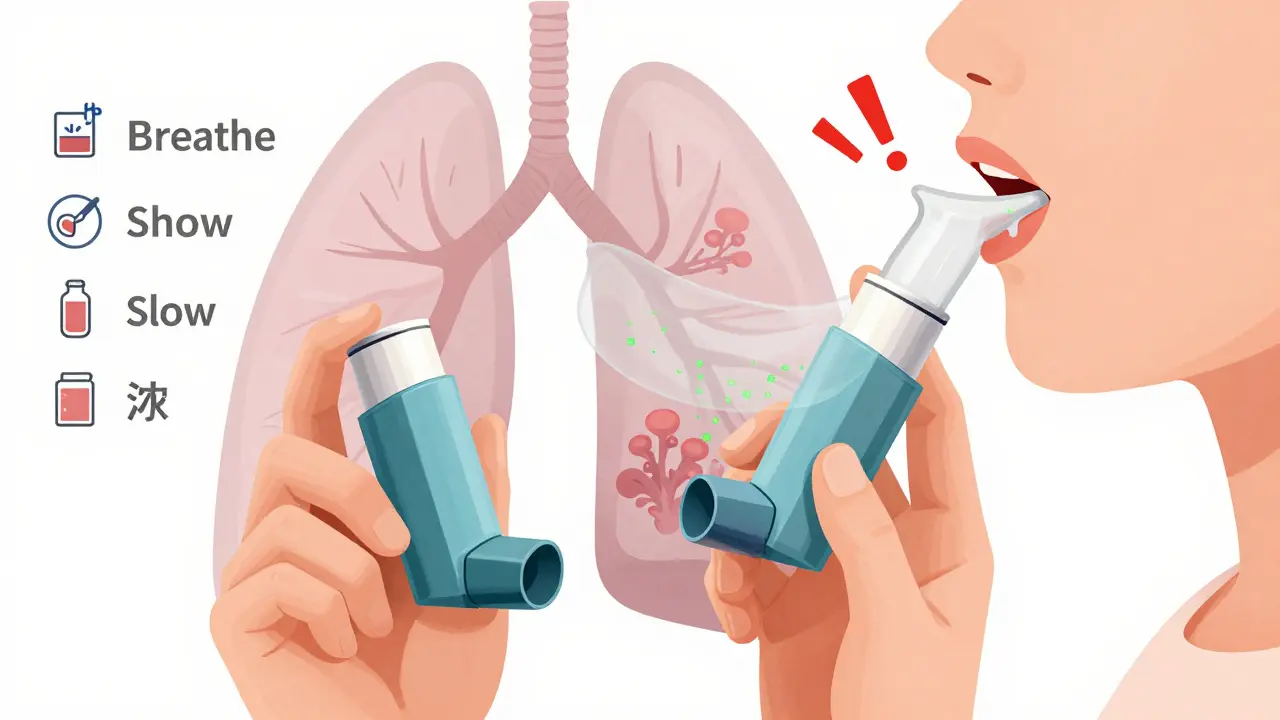
But here’s where most people slip up: technique. A 2025 study found that over 70% of asthma patients use their inhalers incorrectly. If you don’t shake your metered-dose inhaler before use, or if you don’t inhale deeply and slowly after pressing the canister, less than 20% of the medicine reaches your lungs. Dry powder inhalers require a fast, strong breath-not a slow puff. And if you don’t rinse your mouth after using an ICS inhaler, you risk thrush, hoarseness, and irritation.
Ask your doctor or pharmacist to watch you use your inhaler every time you refill it. Use a spacer if you’re using a metered-dose inhaler-it makes a huge difference. And if you’re unsure, record yourself on your phone and compare it to a video from the Asthma Foundation. Technique isn’t just helpful-it’s life-saving.
What’s Triggering Your Asthma? (And How to Stop It)
You can take your medication perfectly, but if you’re constantly exposed to triggers, control will slip. Triggers aren’t the same for everyone. For some, it’s pollen. For others, it’s cold air, stress, or even laughter.The most common triggers you can actually control:
- Indoor allergens: Dust mites, mold, pet dander. Use allergen-proof mattress covers, wash bedding weekly in hot water, and keep pets out of the bedroom. If you’re still struggling, get tested for allergies-skin or blood tests can pinpoint what you’re reacting to.
- Air pollution: Smoke, vehicle exhaust, wildfire smoke. Check local air quality apps daily. On bad days, stay indoors, keep windows closed, and use an air purifier with a HEPA filter.
- Tobacco smoke: Whether you smoke or are around someone who does, this is one of the biggest asthma aggravators. Quitting smoking cuts your risk of attacks by nearly half within six months.
- Respiratory infections: Colds and flu can trigger severe flare-ups. Get your annual flu shot and consider the pneumonia vaccine if you’re over 65 or have had frequent attacks.
- Gastroesophageal reflux (GERD): If you get heartburn, especially at night, it’s likely making your asthma worse. Treating GERD with diet changes or medication often improves lung function without touching your inhaler.
Don’t ignore comorbidities. Obesity, chronic sinusitis, and even anxiety can make asthma harder to manage. Addressing them isn’t optional-it’s part of your asthma plan.
Long-Term Management: It’s Not Just About Medication
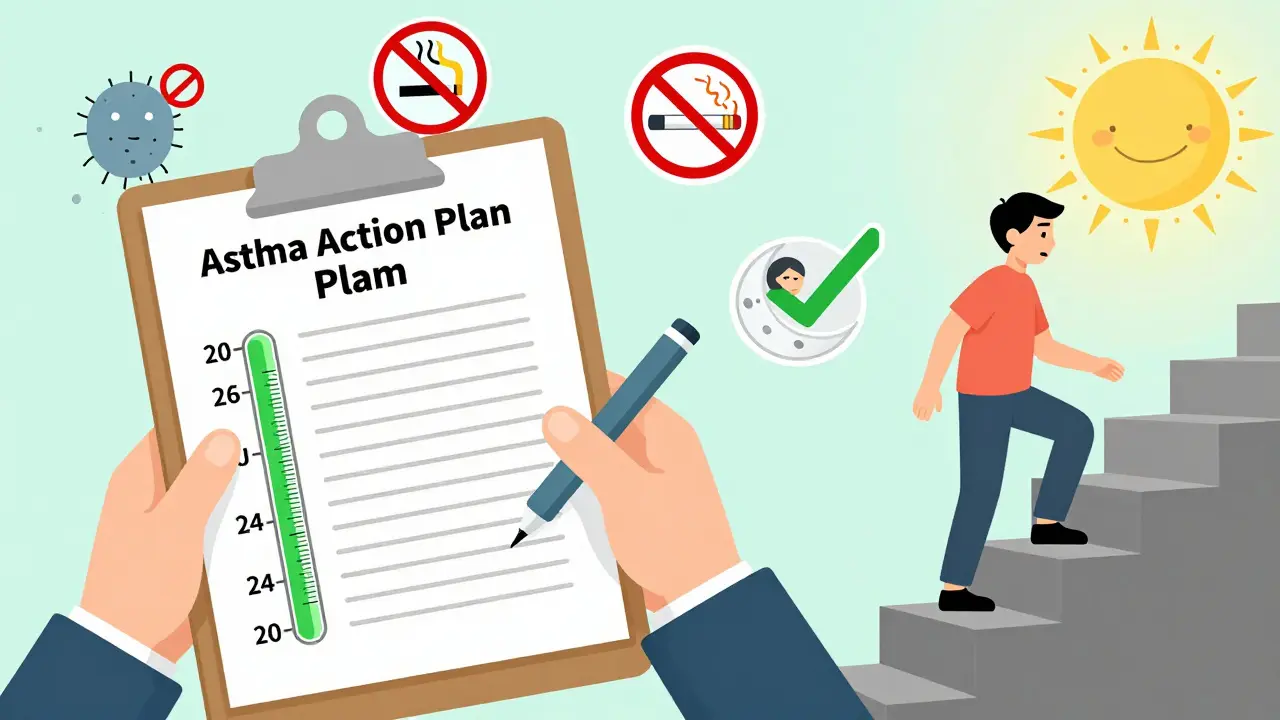
Controlling asthma isn’t a one-time fix. It’s a long game. And the best players don’t just take pills-they track, plan, and adjust.Start with an Asthma Action Plan. This isn’t a generic handout. It’s your personalized roadmap. It should tell you:
- Which medicines to take daily
- When to increase your dose if symptoms get worse
- Exactly when to call your doctor or go to the ER
Use the Asthma Control Test (ACT) every month. It’s five simple questions:
- Have you had trouble with your asthma limiting your activities?
- Have you had shortness of breath?
- Have you woken up at night because of asthma?
- Have you used your rescue inhaler more than twice a week?
- How would you rate your asthma control overall?
Score it. If you’re below 20, your asthma is not well controlled. That’s your signal to talk to your doctor-don’t wait for a crisis.
Another key point: once your asthma is stable for three months, your doctor may reduce your ICS dose by 25-50%. Don’t stop it. Don’t skip it. Just lower it. And if you’ve been on a combination inhaler for a long time with no symptoms, your doctor might consider stopping the LABA-but never the ICS.
And yes, you can still exercise. You can still travel. You can still live fully. Just make sure you have your inhaler with you. For exercise-induced symptoms, using your ICS-formoterol inhaler 15 minutes before activity is now the preferred method-no separate SABA needed.
The Big Shift: Why SABA Monotherapy Is Out
In 2019, GINA declared that using only a rescue inhaler for asthma was dangerous. In 2024, they made it official: no one with asthma should be on SABA-only treatment. By 2025, VA/DOD data showed SABA-only prescriptions dropped from 57% of new cases in 2019 to just 22%-because doctors finally listened.Why? Because studies show people on SABA-only regimens are three times more likely to end up in the ER with a life-threatening attack. ICS-containing therapy-even used only as needed-cuts that risk dramatically. The science is clear: inflammation is the root problem. Rescue inhalers open airways, but they don’t touch the swelling underneath. ICS does.
This isn’t just a guideline change. It’s a cultural shift. And it’s saving lives.
What’s Next? Biomarkers and Personalized Care
For people with severe asthma that still isn’t controlled, the future is getting smarter. Blood tests can now measure eosinophils (a type of white blood cell linked to inflammation). If your level is above 300 cells/μL, or if your exhaled nitric oxide (FeNO) is over 50 ppb, you might benefit from a biologic injection-targeted medicine that shuts down specific inflammation pathways.These aren’t for everyone. But if you’ve tried everything and still struggle, ask your doctor about testing. It could mean fewer attacks, fewer hospital visits, and more freedom.
And while apps and smart inhalers sound promising, current guidelines say there’s not enough proof yet to recommend them over good old-fashioned education and regular check-ins. Focus on the basics: take your medicine, avoid triggers, track your symptoms, and see your doctor regularly.
Final Thought: Control Is Possible
Asthma doesn’t have to run your life. It doesn’t have to stop you from playing with your kids, climbing stairs, or sleeping through the night. But control doesn’t happen by accident. It happens when you understand your inhaler, respect your triggers, and stick to a plan-even when you feel fine.It’s not about perfection. It’s about consistency. One inhaler, one plan, one step at a time. And if you’re unsure? Ask. Your doctor, your pharmacist, your asthma nurse-they’re there to help you get it right. Because breathing shouldn’t be a struggle.
Can I stop using my inhaler if I feel fine?
No. Even if you feel fine, stopping your daily inhaled corticosteroid (ICS) can lead to a flare-up. Asthma is a chronic condition with hidden inflammation. You’re not just treating symptoms-you’re preventing them. Only reduce your dose under your doctor’s guidance, and only after your asthma has been stable for at least three months.
Is it safe to use my rescue inhaler every day?
Using your rescue inhaler (SABA) more than twice a week means your asthma isn’t controlled. It’s a warning sign. Daily use of a rescue inhaler alone increases your risk of severe attacks. The goal is to switch to an ICS-containing inhaler that works as both controller and reliever. If you’re still using your blue inhaler daily, talk to your doctor-your treatment plan needs an update.
Do I need to use a spacer with my inhaler?
If you’re using a metered-dose inhaler (the kind that sprays), yes-a spacer is highly recommended. It helps the medicine reach your lungs instead of sticking in your mouth or throat. Spacers increase delivery by up to 50%, reduce side effects like thrush, and make it easier to coordinate breathing with the puff. They’re especially important for children and older adults.
Can asthma be cured?
No, asthma can’t be cured. But it can be fully controlled. Many people live symptom-free for years with the right treatment and lifestyle adjustments. Some children outgrow asthma, but for most adults, it’s a lifelong condition that requires ongoing management. The goal isn’t to eliminate asthma-it’s to make it irrelevant to your daily life.
What’s the best way to monitor my asthma at home?
Use the Asthma Control Test (ACT) once a month. It’s free, quick, and backed by guidelines. Also, keep a symptom diary: note when you have trouble breathing, how often you use your rescue inhaler, and whether you wake up at night. This helps your doctor spot patterns and adjust your plan before things get serious.
Are biologics right for me?
Biologics are for people with severe asthma who aren’t controlled on high-dose ICS and LABA. Your doctor may test your blood eosinophils or FeNO levels-if they’re high, you might be a candidate. These are injectable or IV medications given every few weeks and can cut attack rates by 50% or more. They’re not first-line, but for some, they’re life-changing.
Can exercise trigger asthma attacks?
Yes, but it doesn’t mean you should avoid exercise. In fact, being active improves lung function. Use your ICS-formoterol inhaler 15 minutes before working out-this is now the preferred method. Avoid exercising in very cold, dry air or high-pollution areas. Warm up slowly and carry your inhaler. Most people with asthma can run, swim, or cycle safely with proper preparation.
How often should I see my doctor for asthma?
At least once a year for a full review-even if you feel fine. If your asthma is uncontrolled or you’ve had a recent flare-up, see your doctor every 1-3 months. Every visit should include checking your inhaler technique, reviewing your action plan, and discussing triggers and adherence. Regular check-ups are the best way to stay ahead of problems.
Chris Urdilas
January 26, 2026 AT 22:21Jeffrey Carroll
January 28, 2026 AT 08:56Linda O'neil
January 29, 2026 AT 20:21Jess Bevis
January 31, 2026 AT 14:19Rose Palmer
January 31, 2026 AT 23:51Howard Esakov
February 2, 2026 AT 10:56Lexi Karuzis
February 3, 2026 AT 13:57Amber Daugs
February 3, 2026 AT 16:16Robert Cardoso
February 4, 2026 AT 18:02James Dwyer
February 6, 2026 AT 00:11