
Antiretroviral Generics in Africa: How Local Production Is Transforming HIV Treatment Access
 Mar, 4 2026
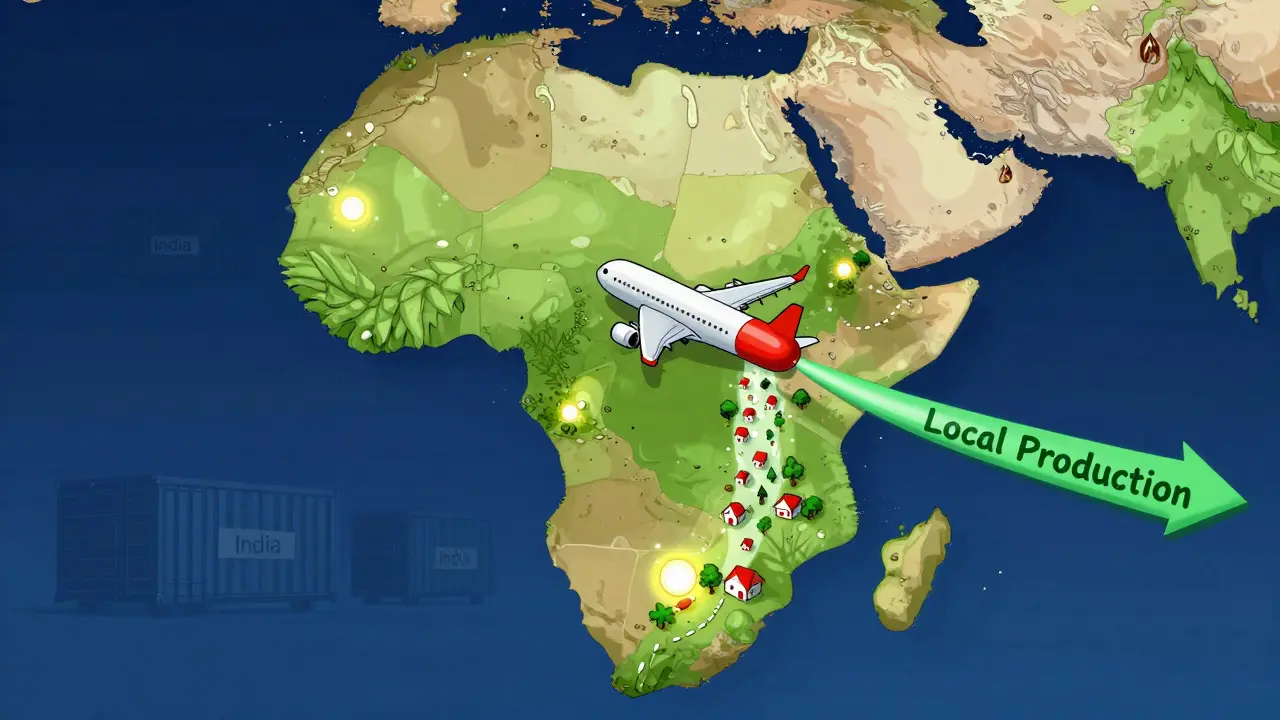
For decades, Africa relied on medicines made halfway across the world. When someone in rural Mozambique needed HIV treatment, the pills often came from India, shipped across oceans, delayed by customs, and priced by foreign distributors. That changed on May 6, 2025, when the Global Fund delivered the first-ever African-made antiretroviral drug to treat HIV - a milestone no one thought possible just five years ago.
From Import Dependence to Local Power
Sub-Saharan Africa carries 65% of the world’s HIV cases, yet for years, it imported nearly 80% of its medicines. This wasn’t just inconvenient - it was deadly. During the pandemic, supply chains snapped. Hospitals ran out of drugs. People stopped getting their daily pills. And when you’re living with HIV, missing even one dose can lead to drug resistance - and death.
The shift began with a single breakthrough: Universal Corporation Ltd, a pharmaceutical company in Kenya, became the first African manufacturer to get WHO prequalification for TLD - a fixed-dose combination of tenofovir, lamivudine, and dolutegravir. This isn’t just any drug. TLD is now the global standard for first-line HIV treatment because it’s more effective, has fewer side effects, and blocks resistance better than older regimens. And now, it’s made in Africa - for Africa.
The first shipment, delivered to Mozambique, was enough to treat over 72,000 people each year. That’s not a drop in the ocean - it’s a turning point. For the first time, a continent with the highest HIV burden is producing its own lifesaving drugs.
Why African-Made Matters
Indian generics slashed the cost of HIV treatment from $10,000 per person per year in 2000 to under $100 by 2015. That was huge. But it didn’t solve everything. Shipping delays, export bans, currency fluctuations, and political tensions still disrupted supply. When India restricted exports during the pandemic, African countries scrambled.
African manufacturing changes the game. Local production means:
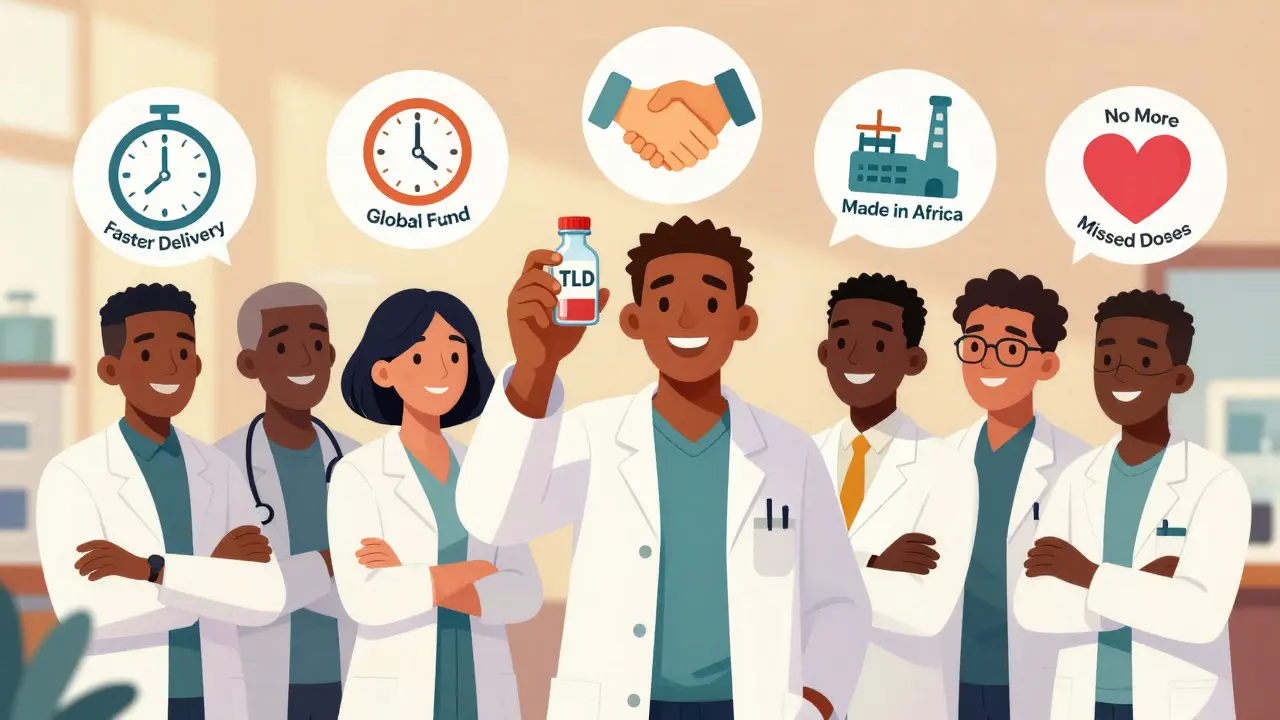
- Faster delivery - no ocean crossing, no customs holdups
- Lower transport costs - drugs are made closer to where they’re needed
- More stable supply - not dependent on foreign policies or global crises
- Job creation - skilled technicians, lab workers, logistics teams
- Health sovereignty - African countries decide their own health priorities
Dr. Ussene Hilário Isse, Mozambique’s Minister of Health, put it plainly: “Africa’s growing capacity to locally produce lifesaving medications marks a strategic shift.” This isn’t charity. It’s self-reliance.
The Role of Global Partnerships
This wasn’t done alone. The Global Fund, WHO, and African governments worked together to build the ecosystem. WHO prequalification wasn’t just a stamp - it was a rigorous audit of quality, safety, and manufacturing standards. Universal Corporation had to meet the same bar as Pfizer or Roche.
But quality alone doesn’t create a market. You need demand. That’s where the Global Fund stepped in. Instead of just buying from India, they committed to purchasing African-made TLD. This gave manufacturers confidence: if they invest in a factory, someone will buy from them. Predictable demand = sustainable business.
Mark Edington, Head of Grant Management at the Global Fund, said it clearly: “Accelerating procurement of African-made health products will continue to be a top priority.” This isn’t a one-time donation. It’s a market-shaping strategy.
Beyond Pills: Diagnostics and Long-Acting Treatments
Getting pills to people is only half the battle. You also need to know who has HIV - and how to treat them best.
In Nigeria, Codix Bio received a technology transfer from SD Biosensor to manufacture HIV rapid diagnostic tests (RDTs) locally. These are the same finger-prick tests used in clinics across the continent. Now, they’re made in Lagos, not imported from South Korea. That means faster restocking, lower prices, and better coverage.
And then there’s the future: long-acting injectables. In October 2025, South Africa became the first African country to register a twice-yearly HIV injection - cabotegravir long-acting. No more daily pills. Just two shots a year. And Gilead Sciences didn’t just license it - they gave 133 countries, including all of Sub-Saharan Africa, the right to make generics. Six African manufacturers are already preparing to produce it.
Even more groundbreaking: Gilead is supplying lenacapavir, a new long-acting PrEP drug, at no profit to 18 high-burden countries until generics are ready. The goal? Prevent new infections before they start. This isn’t just treatment - it’s prevention at scale.
The Numbers Still Don’t Add Up
Let’s be clear: we’re not there yet.
Africa needs about 15 million person-years of first-line ARV treatment every year. The first African-made TLD shipment covers 72,000. That’s progress - but it’s still less than 0.5% of demand.
New factories are coming. By Q4 2025, additional manufacturing plants in Kenya, Rwanda, Ethiopia, and South Africa will begin production. The African Union’s Pharmaceutical Manufacturing Plan for Africa (PMPA) wants to raise local production from 2-3% to 40% by 2040. That’s ambitious. And it needs more than goodwill.
Regulatory systems vary wildly across countries. One drug approved in Kenya might take two years to clear in Nigeria. Harmonizing standards is critical. So is funding. Unitaid, the Gates Foundation, and CIFF are stepping in, but they can’t do it alone.
And then there’s the human factor. African scientists, pharmacists, and engineers need training, not just equipment. The push for “Africanizing research and development” means local teams designing drugs for African strains of HIV - not just copying what works elsewhere.
Integration Is the Next Frontier
HIV programs have long run in silos. Separate clinics. Separate funding. Separate data systems. That’s inefficient. And it leaves people behind.
The 2025 Africa’s Radical Agenda for HIV Sustainability calls for moving “from silos to integrated governance.” That means linking HIV care to maternal health, tuberculosis programs, and primary care clinics. If a woman gets an HIV test during her prenatal visit, she should get her ARVs right there - not be sent to another building.
Integration isn’t just about convenience. It’s about survival. People with HIV often have other health needs. Treating them in one place saves time, money, and lives.
What’s Next? The Road to 2030
By 2030, experts predict African-made ARVs could supply 20-30% of the continent’s treatment needs. That’s still not enough - but it’s a start. And it’s growing.
The Global Fund’s Grant Cycle 7 (GC7) will soon announce which countries can access these new African-made drugs. More countries = more demand = more factories = lower prices.
South Africa’s rapid registration of the injectable HIV treatment shows what’s possible when regulators move fast. Other countries are watching. Some are already rewriting their drug approval rules to mirror South Africa’s speed.
And the economic ripple effect? It’s real. Pharmacies are hiring. Labs are expanding. Local logistics companies are building cold-chain networks for medicines. This isn’t just health - it’s economic development.
The old model - import, wait, hope - is over. The new model - produce, deliver, empower - is here. And for the millions living with HIV across Africa, it’s not just a policy shift. It’s a second chance.
Milad Jawabra
March 6, 2026 AT 00:19Raman Kapri
March 6, 2026 AT 22:33Tildi Fletes
March 8, 2026 AT 01:15Siri Elena
March 8, 2026 AT 19:19Renee Jackson
March 9, 2026 AT 15:40RacRac Rachel
March 10, 2026 AT 11:11Sharon Lammas
March 12, 2026 AT 09:55Aisling Maguire
March 12, 2026 AT 16:31Diane Croft
March 13, 2026 AT 05:22tatiana verdesoto
March 14, 2026 AT 10:00Darren Torpey
March 15, 2026 AT 18:25