
Accidental Pediatric Medication Overdose: How to Prevent It and What to Do If It Happens
 Jan, 14 2026
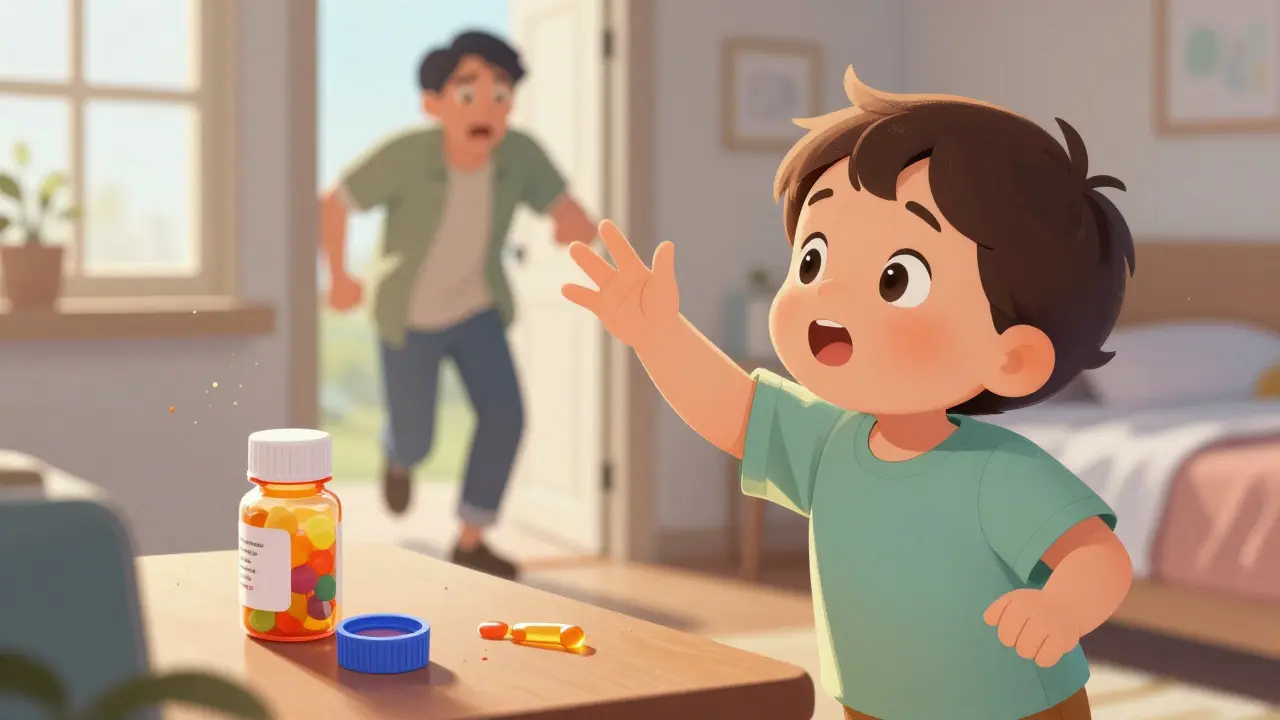
Every year, thousands of young children end up in emergency rooms because they got into medicine they weren’t supposed to. Not because their parents were careless-often, it’s because a bottle was left on the nightstand, a teaspoon was used instead of the dosing cup, or the child figured out how to twist open the cap. Accidental pediatric medication overdose is one of the most common and preventable medical emergencies in homes with young kids. The good news? We know exactly how to stop it.
Why This Happens More Than You Think
Children under five are naturally curious. They explore the world by touching, grabbing, and yes-tasting. A brightly colored liquid medicine bottle on the counter looks like candy to a toddler. A pill left on a dresser after a doctor’s visit? To a child, it’s just another small object to investigate. According to CDC data, emergency visits for unsupervised medication exposures in this age group peaked at 76,000 in 2010-and while numbers have dropped since, they’re still far too high. The most common culprits? Liquid acetaminophen and diphenhydramine. These are in almost every household. But here’s the twist: the danger isn’t always the medicine itself. It’s the dosing. A 2022 analysis of 1,200 cases showed that 78.3% of overdoses happened because caregivers used kitchen spoons, misread labels, or confused infant and children’s formulas. One parent thought they were giving 5 mL of children’s acetaminophen. They were actually giving 10 mL of infant concentration-twice the dose. And because both bottles look nearly identical, it’s easy to mix them up.What Works: The PROTECT Initiative’s Three-Part Plan
In 2008, the CDC launched the PROTECT Initiative to tackle this problem head-on. It’s not just a slogan. It’s a proven, science-backed system with three clear parts: packaging, labeling, and education. First, packaging. Child-resistant caps aren’t foolproof. In fact, 10% of kids can open them by age 3.5 years. That’s why newer bottles now include flow restrictors-tiny plastic inserts that slow down how fast liquid pours out. Even if a child opens the cap, they can’t gulp down a dangerous amount quickly. Since 2020, over 95% of liquid medications now use mL-only labeling instead of teaspoons or tablespoons. That’s huge. A teaspoon can vary from 4 to 6 mL. A dosing cup? Always exact. Second, labeling. All new pediatric liquid meds must now say “mL” clearly on the bottle and the dosing tool. No more “teaspoonful.” No more “half a tablespoon.” If you see a label that says “give 1 tsp,” that’s outdated. Demand a new bottle. Pharmacies are required to provide a dosing syringe or cup with every liquid prescription. Use it. Always. Third, education. The Up and Away and Out of Sight campaign isn’t just a poster. It’s a rule: keep all meds locked up, out of sight, and at least 4 feet off the ground. That means not on the nightstand, not in the purse, not in the bathroom cabinet (kids climb). A locked cabinet, even a simple one with a child lock, cuts the risk of accidental ingestion by more than half.What You Can Do Right Now
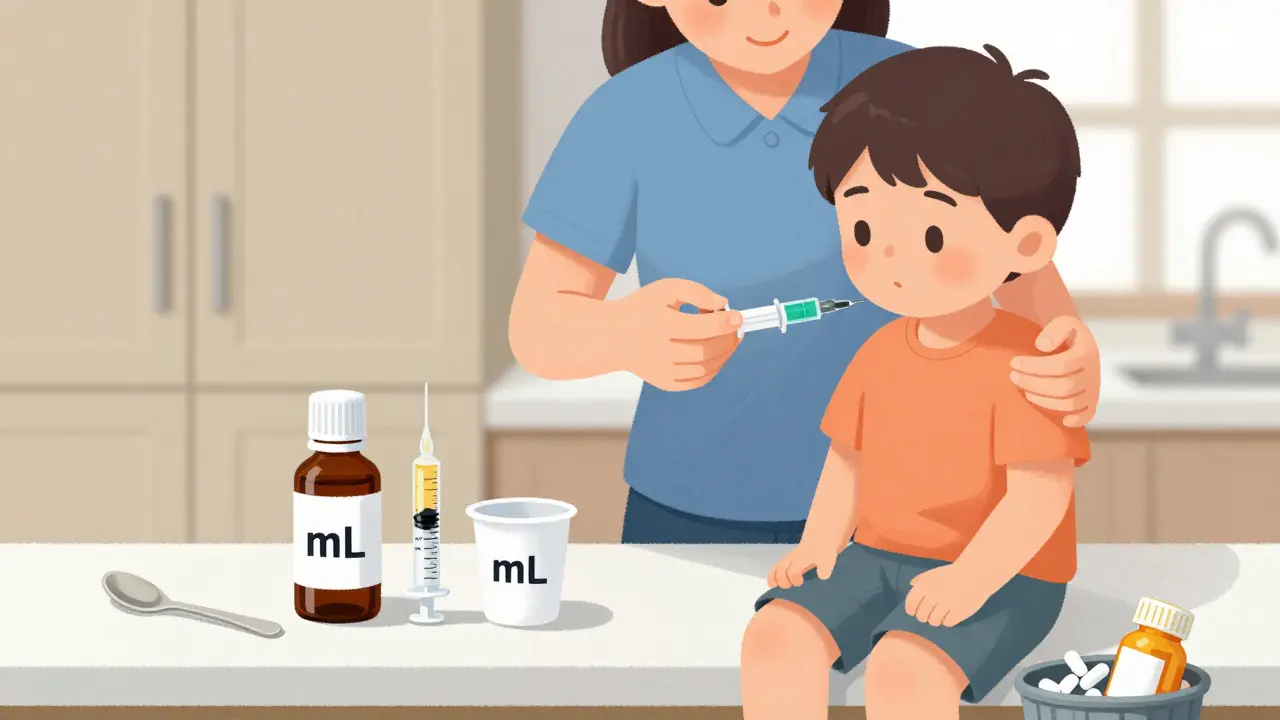
You don’t need to wait for a new pill bottle or a government campaign. Here’s what you can do today:- Use only the dosing tool that comes with the medicine. Never use a kitchen spoon, shot glass, or dropper from another bottle. The syringe or cup is marked in mL. Trust it.
- Store meds in a locked cabinet, high and out of reach. Even if you think your child can’t reach it, they will. A 2023 survey found only 32% of homes store meds this way. Don’t be in that group.
- Never leave meds out after use. Put them back immediately. A 2023 Reddit thread with over 1,200 upvotes shared stories of kids getting into blood pressure pills, antidepressants, and even insulin because they were left on a counter.
- Dispose of unused meds properly. Don’t flush them. Don’t throw them in the trash. Use a drug take-back program at your pharmacy or local police station. If none are available, mix pills with coffee grounds or cat litter, seal them in a bag, and toss them. For liquids, pour them down the drain only if the label says it’s safe.
- Know the difference between infant and children’s formulas. Infant acetaminophen is 160 mg/5 mL. Children’s is 160 mg/5 mL too-but older bottles might say 80 mg/0.8 mL. Always check the concentration on the label before giving it.
What to Do If Your Child Gets Into Medicine
If you find your child with a pill in their mouth or a bottle open nearby, don’t panic. Don’t wait for symptoms. Don’t try to make them throw up. Here’s what to do:- Call Poison Control immediately. In the U.S., it’s 1-800-222-1222. It’s free, confidential, and staffed by nurses and pharmacists trained in poison emergencies. They’ll ask what was taken, how much, and when. Have the bottle ready.
- If it’s an opioid (like oxycodone, hydrocodone, or fentanyl) and your child is unresponsive, not breathing, or turning blue-give naloxone. The American Academy of Pediatrics now recommends that every child prescribed opioids also gets a prescription for naloxone. It’s safe for kids. It comes as a nasal spray or injection. If you have it, use it. Then call 911.
- Keep the medicine bottle. Emergency responders and doctors need to know exactly what was taken. Don’t throw it away.
- Don’t wait for symptoms. Some overdoses take hours to show up. Acetaminophen can damage the liver without any signs for 24 hours. Time matters.
Why This Isn’t Just About Pills
The real problem isn’t just medicine. It’s the system. Only 63% of pediatricians talk about safe storage during well-child visits. Many parents still think “child-resistant” means “child-proof.” It doesn’t. And while smart pill dispensers and apps exist, they cost hundreds of dollars. Most families can’t afford them. The CDC’s Healthy People 2030 goal is to cut pediatric medication overdoses by 10% from 2019 levels. We’ve hit 6.2% so far. That’s progress. But it’s not enough. Every child who nearly dies from a pill they shouldn’t have touched is a sign we can do better.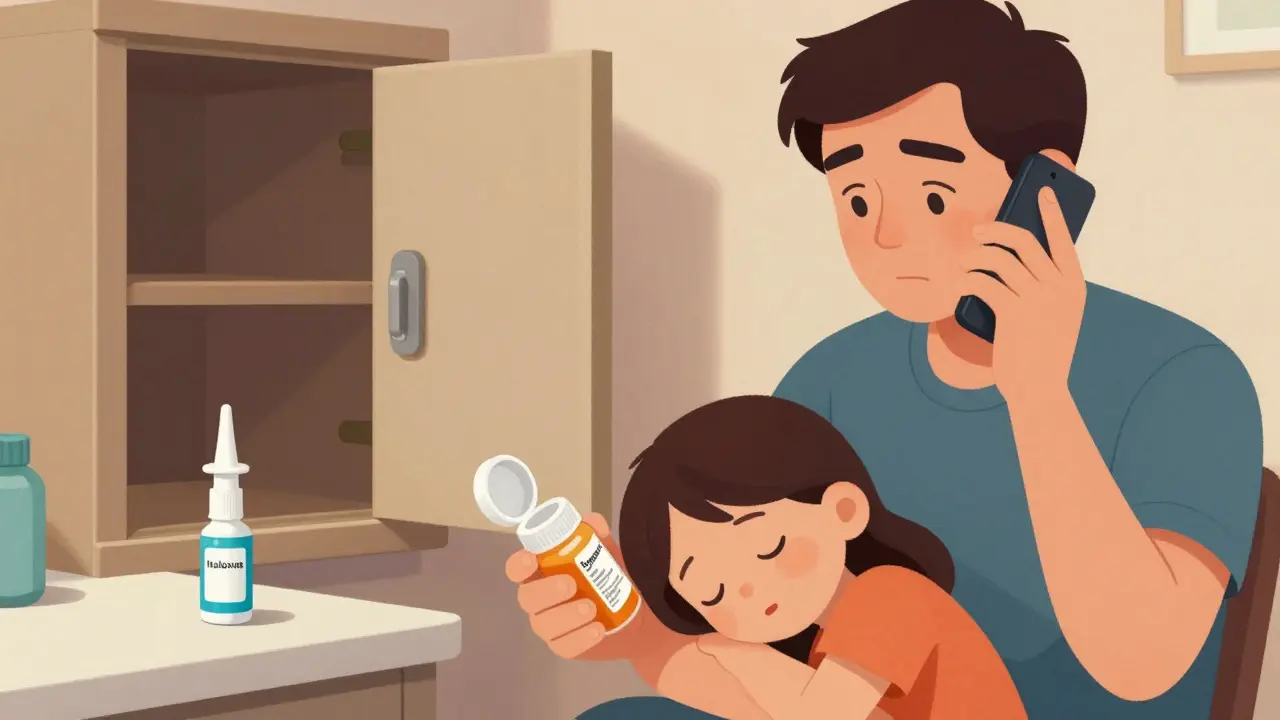
What’s Coming Next
By 2025, the FDA will require flow restrictors on all liquid opioid medications. The PROTECT Initiative is expanding its Up and Away campaign into 12 new languages by 2026. And in late 2024, the American Society of Health-System Pharmacists will release the first official Pediatric Medication Safety Best Practices Guide. These are big steps. But change starts at home. You don’t need a fancy app. You don’t need a new cabinet. You just need to make one habit: lock it up, measure it right, and know what to do if something goes wrong.What’s the difference between infant and children’s acetaminophen?
Both are now standardized to 160 mg per 5 mL. But older bottles may say 80 mg per 0.8 mL (infant drops) or 160 mg per 5 mL (children’s liquid). Always check the concentration on the label before giving it. Never assume they’re the same-even if the bottle looks identical.
Can child-resistant caps really keep kids out?
No. Child-resistant means it’s harder for kids to open-not impossible. Testing shows 10% of children can open these caps by age 3.5. That’s why storage matters more than the cap. Always keep meds locked up, even if the cap is on.
Is it safe to use a kitchen spoon to measure liquid medicine?
No. A kitchen teaspoon can hold anywhere from 4 to 6 milliliters. A dosing cup or syringe is calibrated to deliver exactly 5 mL. Using a spoon is the #1 cause of dosing errors. Always use the tool that came with the medicine.
When should I use naloxone on a child?
If your child is unresponsive, not breathing, or has blue lips or skin after taking an opioid (like oxycodone or fentanyl), give naloxone right away. It’s safe for kids. Use the nasal spray or injection as directed. Then call 911 immediately. Don’t wait for symptoms to get worse.
What if I don’t have a locked cabinet?
Use a high shelf in a closet, behind a heavy box, or inside a locked drawer. Even a small plastic storage bin with a latch works. The goal is to make it out of reach and out of sight. A child who can’t see it won’t think to look for it.
Are there free resources to help me learn more?
Yes. The CDC’s Up and Away campaign has free posters and videos in multiple languages. Poison Control (1-800-222-1222) offers 24/7 advice. The American Academy of Pediatrics also has a Medication Safety page with printable checklists for parents.
Crystel Ann
January 16, 2026 AT 04:50This post saved my life last year. My 2-year-old got into a bottle of children's ibuprofen while I was on the phone. I didn't even realize it until I saw the empty bottle in her hand. I called Poison Control immediately-they walked me through everything. No panic, no vomiting, just calm instructions. I wish I'd read this before it happened.
Diane Hendriks
January 18, 2026 AT 00:03The CDC’s PROTECT Initiative is a textbook example of regulatory overreach disguised as public health. The government mandates mL-only labeling because parents can’t read? No. It’s because they want to control how you administer medicine. The real issue is parental negligence-not the packaging. And don’t get me started on the ‘locked cabinet’ propaganda. Next they’ll require biometric locks on your medicine cabinet. This isn’t safety. It’s infantilization.
Dan Mack
January 18, 2026 AT 23:58They don’t want you to know this but the pharmaceutical companies pushed for flow restrictors because they knew parents were mixing up infant and children’s formulas and suing them. Now they get to charge you $50 for a bottle that’s literally the same medicine with a plastic insert. And don’t tell me about ‘child-resistant caps’-those are just for show. The real reason kids get into meds is because the government won’t let them sell single-dose blister packs like they do in Europe. They’re making money off your fear.
Amy Ehinger
January 20, 2026 AT 08:24I’m a nurse and I can’t tell you how many times I’ve seen this in the ER. One time a mom gave her 18-month-old Tylenol from a bottle labeled ‘infant’ thinking it was the same as the kids’ version because they looked identical. The kid ended up with acute liver failure. It’s not about being careless-it’s about how confusing the system is. I keep a laminated chart taped to my fridge with the concentrations: infant 80mg/0.8mL, children’s 160mg/5mL. I even showed my sister-in-law how to print one. Small things matter. And yes, I use the syringe every single time. No spoons. Ever.
RUTH DE OLIVEIRA ALVES
January 21, 2026 AT 01:32It is imperative to acknowledge that the dissemination of accurate, evidence-based information regarding pediatric medication safety remains a critical public health priority. The PROTECT Initiative, as outlined in this comprehensive post, represents a scientifically validated framework that aligns with international standards for medication safety in pediatric populations. Furthermore, the implementation of mL-only labeling and the provision of calibrated dosing devices constitute measurable improvements in risk mitigation. It is incumbent upon caregivers to adhere to these protocols with unwavering diligence, as the consequences of noncompliance are not merely statistical-they are profoundly human.
Haley Graves
January 21, 2026 AT 12:53If you’re not locking up your meds, you’re gambling with your child’s life. I used to think my cabinet was ‘high enough’ until my niece climbed on a chair and opened it. I’m not being dramatic-I’m being responsible. Buy a $12 lockbox from Target. Use the dosing syringe. Write down the concentration on the bottle with a Sharpie. These aren’t suggestions. They’re survival steps. And if you think ‘it won’t happen to me,’ you’re already part of the problem.
ellen adamina
January 22, 2026 AT 10:08I just realized I’ve been using the same dosing cup for three different meds because I thought they were all the same. I never checked the concentration. I always assumed the pharmacy gave me the right one. Now I’m going back to check every bottle I have. I’m so embarrassed. But I’m glad I found this. I’m printing out the chart from the CDC website. My daughter is 15 months. I don’t want to be that parent.
Gloria Montero Puertas
January 22, 2026 AT 13:44How is it possible that, in the year 2024, parents are still using kitchen spoons?!? This is not a ‘mistake’-it’s a failure of basic literacy and hygiene. And don’t get me started on the ‘I didn’t know’ defense. You have a smartphone. You have access to the internet. You have a pharmacy right down the street. You’re not a victim-you’re negligent. The fact that this even needs to be said is a national embarrassment. Lock it. Measure it. Stop pretending you’re too busy to read a label. Your child doesn’t deserve your laziness.