
180-Day Exclusivity vs. Authorized Generics: Legal Risks and Market Impact
 May, 20 2026
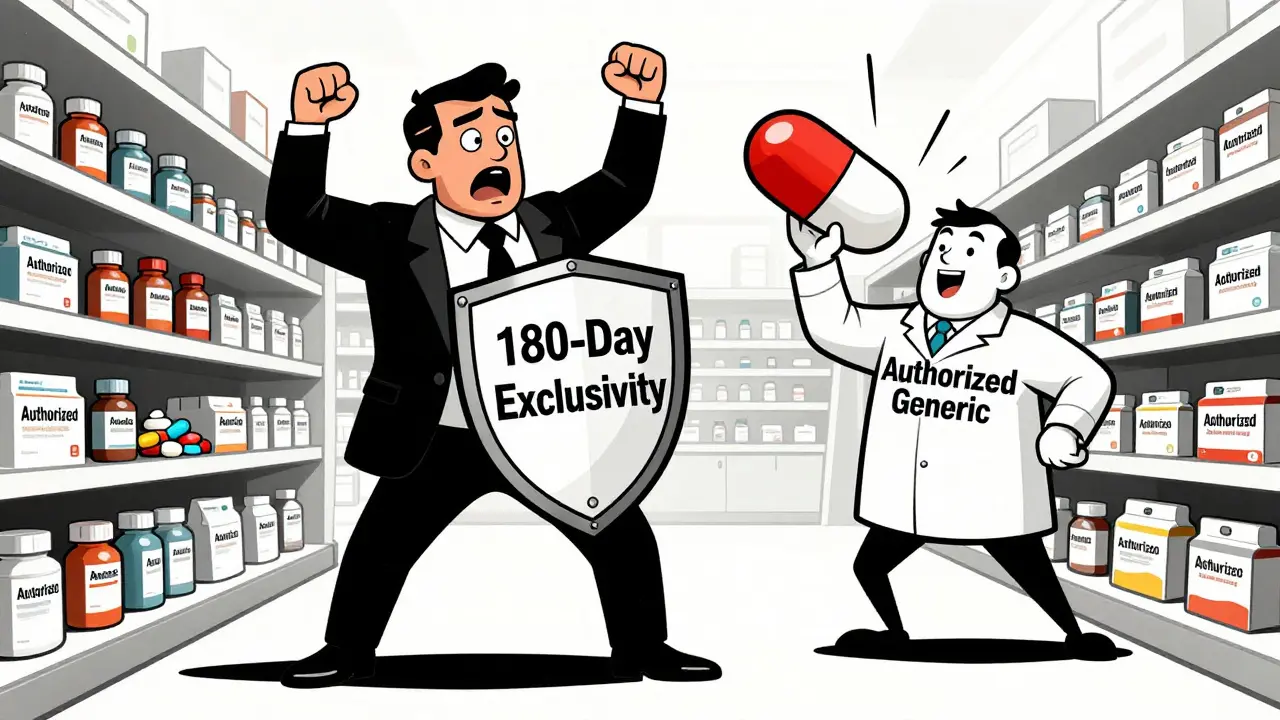
Imagine spending millions of dollars to challenge a pharmaceutical patent, winning the court case, and finally getting approval to sell your generic drug. You expect a monopoly for six months to recoup your investment. Then, the brand-name company launches an authorized generic-their exact same product sold without the brand label-right next to yours on the pharmacy shelf. Your exclusive window just got cut in half, and so did your profits.
This is the reality for many generic manufacturers navigating the U.S. pharmaceutical market today. The tension between 180-day exclusivity and authorized generics creates a complex legal minefield that defines who gets to make money when a blockbuster drug loses its patent protection. Understanding this dynamic isn't just about knowing the rules; it's about recognizing how these rules are often exploited to shift billions of dollars from generic challengers back to brand-name holders.
The Promise of 180-Day Exclusivity
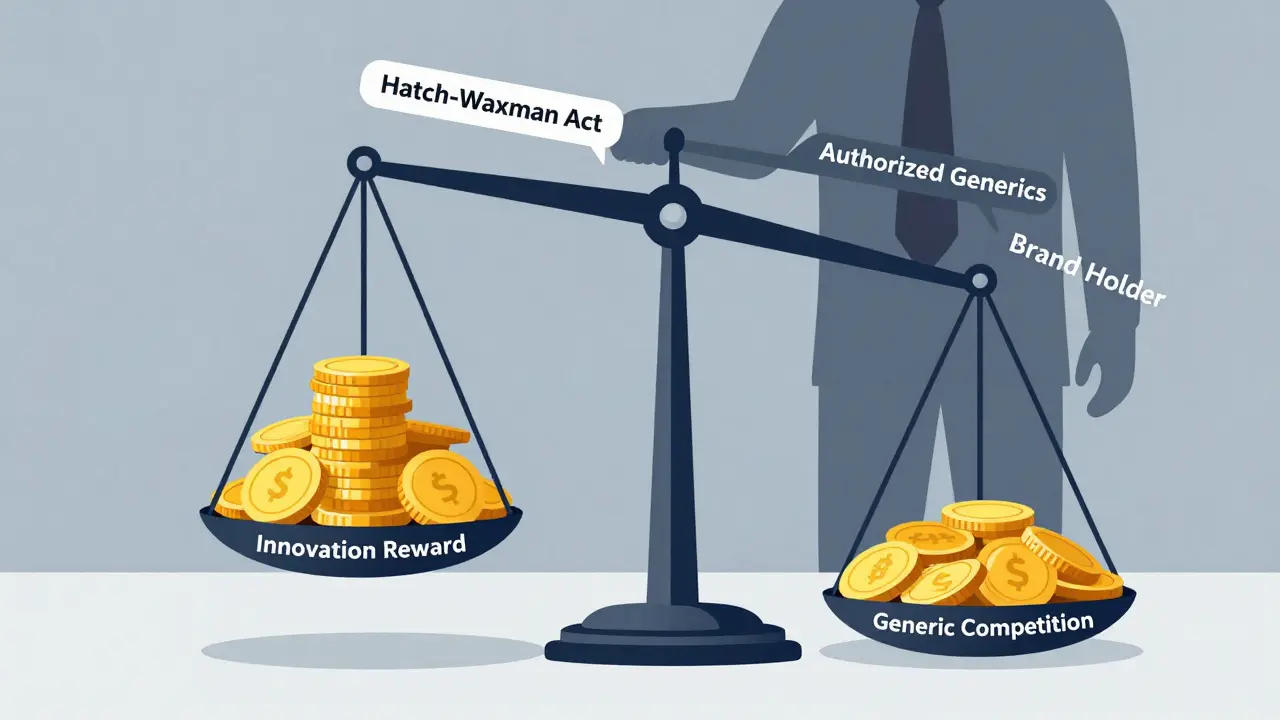
To understand why authorized generics are such a headache, you first need to understand what they disrupt. The Hatch-Waxman Act of 1984 was designed to balance two competing interests: rewarding innovation for brand-name drugs and encouraging cheaper competition through generics. The key incentive? A 180-day period where only one generic version of a drug can be sold.
This provision, codified under 21 U.S.C. § 355(j)(5)(B)(iv), grants marketing exclusivity to the "first applicant" who successfully challenges a listed patent via a Paragraph IV certification. Here’s how it works in practice:
- The Challenge: A generic manufacturer files an Abbreviated New Drug Application (ANDA) stating that the brand-name patent is invalid or not infringed.
- The Litigation: The brand-name holder has 45 days to sue. If they do, FDA approval is stayed for up to 30 months while the courts decide.
- The Reward: If the generic wins (or the patent expires), they get 180 days of sole access to the generic market.
The clock starts ticking either when the first generic begins commercial marketing or when a court finds the patent invalid, whichever comes first. During this window, the FDA cannot approve any other ANDAs for that specific drug. For a generic company facing $2-$5 million in legal fees per challenge, this exclusivity is supposed to be the financial lifeline that makes the risk worth taking.
What Are Authorized Generics?
An authorized generic is not a traditional generic. It is the brand-name drug itself, manufactured by the brand-name company (or their licensee), but sold under its chemical name rather than its trade name. Because it is identical to the reference listed drug, it does not need to go through the full bioequivalence testing required of standard generics. It essentially bypasses the regulatory hurdles that create the 180-day barrier.
Legally, authorized generics exist in a gray area. They are not "generic" in the sense of being made by a competitor using the ANDA pathway. Therefore, the law does not explicitly prohibit them from entering the market during the 180-day exclusivity period granted to the first ANDA filer. This loophole allows brand-name companies to compete directly against the very generic challenger they just fought off in court.
| Feature | Traditional Generic (ANDA) | Authorized Generic |
|---|---|---|
| Manufacturer | Third-party generic company | Brand-name company or licensee |
| Regulatory Pathway | Abbreviated New Drug Application (ANDA) | New Drug Application (NDA) or license |
| Bioequivalence Testing | Required | Not required (identical to brand) |
| Entry Timing | After patent expiration or successful Paragraph IV win | Immediately upon generic entry |
| Impact on 180-Day Exclusivity | Blocked during exclusivity period | Can launch during exclusivity period |
The Financial Impact of the Loophole
The interaction between these two forces is where the real damage happens. Research shows that when an authorized generic enters the market during the 180-day exclusivity period, the first generic entrant’s market share drops from approximately 80% to 50%. This isn't a minor dip; it represents a revenue loss of 30-50% for the generic company.
Consider the case of Teva Pharmaceuticals and Eli Lilly regarding the diabetes drug Humalog. Teva won its patent challenge and secured 180-day exclusivity. However, Lilly launched an authorized generic immediately. Court documents revealed that Teva estimated losing $287 million in revenue due to this move. For smaller generic companies, this kind of blow can be existential. It discourages them from filing Paragraph IV certifications in the first place, which ultimately slows down the availability of affordable drugs for patients.
Data from the FDA indicates that between 2005 and 2015, brand-name manufacturers launched authorized generics in about 60% of cases where 180-day exclusivity was granted. This high frequency suggests it is not an accidental strategy but a calculated business decision to protect brand revenues by fragmenting the generic market early.
Legal Strategies and Settlements
Faced with this threat, generic manufacturers have had to adapt their legal strategies. It is no longer enough to just win the patent lawsuit. Companies now routinely negotiate contractual provisions with brand-name manufacturers as part of patent settlement agreements.
A common tactic is to include clauses that delay the launch of authorized generics. According to industry analysis, nearly 78% of first generic applicants engage in these negotiations. These settlements are controversial. Critics argue they amount to "pay-for-delay" schemes, where brand companies pay generics to keep prices high. However, from a purely defensive standpoint, generic companies use these deals to secure at least some portion of their expected exclusivity revenue.
The Federal Trade Commission (FTC) has been aggressive in policing these arrangements. Between 2010 and 2022, the FTC filed 15 antitrust lawsuits against brand-name manufacturers for allegedly using authorized generics and settlements to improperly delay competition. The legal landscape is shifting, with regulators increasingly viewing unauthorized generic launches during exclusivity periods as anti-competitive behavior.
Operational Pitfalls for Generic Manufacturers
Even if you win the legal battle and avoid an authorized generic launch, you must manage the 180-day clock perfectly. The exclusivity period begins upon "first commercial marketing," which requires both FDA approval and actual shipment of the product. Common mistakes include:
- Premature Triggering: Starting sales before all distribution channels are ready wastes valuable exclusivity time.
- Procedural Errors: Failing to maintain continuous marketing or miscalculating the trigger date can forfeit the entire period.
- Lack of Coordination: Regulatory affairs, legal, and commercial teams must align. Miscommunication here costs millions.
The FDA reports that 28% of first generic applicants lost some portion of their exclusivity due to procedural errors between 2018 and 2022. To mitigate this, larger companies invest $500,000 to $1 million in specialized consulting to optimize exclusivity capture. Smaller firms often lack these resources, putting them at a distinct disadvantage.
Future Legislative Changes
The current system is under pressure to change. Multiple legislative proposals, such as the Preserve Access to Affordable Generics and Biosimilars Act, aim to prohibit brand-name manufacturers from launching authorized generics during the 180-day exclusivity period. Supporters argue this would restore the original intent of the Hatch-Waxman Act: to reward those who take the risk of challenging patents.
If passed, such legislation could increase the value of successful Paragraph IV challenges by $150-$250 million per drug. This would likely lead to a 20-25% increase in patent challenges, accelerating generic entry and lowering drug prices for consumers. However, brand-name companies continue to resist, citing studies that suggest authorized generics can lower prices by 15-25% compared to scenarios with only one generic competitor. The debate continues to center on whether this short-term price benefit outweighs the long-term disincentive for generic innovation.
What triggers the start of the 180-day exclusivity period?
The 180-day clock starts on the earlier of two dates: the date the first generic applicant begins commercial marketing of the drug, or the date of a final court judgment finding the patent invalid, unenforceable, or not infringed. Commercial marketing requires both FDA approval and actual shipment of the product.
Can a brand-name company sell an authorized generic during the 180-day exclusivity period?
Yes. Current U.S. law does not explicitly prohibit brand-name manufacturers from launching authorized generics during the 180-day exclusivity period granted to the first ANDA filer. This allows the brand to compete directly with the generic challenger.
How much revenue does a generic company lose if an authorized generic enters?
Research indicates that the presence of an authorized generic can reduce the first generic entrant's market share from ~80% to ~50%, resulting in a 30-50% reduction in potential revenue during the exclusivity period.
What is a Paragraph IV certification?
A Paragraph IV certification is a statement in an Abbreviated New Drug Application (ANDA) where the generic manufacturer asserts that a patent listed in the FDA Orange Book is invalid, unenforceable, or will not be infringed by the generic product. Filing this certification is a prerequisite for qualifying for 180-day exclusivity.
Is there legislation to ban authorized generics during exclusivity?
Yes, bills like the Preserve Access to Affordable Generics and Biosimilars Act have been introduced multiple times to prohibit brand-name manufacturers from launching authorized generics during the 180-day exclusivity period. As of 2026, these efforts are ongoing but have not yet become federal law.